A Shenzhen landlord collected rent for three years before discovering the shop had been secretly mortgaged by the sublessor. From filing a police report to recovering the property, the 180 days I accompanied him through.
Last week, a client came to us—Boss Chen, who runs a small business in Nanshan District. The moment he walked in, he slammed his phone on the table. On the screen was a court enforcement notice—the shop he had rented for five years was suddenly facing forced eviction.
Mr. Chen said that he signed a five-year lease with the sublessor in 2019 and paid 200,000 yuan in rent all at once. However, earlier this year, the actual landlord showed up with the property deed, saying that the sublessor had already mortgaged the shop to a loan company. Now the loan company has applied for compulsory enforcement, and the sublessor has fled with the money, leaving both him and the landlord as victims.
Mr. Chen, his eyes red, asked me, "Lawyer Wang, I clearly paid the rent, so how did I become an illegal occupier? Can I sue that sublessor? Can I get the money back?"

Scenes like this play out almost every week in Shenzhen, a city where hundreds of startup companies crowd every square kilometer. The contract is signed, the money is paid, and then the other party vanishes or flat-out denies everything—you've been duped. What do you do? Today, I'm going to break down the most common pitfalls in contract disputes, one by one, for you.
The first pitfall: the contract you signed may not be able to bind the other party at all.
Many clients come to consult with contracts in hand, asking outright: "He breached the contract, can I sue him?" I usually don't look at the contract content first, but instead ask: "Who signed the contract?"
Last week, there was a boss in Futian who dealt in electronic components. He signed an 800,000 yuan supply contract with a trading company, shipped the goods, but not a single cent of payment arrived. When he filed a lawsuit, he discovered that the company he signed the contract with had a registered capital of only 30,000 yuan and owned nothing under its name. The actual controller had set up three other companies in Longhua, all run by the same team of people.
This is a classic "contract subject trap"—you use a contract to bind an empty shell, while the real debtor stands outside the contract watching the show.
How to solve this?Before signing a contract, spend 5 minutes checking the company's business registration information, litigation records, and enforcement records. If the registered capital is low, the company has been established for a short time, or it has frequent litigation involvement, require the actual controller or shareholders to provide joint and several liability guarantees, or require advance deposits or payment upon delivery of goods—never agree to goods-first-payment-later terms.
Second pitfall: The "IOU" you think you have may have already exceeded the statute of limitations.
Sister Liu, who runs a clothing wholesale business in Shenzhen, lent a friend 600,000 yuan for temporary use in 2019. Her friend wrote an IOU and promised to repay within three months. However, three years passed without repayment, and Sister Liu, constrained by face, never pressed for it. This year, she finally decided to sue. When I looked at the IOU, I saw the repayment date was October 2019, meaning the statute of limitations would expire in October 2022. There were no records of any demand for payment in between, nor any evidence of the other party acknowledging the debt anew.
Sister Liu asked me, "Lawyer Wang, is it too late for me to file a lawsuit now?"
I asked her back, "In these three years, have you ever mentioned the repayment to him over WeChat? Have you sent any demand letters? Have you asked him to write a new repayment plan?" Sister Liu thought for a long time and said, "Last Chinese New Year, I sent him a WeChat asking how his business was going, but he didn't reply."
This is the second pitfall—Once the statute of limitations has passed, your money shifts from being "legally protected" to becoming a "natural obligation."The court will no longer force the other party to repay.
What should I do?For every loan and every payment due, within two years after the repayment date passes, you must keep at least one written collection record. WeChat collection, SMS collection, and courier-delivered demand letters all count, but they must clearly express the intent to "require performance of the repayment obligation." If the statute of limitations has already expired, the only remedy is to have the other party issue a new repayment commitment letter or make partial repayment—this can cause the limitation period to restart.
The third pitfall: winning the lawsuit but failing to collect the money.
Regarding the Mr. Chen mentioned earlier, he later sued the sublessor and won the case. The court judgment ordered the sublessor to return the 200,000 yuan rent and compensate for losses. However, after the enforcement judge conducted a thorough investigation, it turned out that the sublessor had no property, no vehicle, and no bank deposits under his name. He had already transferred his assets to his wife's name six months prior and had returned to his hometown in Hunan.
Many parties believe that "once the lawsuit is won, everything is fine."In reality, execution is the true battlefield..
In enforcement cases in Shenzhen, the rate of full recovery is less than 30%. If the opposing party is a seasoned player, they would have already taken steps to shield their assets—such as transferring property through divorce, moving deposits into relatives' accounts, using cash transactions to avoid paper trails, or even deregistering the company and rebranding under a new identity.
Practical suggestions:Property preservation should be applied for before filing a lawsuit, freezing and seizing the other party's bank accounts, real estate, vehicles, and equity interests—locking in the funds before tipping them off. The guarantee fee for pre-litigation preservation is not high, but it often determines whether you ultimately recover the money.
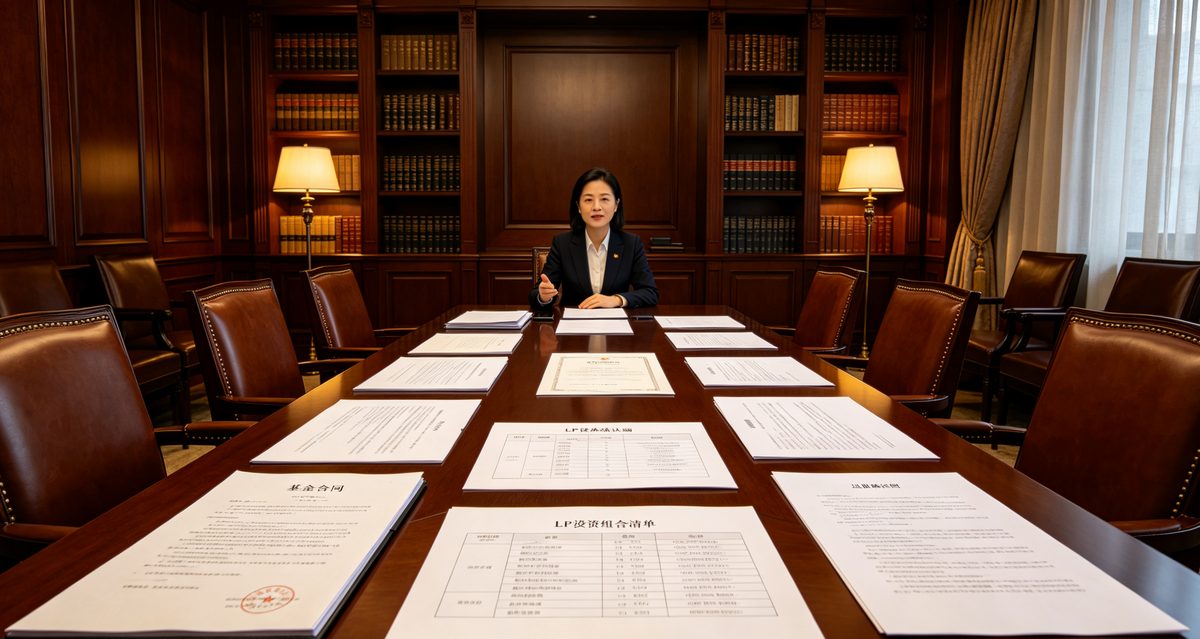
The fourth pitfall: signing a "settlement agreement" only to get yourself tangled up in it.
Last week, there was also a decoration contractor surnamed Zhou who came by. He had done a renovation project for a hotel in Longgang, and the client owed him 380,000 yuan in project payments. After the hotel owner was sued, he proactively sought a settlement, signed a reconciliation agreement, and promised to repay in 12 installments, so Zhou withdrew the lawsuit. However, after only three installments were paid, the payments stopped again. When Zhou tried to sue again, the court said that since they had signed a reconciliation agreement, the original claim for project payments had already been modified, and the statute of limitations would need to be recalculated based on the new agreement.
Originally, Old Zhou had an ironclad settlement statement in hand, but now it has become an extra hassle.
Before signing the settlement agreement, be sure to have a lawyer review it.The agreement includes protective clauses such as "If the obligations are not fully performed on time, the creditor has the right to resume enforcement of the original debt and impose additional penalty interest on a daily basis" and "This agreement does not exempt the guarantor's liability for the original debt." Do not sign on a whim; only after signing will you realize you have given up key rights.
What exactly does a professional lawyer do in contract disputes?
At Guangdong Zhiming Law Firm, we have handled too many similar cases. Director Lawyer Shen Jinlong has 22 years of practicing experience, holds a master's degree in economics from Fudan University, and previously served as a senior executive at a large state-owned enterprise. So when he reviews contract disputes, he not only looks at legal provisions but also sees through the commercial logic—why did the other party breach the contract? Was it a broken capital chain or intentional default? Where are their assets hidden? Which enforcement path is the most direct?
A case I handled myself: A technology company in Shenzhen was owed 1.2 million yuan in payment by its partner. The other company had no money on its books, but through investigation, we discovered that its actual controller owned a property in Bao'an and showed signs of transferring funds. On the day we filed the lawsuit, we applied for pre-litigation preservation and had the property seized. At the same time, we requested the court to obtain the bank statements of the past two years. In the end, we found that 600,000 yuan had been transferred through affiliated companies, and the court determined that the debtor had maliciously evaded debt repayment, applying punitive damages provisions. From filing the case to full recovery of the payment, it took only four months.
Lawyer Shen often tells us: "Winning a contract lawsuit isn't about reciting legal provisions—it's about building the evidence chain, tracing property leads, and mastering psychological strategy." This is also the core of the "Zhiming Artistic Litigation Method" theoretical system独创 by Zhiming Law Firm—treating litigation as an art, where every case requires finding the most favorable entry point and approach for the client.
Attorney Li Yuming at our law firm specializes in construction engineering and real estate dispute resolution. In Shenzhen, property sales and leasing disputes often involve subject matters worth millions or even tens of millions of yuan, encompassing issues such as mortgages, property seizures, dual sales of the same property, and chain defaults. Without the guidance of an experienced attorney, ordinary parties simply cannot untangle the legal relationships involved.
Contract Dispute FAQ
1. If the other party owes money and refuses to repay, should a lawyer's letter be sent before filing a lawsuit?
A lawyer's letter has a psychological deterrent effect, but it is not a legally required procedure. If the other party is facing financial difficulties rather than deliberately delaying payment, sending a letter may facilitate a settlement; if the other party is transferring assets, do not send a letter to alert them—instead, file a lawsuit directly and apply for property preservation.
2. The contract stipulates a "court of jurisdiction." Can I choose not to file a lawsuit in that court?
In principle, agreed jurisdiction must be respected. However, if the agreed court has no actual connection to the contract (for example, two Shenzhen companies agreeing to file a lawsuit in Hainan), you may argue that such a clause is invalid. If the amount in dispute is not significant, you may also consider filing the lawsuit at the court of the defendant's domicile.
3. How much does it cost for bail pending trial in Shenzhen? Can your law firm also handle criminal cases?
The amount of bail guarantee money for release on bail pending trial is determined by the public security authorities based on the nature of the case and the degree of social danger, typically ranging from several thousand to tens of thousands of yuan, and is not a "fixed price." The criminal defense team at Zhiming Law Firm has handled numerous economic crime cases. Applying for release on bail pending trial is not solely about the amount; more importantly, it depends on whether the defense lawyer can submit compelling legal opinions within the golden 37-day window.
4. What is the statute of limitations for contract disputes? From when is it calculated?
The statute of limitations for ordinary contract disputes is three years, calculated from the date you knew or should have known that your rights were infringed. If performance is stipulated in installments, the limitation period is calculated separately from the due date of each installment. Exceeding the limitation period may result in losing the case, so be sure to take collection or litigation actions within the time limit.
5. I am a small business owner in Nanshan District, Shenzhen, and the contract amount is not large. Is it necessary to hire a lawyer?
A small claim amount does not mean low risk. A contract with poorly designed clauses could cost you the entire client and future business opportunities. Zhiming Law Firm has launched a year-round legal advisory service tailored for small and medium-sized enterprises, at a cost far lower than hiring in-house counsel—it's like bringing on a seasoned legal team with 26 years of experience as your external brain.
The essence of contract disputes is a battle of interests after trust breaks down. You are striving in Shenzhen, earning hard-earned money, and every bit of profit comes with great effort. When faced with a dispute, do not panic or act recklessly. Find a professional lawyer to help you organize the chain of evidence, design litigation strategies, and trace property leads, so that you can maximize the protection of your rights and interests.
If you are facing contract disputes, debt collection, or property disputes, you are welcome to visit Guangdong Zhiming Law Firm for a consultation. Our address is Room 1802, Tower A, Xintian Century Business Center, Shixia North Second Street, Futian District. Phone: 0755-25986969. Bring your contracts and materials, and we will review them together to determine the next steps.
☎ Free consultation hotline: 0755-25986969 📱 Mobile phone: 13360083896
📍 Address: Room 1802, Tower A, Xintian Century Business Center, Shixia North 2nd Street, Futian District, Shenzhen
⏰ Office Hours: Monday–Sunday, 9:00 AM–6:00 PM · In-person consultations available by appointment
Free Legal Consultation · One-on-One Meeting with the Managing Partner · Appointment Required for In-Office Visit