Shenzhen Business Owner Signs RMB 3.8 Million Supply Contract; Counterparty Becomes Unreachable for 143 Days After Taking Delivery—Lawyer’s Review: The Contract Was Missing This One Line
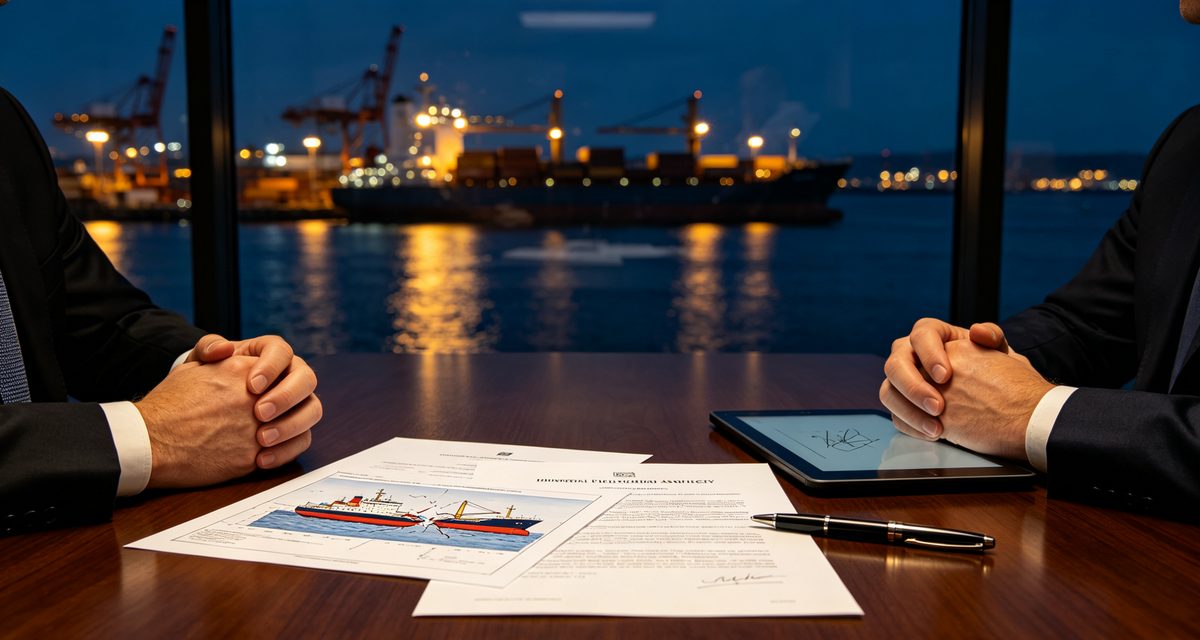
Last Wednesday afternoon, Old Chen, a long-time client in the electronic components business, pushed open my door. His shirt collar was loose, and he was clutching a stack of delivery receipts, which he slapped down on my desk. "Old Shen, this shipment worth 3.8 million—the other side took it, and now they're gone. They won't answer calls, won't reply on WeChat. The company receptionist says the boss is on a business trip. What kind of trip? To outer space?"
I poured him a cup of tea and told him to take his time. The situation wasn't complicated: at the end of last year, Mr. Chen signed a Procurement Framework Contract with a tech company in Bao'an, agreeing to supply goods in three batches, with payment due within 30 days after delivery and acceptance. The first two batches went fairly smoothly—though payment was a few days late, the money did arrive. The third batch, worth 3.8 million yuan, was delivered on December 20th last year. The other party's warehouse keeper signed the receipt, and then—nothing. 143 days have passed, and not a single cent has been paid.
Mr. Chen said: "I went to them three times. The first time, they said the finance person was on leave. The second time, they said the system was being upgraded. The third time, they told me straight out, 'The company is having difficulties right now, just wait a little longer.' I've waited until I'm blue in the face, and now they won't even let me through the door."
I skimmed through his contract and got a rough idea. This isn't an isolated case. In Shenzhen's contract disputes, scenarios like Mr. Chen's—where the goods are delivered but the payment vanishes—play out almost every week.
**Pitfall #1: A contract that's too "clean" is as good as no contract at all**
Many bosses sign contracts on just a single sheet of A4 paper that says, "Party A purchases XX from Party B, unit price XX, quantity XX, total price XX, payment upon delivery." It looks clear enough, but when something actually goes wrong, you'll find that this piece of paper is completely useless.
That's exactly how Mr. Chen's contract is. No late payment penalty clause, no dispute resolution method, no service address, and not even the other company's unified social credit code was written in full. I asked him: "You want to sue—which court will you go to? It's not specified in the contract. The other party says they never received the goods—how do you prove it? The delivery note only has the warehouse keeper's signature, not the company seal. The other party says the goods have quality problems—how do you refute that? The contract doesn't specify acceptance standards."
This is the most common first pitfall in Shenzhen contract disputes: **incomplete contract terms, which make it impossible to provide evidence when defending your rights**. You think having a contract in hand means everything is fine, but in reality, once you get to court, this contract may not even be able to prove "who owes whom money."
**The second pitfall: Delivery notes, reconciliation statements, and WeChat records—you think they're useful, but they may not be.**
Mr. Chen has the delivery note with the warehouse keeper's signature. But the problem is, who is this warehouse keeper? The other company could argue, "This person left long ago, we never received the goods." What do you do?
There are also WeChat records. In the WeChat chat between Mr. Chen and the other party's procurement manager, the other party said, "The goods have been received, please give us a few more days." But for WeChat records to serve as evidence, you need to prove that this WeChat account belongs to an employee of the other company, and that it was during their employment and an act performed in the course of their duties. If the other party says, "This person left the company six months ago," you'll have to go through a whole lot of trouble again.
The second pitfall in Shenzhen contract disputes: **An incomplete evidence chain—isolated pieces of evidence cannot form a closed loop.** You might think a delivery note is enough, but in reality, from "who delivered it" to "who received it" to "who acknowledged it," every link must have a legally recognized connection point.
**The third trap: delay, until you give up on your own.**
Mr. Chen, during these 143 days, you actually missed the best opportunity. When the other party says, "The company is in difficulty, just wait a little longer," this is often a delaying tactic. By the time you wait until it's too late, the other party may have already transferred assets or simply deregistered the company.
In Shenzhen company dissolution disputes, the most common scenario is this: a creditor discovers that the company owing them money has suddenly "vanished," while the shareholders have started a new company elsewhere, leaving the debt behind in that empty shell. Who do you go after? The shareholders? Legally, a company is an independent legal entity, and shareholders bear limited liability. Unless you can prove that the shareholders abused the company's independent status, that money is as good as gone.
**What should you do? Three practical recommendations**
First, **make the contract a bit "thicker."** Don't cut corners—write everything that should be written: late payment penalties (starting at 0.05% per day), the court with jurisdiction over disputes (choose your own location), a confirmed service address clause (include the other party's registered address and actual business address), and acceptance standards and deadlines. These few lines can save you hundreds of thousands in legal fees when it matters.
Second, **evidence must form a chain**. Delivery notes should be stamped with the official seal or the special seal for contracts; if that's not possible, have the other party send a WeChat message saying "goods received, confirmed correct." Reconciliation statements should be prepared regularly, with the other party's finance department stamping them or the legal representative signing each month. WeChat records should be kept on the original device—don't just take screenshots.
Third, **act "fast."** The first time the other party says "wait a little longer," you should become alert. Sending a lawyer's letter, applying for property preservation, and filing a lawsuit—the faster these actions, the better. Property preservation is the most effective pressure tactic in Shenzhen contract disputes—once the other party's account is frozen, many bosses suddenly find they are no longer "in difficulty."

Speaking of the role of lawyers, let me give you an example. Last year, our Zhiming Law Firm handled a similar case. The client was a small mold-making company in Longhua, and they were owed 2.1 million yuan for goods, with the other party making all sorts of excuses to delay payment. After we took the case, we immediately applied for pre-litigation property preservation and froze two of the other party's bank accounts and a piece of real estate. As a result, on the 11th day after the case was filed, the other party came to us proactively to settle, paying the full 2.1 million yuan in one lump sum, including the penalty for breach of contract.
This case was handled by Director Lawyer Shen Jinlong together with me. Lawyer Shen has practiced law in Shenzhen for 22 years, and previously held an economist qualification for 31 years. He holds a master's degree in economics from Fudan University and formerly served as a senior executive at a large state-owned enterprise. When he looks at contract disputes, he doesn't just examine the legal clauses—he also looks at the business logic. Whether the other party truly has no money or is just pretending not to, whether they're facing operational difficulties or maliciously evading debt—he can tell about seventy or eighty percent of it at a glance. Zhiming Law Firm was founded in 2000 and has been rooted in Futian for 26 years. Its original "Zhiming Art of Litigation" theoretical system, put plainly, means this: we don't go head-to-head with you. Instead, we find your most painful point and use the smallest cost to leverage the largest recovery.
Lawyer Li Yuming is also an expert in this area, with his main focuses being construction engineering, real estate sales and leasing, and corporate debt and credit. He often says to me, "When Shenzhen bosses chase debts, what they fear most is not that the other party has no money, but that they themselves don't know when to take action."
**FAQ**
**Question: Are Shenzhen law firms reliable? How can you tell?**
Answer: Don't just look at advertisements. Look at three things: First, how long the law firm has been established. Among Shenzhen's top ten law firms, established firms like Zhiming, founded in 2000, have weathered at least four economic cycles and have seen every kind of case. Second, the practicing years and background of the lead lawyer. A purely legal background and a "law + economics" composite background offer different perspectives on problems. Third, whether there are similar cases. Ask for the judgments, don't just take his word for it.
**Question: How long does it generally take from filing a contract dispute lawsuit to actually getting the money?**
Answer: Shenzhen courts are actually quite efficient now. For a simple contract dispute, it typically takes three to six months from filing to a first-instance judgment. If you add property preservation, the other side is under heavy pressure, and many cases get resolved during the pre-litigation mediation stage. Take the 2.1 million yuan case we handled, for example. From preservation to recovery of payment, it took less than two months in total. The key is not the court, but the evidence and strategy.
**Q: The other company is going to be deregistered. What should I do about the debt they owe me?**
Answer: This is a typical scenario in a Shenzhen company dissolution dispute. Check the business registration information immediately. If the company is still in the liquidation stage, file a claim. If it has already been deregistered, check the liquidation report to see whether the shareholders promised to assume responsibility for the company's debts. If there is such a promise, sue the shareholders directly. If not, check whether there was any capital withdrawal or false liquidation. This work is highly specialized, so don't fumble around on your own.
**Q: Can WeChat chat records be used as evidence?**
Answer: Yes, but with conditions. To prove that the WeChat account belongs to the other party, you must keep the original phone and cannot rely solely on screenshots. It is best to have the other party explicitly say in the chat, "I am [Name] from [Company], and I confirm that I owe you [Amount]." If the other party denies it, you can apply to the court to retrieve the real-name information associated with the WeChat account.
**Question: What is an appropriate amount to agree on for liquidated damages?**
Answer: Shenzhen courts generally support 0.05% per day, which is about 18% annualized. If you write it too high, the court may reduce it; if you write it too low, and the other party drags things out for a year, you won't even cover the interest. It is recommended to write "0.05% per day," and add: "including but not limited to attorney fees, preservation fees, and travel expenses." That one sentence can, at a critical moment, get you tens of thousands of yuan more back.
We filed Mr. Chen's case last week, and the property preservation order was approved. Yesterday he called to say the other party's boss added him on WeChat and said, "Let's talk things through." See that? 143 days of silence, and three days after the account was frozen, suddenly it's "let's talk things through."
In Shenzhen, when you run a business, contracts are your moat. You can't tell in peacetime how deep you've dug it—only when the enemy arrives do you find out whether it can save your life.
Guangdong Zhiming Law Firm
Room 1802, Tower A, Xintian Century Business Center, Shisha North 2nd Street, Futian District, Shenzhen
Phone: 0755-25986969
☎ Free consultation hotline: 0755-25986969 📱 Mobile phone: 13360083896
📍 Address: Room 1802, Tower A, Xintian Century Business Center, Shixia North 2nd Street, Futian District, Shenzhen
⏰ Office Hours: Monday–Sunday, 9:00 AM–6:00 PM · In-person consultations available by appointment
Free Legal Consultation · One-on-One Meeting with the Managing Partner · Appointment Required for In-Office Visit