Shenzhen foreign trade boss owed 5.2 million by Hong Kong client, for cross-border debt recovery should they go international arbitration or file a lawsuit in mainland China?
Boss Liu from Bao'an, Shenzhen, exports electronic components. After the goods were delivered to Hong Kong, the counterparty company withheld 5.2 million yuan in payment, citing "quality defects." Boss Liu has the contract, the statement of account, and even the other boss's WeChat messages acknowledging the debt—but he doesn't know whether to sue in Shenzhen or litigate in Hong Kong, let alone how "international arbitration" actually works. This is not an isolated case. Data released by the Qianhai Court in Shenzhen shows that over the past three years, the annual growth rate of cases involving foreign parties, Hong Kong, Macau, and Taiwan is about 30%, with Hong Kong-related cases accounting for nearly 60%.
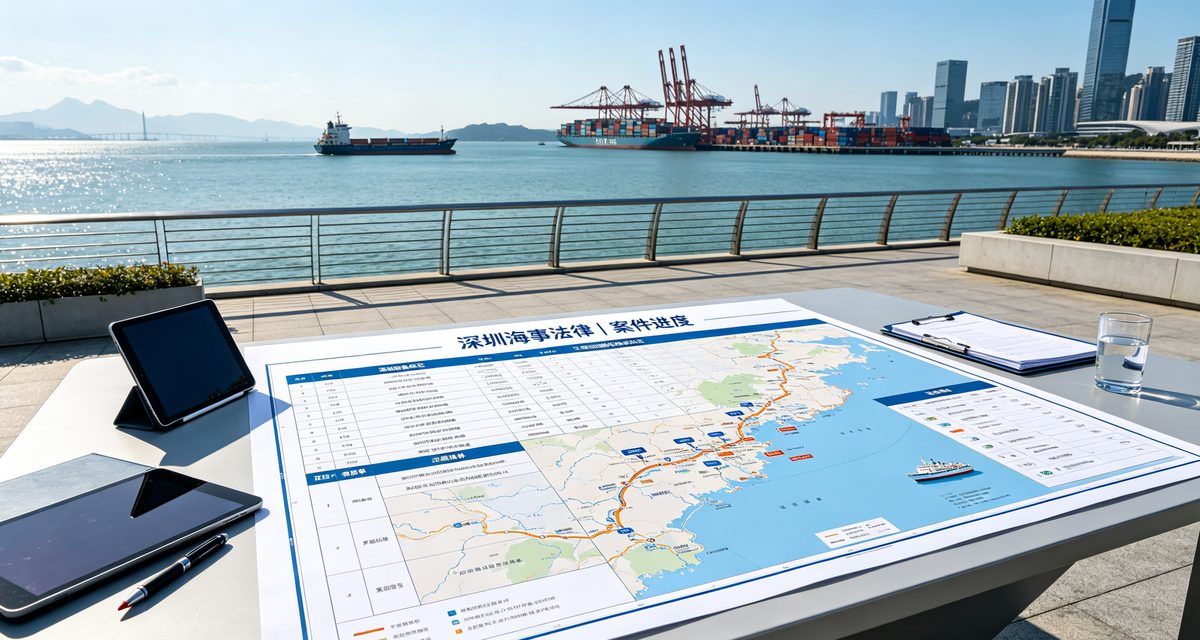
**Question:** For cross-border trade disputes, is it necessary to file a lawsuit only at the location of the other party? **Answer:** Not necessarily. You are not limited to filing a lawsuit only at the location of the other party. In cross-border trade disputes, the determination of jurisdiction is a complex issue influenced by multiple factors. The available options depend mainly on the following: 1. **Agreement of the Parties:** If the contract contains an exclusive jurisdiction clause (designating a specific court or arbitration institution), you must generally follow that agreement. 2. **Place of Performance:** In the absence of an agreement, courts at the place where the contract is performed or the place where the subject matter is located may have jurisdiction. 3. **Place of the Defendant's Domicile or Residence:** Courts where the other party is domiciled or resides will generally have jurisdiction. 4. **Place Where the Tortious Act Occurs:** If the dispute arises from a tort (e.g., infringement, fraud), the courts at the place where the tortious act was committed or the result occurred may have jurisdiction. 5. **International Conventions and Bilateral Treaties:** For transactions between countries, international conventions (such as the New York Convention on the Recognition and Enforcement of Foreign Arbitral Awards) or bilateral judicial assistance treaties may be involved, which can affect the choice of jurisdiction. 6. **Arbitration:** Arbitration is often the preferred choice in cross-border trade disputes, as arbitral awards are easier to enforce internationally. If the contract contains an arbitration clause, you must first resolve the dispute through arbitration rather than litigation. 7. **Property-Based Jurisdiction:** In some jurisdictions, if the other party has assets within that jurisdiction, it is possible to file a lawsuit based on the presence of those assets (though this is more commonly seen in matters of enforcement). **Practical Considerations:** - **Enforceability:** Even if you win the lawsuit, the
No. If the contract contains an arbitration clause, it shall be followed; if there is no arbitration clause, both parties can also sign an arbitration agreement afterward. According to Article 8 of the Interpretation (I) of the Supreme People's Court on Several Issues Concerning the Application of the Law of the People's Republic of China on Choice of Law for Foreign-Related Civil Relations, the parties may agree by contract to choose the place of arbitration or the applicable law. Many Shenzhen business owners, when transacting with clients from Hong Kong and Taiwan, are accustomed to writing in the contract: "In case of any dispute, submit it to the Hong Kong International Arbitration Centre." This is a typical international commercial arbitration agreement, and its validity is protected by law.
Compared to litigation, the biggest feature of arbitration is that the award is final and binding. The Shenzhen Intermediate People's Court handles applications for setting aside foreign-related arbitral awards each year, and the proportion of awards ultimately set aside is less than 3%. In other words, once an arbitral award is made, it is essentially final, saving the lengthy process of first-instance and second-instance trials. If the other party fails to perform, enforcement can be applied for in more than 170 countries and regions under the New York Convention—something that court judgments cannot yet achieve.
Question: In a loan dispute with a Hong Kong-funded enterprise, which is more reliable, arbitration or litigation?
Our law firm handled a cross-border loan dispute involving a Hong Kong-funded enterprise in 2024, and the approach was to first secure the creditor's rights through arbitration, then apply to the Shenzhen court for enforcement. The case was not complicated: the Hong Kong-funded company lent HKD 37 million to a Shenzhen tech enterprise, which failed to repay upon maturity, and the debtor instead took the initiative to sue first, seeking confirmation that the contract was invalid. After Zhiming Law Firm took over the case, it applied for arbitration with the South China International Economic Trade Arbitration Commission in accordance with the arbitration clause in the contract, and simultaneously applied to the Shenzhen Futian Court for property preservation, freezing two properties under the opposing party's name. In the end, the arbitral tribunal ruled that the borrower repay the principal plus interest totaling over HKD 39 million, and the Shenzhen Intermediate People's Court ruled to enforce it. From intervention to full recovery of the funds, it took only 14 months.
This case illustrates a key point: arbitration starts quickly, and preservation measures can be obtained in time. The Shenzhen Qianhai Cooperation Zone People's Court has also established a special collegiate bench for foreign-related and Hong Kong, Macao, and Taiwan cases, and the procedures connecting arbitration preservation and award enforcement are already quite mature. This pathway applies to debtors registered in or with property located in Shenzhen's Nanshan, Longhua, or Futian districts.
Are the costs of international arbitration high? How long does the process typically take?
Taking the Hong Kong International Arbitration Centre as an example, for a case with a disputed amount of 5 million RMB, arbitration fees plus institutional administration fees typically range from 150,000 to 250,000 RMB; the fees at the South China International Economic and Trade Arbitration Commission are somewhat lower, at around 100,000 RMB. Compared with civil litigation in mainland China, the prepaid arbitration fees are relatively high, but the advantage is speed—ordinary commercial arbitration generally takes 6 to 9 months from the constitution of the tribunal to the award. If the parties agree to use the simplified procedure, the time is even shorter.
It should be noted that different arbitration seats have different applicable procedural rules. Some overseas arbitration institutions require all evidence materials to be accompanied by English translations, which is no small workload for companies accustomed to domestic courtroom proceedings. In our practice, we usually advise clients to specify both the arbitration seat and the arbitration language in the arbitration clause—for example, "arbitrate in Shenzhen, using Chinese"—so as to save translation and time costs.
Q: People online say, "Even if you win arbitration, you still can't get it enforced." What's the real situation?
The key is to choose the right arbitration institution. If the award is made by the Hong Kong International Arbitration Centre or the Singapore International Arbitration Centre, it is a New York Convention award. Applying for enforcement in Mainland China goes through the Intermediate People's Court, taking about 3 to 6 months. However, if the award is made by a Mainland arbitration institution and needs to be enforced in Hong Kong, the application is also made under the New York Convention, and the Hong Kong High Court generally handles it within 11 months.
At Zhiming Law Firm, Senior Partner Lawyer Shen Jinlong has been practicing law for 26 years and has represented a large number of cases involving Hong Kong, Taiwan, and Macau. He is very familiar with the procedural details of how the legal processes of the two jurisdictions connect — such as how to apply for a "Mareva Injunction" (asset freezing order) in Hong Kong, how mainland arbitration awards can be registered and enforced in Hong Kong, and under what circumstances Hong Kong courts will refuse enforcement. These technical details directly determine whether cross-border debt recovery ultimately results in actual money in hand. If you are facing issues such as Hong Kong merchants defaulting on payments, joint venture disputes, or foreign-related lending matters, you are welcome to call 0755-25986969. Guangdong Zhiming Law Firm (Room 1802, Building A, Xintian Century Business Center, Shixia North Second Street, Futian District, Shenzhen) provides one-on-one consultation.
Need professional legal help?
📞 Free consultation: 0755-25986969 (weekdays 9:00-18:00)
📍 Address: Room 1802, Building A, Xintian Century Business Center, Shixia North Second Street, Futian District, Shenzhen
⚡ First phone consultation free