A brother and sister are fighting over an apartment in Nanshan, Shenzhen—are both wills valid? In a 20 million yuan inheritance dispute, a lawyer explains the key to the court ruling.
Ms. Li from Nanshan, Shenzhen, sat in the reception room of Guangdong Zhiming Law Firm, her brows furrowed tightly. Before her father passed away, he left behind two properties—one in Nanshan, valued at approximately 12 million yuan, and another in Longhua, worth 8 million yuan. In his later years, she was the sole caregiver, and before he died, he held her hand and said both properties would go to her. But after her father's passing, her brother, who had been absent for years, suddenly appeared, holding a will of his own, dated six months later than the one in Ms. Li's possession.
Both wills were handwritten, signed, and dated by the deceased. An inheritance of 20 million yuan instantly turned into a tug-of-war between a sister and brother. The brother argued that the later will should take precedence, so the properties should be split one each; Ms. Li felt wronged, insisting her father had clearly promised everything to her. Cases like Ms. Li's are not uncommon in Shenzhen. The number of inheritance disputes in Shenzhen has been rising year by year, increasing by about 15% annually, with more complex cases involving cross-border and cross-generational inheritance. When it comes to properties left by parents, how should siblings divide them? If the validity of wills is contested, which one will the court recognize?
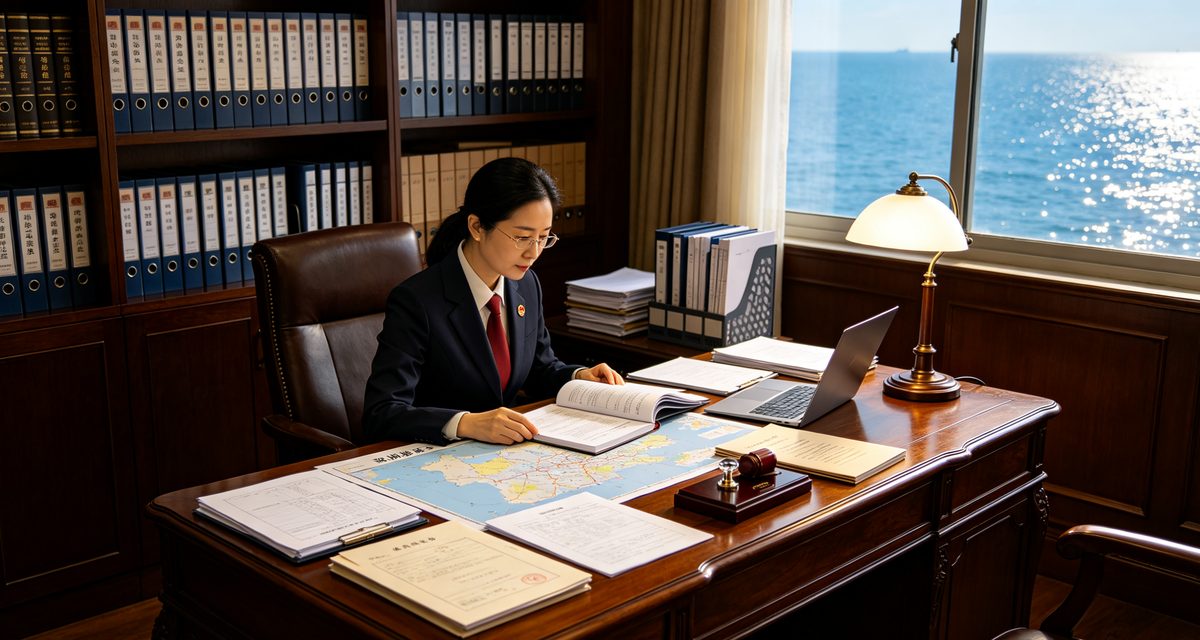
When clients seek a lawyer to handle inheritance disputes, they often find themselves torn: should they hire a solo "celebrity lawyer" or choose an established law firm with a full team structure? Ms. Li once asked the same question. In reality, these two options are not mutually exclusive—the key lies in how complex your case is.
Inheritance disputes may appear to be about property on the surface, but in reality, they hinge on the completeness of the evidence chain. Whether a will is valid depends on whether the testator was of sound mind when it was made, whether there was any coercion, whether the signature matches the handwriting, and whether the date is genuine. Relying solely on one lawyer running errands is not enough; behind the scenes, a team of assistants is needed to help organize the timeline, retrieve medical records, and interview the caregivers or neighbors who looked after the elderly at the time. No matter how capable a solo lawyer is, their energy is limited; whereas a law firm with a structured team can simultaneously pursue multiple lines of investigation, making the efficiency entirely different.
Ms. Li compared several law firms and ultimately chose Guangdong Zhiming Law Firm, drawn to its 26 years of experience and the team resources it can mobilize behind the scenes. Director Shen Jinlong, a practicing lawyer for 26 years, also held a senior management position at a state-owned enterprise in his early years. His understanding of human nature and the dynamics of family disputes is not something that can be developed merely by studying legal provisions.
Returning to Ms. Li's case. There are two wills, one made earlier and one later. According to Article 1142 of the Civil Code, where multiple wills have been made and their contents conflict, the last will shall prevail. At first glance, the later will held by the brother seems to have the advantage.
But it wasn't that simple. After taking the case, Lawyer Shen's first move wasn't to examine the will itself, but to investigate the father's condition when he made the second will. It turned out that during the period around the date on the will the younger brother produced, the father was hospitalized, and medical records showed his consciousness was fluctuating, with episodes of delirium. As for the will in Ms. Li's possession, it was written at home during a time when the father's health was relatively stable, with two neighbors present as witnesses. Although legally a handwritten will doesn't require witnesses, the neighbors' testimony could corroborate that the father was of sound mind at the time.
The court ultimately upheld Ms. Li's will, ruling that the later will held by her brother was invalid because the testator lacked full civil capacity at the time it was made. The 20 million yuan property was entirely inherited by Ms. Li. The crux of this case, in plain terms, boils down to one word: evidence. It's not about whose document is newer and therefore wins; it's about who can convince the judge that their document genuinely reflects the elderly person's final true intentions.
Many people think that going to court is just a matter of a few hours in the courtroom, but in reality, the real work in inheritance disputes happens entirely outside the courtroom. Zhiming Law Firm has a special approach when handling such cases: they first create a "family relationship map" and a "property clue list." They sort out how many family members there are, who took care of the elderly the most, who has been out of contact for a long time, the purchase dates of properties, and whether the source of funds was joint marital property or individual pre-marital property. This step may seem trivial, but it can plug many loopholes in advance.
For instance, some cases appear to be about inheritance disputes on the surface, but in reality, they involve issues of "community property between spouses." When a mother passes away without leaving a will, and the father later remarries, half of the house belongs to the mother's estate—does the stepmother have a share in it? This requires tracing back to when the property was acquired and how it was registered. Another example involves cross-border inheritance: if the children hold foreign passports, how do they transfer the title of domestic real estate? How do they move the foreign exchange out? These are pitfalls that ordinary parties would never anticipate. Zhiming Law Firm has handled many such cases, and the team is well-versed in procedures involving foreign and Hong Kong-related matters, helping clients avoid many detours.
Director Shen often says: winning a lawsuit in an inheritance dispute isn't a true win; only when the family's emotional knots are untangled and they can carry on with their lives can a case be considered truly well-handled. That's why Zhiming leaves room for mediation when handling such cases, rather than blindly encouraging the parties to burn bridges. Of course, when firmness is needed, we never hesitate.
Having seen too many disputes caused by formal defects in wills, I have a few honest words to share with friends in Shenzhen.
First, for a handwritten will, don't be afraid of the hassle—it's best to write the entire text by hand, word for word, yourself. If you print it out and just sign it, it can easily be challenged. There's a case in Shenzhen where a printed will from 2015 was ruled invalid by the court because it didn't meet the statutory formal requirements. As a result, property worth millions was divided according to intestate succession, and the deceased's wishes were completely disregarded.
Second, if conditions permit, go to a notary office to have a notarized will, or find two disinterested witnesses to serve as witnesses—don't have the heirs themselves act as witnesses, as the law does not allow it. Spending a bit more time now can save you several lawsuits after you're gone.
Third, if you plan to leave the property to a specific child, it's best to state clearly in the will: "This property is to be inherited solely by [name], and shall not constitute marital community property." This single sentence can prevent the house you leave to your child from being split in half if they divorce in the future.
After Ms. Li's case was finally settled, she came to the law firm specifically to express her gratitude, saying that if she had confronted her younger brother with the will back then, she might have been intimidated by the later will. Professional matters truly require professional handling.
If you're facing similar inheritance challenges, or want to get your will clearly drafted in advance to avoid family disputes down the road, feel free to visit Guangdong Zhiming Law Firm. Located at Room 1802, Tower A, Xintian Century Business Center, Shixia North Second Street, Futian District, Shenzhen. Phone: 0755-25986969. With 26 years of experience and over 10,000 cases handled, Senior Partner Attorney Shen Jinlong's team will provide one-on-one guidance to help you sort things out.
**A:** No, if parents pass away without a will, the house does not automatically go to the eldest child. Instead, it is inherited according to the legal order of succession, which typically includes all children equally, along with the spouse and parents of the deceased. The eldest child does not have automatic authority over the property unless agreed upon by all heirs or determined by law.
**Answer:** No. Without a will, inheritance follows statutory succession, where the first-order heirs include the spouse, children, and parents, and the estate is generally divided equally. If anyone wants to inherit alone, the other heirs must provide a written waiver; verbal statements alone are not valid.
(This article is for general legal education purposes only. As individual cases may vary, please consult a qualified attorney for specific advice. Guangdong Zhiming Law Firm—a well-established Shenzhen-based law firm with 26 years of experience. Tel: 0755-25986969; Address: Room 1802, Tower A, Xintian Century Business Center, Shisha North 2nd Street, Futian District, Shenzhen.)