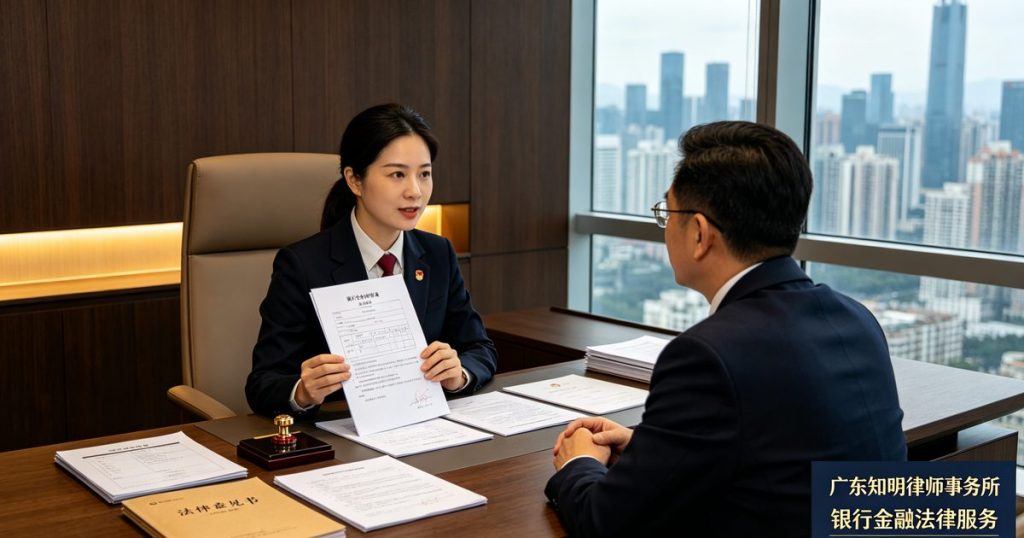
A Shenzhen company was fined 2 million yuan and disagrees with the decision—how should a "citizen suing the government" case be handled? A lawyer addresses four frequently asked questions in one go.
Last month, a boss running an electronics processing business in Longhua came to our firm. As soon as he walked in, he pulled out an "Administrative Penalty Decision." His company had been fined 2 million yuan by the market supervision bureau over labeling issues on a batch of products processed from supplied materials. He said, "Lawyer, this fine is higher than my entire profit last year. It's not that I don't want to pay it, but I genuinely feel wronged. Still, I'm just a businessman—if I sue a government agency, can I actually win?"

This question is almost asked by every party who comes to consult about administrative litigation. In Shenzhen, suing the government is indeed not easy—according to public judgment documents from the past three years, the plaintiff win rate (including partial support) in administrative litigation at Shenzhen grassroots courts is approximately 15% to 20%. However, please note that this figure includes a large number of cases where parties did not retain a lawyer and went to court on their own. When represented by a professional lawyer, the win rate improves significantly, especially in the two dimensions of procedural violations and review of the chain of evidence.
Now, let me break down the four most frequently asked questions from clients, each one packed with practical insights.
Question: The administrative penalty decision has been issued. Should I choose reconsideration or litigation? Is it necessary to go through reconsideration before filing a lawsuit?
There are two scenarios. For ordinary administrative penalties (such as those imposed by the market supervision bureau, transportation bureau, or urban management bureau), the law grants you a choice: you may either apply for administrative reconsideration to the higher authority or directly file an administrative lawsuit with the court, with no required order between the two. However, there is an exception: if a party disagrees with a "tax dispute," they must first pay the amount or provide security, then apply for reconsideration, and only if dissatisfied with the reconsideration result may they file a lawsuit—this is a special provision under Article 88 of the Tax Administration Law.
As for how to choose, my advice is: if the factual disputes are not significant, but there are clear procedural flaws in law enforcement (such as failing to inform of the right to a hearing or exceeding the case handling deadline), prioritize administrative reconsideration, because it is free and has a shorter cycle (usually a decision is made within 60 days). However, if a large amount of money is involved (such as fines in the hundreds of thousands or millions), or if you have a fundamental disagreement on the application of the law, filing a lawsuit directly is more reliable, because the court's review is more thorough and independent than that of the reconsideration body.
Question: I've heard that it's very difficult to even get a case filed when suing a government department. Is that true? How is the situation in Shenzhen?
The court does indeed "strictly control the entry point," but it absolutely does not mean refusing to accept cases. The key lies in how the complaint is drafted—many parties write their complaints as if they were "appeals" or "petitions for retrial," filled entirely with cries of grievance, yet failing to specify which specific law the defendant's administrative act has violated. Such complaints, when filed at Futian Court or Nanshan Court, are easily subject to requests for correction.
In an administrative lawsuit complaint, the key lies in one word: precision. The plaintiff's qualification must be precise (you must be the direct counterpart or an interested party of the administrative act), the defendant must be precise (you cannot sue the wrong department), the litigation claims must be precise (whether you request the revocation of the penalty or confirmation of its illegality leads to completely different legal effects), and the time limit must be precise (the lawsuit should be filed within six months from the date of knowing the administrative act, as stipulated in Article 46 of the Administrative Litigation Law).
The deadline is especially important to note: a logistics company client in Longgang we dealt with missed the 6-month filing period, and an environmental penalty decision that had a chance of being revoked became a final and binding "ironclad case." After receiving the penalty decision, the first thing to do is not to post complaints on social media, but to check the calendar and calculate the filing deadline.
Question: If we cannot reach an agreement on demolition compensation and the government has issued a "Housing Expropriation Compensation Decision," can we get more money by filing a lawsuit?
This is a typical administrative case in the urban village renovation of Shenzhen. To be frank, the court in principle does not intervene in the substantive amount of compensation standards, but it will strictly review two procedural points: first, whether the expropriation decision has fulfilled the procedure of "social stability risk assessment"; second, whether the compensation plan has been lawfully "publicly announced" and given the opportunity for a "hearing." If either of these procedures is missing, the expropriation decision or compensation decision may be revoked by judgment, requiring the government to make a new one.
During my 26 years of practice at Zhiming Law Firm (under the team led by Director Shen Jinlong), I have handled numerous expropriation compensation disputes in Shenzhen. One particularly representative case came from Bao'an Xixiang: the client was dissatisfied with the classification of the property's nature in the appraisal report, which resulted in a compensation amount that was nearly half of what it should have been. After we stepped in, rather than directly confronting the government over the price, we raised an objection to the selection process of the appraisal agency—the agency had not been jointly selected by the expropriated parties, violating the statutory procedure set forth in Article 20 of the Regulations on the Expropriation and Compensation of Houses on State-Owned Land. In the end, the court revoked the original compensation decision, and after the government renegotiated, the total compensation increased by approximately 40%. Winning cases like this doesn't depend on being loud; it's about pinpointing the "Achilles' heel" of procedural violations.
Question: What exactly makes it difficult for citizens to sue government agencies? If a company has been unfairly fined, how can lawyers help?
The difficulty lies in the "asymmetry" of evidence. Administrative agencies hold law enforcement records, internal approval documents, and testing reports in their hands, while enterprises often only have a single penalty notice. Therefore, the first thing a professional lawyer does after getting involved is to immediately initiate procedures under the Regulations on Open Government Information, applying to obtain the complete law enforcement case file to look for flaws within it—such as whether the signature time on the on-site inspection record was backdated, whether the sampled items sent for testing were properly sealed, and whether the penalty notification was served before the decision was made.
In the first half of this year, our law firm, Guangdong Zhiming Law Firm, handled a typical case involving the revocation of an administrative penalty against a Shenzhen enterprise. A technology company in Nanshan District was fined 2 million yuan by the Market Supervision Administration for suspected false advertising. After accepting the case, we carefully reviewed the law enforcement video and discovered that the officers did not present valid law enforcement credentials at the inspection site, and the receipt date on the delivery confirmation for the "Administrative Penalty Notice" was earlier than the actual delivery date—these two procedural violations directly led to the administrative penalty decision being revoked by a district court in Shenzhen. The company ultimately avoided the 2 million yuan fine. This case also reinforces the principle that administrative penalties are not a "one-shot deal"—procedural justice and substantive justice are equally important.
Administrative litigation is not simply a matter of "citizen suing official"—it is a contest of professionalism and patience. Shenzhen is a city that values rules, and government departments are increasingly emphasizing law-based administration, but that does not mean every penalty decision is flawless. If you are facing an administrative penalty dispute or a compensation dispute over expropriation, don't tough it out alone. Before going to court, take half an hour to bring your administrative penalty decision and notice to Room 1802, Building A, Xintian Century Business Center, Shixia North Second Street, Futian District, and let Senior Partner Shen Jinlong's legal team help you sort through the chain of evidence—that half hour could save you tens of thousands or even millions in real money. Consultation hotline: 0755-25986969.
Regarding the cases mentioned in the article, if you have similar situations as well.
You can directly call 0755-25986969 to talk to a marriage and family lawyer. The first consultation is free. The law firm is located at Room 1802, Building A, Xintian Century Business Center, Shixia North Second Street, Futian District, Shenzhen.