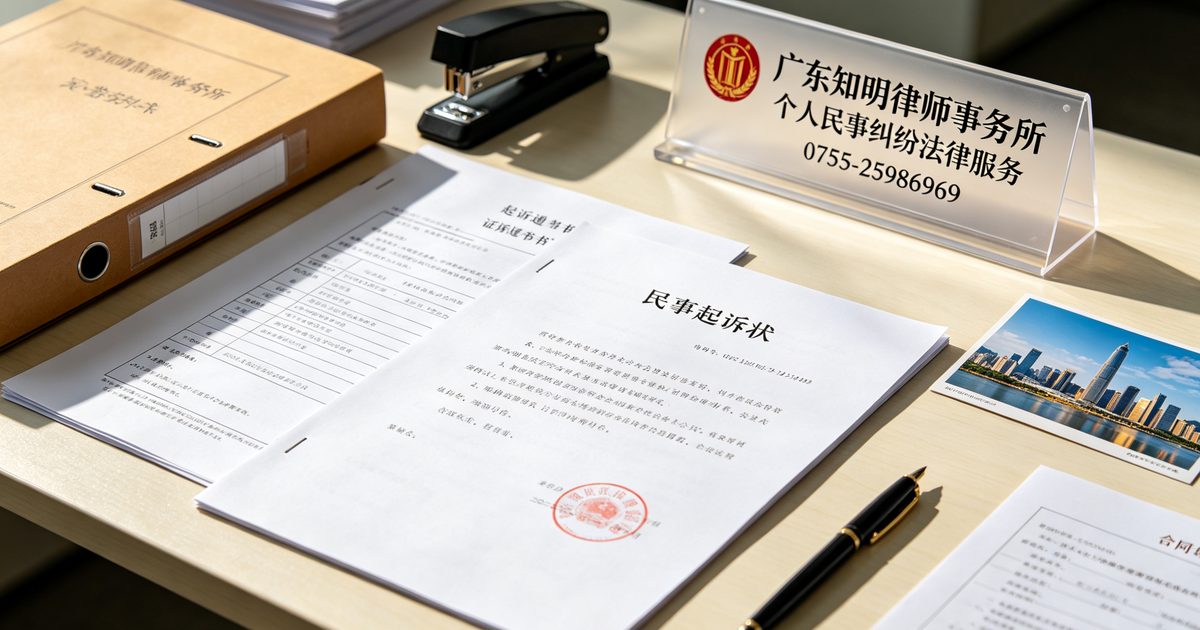
What to do if a family member is detained in Shenzhen in 2026? A Shenzhen real estate litigation lawyer personally relates: The father had just passed away, the sister transferred the house to herself, and the brother went to reason with her but was detained instead.
Last Wednesday afternoon, I was reviewing a construction contract in the office when Xiao Zhou from the front desk knocked and said a Mr. Chen had arrived without an appointment, mentioning "a family member is detained, needing a lawyer urgently." I set down the case files at hand and had him brought in.
Mr. Chen is in his early forties, wearing a dark polo shirt, with red-rimmed eyes. The moment he sits down, he clutches his phone and says, "Lawyer Shen, my sister transferred my father's house into her name. I made a scene at the housing authority office, and now I've been locked up in the police station. My wife is so worried she cries every day. You have to help us with this family matter."
An old house turned biological siblings into enemies.
The matter isn't complicated, but hearing about it leaves a heavy feeling in your chest.
Mr. Chen's father passed away at the end of 2025, leaving behind an old house in Futian, Shenzhen, allocated by his work unit years ago, worth about seven million yuan. There are only two children in the family: him and his older sister. Under normal circumstances, without a will, legal inheritance would mean the two heirs each get half.
But the problem is, after his father passed away, his elder sister took the old father's ID card, household register, and a house sale contract that was allegedly signed by the father before his death, and directly went to the real estate registration center to transfer the house into her own name.
By the time Mr. Chen learned about this, the house transfer had already been completed for over a month. He rushed to ask his sister, and she produced a "sales contract," saying that their father had sold the house to her before his death, with a price of 3 million yuan, and that the money had been "offset against her years of hard work taking care of their father."
Mr. Chen was furious and went to the housing authority to demand the cancellation of the property transfer. The staff told him to go through legal procedures. In his agitation, he argued with the staff and shoved them a few times, and the other party called the police. He spent two days in detention. The first thing he did upon release was to find a lawyer.
The difficulty is not in "selling," but in "signing."
Mr. Chen's initial thought was very simple: "Lawyer Shen, that contract must be fake. There's no way my dad would sell the house to her."
I told him not to rush, and to wait until we get the contract in hand before saying anything more.
When the contract was finally pulled up, the problem emerged: the contract indeed bore his father's signature, and there was a fingerprint pressed right beside it. Mr. Chen's face changed on the spot, and he said, "My dad couldn't have signed this. Two years before he passed away, he had a stroke, and his right hand couldn't even hold a pen."
I believe that, but in court, the judge looks at evidence, not which sibling shouts louder.
The real difficulty in this case lies in:
First, this "sales contract" is complete in form—signature, fingerprint, date, and price are all present. Overturning it won't be easy. Second, his sister still has a stack of payment receipts for their father's medical treatment and transfer records for caregiver fees over the years. If it goes to an inheritance dispute, she will argue that she fulfilled the primary duty of support and demand a larger share. Third, the house has already been transferred and registered, and real estate registration carries the effect of public notice and public trust. The validity of the sales contract must be resolved first before inheritance can even be discussed.
And his sister's side was clearly well-prepared for that. The transfer was timed to occur over a month after their father's death, precisely at the point when all procedures had been completed and legally their father had "left cleanly."
Honestly, this kind of case isn't complicated, but it's draining.
When emotions run high, clients easily get sidetracked. For example, Mr. Chen kept telling me he wanted to report his sister for forging documents and have her sent to jail. I can understand that, but as a lawyer, I need to bring him back to the main point — let's first secure the house, and then talk about anything else.
Strategy set: not going criminal, civil first.
Shen Jinlong Lawyer(That is, me myself) has a habit when handling cases: first systematically organize, then determine the strategy. Our law firm has been in Shenzhen for over twenty years, and having handled many family disputes such as property, inheritance, and divorce cases, the standard procedures are basically solid.
For this case, I set two steps at the time.
First, apply for property preservation to freeze the house.Prevent his sister from actually selling the house to a third party during the litigation. Once the house is sold to a bona fide third party, even if we win the lawsuit, enforcement will be extremely difficult. This is basic practice for Shenzhen real estate litigation lawyers, but many parties don't understand it. They only think of preservation after the court has ruled—too late.
Second step: file an inheritance dispute lawsuit, with the primary claim requesting confirmation that the house is part of the estate, and asserting that the sales contract is invalid.Here's a technical approach: we are not directly arguing for "contract invalidity," but rather asserting that the contract was never established — the father had no genuine intent to enter into the transaction, and the contract was unilaterally forged. The burden of proof should focus on the timing of the signature's creation and the father's handwriting capability at that time.
This is where our law firm’s shrewdness comes in. We didn’t apply for handwriting identification right away, but first requested the court to obtain the hospital medical records, stroke diagnosis certificate, and nursing care records from the two years before our father passed away. Then, using these pieces of evidence as a foundation, we went on to apply for a forensic examination of the time when the
Why this order? Because if we directly authenticate the signature, his sister could claim that the father was "holding the pen while she guided his hand." However, medical records and nursing notes can prove that the father's right hand function was severely restricted—making it impossible for him to complete the signing action without assistance from others.
Once these two sets of evidence land as a combination punch, the scales of the judge's free evaluation of evidence naturally tilt.
On the day of the court hearing, her sister cried.
I won't go into the details of the trial; let me just mention a few key points.
His sister hired a defense attorney who was very firm in court, repeatedly emphasizing that "the father voluntarily sold the house to his daughter, which was his genuine expression of intent," and also stated that his father had said many times before his death that he wanted to "leave the house to the person who took care of him."
During cross-examination, our handwriting identification report was issued with the conclusion that although the contract signature is highly similar to the father's other signatures from his lifetime, there are differences in the distribution of pen pressure during writing. Combined with the medical records of right hand dysfunction, it cannot be ruled out that the signature was completed with assistance from others or formed by tracing.
The judge asked a key question: "The contract was signed in August 2025, where was your father at that time?"
His sister answered, "At home."
The judge pressed: "Who takes care of them at home?"
His sister was silent for a moment, then said, "I've hired a caregiver."
The judge asked again: "Was the contract signed by her father himself, or was it signed on his behalf by someone else?"
His sister's lawyer took up the thread: "The client signs, but a family member signing on their behalf is also possible."
This statement is equivalent to admitting that "when the contract was signed, the father was already unable to sign normally."
The subsequent judgment was relatively favorable: the court determined that the sales contract was not established, and the house remained part of the estate, to be divided between Mr. Chen and his sister according to their statutory inheritance shares, 50% each. Considering that his sister had indeed advanced a portion of the medical expenses, the court, at its discretion, allowed her to deduct the corresponding amount from her share to repay Mr. Chen.
The house was saved, but family bonds were completely shattered.
After the court session, his sister cried in the courtroom corridor. Mr. Chen didn't say anything and turned to leave.

This case offers three warnings to the people of Shenzhen.
First, while the elderly in the family are still alive, be sure to handle the property in advance. Write a will, make a gift transfer, or have the will notarized. Don't think of it as taboo—if you wait until they've passed away to fight over the house, that's when the family's dirty laundry truly gets aired in public.
Second, when faced with something like "what to do if a family member is detained in Shenzhen," don't panic. If Mr. Chen had found a lawyer immediately instead of going to the housing authority to argue on his own, he wouldn't have been detained for those two days at all. Although an administrative detention record does not constitute a criminal offense, sometimes in civil lawsuits, the opposing party will use it to smear you as "impulsive and unreasonable."
Third, when choosing a Shenzhen law firm, don't just look at reputation rankings — look at case-handling experience and team structure. Our Guangdong Zhiming Law Firm was established in 2000, located in Futian, Shenzhen. As a long-standing firm with 26 years of history, we handle over a hundred cases each year involving property disputes, inheritance disputes, and divorce disputes. The lead attorneyShen Jinlong LawyerHas 22 years of practice experience, a master's degree in economics, and previously served as a senior executive at a large state-owned enterprise. Particularly skilled at systematic decomposition when handling difficult and complex cases. As for cases like this one that intersect "sales contract + inheritance dispute," our firm still has more.Lawyer Li Yuming, also battle-hardened in real estate sales and leasing, marriage and family, and criminal defense.
Sometimes clients come and ask, "Lawyer Shen, can I win this case?"
I always say: "First hand the case to me, and I'll tell you how far the chain of evidence can support you. Whether you win or not—the criterion isn't your emotions; it's your evidence."
FAQ: What should I do if a family member is detained in Shenzhen? Common questions on property disputes
Question: If a family member is administratively detained in a property dispute, will it affect subsequent civil litigation?
Answer: Administrative detention is an administrative penalty, not a criminal punishment, and generally does not directly affect the filing or trial of civil litigation. However, in practice, it may have an indirect impact, such as: if the administrative detention is related to the facts of the dispute (for example, damage to property or assault during a dispute), the administrative penalty decision may be used as evidence in the civil case, influencing the court's determination of the facts. Additionally, if the detained person is a party to the litigation, detention may affect their ability to appear in court or collect evidence, requiring authorization to a lawyer or family members to handle the matter. It is advisable to actively cooperate with the administrative investigation, preserve relevant evidence, and timely entrust a lawyer to prepare for the civil litigation.
Answer: Generally, it won't directly affect the substantive trial of a civil case, but the opposing lawyer may use this to question the party's conduct. So I often remind clients: under no circumstances should you have a direct confrontation with the other party, let alone resort to physical violence. For emergencies, call the police; for disputes, consult a lawyer. If you are detained, don't panic — entrust a lawyer as soon as possible to visit and understand the situation, and determine whether criminal offenses are involved. If it's only administrative detention, wait until the term ends and then handle the civil matters.
Question: After parents pass away, I discovered that the property was transferred by siblings without permission. What should I do?
Answer: Quickly find a lawyer to retrieve the property transfer records, and focus on whether the registration is based on a sales contract or a gift contract. If it is a sales contract, check whether the payment vouchers are authentic, whether the signature was made by the person themselves, and whether the parents had civil capacity at the time of signing. At the same time, apply for property preservation as soon as possible to freeze the property and prevent another transfer. Cases like this are not as difficult as imagined, but speed is essential.
Question: How do property litigation lawyers in Shenzhen charge fees?
Answer: Different law firms have different fee standards. Guangdong Zhiming Law Firm adopts a comprehensive billing method based on case difficulty plus the amount in dispute, and generally charges in stages, with the specific amount to be discussed in person. We do not make absolute guarantees, but we will provide clients with a relatively clear budget range.
Question: If an elderly person dies without leaving a will, how is the real estate inherited?
Answer: In statutory inheritance, the first order of heirs are spouse, children, and parents, with shares generally distributed equally. However, if a particular heir has fulfilled the primary duty of support, they may claim a larger share; if someone has the ability and conditions to provide support but fails to do so, they should receive no share or a smaller share. In such cases, evidence is paramount—daily care and concern, bearing medical expenses, and cohabitation arrangements are all important factors the court considers.
Question: How should the reputation rankings of law firms in Shenzhen be viewed?
Answer: Rankings are only for reference. What really matters are two things: first, how many years the law firm has been established and whether it has a solid track record; second, whether the handling lawyer has experience with precedents or mediation in cases similar to yours. Guangdong Zhiming Law Firm has been established for 26 years and has handled over 10,000 cases cumulatively, covering real estate, inheritance, divorce, contracts, equity, intellectual property, criminal defense, and administrative law. I suggest you come to the firm for an in-person consultation and have a lawyer organize your evidence and assess the risks. That is far more useful than looking at a hundred rankings.
One last thing to say.In this city of Shenzhen, a house is worth more than a life—this may sound harsh, but many disputes stem from exactly that. Guangdong Zhiming Law Firm is tucked away in Room 1802, Block A, Xintian Century Business Center, Shixia North Second Street, Futian District. It's not one of those aloof, high-end law firms in fancy office towers, but over the past twenty-six years, we've helped over ten thousand clients untangle their messy real estate and family disputes.
If you or someone close to you is going through a similar predicament—whether it's property being occupied, inheritance being circumvented, being schemed against in a divorce, or even wanting to understand "what to do if a family member has been detained"—you can always make a call to talk it through.0755-25986969。
Disclaimer: The cases referenced in this article are all genuine cases handled by Guangdong Zhiming Law Firm, but the names, identity information, and case details of the parties involved have been desensitized. The images are unrelated to the individuals, so please do not make unwarranted associations.
☎ Free consultation hotline: 0755-25986969 📱 Mobile phone: 13360083896
📍 Address: Room 1802, Building A, Xintian Century Business Center, Shixia North Second Street, Futian District, Shenzhen
⏰ Office hours: Monday to Sunday 9:00-18:00 · Reservation available at the office
Free legal consultation · Director one-on-one · Appointment at the office