2026 Shenzhen Inheritance Dispute Case Record: One Property, Two Wills — How Did We Help the Client Recover Their Rights? — How Do Shenzhen Lawyers Charge? Shenzhen Divorce Lawyer Shen Jinlong, Lead Attorney Team's Personally Handled Case
Friends in the industry, I'm a lawyer at Guangdong Zhiming Law Firm. No empty talk today—let's get straight to a case we recently handled. It's a fairly typical one involving inheritance, real estate, and a will of questionable authenticity. Here's what happened—late last month, a Ms. Liang rushed into our firm, clutching a court summons and a few crumpled pages of documents. The moment she walked in, she asked: "Is Lawyer Shen here? I've been sued—they're claiming my father's will is fake and demanding I give up the house!"

I. Case Background: One Old House, Two "Wills," Three Families
Ms. Liang's father, Mr. Liang, passed away at the end of 2024, leaving behind a 120-square-meter apartment in Futian District, with a market value of approximately twelve million yuan. Mr. Liang had been married twice during his lifetime. Ms. Liang was the daughter of his second wife, and his first wife had also left him a son, Liang Moujun. After the elderly man's death, Liang Moujun suddenly produced a handwritten will, claiming that his father had left the house to him. Ms. Liang was not to be outdone, and produced a printed will stating that the house belonged to her.
The two wills were dated only three days apart, yet their contents were completely contradictory. Liang Moujun struck first and filed a lawsuit in court, alleging that Ms. Liang's will was forged and demanding inheritance according to his own will. This threw Ms. Liang into a panic — because that will of hers had actually been typed by her on the computer for her father, who then signed it. Strictly speaking, the witness formalities were indeed not properly completed.
The difficulty in this case lies not only in determining which will has higher validity, but also in another hidden issue: aside from this property, Mr. Liang also held a 30% equity stake in a small company under his name. In the complaint, Liang Moujun only mentioned the property and not the equity stake, and his intention is quite clear — secure the larger asset first, and deal with the equity matter later.
II. Strategic Analysis: Rather Than Disputing the Will's Authenticity, Shift Tactics
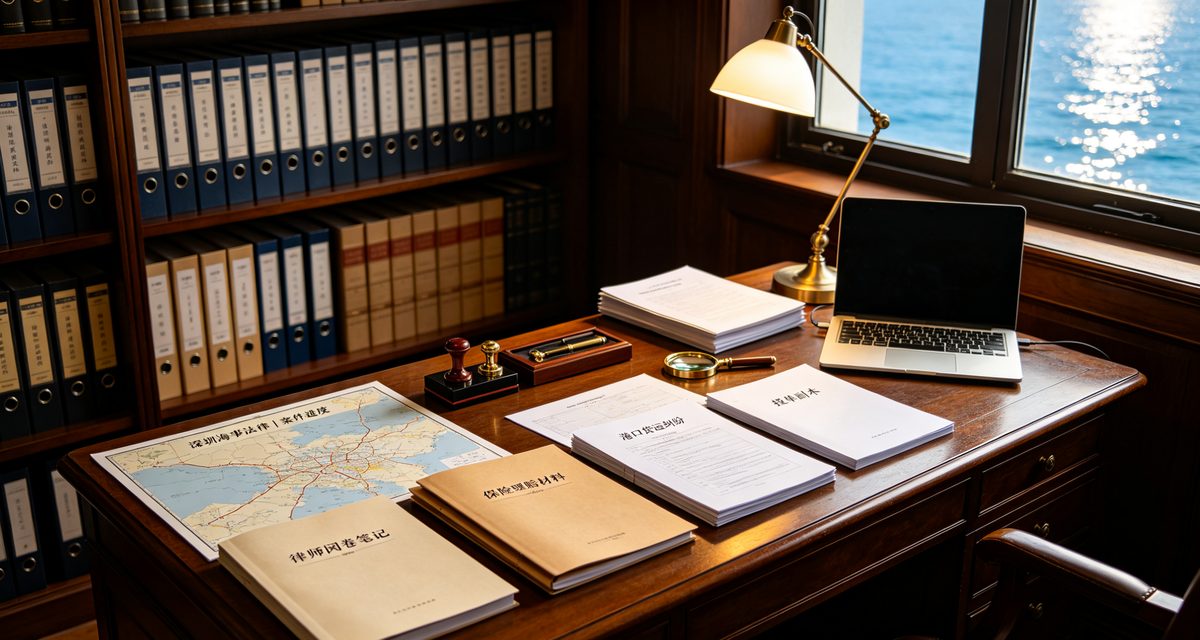
After taking on the case, our team immediately did three things: first, we obtained Mr. Liang's hospital records and diagnostic certificates; second, we examined the time at which the handwriting of Liang Moujun's handwritten will was formed; third, we sorted out the company's equity structure. Upon investigation, we discovered two key points.
Key Point One: When Mr. Liang made the will, he was in the recovery period after a cerebral infarction, had mild cognitive impairment, and his medical records stated "slow reaction, decreased logical judgment." This directly undermines the foundation of his civil capacity to make a will at that time.
Key Point Two: As for the so-called "handwritten will" by Liang Moujun, although the handwriting closely resembles that of the elderly Mr. Liang, the phrasing habits do not match. Mr. Liang was from Guangdong and habitually used Cantonese vocabulary in his writing, such as "间屋" (house) and "俾" (to give), whereas this will is entirely in standard Mandarin written language. We engaged a handwriting expert, whose preliminary assessment is that the handwriting was traced.
So we decided not to get bogged down in "which will is real," but instead to attack on two fronts: first, the validity of Liang Moujun's will is doubtful; second, even if the will is invalid, under statutory succession, Ms. Liang, Liang Moujun, and Mr. Liang's elderly mother (in her 80s, still alive) all have shares, and Ms. Liang, as the one who had long cared for her father, could claim a larger share. At the same time, we raised the issue of equity inheritance together, asking the court to handle it jointly, disrupting the other side's rhythm of "property first, shares second."
III. Agency Process: From Handwriting Examination to In-Court Cross-Examination
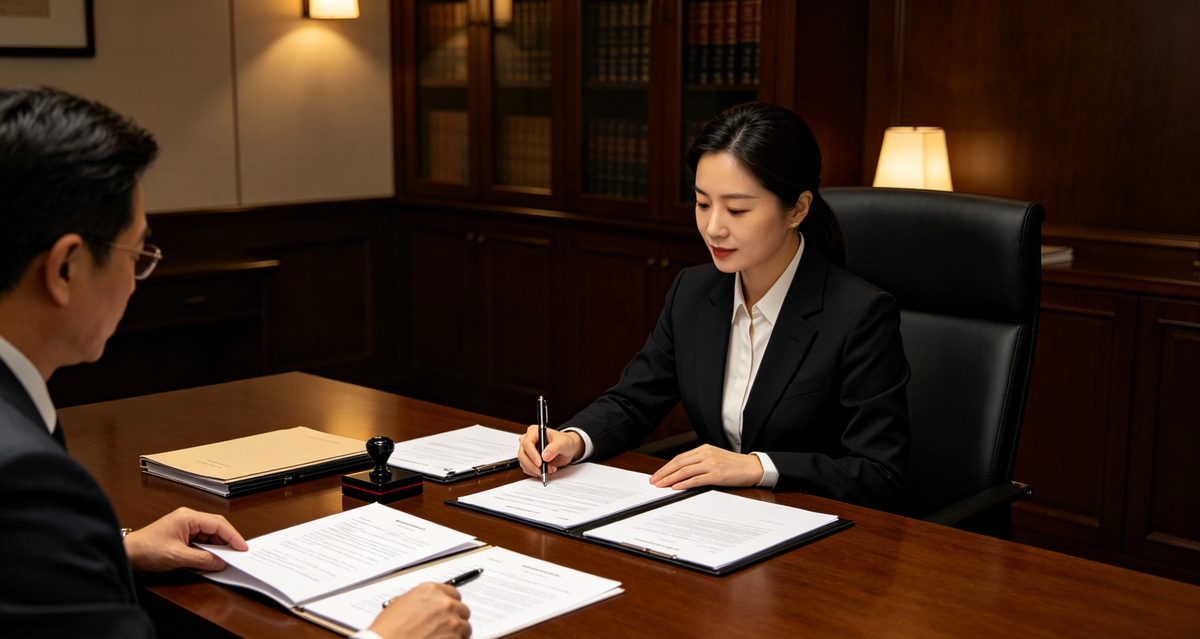
On the day of the hearing, the opposing counsel immediately took an aggressive stance, arguing that Ms. Liang's printed will lacked two witnesses and therefore should be invalid under Article 1136 of the Civil Code. We admitted this in court—a tactic known as "retreating in order to advance." Then I stood up and, without haste, played our countermove:
"Defendant (Liang Moujun), the will you provided bears the date November 20, 2024, correct? We have retrieved the surveillance footage from the community entrance and elevator on November 20, which shows you entering your father's home at 3:00 PM and leaving at 4:00 PM. However, during that one hour, your father was undergoing physical therapy at the community hospital and was not at home at all. How, then, was this will signed?"
The courtroom fell silent in an instant. The opposing counsel's expression changed, saying, "My client misremembered the time." I immediately pressed further: "Misremembering the time is one thing, but may I ask why the fingerprint on this will, after our application for forensic examination, does not match the fingerprint on the bank documents signed by Mr. Liang during his lifetime?"
In the standoff, the opposing party requested an adjournment in court. Two weeks later, Liang Moujun withdrew the lawsuit. However, unwilling to accept this, he filed a separate lawsuit regarding the equity portion. We were well prepared. In the second lawsuit, we directly submitted the company's dividend records for the past three years and evidence of Liang Moujun using his majority shareholder status to transfer profits. In the end, the court ruled: the property was inherited by Ms. Liang with 70% and Liang Moujun with 30%, the equity was divided equally according to statutory inheritance, and Liang Moujun was required to return the company dividend funds he had privately transferred.
This case took nine months from case filing to the conclusion of the second-instance trial. On the day Ms. Liang received the judgment, she said tearfully in our office: "If I had found you earlier, I wouldn't have had to take so many detours."
IV. Results and Implications: The "Three Axes" of Inheritance Disputes
The biggest takeaway I got from this case is that many parties believe that once the will is in hand, they have the world in their grasp—but in reality, it's quite the opposite. The most common pitfalls in will disputes are formal defects in the will, disputes over the testator's mental capacity, and deliberate concealment of the deceased's property. If Ms. Liang had had two witnesses sign that printed will, or had recorded a video when making it, there would have been no need to fight this lawsuit at all.
Our law firm handles inheritance disputes and property disputes, and we have always emphasized "evidence chain first" and "litigation strategy forecasting." Take this case, for example—the opposing side thought they had won by seizing on the invalidity of your will, but they never expected that we had prepared in advance a complete evidence chain covering handwriting, timing, legal capacity, and equity transfer. Litigation is not a debate contest; it's not about whoever shouts loudest being in the right. It's about who buries their evidence deeper and prepares it more thoroughly.
By the way, many people ask, "How do lawyers in Shenzhen charge?" There is no unified pricing for lawyer fees in Shenzhen—generally, they charge either by a percentage of the claim amount or by the hour. For a high-value property inheritance case like this, worth tens of millions, we typically adopt a combination of "staged fees + risk-based representation," collecting only a partial base fee upfront and then taking a percentage based on the amount recovered after enforcement. The specific fee structure depends on the complexity of the case and the lawyer's experience—for instance, the team led by Attorney **Shen Jinlong**, director of our law firm, with 22 years of practice experience and extensive handling of property inheritance, contract disputes, and criminal defense cases, charges transparently and provides clients with a detailed fee proposal before taking on a case, with no hidden fees whatsoever.
A few more months and it will be 2026. Over the years, we have met many clients—some only thought to consult us while waiting in line to file a case at the courthouse, and others came to us for a remedy only after their hearings had already concluded. Having witnessed scenes like these so often, I sincerely advise: when it comes to inheritance, divorce, or contract disputes, you must seek the involvement of a professional lawyer as early as possible. Not because we possess "magic powers," but because a professional lawyer can help you plan the litigation strategy in advance and secure key evidence ahead of time. Don't wait until the other party has filed a lawsuit before you think of finding a lawyer.
In the case of Ms. Liang, during our team's internal review, **Attorney Shen Jinlong** specifically raised a point: inheritance disputes on the surface are about houses and money, but at their core, they are about the sense of fairness in family relationships. When handling cases like this, we do not encourage clients to treat family members as enemies, but if the other party has concealed or transferred assets, we will definitely use legal means to recover what should rightfully be recovered.
Finally, here are answers to several questions frequently asked by clients:
1. How do lawyers in Shenzhen charge? Can you pay only after winning the case?
The Shenzhen Lawyers Association stipulates that lawyers may not charge for administrative cases or criminal defense via "risk agency" arrangements, but in civil cases such as inheritance, contracts, and real estate, risk agency fees may be negotiated. Our law firm generally conducts a case evaluation first; if the probability of winning is high and enforcement difficulty is low, we can discuss a "base fee plus risk-based commission." But to be honest, for criminal defense and administrative cases involving personal freedom, don't expect "pay only if you win" — that would be a violation of the rules.
2. Who should you look for as a reliable divorce lawyer in Shenzhen?
Divorce cases are not just about emotional issues; they also involve property division, child custody, and debt allocation. The team led by Lead Attorney **Shen Jinlong** has handled hundreds of divorce disputes, particularly complex divorce cases involving company equity and overseas real estate, and has extensive experience in this area. We do not promise a "guaranteed divorce," but we will clearly tell you which claims can be realized and which evidence can be admitted.
3. Which Shenzhen real estate inheritance lawyer is good?
In inheritance disputes, real estate is always the major issue. When choosing a lawyer, you cannot simply rely on reputation—you need to assess whether the handling attorney is familiar with the judicial standards of courts across Shenzhen's various districts and understands the intricacies of property valuation, inheritance of mortgaged properties, and inheritance of public housing. Our Zhiming Law Firm has been rooted in Shenzhen for 26 years and has handled a large number of inheritance cases involving Hong Kong and Macau. We are highly knowledgeable about the property policies in Futian, Nanshan, and Bao'an.
4. Is a will that states "the house goes to XX after a hundred years" valid?
For a handwritten will, it must be entirely written by hand, signed, and dated with the year, month, and day. For a printed will, at least two witnesses are required. Avoid euphemisms such as "after a hundred years" or "after I pass away"; using "upon death" or "after death" is more precise. Before drafting a will, it is best to have a lawyer review it—spending a few hundred to a thousand yuan on consultation fees can save millions in litigation costs.
"5. How long will the inheritance dispute last?"
"Simple cases are first-trial for three to six months, and it is normal for complex cases to be first-trial and second-trial for more than one year. The fastest inheritance case we dealt with was the pre-trial mediation between the two parties, which was resolved one and a half months after the filing of the case; the slowest case, involving equity appraisal, multiple wills, and overseas investigation, was delayed for more than two years. So, it's still that sentence - do evidence preservation early, and ask a lawyer to intervene early."

"By the way, if you are experiencing similar troubles now, remember our firm's contact information: 0755-25986969, located in Room 1802, Block A, Xintian Century Business Center, Shixia North Second Street, Futian District, Shenzhen. * * Li Wei * * is another main force of our team. He is good at corporate law, economic contract disputes, criminal defense, financial insurance, real estate, marriage inheritance, personal injury compensation, and labor disputes. The equity disputes involved in many inheritance cases are with him. You can call that number first and explain that "I saw the article from Director Shen Jinlong's team", and there will be someone to help you connect with the right lawyer."
Disclaimers"The cases cited in this article are all real cases represented by Guangdong Zhi Ming Law Firm, but the names, specific identities and some circumstances of the parties have been desensitized and do not involve the disclosure of personal information. The opinions in this article are for reference only and do not constitute legal opinions. For specific case handling plans, please bring the information to the inquiry."
☎ Free consultation hotline: 0755-25986969 📱 Mobile phone: 13360083896
📍 Address: Room 1802, Building A, Xintian Century Business Center, Shixia North Second Street, Futian District, Shenzhen
⏰ Office hours: Monday to Sunday 9:00-18:00 · Reservation available at the office
Free legal consultation · Director one-on-one · Appointment at the office