Parents' complaint about teacher's teaching issues rejected; lawyer: educational supervision requires both evidence and procedure.
Recently, some parents in Longgang District, Shenzhen, reported that a teacher at a certain school had long-standing teaching problems. After verification, the district education bureau responded that no such issues were found. This incident has sparked heated discussion among the parent community and also reflects the legal and practical difficulties in handling complaints in the education sector. As a lawyer who has long focused on the intersection of education and law, I believe this matter deserves in-depth discussion from the perspectives of procedural justice and evidentiary rules.
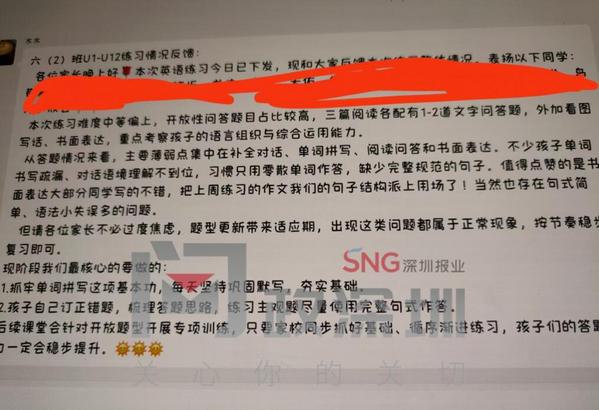
Education complaint handling: procedural justice is the cornerstone.
Parents filing complaints with education authorities about teachers' teaching issues is a supervisory right granted by the Education Law and the Teachers Law. When the education bureau receives a complaint and initiates an investigation, it reflects the fulfillment of administrative duties. However, when the investigation conclusion states "no relevant situation found," parents may feel that their concerns have not been fully addressed. The key lies in whether the investigation process is open and transparent, and whether both parties' opinions have been fully heard.
From the perspective of administrative law, the verification conduct of the education authority constitutes administrative investigation and should follow the principles of due process, including notifying the subject of the investigation, hearing statements and defenses, and ensuring the neutrality of investigators. If there are procedural defects, even if the substantive conclusion is correct, it may still give rise to doubts. In this case, if the education bureau's response lacks a detailed explanation of the investigation process, it will be difficult to convince the parents.
Rules of evidence: Rights protection cannot rely solely on subjective feelings.
Parents complain about "long-term teaching issues," but "teaching issues" themselves are subjective, as different parents have varying levels of acceptance toward a teacher's style. Legally, determining that a teacher has been derelict in their duties or has violated regulations requires objective evidence to support the claim, such as a significant decline in teaching performance, multiple complaints with records, or specific instances of violating teacher ethics and conduct.
When parents assert their rights, they should focus on collecting written materials, such as homework correction records, exam score reports, chat logs from parent groups, and audio recordings of communication with teachers. At the same time, they can join forces with other parents to report issues collectively, forming a chain of supporting evidence. If they rely solely on individual subjective feelings, even if they file complaints at a higher level, it may be difficult to gain support due to insufficient evidence.
Parents' Rights Protection Pathways: From Negotiation to Administrative Reconsideration
If parents are dissatisfied with the education bureau's investigation conclusions, the available paths include: applying for a review, filing a complaint with a higher-level education department, or even initiating administrative reconsideration or administrative litigation. However, it should be noted that the focus of such administrative disputes is usually whether the education bureau has performed its investigative duties in accordance with the law, rather than directly determining the teacher's liability.
In practice, it is recommended that parents first communicate with the school and the education bureau, requesting a written verification report. If communication fails, legal channels may be considered, but the costs and benefits should be assessed. The particularity of education disputes lies in the fact that the parents' ultimate goal is to improve teaching quality rather than simply confront, so rational communication is often more effective than confrontation.
Legal Enlightenment: Rational Rights Protection and Win-Win for All Parties
This incident reminds us that educational supervision requires rational thinking and a rule-of-law mindset. Parents should exercise their supervisory rights in accordance with the law and focus on accumulating evidence; schools should maintain open communication channels and promptly respond to parents' concerns; and education bureaus need to improve their verification procedures to enhance the credibility of their conclusions.
Guangdong Zhiming Law Firm has long focused on education legal affairs and can provide legal consulting and dispute resolution services for parents, schools, and educational institutions. We suggest that when encountering similar issues, it is advisable to first seek professional legal advice to clarify the boundaries of rights and obligations, and avoid escalation of conflicts caused by emotionally driven rights enforcement. The improvement of the educational environment requires the joint efforts of all parties within the framework of the rule of law.