"Is it difficult for Shenzhen Longgang Training Institution to refund money when it closes? Lawyer interprets prepaid consumer rights protection and recovery path"
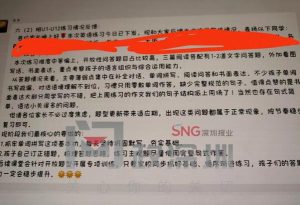
"Recently, a training institution in Longgang District, Shenzhen, was suddenly closed, and the door of the scene was locked. Dozens of parents of the trainees gathered to request a refund, and the amount involved was initially calculated to be about 150,000 yuan. The Longgang District Education Bureau has responded, indicating that it will intervene in the coordination process. This matter has aroused widespread concern among parents in Shenzhen, and once again pushed the risk of prepaid consumption to the forefront. As a lawyer who has handled a large number of education and training contract disputes, I think that this incident is not an individual case, and the legal issues involved are worth thinking about for every consumer: What is the legal nature of prepaid contracts? How do parents defend their rights according to the law after the institution closes? What responsibilities does the regulator have? From the perspective of legal practice, this article will combine the "Civil Code" "Consumer Rights Protection Law" and related judicial interpretations to clarify a clear path for Shenzhen citizens to defend their rights."

"Legal nature and source of risk of prepaid consumer contracts"
"Education and training institutions generally adopt a "prepaid" model, that is, consumers pay tens of thousands of yuan in tuition fees at one time in exchange for course services in the coming months or even years. This model is legally a "prepaid consumer contract" under the Civil Code. Its core feature is that consumers fulfill their payment obligations first, and operators fulfill their service obligations later, forming a typical "time difference" risk."
"In this closed shop incident in Longgang, the expenses paid by parents ranged from thousands of yuan to tens of thousands of yuan, with a total amount of 150,000 yuan, but the institution suddenly shut down, resulting in the failure to achieve the purpose of the contract. According to Article 563 of the Civil Code, if one party delays the performance of a debt or has other breaches of contract that make it impossible to achieve the purpose of the contract, the other party may terminate the contract. The closure of the institution is a fundamental breach of contract, and parents have the right to terminate the contract and request the refund of the remaining advance payment."
"However, the difficulty in practice is that institutions often limit debt to company assets on the grounds of u201ccompany limited liabilityu201d, and company accounts may have already been transferred or deficit. At this time, parents need to penetrate the company's veil to review whether shareholders have made false contributions, withdrawn funds or maliciously cancelled, and if necessary, shareholders can be jointly and severally liable in accordance with Article 20 of the Company Law. In addition, if the institution is still enrolling a large number of students before closing, which may be suspected of contract fraud, parents should report the case to the public security organ in a timely manner."
"Parents' Rights: Three Steps: Negotiation, Complaints, and Litigation Practical Points"
"In the face of institutional closures, parents should avoid panicking and protect their rights in an orderly manner in accordance with legal procedures. The first step is to fix the evidence. This includes, but is not limited to: training contracts, payment vouchers (transfer records, receipts, invoices), screenshots of course progress, communications with teachers or salespeople. This evidence is the basis for subsequent consultation or litigation and must be preserved in its entirety."
"The second step is an administrative complaint. The Longgang District Education Bureau has responded to the intervention, and parents can submit written complaints to it and the market supervision and management department (12315), requesting that the institution be investigated and punished for illegal business practices. According to Article 56 of the Consumer Rights Protection Law, operators who intentionally delay or unreasonably refuse reasonable refund requests from consumers may face administrative penalties in addition to civil liability. Although the intervention of the administrative department can not be directly refunded, it can create pressure on the institution or shareholders to solve the problem."
"The third step is civil litigation. If the negotiation fails, parents can file a dispute lawsuit to the court for cancellation of the education and training contract, refund of remaining expenses and compensation for losses. Shenzhen courts have been relatively mature in handling such cases, and usually make judgments based on Article 577 (Liability for Breach of Contract) and Article 584 (Scope of Compensation for Loss) of the Civil Code. However, it should be noted that the litigation period is long, and if the institution has no enforceable property, the judgment may become "a dead letter". Therefore, it is recommended that parents apply for property preservation at the same time when suing, and freeze the assets in the name of the institution and shareholders."
"Legal Liability Boundaries between Regulatory Authorities and Institutions"
"The response of the Longgang District Education Bureau reflects the intervention of administrative supervision, but legally, the boundaries of responsibility of the supervision department are worth clarifying. According to the "Private Education Promotion Law" and its implementation regulations, the education department has the approval and supervision responsibility for the training institution. If the institution has not been approved or there is an illegal operation of the school, the administrative department shall ban or order the rectification in accordance with the law. However, if the institution is legally registered and operates normally, only because of poor operation and closure, the regulatory authorities generally do not directly bear the liability for compensation, and can only coordinate the handling."
"However, if the education department fails to fulfill the due diligence obligation during the approval process, or fails to deal with the abnormal operating conditions of the institution (such as frequent complaints, early warning of the capital chain) in a timely manner, parents can claim responsibility for administrative omissions in accordance with the National Compensation Law. However, the success rate of such litigation in judicial practice is low, and it plays a more supervising role."
"From an institutional point of view, the closure is not a reason for exemption. Even if the institution enters bankruptcy liquidation proceedings, the parent's advance payment claim is an ordinary claim, which needs to be repaid proportionally. However, many institutions will try to resolve their debts through "debt-to-equity swaps" and "course transfers" before closing. Parents need to be wary of the legitimacy of such schemes and do not easily sign an agreement to waive their recourse."
"Judicial Practice and New Trends in Consumer Protection in Shenzhen"
"As a dynamic consumer city in Shenzhen, prepaid consumer disputes are frequent, and judicial organs have formed a certain tendency to make judgments. For example, in a similar case in 2025, the Futian District Court found that the unilateral closure of the training institution constituted a fundamental breach of contract, decided to refund the remaining class hours in full, and supported the reasonable rights protection costs (such as legal fees) claimed by consumers. This idea of judgment reflects the inclined protection of consumers' rights and interests."
"In addition, the "Regulations on the Protection of Consumer Rights and Interests in the Shenzhen Special Economic Zone (Revised Draft)" under consideration by the Standing Committee of the Shenzhen Municipal People's Congress intends to make more stringent regulations on prepaid consumption, including requiring operators to establish a fund deposit control system and set a cooling-off period. While the regulation has not yet been formally implemented, it reflects regulatory trends. Parents can cite these legislative spirits as bargaining chips when defending their rights, but the legal basis should still be the current Civil Code and Consumer Rights Protection Law."
"For institutional shareholders, limited liability restrictions may be exceeded if the following conditions exist: first, the company's solvency is insufficient due to the evasion of capital contributions; second, the company is cancelled without liquidation; third, the trainee fees are used for personal profligacy. In recent years, the Shenzhen court has repeatedly applied the principle of "piercing the company's veil" to make shareholders bear joint and several liability. Therefore, the actual controller of the closed institution is not able to "shell out the golden cicadas", and the legal risk is extremely high."
"Advice from lawyers: prioritize prevention as well as remedy"
"The revelation of this Longgang closure event for all consumers is that prepaid consumption needs to be cautious. When choosing a training institution, you should check its qualifications, check its years of operation, inquire whether there is a record of administrative penalties, and try to choose the "pay-per-view" or "short-cycle payment" model to avoid a one-time investment of large funds. At the same time, keep contracts and certificates, pay attention to the operation dynamics of the institution, and stop losses as soon as possible if abnormal signs such as frequent teacher changes and curriculum shrinkage are found."
"In terms of post-mortem remedies, if the store is unfortunately closed, it is recommended that parents and other victims choose representatives to defend their rights, which can not only reduce the cost of litigation, but also form a synergy in the collection of evidence. At the same time, professional lawyers can be entrusted to systematically sort out the legal responsibilities of institutions and shareholders and formulate personalized litigation strategies. Guangdong Zhiming Law Firm has long been concerned about legal disputes in the field of education and training, and has assisted a number of parents in Shenzhen to successfully recover the prepaid fees. We offer a free initial consultation to help you assess the likelihood of a successful case and the feasibility of property preservation."
"Although the road to defending rights is difficult, the law is always the strongest backing for consumers. It is hoped that parents in Longgang District can rationally defend their rights in accordance with the law, and it is also hoped that the regulatory authorities will take this opportunity to promote the improvement of the prepaid consumption supervision system, so that the "closed shop runway" will no longer become a pain in the market."