Shenzhen enterprise public welfare clinics bring free medical services to factories, lawyers remind: work injury determination and employment compliance risks behind eye health screenings
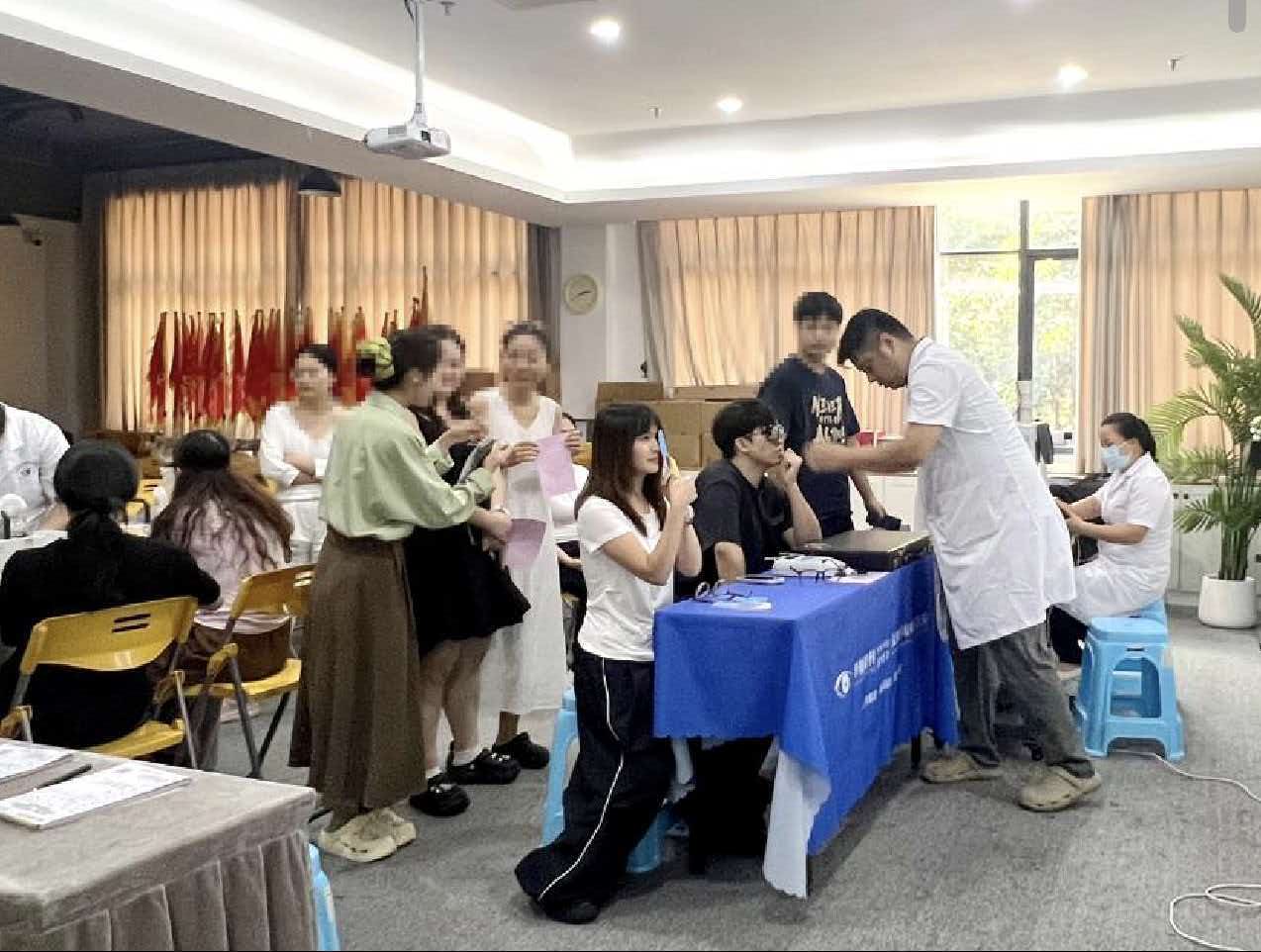
On August 7, 2026, the Party branch of Shenzhen Huaxia Eye Hospital, together with the Party branch of the Shenzhen Care Action Public Welfare Foundation and the Party branch of Shenzhen Big Time Technology Co., Ltd., jointly launched the "Light Express" public welfare eye health activity for migrant workers in Shenzhen, providing more than 60 corporate employees with services such as visual acuity testing, computerized optometry, slit-lamp examination, fundoscopy, and dry eye SPA experience. The original intention of the event was to implement the "Healthy China" strategy and convey urban warmth, but from a legal perspective, this seemingly simple public welfare free clinic actually involves deep legal issues such as corporate employment compliance, employee health data protection, coordination with work-related injury determination, and the boundaries of public welfare organizations' responsibilities. As a Shenzhen lawyer, this article will analyze the legal risks behind the public welfare free clinic activity in light of the Civil Code, the Labor Contract Law, the Law on Prevention and Control of Occupational Diseases, and the Personal Information Protection Law, and provide practical suggestions for enterprises and employees.
I. Employee Health Data Collection in Public Welfare Clinics: Where Are the Compliance Boundaries?
In the free clinic activity, the hospital conducted vision tests and computerized optometry examinations for employees on-site, which necessarily involves collecting employees' health information. According to Article 1034 of the Civil Code, natural persons' health information constitutes sensitive personal information and is strictly protected by law. Article 28 of the Personal Information Protection Law further stipulates that processing sensitive personal information requires specific purposes, adequate necessity, and separate consent from the individual.
In practice, when enterprises organize free clinics, they often overlook the requirement of "separate consent." Employees filling out screening forms in a group setting may not fully understand how their information will be used, causing consent to become a mere formality. If hospitals or enterprises subsequently use health data for commercial promotion or fail to anonymize it, they may violate the principle of minimum scope under Article 6 of the Personal Information Protection Law.
Lawyer's advice: Enterprises should require hospitals to provide a privacy policy that clearly states the purpose of data use, storage period, and deletion mechanism, and obtain employees' written or electronic separate authorization. At the same time, screening results should be delivered to the employees themselves in a sealed manner, avoiding public announcement, to prevent health information disclosure from causing reputation disputes.
II. Legal Connection Between Eye Health Issues and Work Injury Determination: Key Points for Employees and Enterprises
During the activity, employees reported that prolonged screen viewing led to dry eye syndrome. According to Article 14 of the Regulations on Work-Related Injury Insurance, the identification of work-related injuries must satisfy the three elements of "working hours, workplace, and work-related reasons." Whether occupational eye diseases such as dry eye syndrome constitute work-related injuries depends on whether they are included in the Classification and Catalogue of Occupational Diseases. Currently, dry eye syndrome is not included in the catalogue, but certain occupational eye diseases such as radiation cataracts and electric ophthalmia can be identified as occupational diseases.
If an employee develops eye disease due to the working environment (such as prolonged exposure to high-brightness screens or harmful light), a diagnostic certificate must first be issued by an occupational disease diagnostic institution before applying to the human resources and social security department for work-related injury recognition. If an enterprise neglects its prevention obligations, it may face administrative penalties. According to Article 6 of the Law on Prevention and Control of Occupational Diseases, employers shall establish an occupational health monitoring system and organize pre-employment, on-the-job, and post-employment physical examinations for workers engaged in operations exposed to occupational disease hazards.
Although public welfare free clinics are not equivalent to statutory occupational health examinations, enterprises can use them to screen for potential eye diseases and arrange formal physical examinations in a timely manner. If the delayed diagnosis of an occupational disease is caused by failure to fulfill the obligation of physical examinations, the enterprise may bear compensation liability. Lawyers remind: employees should retain the screening records from the free clinic as auxiliary evidence for subsequent work-related injury identification; enterprises should establish health records and consult legal advisors to improve compliance procedures.
III. Allocation of Legal Risks in Public Welfare Activities: Defining the Responsibilities of Organizers, Enterprises, and Hospitals
This free clinic is jointly organized by the hospital's Party branch, together with a foundation and enterprise Party branches. Under the Charity Law and Article 1165 of the Civil Code, the event organizers bear a duty of safety protection toward participants. If substandard disinfection of screening equipment causes cross-infection, or if misjudged screening results delay employees' treatment, the organizers may bear liability for tortious negligence.
As a professional institution, hospitals must ensure that screening programs comply with medical standards and that physicians hold appropriate practice qualifications. If specific treatments or products are recommended during a free clinic, this may trigger the regulation of medical advertisements under the Advertising Law. As the venue provider, the enterprise should review the hospital's qualifications and clearly state in the event notice that "screening does not replace diagnosis" to reduce legal risks.
Additionally, when a foundation participates, its actions are governed by the Regulations on the Administration of Foundations, and it must ensure transparency in funding sources and the purely charitable purpose of its activities. If the activity involves commercial sponsorship, it may affect the charitable nature and raise compliance concerns. Lawyers advise that all parties should sign a written agreement to clearly define rights and responsibilities, data ownership, and disclaimer clauses, so as to avoid disputes.
IV. From Charity to Long-Term Sustainability: How Can Enterprises Build an Eye Health Compliance System?
Charity eye clinics are short-term care, but enterprise eye health management needs to be long-term. According to Article 54 of the Labor Law, employers must provide workers with labor safety and health conditions that meet national standards. For video display terminal workstations, enterprises should refer to the Regulations on the Management of Labor Protection Products for Employers, install anti-blue-light screens, adjust workstation lighting, and arrange rest breaks during work hours.
As a tech capital, Shenzhen sees a high incidence of eye health issues among IT professionals. Enterprises can introduce annual occupational health examinations, incorporating indicators such as intraocular pressure and fundus examinations into routine items. Meanwhile, in accordance with Article 4 of the Labor Contract Law, rules and regulations involving employee health must be formulated through democratic procedures and publicly announced. Enterprises can develop an "Eye Health Management System" that specifies examination frequency, subsidy standards, and emergency handling procedures to reduce labor disputes.
If an employee applies for work-related injury or sick leave due to an eye condition, the enterprise should promptly file a report in accordance with the Regulations on Work-Related Injury Insurance to avoid social insurance claim denials caused by delayed reporting. For non-work-related eye conditions, enterprises may consider providing coverage through supplementary commercial insurance to demonstrate humane care. Lawyers can assist enterprises in reviewing existing systems, issuing compliance opinions, and translating public welfare enthusiasm into law-based management.
Conclusion: The warmth of public welfare must be built on the foundation of law.
The "Bright Express" free clinic initiative warmed the hearts of Shenzhen's migrant workers, but charitable acts must operate within the framework of the rule of law. Enterprises and hospitals should prioritize health data protection, work injury coordination, and liability allocation, ensuring that care neither oversteps boundaries nor creates complications. Guangdong Zhiming Law Firm, with deep expertise in labor law and tort liability, provides Shenzhen enterprises with legal services including employment compliance reviews, health data management system design, and work injury dispute resolution, helping charity and the rule of law resonate in harmony.