Behind the SUSTech Undergraduate's 3,900-Meter Deep Dive: Legal Risks and Compliance Guidelines for Deep-Sea Scientific Research Activities
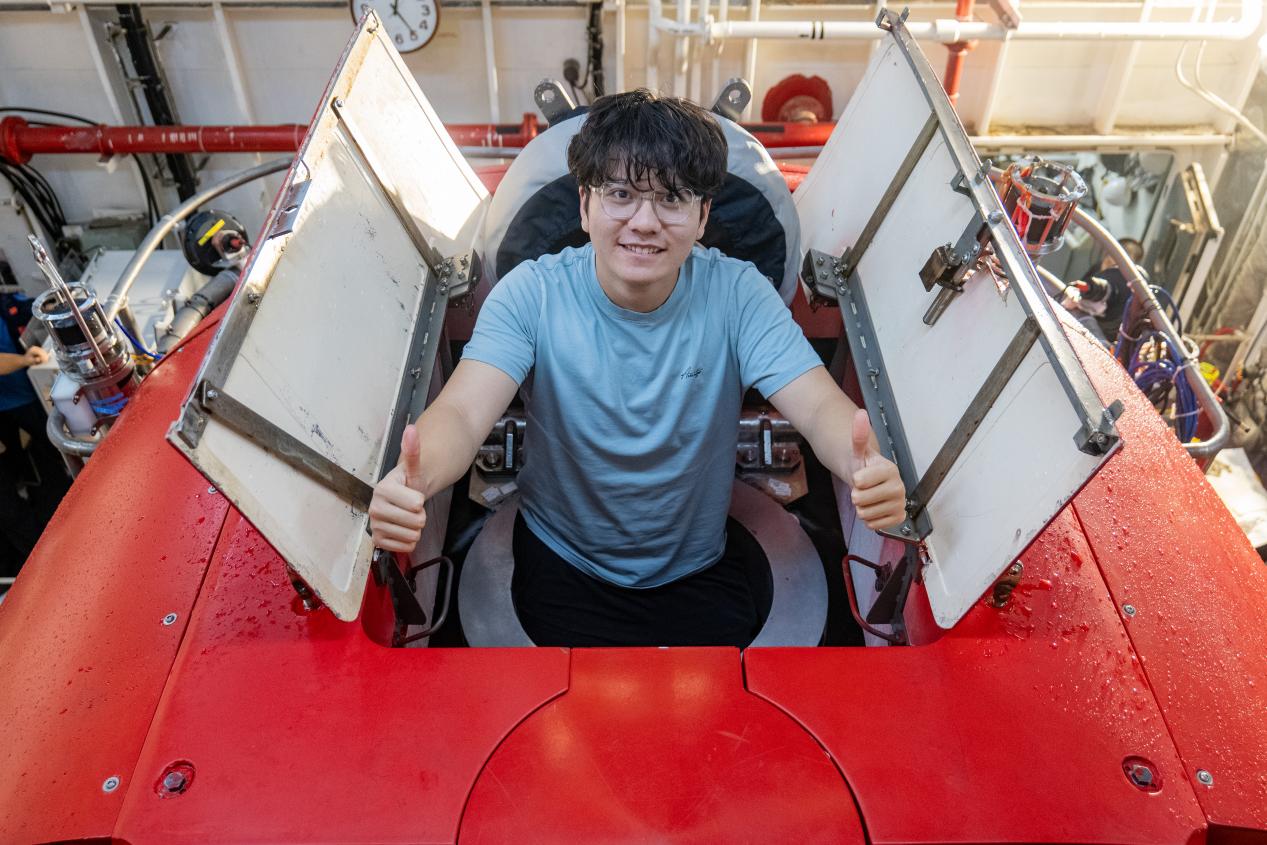
This summer, Guo Jingkai, an undergraduate student from the Class of 2023 in the Department of Ocean Science and Engineering at the Southern University of Science and Technology, completed a 3,900-meter-class deep-sea diving operation in the South China Sea aboard China's independently developed "Deep Sea Warrior" manned submersible, becoming one of the few undergraduate students in China to receive such an opportunity. This news not only showcases China's strength in deep-sea technology but also raises thoughts on the legal regulation and compliance requirements of deep-sea scientific research activities. As lawyers, we are more concerned with: What legal norms apply to deep-sea scientific research activities? How should research institutions, universities, and participating students avoid legal risks? This article will interpret this hot event from a legal perspective and provide compliance guidance for the relevant parties.
The Legal Regulatory Framework for Deep-Sea Scientific Research: From International Conventions to Domestic Regulations
Deep-sea scientific research activities are not a lawless domain; they are subject to dual regulation by international law and domestic law. At the international level, the 1982 United Nations Convention on the Law of the Sea is the fundamental legal instrument governing marine scientific research. According to Articles 238 to 241 of the Convention, all states, regardless of their geographical location, have the right to conduct marine scientific research in areas beyond the exclusive economic zone, but must comply with the jurisdiction of coastal states over the continental shelf and the exclusive economic zone. China ratified the Convention in 1996, therefore deep-sea scientific research within waters under China's jurisdiction must comply with the notification and licensing procedures stipulated by the Convention.
At the domestic level, China has established a relatively comprehensive deep-sea legal framework. The Law of the People's Republic of China on Exploration and Development of Resources in the Deep Seabed Area, which took effect in 2021, is China's first law regulating deep-sea resource exploration and development. Article 3 of this law explicitly states that the State encourages deep-sea scientific and technological research, but entities engaged in related activities must apply to the marine administrative department of the State Council for permission. In addition, the Regulations of the People's Republic of China on the Administration of Foreign-Related Marine Scientific Research impose strict approval requirements on foreign-related marine scientific research activities. Even domestic universities and research institutions must submit advance applications when foreign personnel or foreign funding are involved.
As for this specific event, the research vessel "Exploration One" was operating in the South China Sea, which constitutes normal scientific research activity within the sea areas under China's jurisdiction. Legally, no additional approval is required, but it must still comply with general regulations such as vessel navigation safety and marine environmental protection. Lawyers remind that when organizing similar activities, scientific research institutions should first confirm the legal status of the operating sea area and ensure that all necessary administrative permits have been obtained, so as to avoid administrative liability arising from procedural defects.
Safety liability and legal risks in manned submersible operations
The "Deep Sea Warrior" manned submersible is 4,500-meter-class equipment independently developed by China, and its safe operation is directly related to the safety of personnel and property. From a legal perspective, the use of manned submersibles involves multiple legal issues, including product liability, operational standards, and emergency response plans.
First, regarding product liability. Article 1202 of the Civil Code of the People's Republic of China stipulates that where a product is defective and causes harm to others, the manufacturer shall bear tort liability. As high-tech equipment, if a manned submersible causes an accident due to design, manufacturing, or maintenance defects, the development unit or operator may face civil claims. In this case, the "Deep Sea Warrior" has completed hundreds of dives and its technology is mature, but rigorous safety inspections must still be conducted before each operation, with complete records retained for potential legal recourse.
Secondly, operational standards and personnel qualifications. According to Article 28 of the Work Safety Law of the People's Republic of China, production and business operation entities shall provide safety production education and training to their employees to ensure that they possess the necessary workplace safety knowledge. Deep-sea scientific research involves high pressure, low temperature, and enclosed environments, and operators must undergo professional training and hold corresponding qualifications. For student volunteers, the organizing party must especially fulfill its obligations of safety notification and training to ensure they understand emergency procedures. Guo Jingkai mentioned in an interview that he received systematic guidance before diving, which is precisely a reflection of compliant operations.
Lastly, emergency response plans and insurance arrangements. Deep-sea operations carry extremely high risks, so organizers should develop detailed emergency response plans, including medical rescue and equipment failure handling. Meanwhile, in accordance with the Insurance Law of the People's Republic of China, purchasing personal accident insurance for participants is an important means of risk transfer. Lawyers recommend that research institutions, when organizing similar activities, should review insurance coverage to ensure that the insured amounts match actual risks and clearly define liability allocation mechanisms to avoid subsequent disputes.
Protection of Students' Rights and Interests in Research Activities and Division of Responsibilities
In this incident, Guo Jingkai, as an undergraduate student, participated in deep-sea diving, which is a typical scenario of students engaging in scientific research activities. Although student participation in research contributes to talent cultivation, it is legally necessary to clarify their identity positioning and the protection of their rights and interests.
From the perspective of labor law, the relationship between students and universities generally does not constitute a labor relationship, and therefore the provisions on work-related injury compensation under the Labor Contract Law of the People's Republic of China do not apply. If a student is injured during scientific research activities, the primary basis for relief lies in Article 1191 of the Civil Code of the People's Republic of China, which stipulates that where a staff member of an employer causes harm to another person in the course of performing work tasks, the employer shall bear tort liability. However, since students are not "staff members," their rights protection relies more on the school's safety management obligations.
Specifically, as the organizer, institutions of higher education bear the responsibility of ensuring students' personal safety under Article 29 of the Education Law of the People's Republic of China. When organizing students to participate in high-risk scientific research activities, they must conduct risk assessments and take adequate protective measures. If a student is injured due to the institution's failure to fulfill its safety guarantee obligations, the student may claim tort compensation under Article 1198 of the Civil Code. In addition, institutions of higher education should establish and improve an approval system for research activities, clearly define the eligibility requirements and liability boundaries for student participation, and prevent students from engaging in dangerous operations beyond their capabilities.
Legal counsel reminds that students participating in high-risk activities such as deep-sea scientific research should proactively sign written agreements with their schools, specifying the activity content, risk warnings, insurance arrangements, and liability allocation. Schools, on the other hand, need to establish files documenting the training and authorization process for legal review purposes. In this case, SUSTech selected participants through departmental screening and arranged for mentors to provide full-process guidance—a model worth promoting, though it still requires further refinement in terms of written documentation and institutionalization.
Environmental Compliance and Intellectual Property Issues in Deep-Sea Scientific Research
Deep-sea scientific research is not merely scientific exploration; it also involves legal issues such as environmental protection and the attribution of intellectual property rights.
In terms of environmental protection, Article 46 of the Marine Environment Protection Law of the People's Republic of China stipulates that when conducting marine scientific research activities, effective measures shall be taken to prevent pollution of the marine environment. In deep-sea diving operations, the waste discharged by submersibles and the impact of sampling activities on seabed ecosystems must all be included in compliance reviews. Scientific research institutions should formulate environmental management plans to ensure that their activities comply with the requirements of ecological protection red lines. At the same time, in accordance with the Convention on Biological Diversity, the collection of deep-sea biological resources may involve issues of benefit-sharing, and the subsequent use of relevant samples must comply with international norms.
In terms of intellectual property, the ownership of data and samples generated by deep-sea scientific research often gives rise to disputes. According to Article 30 of the Science and Technology Progress Law of the People's Republic of China, the state supports scientific and technological research and development activities, and the ownership of intellectual property rights arising from such achievements shall be determined by agreement between the parties concerned. Universities and research institutions should clarify in advance through agreements the ownership of work-related achievements to avoid disputes arising from the commercialization of research results. The rock samples brought back by Guo Jingkai may potentially yield significant scientific research outcomes in the future, and their ownership should belong to his affiliated institution, but the student's contributions should also be reflected in paper authorship and reward distribution.
Lawyers recommend that research institutions establish a full-process compliance system for deep-sea scientific research activities, including environmental assessment, sample collection permits, data management, and agreements on the transformation of research outcomes. For participating students, intellectual property agreements should be signed to balance their individual contributions with the institution's rights, thereby both protecting students' enthusiasm for innovation and safeguarding the institution's legitimate rights and interests.
Conclusion: Rule of Law Safeguards and Future Prospects for Deep-Sea Scientific Expeditions
Guo Jingkai's deep-sea diving experience epitomizes the growth of China's deep-sea technology talent and reflects the importance of law-based governance in deep-sea scientific expeditions. As the national maritime strategy advances, deep-sea scientific research will become more frequent, and legal compliance will serve as the cornerstone for the sustainable development of research activities. Research institutions and universities should strengthen legal awareness, improve internal systems, and ensure that scientific research operates within the framework of the rule of law. For participating students, it is essential to understand their rights and obligations, pursuing scientific ideals while paying attention to the prevention of legal risks.
As a homegrown Shenzhen law firm, Guangdong Zhiming Law Firm has long focused on legal services in the fields of marine technology and education, providing research institutions with professional support in compliance review, contract drafting, and dispute resolution. We look forward to seeing more young students, under the protection of the rule of law, bravely sail into the deep blue like Guo Jingkai, contributing to the nation's maritime endeavors.