Laboratory Testing Project Guidelines from the National Healthcare Security Administration Take Effect: How Are the Rights of Shenzhen Medical Institutions and Patients Protected? A Lawyer's Interpretation
Recently, the National Healthcare Security Administration officially released the "Guidelines for Project Establishment of Medical Service Price Items in Laboratory Testing (Trial)" (hereinafter referred to as the "Laboratory Testing Project Establishment Guidelines"), covering major sectors including clinical laboratory testing, blood transfusion and blood typing, microbiology and parasitology, molecular diagnostics, biochemistry, and immunology, with a total of 662 primary items, 114 additional charge items, and 7 extended items. As the "final piece" of the guidelines for project establishment of medical service price items, these Guidelines aim to unify laboratory testing price items nationwide, promote mutual recognition of testing results, and lead the high-quality development of the laboratory testing discipline. For Shenzhen, a city with abundant medical resources and vibrant innovation, the implementation of the Guidelines is not only related to the compliance of medical institutions' charging practices, but also directly affects patients' medical burden and rights protection. This article will analyze the legal implications of the Laboratory Testing Project Establishment Guidelines from a lawyer's perspective and provide practical recommendations for medical institutions and patients.
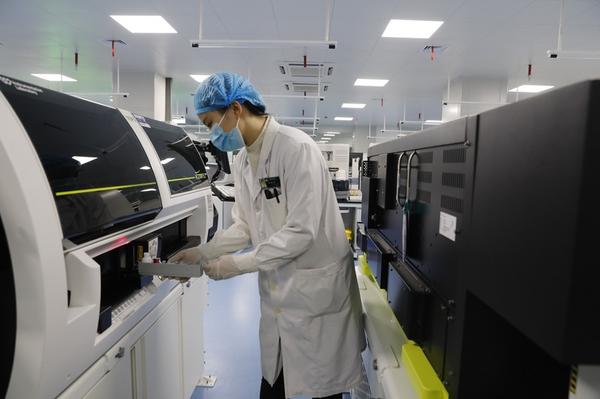
Unification of Laboratory Test Price Items: A New Benchmark for Fee Compliance in Medical Institutions
The core of the examination-type project establishment guidelines lies in "unification." In the past, there were significant differences in the names, billing units, and fee standards of examination projects across different regions. The same examination could have different names and vastly different prices at different hospitals, which not only confused patients but also easily led to fee disputes. The guidelines are oriented toward service output, integrating different examination methods into the same priced project. For example, glucose testing using the dry chemical method, enzymatic method, and enzyme electrode method is unified as a "glucose testing fee," achieving "same examination, same price." For medical institutions in Shenzhen, this change means that fee items need to be comprehensively reviewed and adjusted in accordance with the guidelines.
From a legal perspective, the fee-charging practices of medical institutions are governed by regulations including the Price Law and the Regulations on the Administration of Medical Institutions. Although the guideline is in trial implementation, as a normative document issued by the National Healthcare Security Administration, it has guiding effect on pricing and fee-charging. If a medical institution fails to adjust its charging items in accordance with the guideline, it may face administrative penalties from the price administration authority, and may even trigger patient complaints or litigation. Medical institutions in Shenzhen should promptly organize study of the guideline's contents, conduct item-by-item review of existing charging items, and ensure that fee names, pricing units, and surcharge item settings are consistent with the guideline, so as to avoid obstacles or disputes in medical insurance reimbursement caused by inconsistent item naming.
Additionally, the guidelines explicitly establish the "fee reduction for missing data" policy, whereby medical institutions that fail to store and upload testing data will incur a 10% reduction per testing indicator, with a cap of 5 yuan. This policy not only promotes the mutual recognition of testing results but also imposes requirements on the digitalization efforts of medical institutions. As a smart city, Shenzhen's medical institutions have a relatively solid IT infrastructure, yet they still need to pay attention to compliance in data uploads, ensuring the authenticity and completeness of the data. Otherwise, it may affect the legality of fee collection and even give rise to data compliance risks.
Tiered Discounts for Combined Testing and "Reductions for Missing Items": Statutory Adjustments to Patient Financial Burden
The guidelines for the initiation of laboratory testing projects contain many highlights in alleviating patient burden, among which the tiered discount for combined testing and the "deduction for missing items" policy are particularly noteworthy. Combined testing refers to detecting multiple indicators in a single testing operation. The guidelines specify that for combined tests with no more than 5 indicators, each test is billed at 80%; for no more than 10 indicators, at 70%; and for more than 10 indicators, at 60%. This tiered discount is based on the law of diminishing marginal costs and is designed to reduce the frequency and cost of patient sampling.
For patients in Shenzhen, this means that the cost of multi-indicator joint testing at medical institutions will drop significantly. However, patients should be aware of whether medical institutions implement the discount in accordance with the guidelines, to avoid being charged the original price. If any irregular charges are found, patients have the right to file complaints or reports under the Consumer Rights Protection Law and the Regulations on the Supervision and Administration of the Use of Medical Security Funds, or to seek legal remedies through judicial channels. Lawyers advise that before receiving testing services, patients may proactively inquire about the joint testing items and billing methods, and retain payment receipts for future verification.
The "deduction for missing data" policy also directly concerns patient rights. When medical institutions fail to upload testing data, each item is reduced by 10%, with a maximum reduction of 5 yuan; where reference intervals are inconsistent with industry standards, each item is reduced by 5%, with a maximum reduction of 0.5 yuan. This policy encourages medical institutions to share data, but patients may be unaware of it due to information asymmetry. For example, if a patient undergoes a routine blood test at a hospital in Shenzhen, and the hospital fails to upload the data, the charges should be reduced by the corresponding amount, but the patient may not notice. Lawyers remind that patients may request medical institutions to clearly indicate the reduced items in the fee statement, so as to protect their right to know and their right to fair dealing. If a medical institution fails to make reductions in accordance with the law, patients may report the matter to the medical insurance department or the price regulatory authority.
Legal Effect of Mutual Recognition of Test Results: Dual Responsibilities of Medical Institutions and Patients
The ultimate goal of the guidelines for initiating laboratory testing projects is to promote mutual recognition of test results. Unifying price items, standardizing reference intervals, and facilitating data upload all serve to remove obstacles to cross-institutional mutual recognition. From a legal perspective, mutual recognition of test results involves the obligations of medical institutions and the rights of patients.
For medical institutions, mutual recognition means that during the diagnosis and treatment process, if a patient holds a recent laboratory report issued by another medical institution, the institution should recognize it when the conditions for mutual recognition are met, thereby avoiding duplicate examinations. This reflects both the principle of "reasonable examination" in the Regulations on the Administration of Medical Institutions and the requirement to reduce waste of medical resources. However, mutual recognition is not absolute; if the patient's condition changes or the laboratory results exceed the validity period for mutual recognition, the medical institution may require re-examination. When implementing mutual recognition, medical institutions in Shenzhen must establish internal review procedures, clearly define mutual recognition standards and exceptional circumstances, and prevent medical disputes arising from improper mutual recognition.
For patients, mutual recognition of test results can reduce the monetary and time costs of repeated examinations, but it may also bring risks. For example, if a patient conceals test results from other hospitals or provides incomplete reports, it may lead to misdiagnosis. Lawyers advise that patients should proactively provide recent test reports, truthfully disclose their medical history, and cooperate with medical institutions in assessing the feasibility of mutual recognition. If repeated examinations occur due to a medical institution's refusal to recognize results, patients may claim a refund of unreasonable fees, but they must prove that the medical institution was at fault. In such disputes, patients may consult professional lawyers to evaluate the path for rights protection.
Examining Technological Innovation and Patient Informed Consent: The Legal Boundaries of New Projects such as Organoid Culture
The pricing guidelines for laboratory testing projects have added over 130 pricing items, including tumor organoid culture and drug sensitivity testing, to support innovation in testing technology. Most of these items involve cutting-edge technology, carry relatively high fee levels, and may not be covered by medical insurance. For patients in Shenzhen, when choosing these items, particular attention should be paid to the right to be informed and the issue of cost-bearing.
According to Article 1219 of the Civil Code, medical personnel shall, during diagnosis and treatment activities, explain the patient's condition and medical measures to the patient. Where special examinations or special treatments need to be performed, they shall promptly explain the medical risks, alternative plans, etc., to the patient and obtain explicit consent. Projects such as organoid culture fall within the scope of special examinations, and medical institutions must fulfill the full duty of disclosure, including the purpose of the project, costs, medical insurance reimbursement status, alternative plans, etc. If a medical institution fails to provide full disclosure, the patient may assert that their right to informed consent has been infringed and claim compensation for corresponding losses.
Additionally, pricing for new technology projects may be higher, and patients should be wary of excessive medical treatment or induced consumption. Lawyers advise that patients should rationally choose testing items based on their own medical condition and financial capacity. If there are doubts about the necessity of a project, patients may request the doctor to explain the basis, or consult the opinions of other medical institutions. As a city of innovation, Shenzhen has seen rapid development in medical technology, but the protection of patient rights must not be overlooked. When adopting new technologies, medical institutions should ensure transparent charging and adequate disclosure, so as to avoid legal risks arising from compliance deficiencies.
Lawyer's Advice: How Medical Institutions and Patients Should Respond to the Implementation of the Guidelines
The publication of the guideline for establishing testing-related projects is both a milestone in medical pricing reform and imposes new legal requirements on medical institutions and patients in Shenzhen. As lawyers, we recommend:
Medical institutions should complete the adjustment of fee items as soon as possible to ensure consistency with the guidelines; strengthen training for medical staff to understand policies such as combined inspection discounts and fee reductions for missing data, and standardize billing practices; improve the data upload system to ensure compliance with the requirements for "fee reductions for missing data"; and when carrying out new technology projects, strictly fulfill the obligation to inform, develop written informed consent forms, and clearly specify costs and risks.
When receiving testing services, patients should proactively inquire about billing items and pricing methods, verify the fee list to ensure they receive combined testing discounts and fee reduction policies; properly keep test reports and payment receipts as evidence for rights protection; for new technology projects, be sure to carefully read the informed consent form, fully understand the costs and risks before signing. In case of arbitrary charges or infringement, patients may complain to the Shenzhen Medical Security Bureau or the Market Supervision Administration, and if necessary, protect their rights through litigation.
Guangdong Zhiming Law Firm has deep expertise in the medical law field, offering services to medical institutions such as fee compliance reviews and drafting of informed consent documents, as well as providing patients with medical dispute consultation and representation. We believe that under the standardization of the guidelines for establishing diagnostic test items, Shenzhen's medical environment will become more transparent and fair, and patients' legitimate rights and interests will be better protected. If you have any questions regarding test fees or medical rights, please feel free to contact us, and we will use our professional legal knowledge to help resolve your concerns.