Behind the Micro-Renovation of Waste Sorting in Bao'an, Shenzhen: The Boundary of Legal Responsibilities and Compliance Guidelines for Residents and Property Management
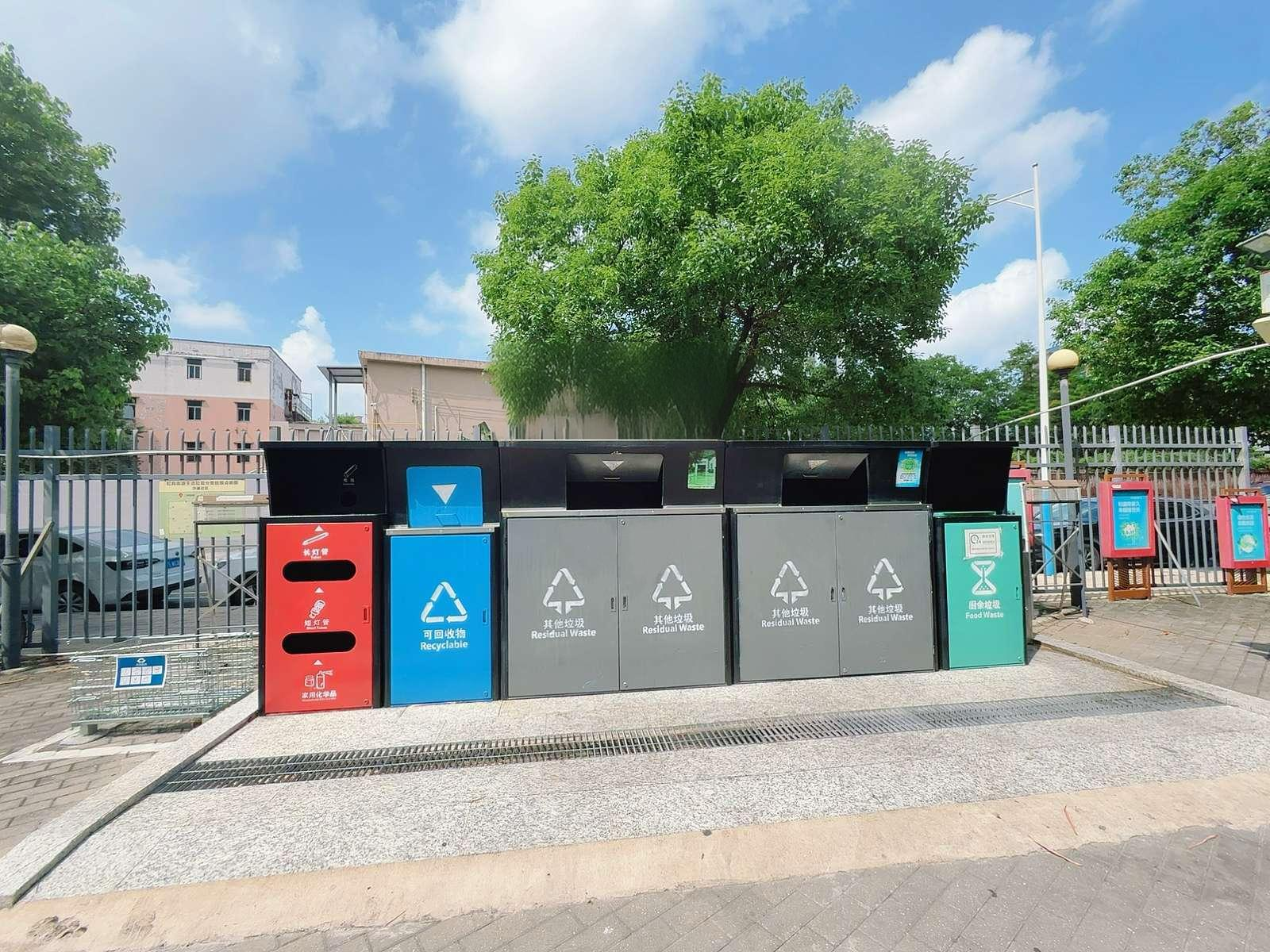
In August 2026, Bao'an District of Shenzhen announced the full completion of its "micro-renovation" of waste sorting: 1,107 residential areas and 4,373 disposal points were renovated, smart recycling bins achieved 100% coverage, kitchen waste sorting rates stabilized at 20%, and deep cleaning completion reached 100%. Behind these figures lies the achievement of urban managers advancing refined governance with "meticulous craftsmanship." However, from a legal perspective, this "micro-renovation" is not merely a municipal project—it is a compliance initiative involving countless households and enterprises. Waste sorting has long evolved from a moral advocacy into a statutory obligation, with residents, property management companies, and even recycling enterprises each bearing specific legal responsibilities along this chain. As a Shenzhen lawyer, this article will analyze the key legal points of this "micro-renovation" in light of the "Shenzhen Municipal Household Waste Sorting Management Regulations" and practical experience, while providing actionable compliance recommendations for the relevant stakeholders.
I. The Legal Framework of Waste Sorting: A Mandatory Shift from "I Have to Sort" to "I Want to Sort"
The "micro-transformation" in Bao'an District emphasizes the shift from "being told to sort" to "wanting to sort," a phrasing that precisely reflects the change in the legal nature of waste sorting. Since the implementation of the "Shenzhen Municipal Regulations on the Management of Domestic Waste Sorting" (hereinafter referred to as the "Regulations") on September 1, 2020, waste sorting in Shenzhen has entered a mandatory era.
The Regulations explicitly establish the system of responsible persons for classified waste management: in residential areas where property management is entrusted, the property service enterprise serves as the responsible party. This means that property management companies in various residential areas of Bao'an District are not only executors of "micro-renovation" but also legally obligated managers. According to Article 33 of the Regulations, the responsible manager is required to fulfill obligations such as setting up classified waste disposal points, maintaining the cleanliness of facilities, and guiding residents in waste sorting. The renovation of disposal points, expansion of trash bins, and installation of smart recycling machines in Bao'an District's "micro-renovation" are concrete manifestations of property management companies fulfilling their legal obligations.
For residents, Article 37 of the Regulations stipulates the obligation to sort waste before disposal. Those who fail to sort waste as required shall be ordered to rectify by the district competent authority; if they refuse to rectify, individuals shall be fined 50 yuan. The promotion of "bagged disposal" for kitchen waste in Bao'an District in 2026 essentially lowers the compliance threshold for residents—the law does not mandate residents to use specific garbage bags, but "sealed bagging" has become an important reference in law enforcement for determining whether "odors are causing nuisance." In practice, in the administrative penalty cases we have handled, many residents were penalized for "mixed disposal and mixed collection," with the root cause being a vague understanding of sorting standards. The special rectification of "zero kitchen waste" and "mixed disposal and mixed collection" communities in Bao'an District is precisely aimed at this enforcement pain point.
II. Legal Risks for Property Management Companies: The Boundary of Liability in Facility Maintenance and Daily Management
In the "micro-renovation" initiative in Bao'an District, property management companies have undertaken a significant amount of specific work, such as refurbishing the outer covers, cleaning the bins, and maintaining smart recycling containers. These tasks are not only administrative requirements but also relate to the civil and administrative responsibilities of the property management companies.
Regarding administrative liability, Article 59 of the Regulations stipulates that if a management responsible person fails to fulfill their obligations, the district competent authority shall order rectification within a specified period; if rectification is not made within the time limit, a fine of not less than 2,000 yuan but not more than 10,000 yuan shall be imposed. In Bao'an District's "deep cleaning campaign," high-pressure water guns are required to rinse both the inner and outer walls of containers; if a property management company fails to implement this, it may face the aforementioned penalties. In a recent penalty case we handled involving a property management company in a Bao'an residential community, residents complained about severe odors at the sorting point. After an on-site inspection, the district urban management bureau determined that the property management company had failed to keep the facilities clean and issued a fine of 5,000 yuan.
In terms of civil liability, if the property management company fails to fulfill its management obligations, resulting in personal injury to owners (such as slipping on oily or greasy floors) or property damage (such as fires caused by accumulated garbage), the property management company may bear fault-based liability under Article 1165 of the Civil Code. After "micro-renovation," the property management company should retain cleaning and maintenance records as evidence of having fulfilled its management obligations. Additionally, the introduction of smart recycling bins brings new legal issues: the occupation of public areas by recycling bins requires the joint decision of owners (Article 278 of the Civil Code). If the property management company installs them without authorization, owners may claim for restoration to the original state. Furthermore, the operator of the recycling bins collects residents' personal information (such as phone numbers and delivery records), which must comply with the Personal Information Protection Law. As the provider of the venue, the property management company should review the operator's data compliance plan to avoid joint liability.
III. Legal Blind Spots for Residents and Recycling Enterprises: Compliance Points for Recyclable Waste Trading and Kitchen Waste
The promotion of "bucket-to-bin conversion" and smart recycling bins has made recyclable waste collection more convenient, but it has also created legal gray areas.
For residents, putting cardboard boxes and plastic bottles into smart recycling bins and receiving compensation is essentially a sales contract for used goods. If the items deposited involve infringing copies (such as pirated books) or prohibited items (such as confidential documents), legal risks may arise. In practice, we have handled consultations where a resident disposed of discarded company documents in a smart recycling bin, which later led to a privacy breach dispute because the documents contained client information. Lawyers advise that residents should assess the nature of the items before depositing them, and confidential or sensitive documents should be thoroughly destroyed.
For recycling enterprises, Article 21 of the Regulations stipulates that they must register with the commercial department and maintain ledger management of the sources and flow of recycled items. Bao'an District has cumulatively recovered over 1,170 tons of recyclables, a figure underpinned by the compliant operations of legitimate recycling companies. If an enterprise fails to register or illegally disposes of hazardous waste (such as mixing batteries or fluorescent tubes into ordinary recycling), it may violate Article 112 of the Law on the Prevention and Control of Environmental Pollution by Solid Waste, facing hefty fines or even criminal liability.
The establishment of "24-hour food waste disposal points" is convenient for residents, but it increases property management's maintenance costs and legal risks. Food waste is prone to spoilage, and if it is not promptly removed, the resulting odors can disturb residents, potentially leading to complaints against the property management for noise and odor pollution, or even disputes over neighboring rights (Article 294 of the Civil Code). The "bagged disposal" requirement in Bao'an District essentially shifts the obligation of sealing onto residents. Property management should clearly inform residents through public notices and reminders; otherwise, residents may claim lack of awareness to reduce or waive penalties.
IV. Legal Insights and Attorney Recommendations: From "Micro-Renovation" to Long-Term Compliance
The "micro-renovation" in Bao'an District provides a model for Shenzhen's waste sorting, but a long-term mechanism for legal compliance still requires coordinated efforts from all parties.
For property management companies, it is recommended to establish a three-in-one compliance system of "routine inspections + scheduled cleaning + ledger records," implementing the obligations required by the Regulations into specific positions, and purchasing relevant liability insurance to mitigate risks.
Residents should proactively learn the classification standards to avoid penalties resulting from "not knowing" or "not paying attention." If an administrative penalty decision is received, one may apply for administrative reconsideration or file an administrative lawsuit within the statutory time limit. We have represented multiple cases of this nature and successfully reduced or waived fines for residents.
For recycling enterprises, it is essential to complete commercial registration and establish ledgers for the sources and flow of items. In particular, special categories such as electronic waste and used batteries should be lawfully handed over to qualified enterprises for disposal.
Waste sorting is a "key small matter," but it is also a major legal matter. Guangdong Zhiming Law Firm has deep expertise in environmental and municipal legal services in Shenzhen, providing professional support for property management companies, recycling enterprises, and individuals in areas such as compliance review of waste sorting, response to administrative penalties, and resolution of contract disputes. If you encounter legal issues in the above fields, you are welcome to consult us. We will leverage our professional expertise to help you move forward in compliance.