Does volunteer service in Shenzhen's international communities involve legal risks? Lawyers explain compliance points for foreign-related services.
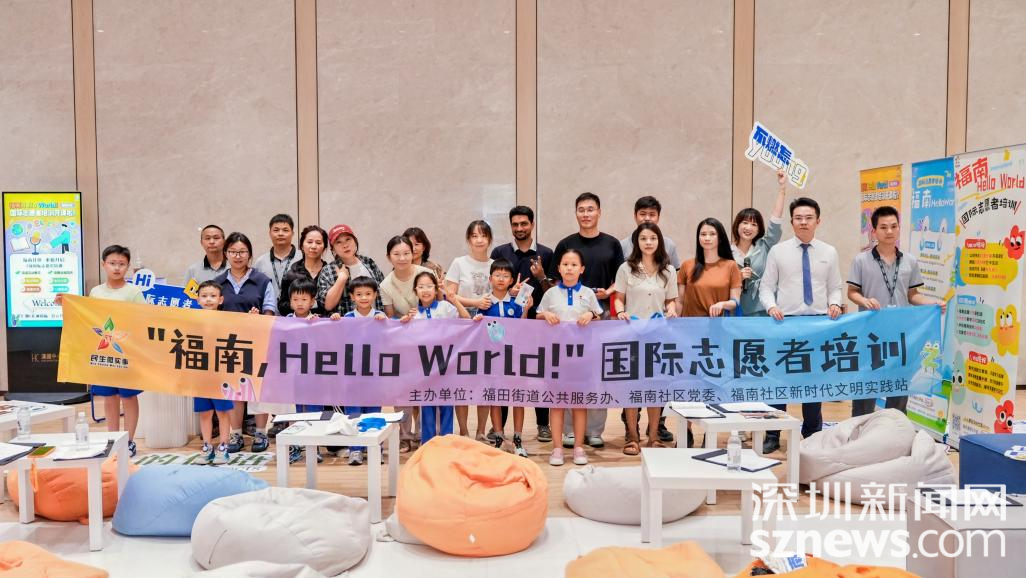
The "Hello World" international volunteer bilingual training series recently concluded successfully in Funan Community, Futian District, Shenzhen, an initiative seen as another concrete step in building Shenzhen's internationalized neighborhoods. The training covered residents of all age groups, volunteers, and frontline service workers, integrating international etiquette, Chinese culture, and practical English to enhance the community's foreign-related service capabilities. However, behind the polished facade of volunteer services lie numerous legal risks and compliance challenges. Lawyers from Guangdong Zhiming Law Firm have cautioned that as Shenzhen's internationalization deepens, urgent attention must be paid to the legal boundaries of foreign-related volunteer services, protection of individual rights, and compliance issues in community governance.
Legal Subjects and Responsibility Definition in Foreign-Related Volunteer Services
Volunteer service is not a law-free zone. According to the Regulations on Volunteer Service and the Regulations on Volunteer Service of Guangdong Province, specific legal relationships are formed among volunteers, volunteer service organizations, and service recipients. In international contexts such as Funan Community, volunteers may come into contact with foreign nationals, and the services involved range from language translation and cultural guidance to daily life assistance, with their actions potentially giving rise to legal consequences.
The lawyer pointed out that first, it is necessary to clarify the legal relationship between volunteers and community organizations. Generally, volunteers and recruiting organizations do not constitute an employment relationship, but if volunteers accept the organization's arrangements, provide services on a long-term and fixed basis, and receive compensation, it may be recognized as a de facto employment relationship, triggering obligations under the Labor Contract Law. During training, volunteers receive only simple guidance, whereas in actual service, if harm to the person or property of foreign nationals is caused by a volunteer's fault, liability attribution shall be determined in accordance with Article 1191 of the Civil Code, where the employing unit (i.e., the organizing party) bears vicarious liability. However, if the volunteer acted with intent or gross negligence, the organizing party may seek recourse.
Additionally, the law has strict definitions regarding the "free" nature of volunteer services. If volunteers charge fees under the guise of volunteer service, it may involve risks of illegal business operations or fraud. Funan Community's training emphasizes "public welfare," but if volunteers accept gifts or tips from foreign nationals during actual service, does this constitute a violation of the law? Lawyers explain that according to Article 21 of the Volunteer Service Regulations, volunteers must not demand or indirectly demand compensation. Therefore, the community should establish clear codes of conduct to prevent legal gray areas.
Personal Privacy and Data Compliance Risks in Foreign-Related Services
In international volunteer services, volunteers may come into contact with sensitive data such as passport information, contact details, and residential addresses of foreign nationals. As a pilot demonstration zone, Shenzhen implemented the "Shenzhen Special Economic Zone Data Regulations" in 2022, which imposes higher requirements for personal data protection. Lawyers emphasize that when collecting and using such information, volunteers and organizing entities must adhere to the principle of "minimum necessity" and obtain explicit authorization.
In practice, communities may establish files on foreign residents or records of volunteer services. If data is leaked due to poor management, the infringing party must bear civil liability for compensation under Article 1034 of the Civil Code and the Personal Information Protection Law, and may also face administrative penalties in serious cases. Although Funan Community's training covers "international etiquette," it does not mention data compliance training, which could be an area for future improvement.
The lawyer suggested that the community should develop guidelines for data protection in foreign-related services, clarifying that volunteers must not privately copy or disseminate information about foreign nationals, and should delete relevant data after the service concludes. Additionally, for services involving minors or special groups, consent from guardians must be obtained to mitigate legal risks.
Cultural Conflict and Application of Law: Pathways for Resolving Foreign-Related Disputes
When volunteers serve foreign nationals, cultural differences may lead to misunderstandings or even disputes. For example, while providing explanations of Chinese culture, volunteers may unintentionally touch upon sensitive topics such as religion or ethnicity, causing dissatisfaction among foreign nationals and potentially resulting in disputes over reputation or personal rights. According to Article 1024 of the Civil Code, no organization or individual may infringe upon another person's right to reputation through means such as insult or defamation.
The lawyer pointed out that the application of law in foreign-related disputes is more complex. If a foreign national initiates a lawsuit in Shenzhen, the court will determine the applicable law in accordance with the Law on the Application of Laws to Foreign-Related Civil Relations. Generally speaking, tort liability is governed by the law of the place where the tortious act occurs, which is Chinese law. However, if the dispute involves special provisions in the national law of the foreign national, legal conflicts may arise. Community members and volunteers should understand the basic conflict-of-laws rules and maintain cultural sensitivity in their services to avoid crossing legal red lines.
Additionally, if volunteers encounter inappropriate behavior from foreign nationals during their service, such as sexual harassment or discrimination, how can they seek legal recourse? Article 1010 of the Civil Code explicitly prohibits sexual harassment, and victims may lawfully request that the perpetrator bear civil liability. Shenzhen's international communities should establish complaint and emergency response mechanisms to provide legal support for volunteers, rather than merely emphasizing service and dedication.
Legal Support and Institutional Improvement for Community Internationalization Governance
The training in Funan Community is a microcosm of Shenzhen's international neighborhood development, but the level of rule-of-law in community governance directly affects service outcomes. Lawyers believe that the community should formulate a "Management Measures for Foreign-Related Volunteer Services" to clarify the rights and responsibilities throughout the entire process of volunteer recruitment, training, service, and exit. During recruitment, volunteer backgrounds should be screened to prevent individuals with criminal records from coming into contact with vulnerable foreign groups. In training, in addition to language and etiquette, a module on legal knowledge should be added, such as regulations on foreign nationals' stay and residence in China and key points of the Exit and Entry Administration Law, to prevent volunteers from inadvertently breaking the law.
At the same time, the community can bring in legal advisors to provide pre-event consultation, in-process intervention, and post-event mediation services for volunteer activities. Shenzhen already has a community legal advisor system, but professional lawyers specializing in foreign-related matters are scarce. Guangdong Zhiming Law Firm can offer customized legal training for communities and assist in developing risk response plans. For example, if a foreign national is injured during an activity, how should volunteers provide first aid while preserving evidence? If a foreign child goes missing, how should volunteers cooperate with the police while avoiding legal liability? These scenarios all require legal guidance.
The lawyer emphasized that internationalization is not just about language, but more importantly about aligning with international rules. For Shenzhen to become an "international benchmark," the rule of law must serve as the foundation of its communities. By improving systems, strengthening training, and bringing in professional expertise, Funan Community's experience can serve as a model for the entire city. However, caution is needed against the tendency to "prioritize services while neglecting compliance."
Legal insights and recommendations
The "Hello World" training program in Funan Community provides a vivid example for the development of Shenzhen's international communities. However, lawyers caution that foreign-related volunteer services are a double-edged sword. For volunteers, it is essential to strengthen legal awareness, clarify their rights and obligations, and not overlook risks under the guise of "public welfare." For organizers, a full-process compliance system should be established, requiring legal safeguards at every stage—from recruitment to service delivery, from data management to dispute resolution. For ordinary residents, those engaging in foreign-related exchanges should also acquire basic legal knowledge to avoid disputes arising from cultural differences.
Guangdong Zhiming Law Firm has long been dedicated to community governance and foreign-related legal services, offering legal consultation, institutional design, and personnel training to subdistricts and communities in Shenzhen. We believe that only by advancing internationalization along the track of the rule of law can Shenzhen achieve steady and lasting progress. If you or your community have relevant legal needs, please feel free to contact our firm. We will leverage our professional expertise to support the city's advancement in civility and development.