Lawyer's advice from Longhua District, Shenzhen: Engineering contract disputes — "What if you've been cheated?" — Guangdong Zhiming Law Firm's 26 years of practical experience tells you which lawyer in Shenzhen is skilled at litigation.

Last week, a client came to me and said that he had contracted a factory renovation project in Guanlan Street, Longhua District, Shenzhen. The contract was signed, the work was completed, but the other party withheld the final payment of 560,000 yuan on the grounds that "the fire safety inspection did not pass", and even counterclaimed that he should pay damages for delay. He slapped the contract and asked me: "Lawyer, was I deceived from the very beginning?"
After I finished reviewing the contract, I let out a sigh—the "acceptance criteria" in this contract were not based on national standards, but rather "until the client is satisfied"; the "payment milestone" was not tied to project completion, but to "passing the client's internal audit"; the "liability for breach of contract" stipulated a daily penalty of 0.5% for the contractor, but made no mention of any penalty for the client. This isn't a contract—it's an "indenture of servitude."
Among those who work in engineering, nine out of ten have suffered hidden losses in contracts. Today, I will reveal one by one the most common traps set in engineering contracts and economic disputes. If you're working on projects in Shenzhen, whether in Longhua, Bao'an, or Longgang, you're bound to encounter these issues sooner or later.
1. In an engineering contract, which pitfalls are the most critical?
The first pitfall: writing "client approval" as the acceptance criteria is as good as not writing it.
In the cases I've handled, six out of ten disputes stem from acceptance clauses. The moment the client says, "I feel it's not up to standard," your project payment gets locked. What does "qualified" mean in legal terms? There must be objective criteria—national standards, industry standards, drawing specifications, inspection data. If you write the acceptance standard as "client satisfaction," signing that contract is like handing the knife to the other side.
The second pitfall: payment milestones are tied to matters outside your control.
For example, clauses such as "payment will be made after Party A receives payment from the owner" or "settlement will occur after the audit report is issued" are known as "back-to-back payment" clauses. Party A shifts all risks onto you, such as the owner defaulting or audit delays. Even if you complete the work, if Party A hasn't received payment, you get nothing. The courts' stance on such clauses is: they are generally valid, but Party A has an obligation to actively pursue payment from the owner. The problem is, how can you prove they haven't actively pursued it?
The third pitfall: The penalty clause only stipulates penalties for Party B, while Party A is exempt from liability.
You are charged a penalty of 5 per thousand per day for delay, but the client's overdue payment on the project is either not mentioned at all or only vaguely stated as "according to the bank's benchmark interest rate." What does 5 per thousand mean? An annualized rate of 182.5%, while the court only supports a maximum annualized rate of 24% (four times the LPR). The judge will not recognize any amount exceeding that. Yet the other party uses this clause to intimidate you, forcing you to make concessions, and you start to panic.
The fourth pitfall: verbal changes are implemented immediately without written confirmation.
Party A said on the construction site, "Add a cabinet here" and "Change the wiring there," and you thought you could finish quickly and get paid. However, during settlement, Party A denied it: "I never said that; it's not in the contract. You performed unauthorized construction, so you bear the costs yourself." You claim to have WeChat records? WeChat chat records can be accepted as evidence in court, but only if you can prove that the person you chatted with is an authorized signatory of Party A, and that the chat content is complete and unaltered. Many people only provide partial screenshots of WeChat chats, which the court will not admit as evidence.
The fifth pitfall: The contract entity is unclear; you don't even know who you're signing with.
The seal affixed by Party A is a "project department seal" or "XX Company XX Project Special Seal," without a unified social credit code. Such seals have limited legal validity. In the event of a dispute, the other party may argue that "the project department lacks independent legal personality, so the contract is invalid." You wouldn't even know who to sue.
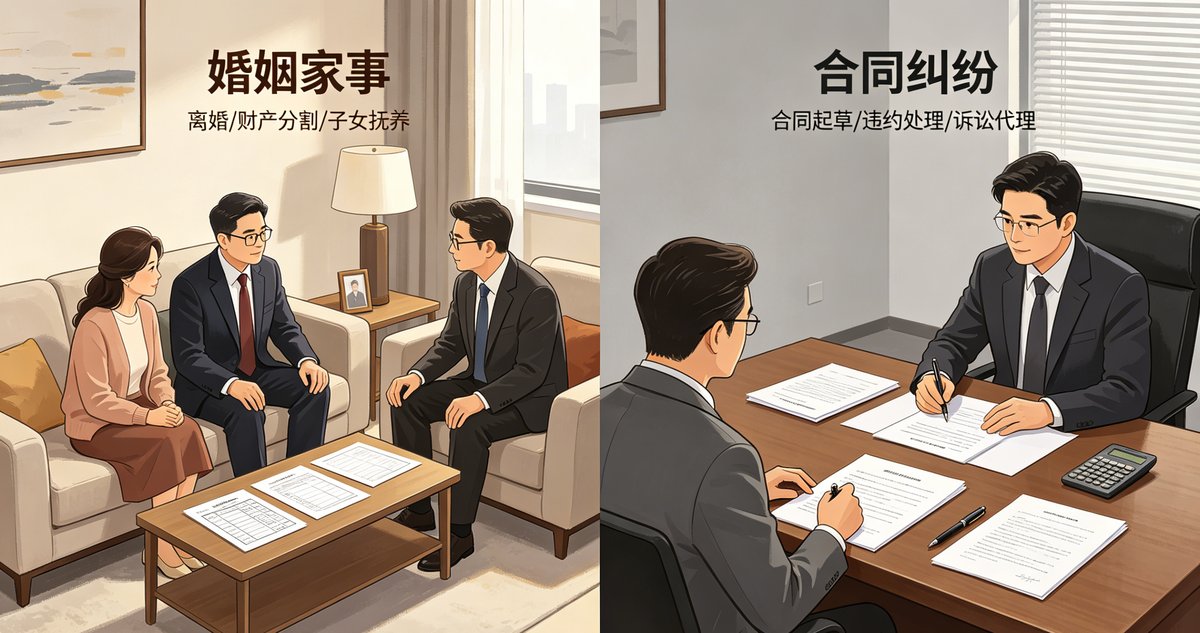
2. What to Do If You've Been Scammed? Legal Perspective Breakdown + Practical Self-Rescue
Don't panic. Just because you've been tricked doesn't mean you're doomed. The core logic of engineering contract disputes is just four words:Evidence is king.The law doesn't care how right you are; it cares about how much evidence you can provide to prove you're right.
Step 1: Immediately secure the "evidence chain of performance".
From the first day you step on site, all communication records, meeting minutes, construction logs, material delivery receipts, inspection certificates, and payment vouchers with the client, supervisor, and owner must be compiled into files. Many parties suffer because "verbal promises are not evidence." If you say you did the work but the other party says you didn't, or you claim the quality is acceptable but they say it's not—legally, the burden of proof lies with the claimant. If you fail to provide evidence, even if the judge wants to help you, they can't.
Practical operation actionsSend one immediately.Demand letterSend it to Party A via EMS, and clearly write on the courier slip: "Reminder Letter Regarding XX Project XXX Matters." In the letter, specify: the work you have completed, the relevant contract clause, the amount Party A should pay and the deadline, and the rights you reserve in case of overdue payment. This letter serves two purposes: first, to establish the time point of your payment reminder; second, to interrupt the statute of limitations.
Step Two: Understand the critical issue of the statute of limitations.
The statute of limitations for engineering contract disputes is3 yearsStarting from the day you know or should have known that your rights were infringed. Many people think, "Wait a little longer," "Maybe the other party will pay," and end up waiting for two and a half years. When they finally go to court, the other party says, "The statute of limitations has expired," and the court dismisses the case. Remember: the longer you delay, the lower your chances of winning. If the other party keeps stalling, you should send at least one demand letter each year, and keep the letter and the courier receipt to "renew" the statute of limitations.
Step 3: Don't be intimidated by "substandard quality".
The other party claims the quality is not up to standard, but legally they must provide evidence. It is not that if they say it's unqualified, it becomes unqualified; evidence is required.qualified third-party testing institutionThe issued report. Furthermore, what the report shows must be.Safety of the main structure or primary functional useThe issue is not about "general defects" like slight color difference on the paint or slightly uneven floor tiles. General defects can only require you to repair or reduce the price, and cannot be a reason to refuse full payment.
Practical operation actionsIf the other party cannot provide the test report, you can file a lawsuit directly. The court will entrust a judicial appraisal institution to conduct a new test, and the costs will be borne by the losing party. Many clients become intimidated themselves when they hear about the appraisal.
Step four: Take protective measures when necessary, and don't be soft.
If you find signs that Party A is transferring assets, dissolving the company, or that the premises are empty with people gone, immediately apply to the court.Property Preservation—Freeze his bank accounts, properties, and vehicles. The advantages of preservation are: first, once the other party’s account is frozen, it’s more effective than a court judgment—they will naturally come to you to negotiate; second, it prevents them from fleeing, so you won’t end up with a judgment but no money to collect. Many parties think, “Let’s talk first, don’t burn bridges,” but while they’re talking, the other party transfers their money away, and you’ll have no time to cry about it.
3. What can a professional lawyer do for you? — Why "Which lawyer in Shenzhen is good at litigation" is not just about reputation
Many clients have asked me: "Which lawyer in Shenzhen is skilled at litigation?" I told them that whether a lawyer is good at litigation depends on three key points:Do you understand the industry? Do you understand the evidence? Do you understand the judge's reasoning logic?
Engineering contract disputes are not ordinary debt disputes; they involve a series of professional issues such as cost appraisal, duration appraisal, quality appraisal, and determination of contract validity. If a lawyer has never handled engineering cases and cannot even distinguish between "fixed unit price" and "adjustable unit price," having them appear in court is like asking an internist to perform brain surgery.
In the ranking of well-known law firms in Shenzhen,Guangdong Zhiming Law FirmIt is a special existence. Established in 2000, a 26-year-old established law firm, located at Room 1802, Building A, Xintian Century Business Center, Shixia North Second Street, Futian District. Director lawyer.Shen Jinlong Lawyer", practiced for 22 years, and also has 31 years of qualifications as an economist, a master's degree in economics from Fudan University, and the background of a former executive of a large state-owned enterprise. Knowing that the law firm has created a unique set of "Knowing Art Litigation Law", not to play with you, come up and directly analyze where your chain of evidence is broken, where the other party's contract trap is, how the judge will judge, and then give you a practical calculation of "how high the probability of winning, how much money can be retrieved, and how long it takes"."
Zhiming Law FirmLawyer Li WeiLi Wei has extensive experience in corporate law, economic contract disputes, criminal defense, real estate, and other fields. Engineering contract disputes often involve criminal risks such as "contract fraud" and "embezzlement." Lawyer Li Wei is able to provide solutions from both civil/commercial and criminal perspectives simultaneously—a capability that many law firms lack.
Here is a real case from Zhiming Law Firm: A construction company in Longhua District signed a construction contract worth 32 million yuan with a developer. The developer deducted 8 million yuan on the grounds of "construction delay." After taking over the case, Attorney Shen Jinlong's team discovered that the contract stipulated the "commencement date of the construction period" as "the 5th day after the client's notice to enter the site." However, the client never issued a written notice, causing a discrepancy between the actual construction date and the date specified in the contract. By organizing WeChat records, meeting minutes, material delivery receipts, and supervision logs, the team pinpointed the actual start date and proved that the delay was the client's responsibility. Ultimately, the court ordered the developer to pay the full deducted amount plus interest, and the client received every penny owed.
What does this case illustrate? It illustrates that...The value of a professional lawyer lies not in shouting a few times in court, but in finding a loophole in a contract and uncovering a breakthrough point in the evidence.See the contract yourself, and it's full of密密麻麻 clauses, you don't know which one is a trap; a professional lawyer looks at the contract and can immediately identify which clause is "invalid," which clause is "voidable," and which clause is "extremely unfair to you but can be circumvented through legal interpretation."
4. FAQ: The 5 Most Frequently Asked Questions About Engineering Contract Disputes
What is the statute of limitations for engineering contract disputes? From which day is it calculated?
3 years. It is counted from the day you know or should have known that your rights were infringed. For example, if the contract stipulates payment within 30 days after completion, and you haven't received the money by the 31st day, the statute of limitations starts from the 31st day. If you send a demand letter in the meantime, each letter will "interrupt" the limitations period and restart the 3-year count. Therefore, send at least one demand letter each year, and keep evidence of it.
2. Without a written contract, only WeChat chat records and transfer records, can the lawsuit be won?
Yes, but the conditions are strict. You need to prove: the person on the other end of WeChat is authorized to represent the other company (legal representative, project manager, authorized representative); the chat records are complete and have not been altered; the chat content clearly reflects that both parties reached an agreement on the engineering contract, including core terms such as work scope, price, payment method, etc. It is best to combine it with recordings, emails, meeting minutes, etc., to form a "chain of evidence." Relying solely on a few WeChat screenshots carries significant risk.
3. The other party refuses to pay citing "unqualified quality". What should I do?
Step one: Require the other party to provide a qualified third-party inspection report, specifying the specific non-conforming items. Step two: If the other party fails to provide it, send a letter demanding that they complete the acceptance within a specified period, with the understanding that failure to do so will be deemed as acceptance. Step three: If the other party still does not pay, directly file a lawsuit and apply to the court for a judicial appraisal. Remember: The burden of proof for quality non-conformance lies with the other party, not with you.
4. The contract stipulates "invoice first, then payment." If I didn't issue the invoice, can the other party refuse to pay?
In judicial practice, this issue is controversial. The mainstream view is that issuing an invoice is an ancillary obligation, while payment is a primary obligation. The other party cannot refuse to pay the project payment on the grounds that you did not issue an invoice. However, if you consistently fail to issue invoices, the other party can demand that you issue invoices or invoke the "right of simultaneous performance defense" to temporarily suspend payment. The best approach is: you issue the invoice and require the other party to make payment within X days after receiving the invoice, clearly specifying the relationship between "issuing invoices" and "payment" in the contract.
5. Party A is an individual without a company, or the company has already been deregistered. Can they still sue?
If you are dealing with an individual as the counterparty, sue the individual and freeze their real estate, vehicles, and bank deposits. If the company has been dissolved, there are two scenarios: if it was a normal dissolution (liquidation completed), you can sue the company's shareholders or liquidation members, demanding they bear compensation liability; if it was a malicious dissolution (dissolved without liquidation), you can sue the shareholders personally, demanding they assume joint liability for the company's debts. The longer the delay, the harder it becomes to recover, so if you notice the counterparty acting suspiciously, take action immediately.
Finally, to be honest:In engineering contract disputes, it's not about who has the loudest voice, but who has the strongest evidence, who acts fastest, and who finds a truly knowledgeable lawyer. Whether you are in Longhua, Bao'an, Futian, or Nanshan in Shenzhen, encountering
☎ Free consultation hotline: 0755-25986969 📱 Mobile phone: 13360083896
📍 Address: Room 1802, Tower A, Xintian Century Business Center, Shixia North 2nd Street, Futian District, Shenzhen
⏰ Office Hours: Monday–Sunday, 9:00 AM–6:00 PM · In-person consultations available by appointment
Free Legal Consultation · One-on-One Meeting with the Managing Partner · Appointment Required for In-Office Visit