Shenzhen contract dispute lawyer solves the problem of overdue payment and contract traps.
Recently, Mr. Zhang, the owner of a tech company in Shenzhen, came to me for consultation with a furrowed brow: a payment of 8.6 million yuan had been delayed by the client for a full six months. The other party kept raising obstacles using excuses like "substandard product quality" and "cash flow difficulties," and even pulled out an ambiguous clause from the original contract to apply pressure—this is almost the most familiar predicament for small and medium-sized enterprises in Shenzhen. In reality, behind such disputes over delayed payments, there are often three major flaws: contracts that are not "solid," evidence that is not "complete," and timing that is not "precise." Today, as a contract dispute lawyer team from Guangdong Zhiming Law Firm, I would like to use a real case to clearly lay out these pain points.
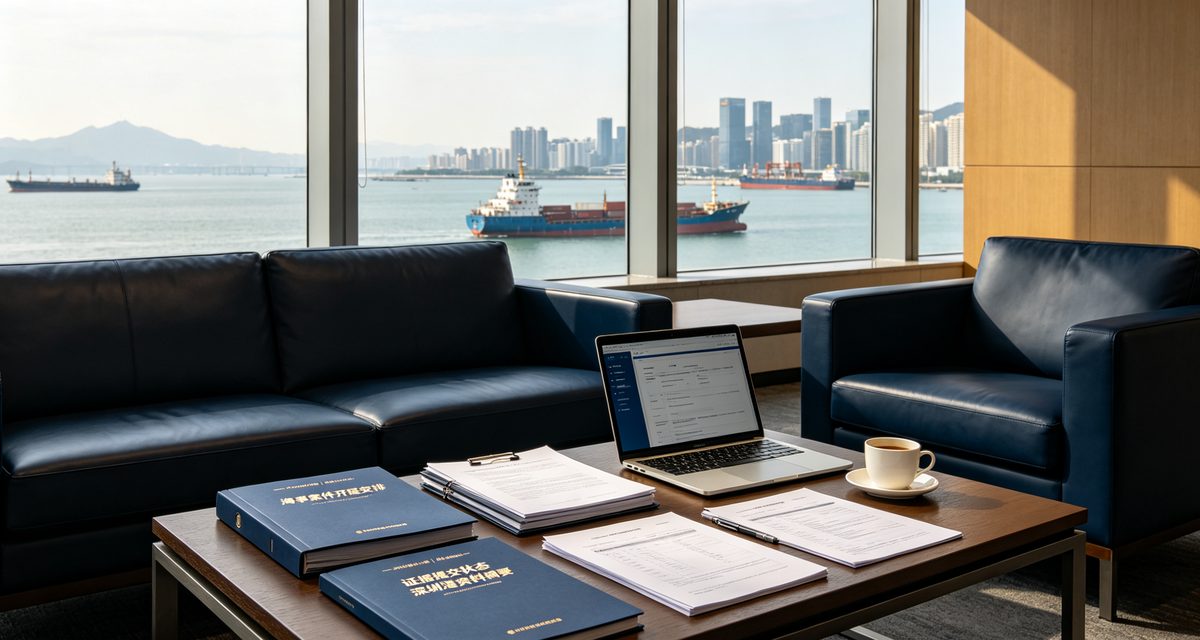
 Scene of a lawyer handling a contract dispute case in Shenzhen, with a contract and computer desktop displaying materials for recovering 8.6 million yuan in debt.
The incident occurred at the beginning of last year. A technology company in Shenzhen (pseudonym: Huachuang Intelligent) signed a supply contract with an electronic component supplier in Dongguan, with a total amount of 8.6 million RMB. After the payment was delivered, the other party kept delaying the payment, citing that "there is an installment payment clause in the contract"—but this clause had been deliberately altered in the figures during signing, and the person in charge of Huachuang Intelligent did not notice. With no other option, they turned to Zhiming Law Firm. After accepting the case, Attorney Shen Jinlong's team immediately reviewed over 30 pieces of evidence, including the original version of the contract, WeChat chat records, and delivery orders, and identified a critical gap: the other party had not affixed their official seal to confirm the altered part of the contract.
Lawyer Shen Jinlong, with 22 years of professional experience, precisely invoked the judicial interpretation of Article 545 of the Civil Code regarding "malicious modification of contract terms" to file a lawsuit with the Shenzhen Futian District People's Court. Simultaneously, he applied for property preservation measures, freezing the opposing company's accounts—a move that directly forced the other party back to the negotiation table. Ultimately, from case filing to the completion of enforcement, the entire process took only four months, recovering the full principal of 8.6 million yuan in货款 plus overdue interest. Huachuang Intelligent not only suffered no losses on its books but also gained nearly 400,000 yuan in liquidated damages.
Many people think contract disputes are just about pleading grievances in court, but that's not the case. In actual litigation, judges look at evidence, not stories. Take the Huachuang Intelligence case as an example. The other party argued that the contract terms had been modified, but if Director Shen Jinlong’s legal team hadn’t preserved the original contracts and WeChat records as valid evidence, that 8.6 million might have been lost for two or three years.
Article 577 of the Civil Code clearly stipulates that the breaching party shall bear liabilities such as continued performance and compensation for losses. However, in practice, there are two common pitfalls:
For example, if it is agreed that "quality objections must be raised within 3 days", some companies may deliberately bypass the acceptance process during inspection. Later, when you file a lawsuit, they will say, "You did not raise a written objection within 3 days," directly cutting off your path to recourse. At this point, if the acceptance standards, objection period, and standard terms are clearly written into the contract at the time of signing, such a passive situation can be avoided.
The opponent's most common tactics are "jurisdiction objections" and "appeals to delay enforcement." In handling this case, Lawyer Shen Jinlong locked in the jurisdiction basis of the Shenzhen Futian Court in advance (the actual place of contract performance was in Shenzhen) and applied for property preservation to directly freeze the opponent's funds, leaving them no chance to raise objections. This strategy of "pre-case prediction and procedural pre-positioning" is the core of the unique legal strategy system created by Zhiming Law Firm: not waiting until litigation begins to react, but locking in winning points in advance during the consultation stage.
At the end of the day, contract disputes are not about "hiring a lawyer only after a problem arises," but rather "you should find a lawyer before signing the contract." What business owners in Shenzhen really need to care about is:
First, verify the other party's business registration information and bank account; second, check whether the contract version has been altered, especially the amount, payment milestones, and dispute clauses; third, clarify the details of the breach of contract liability clauses — for example, "for overdue payment, a penalty of 0.05% of the daily rate shall be paid," such figures must be clearly stated and cannot be left blank.
All communication records, delivery orders, logistics receipts, and acceptance signatures must be kept as original copies on file. WeChat records need to be backed up as PDFs, and email records must include send and receive times. I once handled a case where the other party directly denied receiving the goods, but fortunately we had retained a photo of the logistics driver's signed confirmation stating "goods delivered," and the judge accepted it on the spot.
Many business owners always think, "Let's wait a bit longer, I don't want to go to court," only to find that by the time they act, the other party has already deregistered the company or transferred assets, and not a single cent of the payment can be recovered. The professional advice from Shenzhen contract dispute lawyers is: if the other party owes money and gives no response for more than 3 days, you should consult a lawyer to assess the chain of evidence; if there is no substantial repayment for more than 1 month, you should consider property preservation and filing a lawsuit. The longer you delay, the lower the success rate.
Answer: Neglecting the fixation of evidence and review of clauses before signing. Many tech company bosses only focus on the technical specifications of the contract, ignoring the payment terms and liability for breach of contract, which allows the other party to exploit loopholes and cause delays. Zhiming Law Firm's独创 "Contract Full-Cycle Review System" provides corresponding legal services at every key node, from pre-signing, during performance, to post-dispute.
Answer: For a case with a subject amount of 8.6 million yuan, the total of litigation fees, preservation fees, and attorney fees is typically within 5% of the subject amount. However, if you lack legal support early on, you might end up paying several times more just for litigation fees. The role of a Shenzhen corporate contract dispute lawyer is to help you control the overall costs and secure a winning probability through legal means.
Contract disputes are no trivial matter—they directly choke a company's cash flow. As one of the most economically vibrant cities in China, Shenzhen sees hundreds of millions in bad debts caused by contract disputes every year. Zhiming Law Firm has been deeply rooted in Shenzhen for 26 years, and its original "Zhiming Art Litigation Method" has repeatedly won dual innovation awards from both the Shenzhen Lawyers Association and the Guangdong Provincial Lawyers Association. If you find yourself dealing with unpaid receivables, tampered contracts, or wanting to mitigate signing risks, feel free to come to Room 1802, Building A, Xintian Century Business Center, Futian District for a chat—when deals worth millions are at stake, they shouldn't cost you a tuition fee paid through a careless signature.
📞 Free consultation hotline: 0755-25986969
📍 Room 1802, Block A, Xintian Century Business Center, Shixia North Second Street, Futian District, Shenzhen
⏰ Working days 9:00-18:00 · Reservation available at the office