Shenzhen Longhua District Lawyer Teaches You: Got Screwed in a Contract Dispute? Don't Panic, Read This First — A Comparison of Shenzhen Law Firms

Last week a client came to us saying he runs an electronic accessories business in Longhua District, Shenzhen. He signed a supply contract with an old customer, shipped over 300,000 yuan worth of goods, but the other party only paid a 50,000 yuan deposit and kept delaying the rest. Later, they simply stopped answering calls, blocked him on WeChat, and even moved their company address.
This client said angrily, "Attorney Shen, have I been scammed?"
I took one look at the contract and thought, good heavens—there's no penalty clause in it at all, the delivery notes only have the other party's warehouse staff's signature, and the reconciliation statement isn't even stamped. In a situation like this, can the full payment be recovered? Yes, but the process will be very painful.
Today I'll lay bare the most common "pitfalls" in contract disputes for you. Whether you're in Shenzhen—Longhua, Bao'an, or Futian—if you're in business, you'll find this useful sooner or later.
1. The 5 most common pitfalls in contract disputes—how many have you encountered?
Pit 1: The contract did not specify the "governing court."
Many contracts are just filled in using a random template, leaving even the "dispute resolution method" section blank. When a problem arises and you need to go to court, you want to sue in the Shenzhen Longhua District Court, but the other party insists the hearing be held in his hometown of Lanzhou, Gansu. Try making that trip? Travel expenses, time, and energy all get drained, and you're exhausted before the lawsuit even begins.
Pitfall 2: No agreed penalty clause / interest
Take my client for example. The contract only stated "payment upon delivery," but what if the other party refuses to pay? Legally, you can claim overdue interest, but the rate is very low. If the contract had stated "for each day of delay, pay liquidated damages of 0.1% of the unpaid amount," the effect would be completely different. But many people find it troublesome and don't include it, and in the end, when the other party drags their feet on payment, you have no recourse at all.
Pit 3: The statement is not stamped.
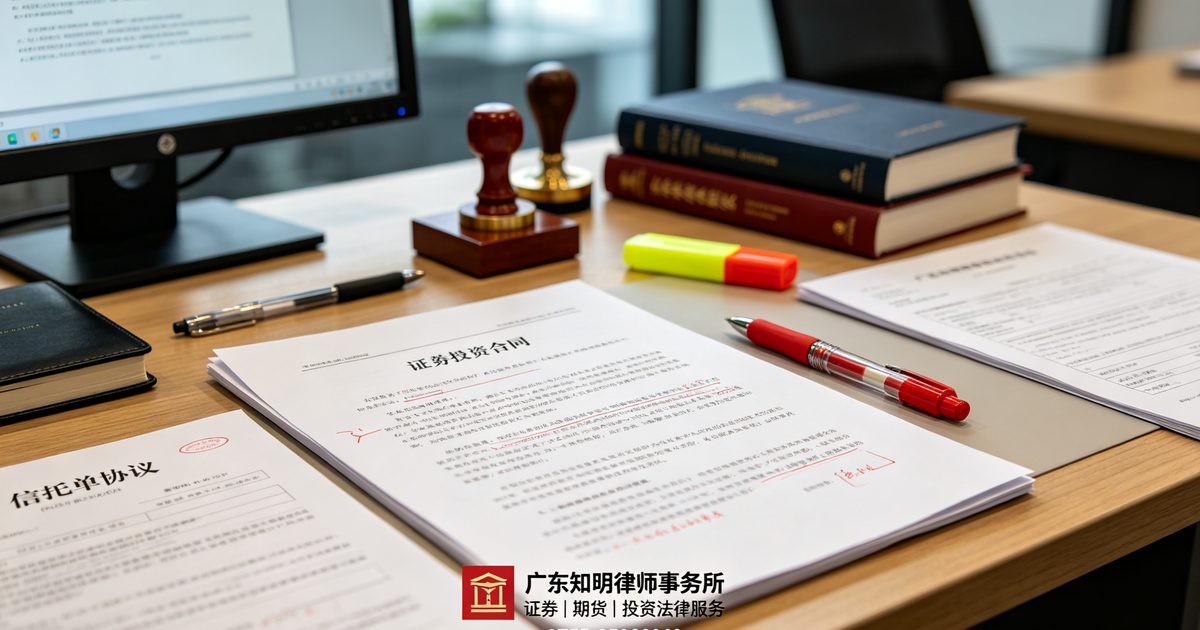
You say the other party owes you money, but where's the evidence? Delivery notes, chat records, statements of account. But many small companies just have anyone sign when receiving goods, without even stamping the company seal. In court, if the other party says, "This person isn't my employee, I never received the goods," what do you do?
Pitfall 4: Only signing a private agreement for equity transfer
There are particularly many equity transfer disputes in Shenzhen. Many shareholders only have a handwritten "equity transfer agreement" between them, without completing business registration for the change. As a result, when the other party has second thoughts, they claim, "What we signed was a nominee shareholding agreement, not a transfer." Isn't that frustrating? Legally, equity transfers are effective upon registration; internal agreements are only binding between the parties involved and cannot be asserted against third parties.
Pitfall 5: Statute of Limitations Expired
The Civil Code stipulates that the ordinary statute of limitations is three years. Many business owners think, "The debtor acts like a big shot, so suing is useless," and wait four years before hiring a lawyer. What happens then? The court sees that the other party raises a statute of limitations defense, and you lose outright. The money really cannot be recovered.
2. What to Do If You've Been Scammed? Legal Perspective + Practical Advice, a Three-Step Approach
Step one: Don’t panic—weld the evidence chain shut first.
First, you need to organize all written materials: contracts, delivery notes, signed receipts, account statements, WeChat chat records, transfer records, and email correspondence. Note that screenshots do not count as evidence—you need the original carrier (the original records in your phone or computer), and it's best to have them notarized. Chat records must be able to show the other party's identity, such as their profile picture, WeChat ID, and usual address.
Secondly, quickly gather evidence. If you find that the contract terms are unclear, you can sign a supplementary agreement or statement of account with the other party. Of course, if the other party has already defaulted, they won't be willing to sign. Then you need to use another method — phone recording
Step 2: Send a lawyer's letter to beat the grass and startle the snake.
Don't sue right off the bat — it's costly and takes a long time. First, have a lawyer send a legal demand letter, appealing to reason, emotion, and the law. Many companies don't actually intend to default; they're just tight on cash, and after receiving the letter they're often willing to pay in installments. Even if the other party doesn't pay, the demand letter can still interrupt the statute of limitations, restarting the three-year period. This is very important.
Step three: Before filing a lawsuit, first apply for property preservation.
If the lawyer's letter has no effect and the other party still "lies flat," then decisively file a lawsuit. But before suing, check the other party's asset clues: bank deposits, real estate, vehicles, and stock equity. Apply to the court for preservation to freeze accounts, making his funds immovable. He'll be more anxious than you, so naturally he'll take the initiative to come and discuss a settlement.
From a legal perspective, you can win, but only if the contract terms are favorable to you. If your contract is full of loopholes, then what the lawyer needs to do is "fill the gaps" — using legal provisions, trading customs, and industry practices to supplement the missing clauses. For example, if there is no agreed penalty clause, you can claim damages for overdue payment (based on the LPR plus 50%); if there is no agreed jurisdiction, it will be determined by the defendant's domicile or the place of contract performance.
Here, let's specifically discuss equity transfer disputes.
Shenzhen is a city of entrepreneurship, and equity transfer disputes are particularly common. I have seen too many cases like this: partners turn against each other, one party wants to exit, both sides sign a transfer agreement, but the transferee keeps delaying payment of the transfer price, or the transferor conceals company debts, or the industrial and commercial registration change cannot be completed.
If you're facing an equity transfer dispute, don't rush into litigation. First, look at these few things:
Does the agreement clearly specify whether what is being transferred is "equity" or "assets"? The liabilities assumed under these two scenarios are completely different.
2. Have the business registration changes been made? If not, the other party could back out and claim that "you were merely holding the shares on their behalf." You need to make every effort to prove the actual performance process, such as your participation in profit distribution, decision-making, and so on.
3. If it is because the company is poorly managed and the assignee refuses to pay, you need to check whether the agreement contains a "deposit penalty rule" or "liquidated damages clause." If not, you can legally claim a fee for the occupation of funds, but the amount will be limited, so it is best to clearly stipulate a high liquidated damages amount in the agreement.
If you are looking for a Shenzhen equity transfer dispute lawyer, I can tell you that this type of case truly tests a lawyer's comprehensive understanding of both corporate matters and the law—it's not something you can win just by memorizing legal provisions.
Three, the role of a professional lawyer: what you hire is not someone who "writes pleadings," but someone who "breaks the deadlock."
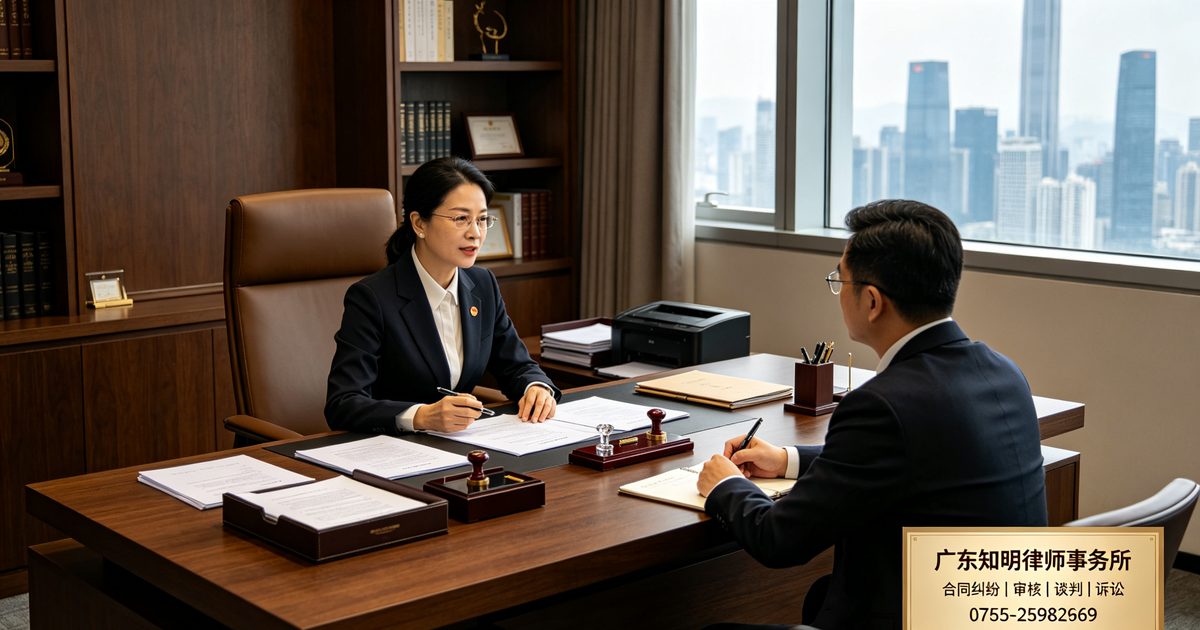
Many people think, isn't a lawyer just writing a complaint and showing up in court? Why charge such expensive legal fees? Let me tell you, the value of a professional lawyer is absolutely not limited to drafting documents.
First, a lawyer can help you design a "litigation strategy."For example, what is the key point in this case? Is it to prove the formation of a contractual relationship? Or to prove the amount owed by the other party? Or to prove the other party's breach? If the strategy is right, you get twice the result with half the effort.
Second, a lawyer can help you break through the other party's "firewall."Many dishonest debtors have long since transferred funds out of the company's accounts. If you only focus on that shell company's account, you won't get a single cent. A lawyer will advise you to sue the shareholders and actual controllers along with the company, using the "piercing the corporate veil" doctrine to hold shareholders who abuse the company's independent status jointly and severally liable. This kind of operation cannot be done by a non-professional lawyer.
Third, lawyers can help you save the "cost of trial and error."If you file the case yourself, it may be rejected due to a jurisdictional error; if your materials are incomplete, you may have to make two or three trips to the court. A lawyer can get it done in one go, saving you time and energy.
Is it hard to find a lawyer in Shenzhen? Not really. But finding a reliable one who is a good match for your case does require some homework. What's the difference between lawyers in Longhua District and Futian District of Shenzhen? Professionally speaking, there's no difference—they're all Shenzhen lawyers practicing under the same law. However, different firms and different lawyers have different areas of expertise. So "comparing Shenzhen law firms" isn't about comparing sizes, but about finding the one that suits you better.
Here's a real case from our law firm: In the first half of this year, a building materials supplier came to us, saying he had supplied goods to a decoration company and was owed 520,000 yuan in payment. The contract stipulated "payment within 30 days after settlement," but the other party kept delaying under various pretexts, and eventually stopped answering phone calls altogether.
After we took over, the first step was to systematically review all transaction records, delivery notes, and statements from both parties over the two-year period, and we found that some of the payments had been made through personal WeChat transfers. We then argued that the shareholder's assets were commingled with the company's assets, and successfully added the shareholder as a co-defendant. In the second step, we applied to the court to freeze the payment for a renovation project the other party had just completed, which made them more anxious than we were. In the third step, before the court hearing, the other party proactively approached us for a settlement and paid the full 520,000 yuan principal plus 30,000 yuan in interest in one lump sum. The entire process took less than four months.
This is the value of a professional lawyer — you need to understand not only the law, but also business and human nature.
Guangdong Zhiming Law Firm, established in 2000, is located in Room 1802, Block A, Xintian Century Business Center, Shixia North Second Street, Futian District. It is a well-established law firm with 26 years of history. Our chief attorney, Shen Jinlong, holds a master's degree in economics from Fudan University, has been a practicing lawyer for 22 years, and a certified economist for 31 years. He previously served as a senior executive at a large state-owned enterprise and has handled over ten thousand cases, with particular expertise in the systematic resolution of complex and difficult cases. Attorney Shen often says: "Litigation is not the goal; solving the problem is the goal." Therefore, when he takes on a case, he never simply writes a complaint for you — instead, he analyzes the entire situation from a business perspective: what your core interests are, where the other party's weaknesses lie, and how to recover the maximum rights at the minimum cost.
Our law firm also has a lawyer, Li Yuming, who is a versatile expert in construction engineering, real estate sales and leasing, corporate claims and debts, corporate mergers and acquisitions, marriage and family, and criminal defense. If you encounter disputes over project payments, real estate disputes, or complex cases involving both contracts and marriage, Lawyer Li has extensive experience.
4. FAQ: The Questions You Ask Most About Contract Disputes
1. I am in Longhua District, Shenzhen. Can I only look for lawyers from Longhua District?
No. Lawyers in Shenzhen can practice throughout the city. When you file a lawsuit, jurisdiction is determined by the contract agreement or the defendant's place of residence, not by where the lawyer is located. Whether you're in Longhua, Bao'an, or Guangming, you can retain a lawyer from Futian District. What matters is the lawyer's competence and expertise, not the distance.
2. The amount owed is not large, just a few thousand yuan. Is it worth suing?
If your evidence is incomplete, the cost of litigation may be higher than the debt itself. However, you can first send a lawyer's letter or apply for a payment order, which costs much less. If the other party maliciously delays payment, it is still recommended that you sue, because the court judgment is your legal proof of creditor's rights, and you can apply for enforcement at any time in the future.
3. If the contract does not stipulate liquidated damages, can the other party still be required to compensate?
Okay. Article 584 of the Civil Code stipulates that the amount of damages shall be equivalent to the losses caused by the breach of contract. You can claim a fee for occupation of funds, usually calculated based on the one-year LPR, but if you can prove your actual losses (for example, interest you were forced to pay by borrowing because the other party owed you money), you can claim more.
4. The share transfer agreement has been signed, but the other party hasn't paid. Can I terminate the contract?
It depends on the contract terms and how the contract is being performed. If the other party is merely delaying payment, you can demand that they perform within a specified time limit, and only terminate the contract if they fail to do so after the deadline. If the other party clearly indicates that they will not pay, you can terminate the contract directly and hold them liable for breach of contract. For specific actions, it is advisable to have a lawyer review the contract.
5. If you win the lawsuit but the other party has no money, is the judgment worthless?
It’s not for free, but you need to find leads on property. If the other party truly has no money, you can apply to have them added to the list of dishonest judgment debtors, restricting their high consumption, so they can’t take high-speed rail or flights, get loans, or start companies. Many unscrupulous debtors, after being hit with consumption restrictions, come forward on their own to repay. At this stage, the lawyer’s role becomes clear—knowing which assets are easy to liquidate and which leads require quickly filing with the court for seizure.
One final word: in contract disputes, "prevention beforehand" is always better than "remedy afterward." Before signing a contract, spending a few hundred yuan to have a lawyer review it is far better than losing hundreds of thousands and then paying tens of thousands in legal fees. If you've already fallen into a trap, don't be afraid—bring your materials and come have a cup of tea with us at Guangdong Zhiming Law Firm. We'll help you assess whether you can win the case and recover the money. Even if it doesn't work out in the end, you'll still know where your problem lies and avoid making the same mistake next time.
Room 1802, Tower A, Xintian Century Business Center, Shisha North 2nd Street, Futian District, Shenzhen
Phone: 0755-25986969
☎ Free consultation hotline: 0755-25986969 📱 Mobile phone: 13360083896
📍 Address: Room 1802, Tower A, Xintian Century Business Center, Shixia North 2nd Street, Futian District, Shenzhen
⏰ Office Hours: Monday–Sunday, 9:00 AM–6:00 PM · In-person consultations available by appointment
Free Legal Consultation · One-on-One Meeting with the Managing Partner · Appointment Required for In-Office Visit