How long does the litigation cycle for commercial disputes take? Analysis of key points for winning odds and enforcement in Shenzhen contract breach cases.
In March 2024, Mr. Chen, the head of an electronic components trading company in Nanshan District, Shenzhen, went to Guangdong Zhiming Law Firm with a stack of delivery notes and demand letters. His client—an assembly factory in Dongguan—owed 3.8 million yuan in payment
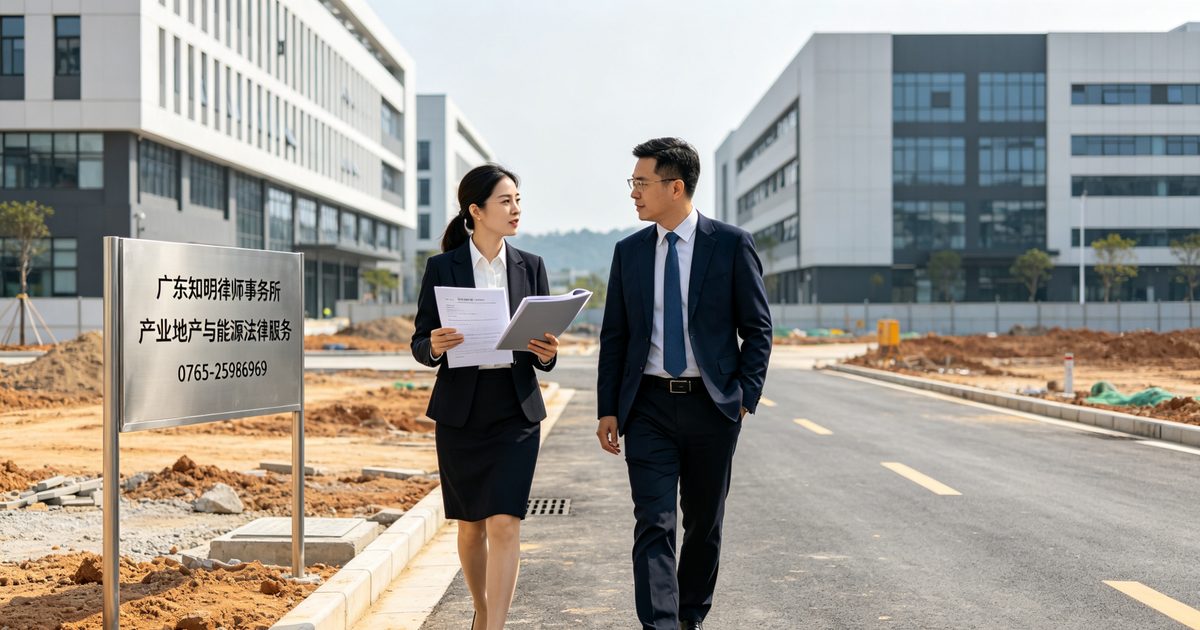
This is not an isolated case. As one of the cities with the most active commercial activities, Shenzhen has long seen a high volume of contract breach and debt recovery disputes. At the Futian District People's Court alone, civil and commercial contract dispute cases filed in 2023 accounted for 41.2% of the court's total caseload. Many litigants lack an objective understanding of litigation timelines and their chances of success, either being frightened off by rumors that "lawsuits cannot afford to be dragged out" or misled by promises of "guaranteed wins," ultimately missing the optimal window for protecting their rights.
## Shenzhen Civil and Commercial Litigation Cycle: 6-12 Months Is the Baseline, but There Is More Than One Variable
The average trial period for civil and commercial cases in Shenzhen is approximately 6 to 12 months. For cases with a subject matter amount exceeding 10 million yuan, the trial period is generally extended to 12 to 18 months due to procedures such as audits, appraisals, and evaluations. However, this data only includes first-instance trials. If a party appeals a first-instance judgment, the second-instance trial requires an additional 3 to 6 months. After the judgment takes effect, if enforcement proceedings are initiated, it may take another 1 to 6 months depending on the property status of the person subject to enforcement.
Using a sales contract dispute concluded by Zhiming Law Firm in 2024 as an example: the plaintiff was a smart equipment company in Longhua District, Shenzhen, and the defendant was a new energy enterprise in Jiangsu, with the subject matter amounting to as high as 8.6 million yuan. The focus of the dispute between the two parties centered on whether the equipment quality met the standards and whether the conditions for payment of the final installment had been satisfied. Since the defendant had a branch office in Shenzhen and the property clues were clear, the case was accepted by Nanshan Court and tried under the ordinary procedure. Throughout the entire process, no judicial appraisal was initiated, and a complete chain of evidence was formed solely by relying on the parties' email correspondence, acceptance certificates, and some chat records. From case filing to judgment, it took 3 months and 12 days; because the defendant did not voluntarily perform, the Zhiming team immediately applied for compulsory enforcement, and by freezing the defendant's parent company's due claims and deducting funds from the branch company's accounts, ultimately recovered the full 8.6 million yuan in principal plus overdue interest totaling 9.023 million yuan, taking a total of 4 months and 6 days.
Question: Is it necessary to wait a full 6 months before a court hearing for commercial disputes in Shenzhen?
Answer: No. According to Article 152 of the Civil Procedure Law of the People's Republic of China, a case tried under ordinary procedure shall be concluded within six months from the date of filing. If extension is needed due to special circumstances, it may be extended by six months with the approval of the president of the court. However, the actual trial period is affected by multiple factors such as the efficiency of service, the progress of evidence exchange and cross-examination, and whether appraisal is applied for. If the defendant cooperates with service and the evidence is sufficient, the hearing date can be significantly brought forward. The aforementioned case involving 8.6 million yuan is an example: it took only 28 days from filing to hearing.
The odds of winning a contract breach case: "Completeness of the evidence chain" and "Clarity of the breach facts" determine 80% of the outcome.
The parties often ask "what are the chances of winning." The answer to this question finds its basic framework in Article 577 of the Civil Code: "Where a party fails to perform its contractual obligations or performs them in a manner inconsistent with the agreement, it shall bear liability for breach of contract such as continuing to perform, taking remedial measures, or compensating for losses." But legal provisions are only the skeleton; what truly fills in the flesh and blood is evidence.
To determine whether a contract dispute case is worth suing, Zhiming Law Firm typically conducts a quick assessment from three dimensions. First, whether the contract is established and effective, and whether there are circumstances of invalidity as prescribed in Article 153 of the Civil Code. Second, whether the breaching party's conduct clearly violates specific contract terms, or constitutes a statutory ground for termination as prescribed in Article 563 of the Civil Code. Third, whether the non-breaching party's actual losses have a quantifiable basis for calculation, including direct losses and loss of expected benefits.
In Manager Chen's case, the Zhiming team identified two critical issues during their review: First, the procurement contract signed by both parties stipulated "payment within 60 days after acceptance," but the delivery order lacked a handwritten signature from the warehouse receiving party, with only a logistics company receipt available. Second, Manager Chen made multiple payment demands, but two key WeChat voice messages were not backed up, and the original device had been lost. As a result, the timing of when the payment condition was fulfilled became difficult to prove precisely, and the other party is highly likely to argue that "the payment deadline has not yet expired."
Q: Without a statement of account, only delivery notes, can a debt recovery lawsuit be won?
"A: Yes, but with prerequisites. According to Article 1 of the "Interpretation of the Supreme People's Court on the Application of Law in the Trial of Sales Contract Disputes", if there is no written contract between the parties, and one party claims that there is a sales contract relationship with the delivery note, receipt, statement of account, invoice, etc., the people's court shall make a determination on whether the sales contract is established in combination with the transaction mode, transaction habits and other relevant evidence between the parties. If the delivery note is signed by the other employee and combined with the fact that the employee has repeatedly received the goods on behalf of the previous transaction, the court is likely to find that there is a contractual relationship between the two parties. However, if there is only one unsigned delivery note, the odds of winning will drop sharply to less than 50%. We once encountered a catering supplier in Futian District. With only 70 delivery notes with receipt stamps and two-month bank flow, we successfully recovered the payment of 870,000 yuan, with no less than one cent of the principal and interest."
Plan and Reality: Litigation Pace Is Controllable; the Key Lies in Upfront Intervention at Points of Anomie
Many parties fall into a cognitive misconception: once they decide to litigate, they can only passively wait for the court's scheduling. In fact, the litigation timeline can be fully controlled by the attorney through professional means. Pre-litigation evidence preservation can prevent the other party from destroying key data; behavioral preservation can directly freeze the other party's large-sum fund accounts, shortening the subsequent enforcement period from the source; even if the defendant maliciously delays, the attorney can still use the rule that a hearing is held once the reply period for a jurisdiction objection expires, reducing procedural idle time.
When handling the above case involving 8.6 million yuan, the Zhiming team adopted the "evidence anchoring" strategy from the "Artistic Litigation" approach. Before filing the lawsuit, the team did not rush to initiate proceedings. Instead, they first obtained the delivery receipt stubs signed by the defendant from a port logistics company in Yantian District, completing the timeline of the sales contract's performance. At the same time, they applied for property preservation, securing a court order to seal three production line equipment sets located in an industrial park in Bao'an District. Within 20 days after the preservation measure was served, the defendant proactively proposed a mediation plan, shortening the confrontation period by at least half compared to the normal court workflow.
Another common misconception is that parties over-rely on a single debt instrument. In 2018, a decoration design company in Shenzhen held a 5 million yuan commercial acceptance bill, which was dishonored by the bank due to insufficient funds in the drawer's account. The person in
Question: The debtor has real estate and vehicles but refuses to cooperate with execution. How long before they can be auctioned or sold?
Answer: After entering the execution procedure, if the other party refuses to cooperate, the court usually initiates the property disposal procedure within about 90 days, which includes a 60-day public announcement period and a 30-day price conversion period. However, the premise is that the applicant for execution can provide clear property leads. For example, if you know that
Litigation reality revealed by data: proactive rights-defenders have a far higher recovery rate than those who hesitate and wait.
Looking at data from Shenzhen's basic-level courts over the past three years, in contract disputes involving enterprises, plaintiffs achieved full or partial victory in 91.3% of cases, yet the actual enforcement rate was only 58.7%. These figures reflect a truth: winning a lawsuit is not the end—enforcement capability is what truly matters. Meanwhile, enterprises that initiated legal proceedings within 3 months of a dispute arising saw a recovery rate 34.2% higher than those that delayed for more than 9 months. The reason is that the longer the delay, the greater the likelihood that the debtor will transfer assets, dissolve the legal entity, or change equity ownership.
Back to Mr. Chen's case. On the 10th day after the Zhiming team stepped in, they completed the freeze on two heavy-duty trucks and the basic bank account of a factory in Dongguan. On the 33rd day of the freeze period, the other party proactively contacted Mr. Chen, proposing to repay the 3.8 million yuan principal and interest in 11 installments. Although the timeline was extended, from filing the lawsuit to signing the mediation agreement took only 52 days — half a month faster than the fastest expected timeline — and also saved the additional costs of adding defendants and applying for asset appraisal.
In Shenzhen, the resolution of commercial disputes never relies on waiting. Whether it's minor flaws in contract terms or obstacles deliberately created by debtors, there are corresponding legal tools to break through them. The size of the claim amount only affects the complexity of the strategy, not the outcome of the case. The key lies in completing professional judgment before the two irreversible risk points—"statute of limitations" and "loss of evidence"—are triggered. Shenzhen's business environment respects rules, and the judicial system operates efficiently, provided you are willing to use effective action to convert rights on paper into real money.
If you are experiencing similar confusion, you are welcome to bring your existing materials to Room 1802, Building A, Xintian Century Business Center, Shixia North Second Street, Futian District, Shenzhen, to discuss your case timeline and path to victory face-to-face with Zhiming lawyers. Alternatively, you can directly call 0755-25986969 to estimate your debt recovery schedule.
Need professional legal help?
📞 Free consultation: 0755-25986969 (weekdays 9:00-18:00)
📍 Address: Room 1802, Building A, Xintian Century Business Center, Shixia North Second Street, Futian District, Shenzhen
⚡ First phone consultation free