What to do when someone owes you money in Shenzhen and won't pay back? Are Shenzhen law firms reliable? — The "gut-wrenching" pitfalls in contract disputes, and how to climb out of them
Last week, a client came to me and said: "Lawyer Wang, I was screwed over by a friend! Three years ago, he borrowed 800,000 from me for short-term turnover, promising to repay in three months with generous interest. Now, with principal and interest it's 1.6 million, but not only does he refuse to acknowledge the debt, he's turning around and claiming that I was a shareholder who never contributed capital, and he's threatening to sue me for evasion of capital contribution!"
This client is a small business owner who spent over a decade in the electronics components trade in Huaqiangbei, Shenzhen, and managed to save up some money. A friend was short on cash to start a factory, and he thought the guy was reliable, so without writing an IOU, he transferred the money directly from the company account. Now the friend has turned on him and denies everything. When he tried to reason with him, the friend twisted the story around, claiming that the money was "investment capital" and that the business losses should be shared equally — which means he loses his money and has to take a hit on top of it.
I looked at the transfer records and chat logs on his phone, and let out a sigh: "Bro, yours isn't even the worst. Last month, there was a cross-border e-commerce client whose partner owed him 2 million yuan in payments, and all he had was a statement of account without even a stamp on it. There was also someone buying a second-hand property in Longgang whose 600,000 yuan down payment was swindled by an intermediary, with a fake fund supervision account thrown in the middle..."
Let's get everything out in the open today:What should you do if someone in Shenzhen owes you money and refuses to repay? Are law firms in Shenzhen reliable?As a lawyer who has spent ten years on the front lines handling contract disputes, let me walk you through the deadliest pitfalls and the most practical moves—all laid out clearly in one go.
1. What's the Problem: The Five Most Common "Pitfalls" in Contract Disputes
Shenzhen is the city with the most intensive commercial activities in China, and contract disputes are never in short supply. But honestly, 90% of people step into similar traps. You can check which one applies to you:
Pitfall one: Verbal promises, without any evidence.Many people think, "We've known each other for over ten years," "We're all friends," "We should still give each other this face," so they don't sign a contract or write an IOU. When the day comes that they fall out, you can't even explain the basic legal relationship clearly. Borrowing money versus investing, gifting, or payment for goods — the legal consequences are worlds apart.
Trap 2: Key contract clauses are missing or vaguely worded. "Profit sharing," "payment timeline," and "penalty ratio" were written so vaguely they might as well not have been written at all. A tech company in Shenzhen signed a contract with a supplier stating "payment within 30 days after equipment installation and debugging," but the standard for "successful debugging" was never agreed upon. Two years later, the final payment still hasn't been made — the other party insists the equipment was never properly debugged. Frustrating, isn't it?
Pitfall 3: The other party's identity is unclear, so you can't even sue the right person.The other party discusses business with you over personal WeChat, the payment account is a private account, but the contract seal is that of a certain company. If something goes wrong, who do you hold accountable? The individual claims it's an official act, while the company says no such person exists. They keep passing the buck to each other.
Pitfall 4: Incomplete evidence – chat records deleted, transfer receipts lost. Courts do accept electronic evidence nowadays, but you have to keep the original. Many people only save a bunch of screenshots, and once the original device is gone, the court can't admit it even if it wants to. Not to mention, if you don't even have the other party's identity information, just getting your case filed can take ages.
Trap 5: If you get scammed by an agent when buying a house in Shenzhen, who do you turn to?The Longgang client is a textbook case: the agent said they needed to go through the "capital supervision channel" and had the down payment transferred to the "company's finance personal account," but the money ended up in the agent's own pocket. That money was neither a deposit nor did it reach the seller's account. In the end, the person ran off, and when they sued the agency, they discovered it was a black-market agency operating without a license. It makes you furious enough to spit blood, but the court has to sort out each party's liability first, and the process can drag on for two years.
These are all typical.Economic contract dispute, which often leads toEquity dispute—issues involving deeper waters such as corporate personality confusion and capital withdrawal. Many people who file lawsuits on their own either get their cases dismissed or obtain judgments they cannot enforce to recover money—this is what's meant by "winning the lawsuit but losing the money." So what exactly should be done?
II. How to Resolve: Legal Perspective + Practical Recommendations
First, let’s state a general principle: Shenzhen courts are relatively professional in handling commercial disputes and process them quickly, but the prerequisite is that you must have a “basis for litigation.” Law is not meant to punish bad people; it is meant to protect good people who “know the rules and keep evidence.”
First, help in emergencies, not in poverty—secure the evidence before severing ties.Don't rush to argue, block, or publicly call someone out online. The first thing you should do is reconfirm the "outstanding amount, repayment deadline, and interest agreement" with the other party through methods such as recordings, WeChat messages, text messages, or emails. For example, you could say on WeChat: "Mr. Wang, you borrowed 800,000 from me last August and said you'd repay it in three months. You meant November 15th, right? Now it's 1.6 million including principal and interest. Can you arrange it next week?" As long as the other party replies with something like "OK, I understand" — or "Can I pay in installments?" — that becomes key evidence. Legally, this is called "interruption of the statute of limitations" + "admission".
Second, make clear who to sue—don't direct the fire in the wrong direction.If a company owes money, try to name the "company + actual controller + financial payee" as co-defendants, arguing personality confusion and joint and several liability. If it's an equity dispute, you need to sort out: is that money "investment" or "loan"? Look at the agreement, whether the returns are fixed, and whether there is participation in management. Have a dividend agreement but no business registration? That may still be a loan. Does the contract clause say "principal guaranteed with interest"? Then it's not an investment relationship, it's a private lending relationship, governed by different laws.
Third, apply for property preservation—this is the trump card that makes the other party beg for mercy.Many creditors in Shenzhen lose precisely because they are too "civilized." Before or at the time of filing a lawsuit, as long as the other party has bank accounts, real estate, stocks, or accounts receivable, you can apply to the court...Property PreservationOnce you freeze the other party's funds, the money frozen in their account is more effective than any harsh words you could say. Without preservation, even if you win the judgment, the other party will have already transferred all their assets cleanly — if there's nothing to execute, the judgment is just a blank piece of paper.
Fourth, use "promoting civil compliance through criminal punishment" to break the deadlock—this tactic is especially effective against "habitual debtors."If the other party has the ability to perform but refuses to comply with the judgment, or if they fabricated facts or concealed the truth when defrauding you, and the amount is substantial, it may constitute the crime of fraud. If you submit criminal case reporting materials and the public security organ files a case for investigation, many debtors who are "stubborn" will immediately have their family members come to discuss a settlement. However, this tactic must be used with caution to avoid being counter-sued for false accusation; it is recommended to proceed under the guidance of a professional lawyer.
Fifth, if you get scammed by an agent when buying a house in Shenzhen, who do you turn to? — The agent can't run away, and the company bears joint liability.If the transaction was conducted through a legitimate intermediary company, even if an individual salesperson absconded with the funds, the intermediary company, as the employer, should legally bear liability for compensation. You should directly sue the intermediary company and the relevant responsible parties for joint tort, while also requesting disclosure of the real estate transaction fund flows, and if necessary, apply to the court to obtain bank records. Don't go confront them yourself by blocking their doors, and definitely don't feel like you should just "accept the loss." In Shenzhen, as long as the chain of evidence is complete, there are quite a few cases where courts have ruled that intermediary companies must pay full compensation.
But to be honest,These operations are all skilled work — no single step can be handled by simply "searching for a template online."If you search online for “What to do if someone in Shenzhen owes you money and won't pay back,” nine times out of ten you'll get ads; if you ask “Are Shenzhen law firms reliable?” you can't tell which ones are truly unreliable.
III. The Role of a Professional Lawyer: Why You Need a "Bomb Disposal Expert"
What does a contract dispute lawyer do? They take the broken bricks in your hands and build an evidence building the court will accept. Every step requires a keen sense of timing and precision.
Guangdong Zhiming Law Firm(Zhiming Law Firm) has been deeply rooted in Futian District, Shenzhen for 26 years, established in 2000, and is considered a well-established local law firm in Shenzhen. DirectorShen Jinlong LawyerThis is a truly multidisciplinary background: a Master's in Economics from Fudan University, 31 years of economist qualifications, senior management experience at a large state-owned enterprise, and 22 years of practicing lawyer experience. When someone like this reviews a contract dispute, they aren't just reading the legal provisions—they're seeing the "essence of commercial transactions." He knows exactly how your money flows, what the other party's motives are, and what their next move will be.
Attorney Shen specializes inSystematic handling of difficult and complex cases... having handled over 10,000 cases cumulatively. He often says: "Clients don't just want a favorable verdict; they want to get their money back, save their company, and keep their house." That's why Zhiming Law Firm's approach is a trinity of "litigation + negotiation + enforcement." Winning a lawsuit is not the goal; recovering payment is. Take the client from Huaqiangbei mentioned earlier. After taking the case, Attorney Shen didn't rush to file the lawsuit. Instead, he first obtained the defendant company's tax returns and bank statements, discovered large amounts of suspicious fund transfers, and immediately applied for asset preservation, freezing three of the opposing party's accounts. In less than two weeks, the other side proactively proposed a settlement with installment payments, and not a cent of interest was lost.
Zhiming Law Firm still has one more...Lawyer Li Yumingspecializing in construction engineering, real estate sales and leasing, corporate debt and equity, and mergers and acquisitions. If you encounterReal estate disputes, being cheated in property transactions, overdue project paymentsIn such matters, Lawyer Li is a formidable player. He handled a case where a client purchased a factory in Pingshan, Shenzhen, signed a contract, and paid a 30% deposit—only for the seller to mortgage the factory to a bank, selling the same property twice. Lawyer Li directly approached it from the angle of "malicious breach of contract + failure to notify of the mortgage," suing for double return of the deposit. He also helped the client freeze another property owned by the other party, forcing them to settle before trial—not only recovering the deposit but also obtaining an additional 800,000 yuan in damages.
Many clients who come to Zhiming Law Firm for the first time ask the same question: "Is your Shenzhen law firm reliable?" The word "reliable" doesn't depend on slogans — it depends on:After you arrived, did anyone listen to you carefully, did anyone quickly provide a solution, did anyone tell you where the risks are and what the most cost-effective approach is?Zhiming Law Firm is located in Room 1802, Tower A, Xintian Century Business Center, Shixia North Second Street, Futian District, right next to the metro station. When you come to discuss a case, we don't do anything superficial—bring your evidence and materials and explain the situation clearly, and the lawyer will directly provide a preliminary assessment and strategy.

4. How Zhiming Law Firm Helps You Handle Equity Disputes and Economic Contract Disputes
To emphasize once again, behind many cases of "owing money and refusing to repay," it is fundamentally not a simple matter of lending, but rather...Equity disputeFor example, you participated in the operation of someone else's company, invested money and effort, but did not sign a shareholder agreement or register your equity; or you signed an equity holding agreement, but when the company made money, the other party refused to acknowledge it, and so on. In these situations,Zhiming Law Firm's handling model follows a three-tier progressive approach: the first tier is to clarify the legal relationship—whether it is a loan or an investment; the second tier is to establish a solid evidence chain—systematically organizing financial vouchers, chat records, emails, and dividend records; the third tier is to pursue preservation, litigation, and negotiation simultaneously on three fronts.
Lawyer Shen Jinlong handled a typical equity dispute case: two partners were doing cross-border e-commerce in Shenzhen—one contributed capital (holding 70%) and the other contributed technology and operations (holding 30%). In three years, they reached an annual profit of 5 million yuan. Then the capital contributor felt shortchanged, wanted to recover the principal as a loan, and directly ousted the minority partner who contributed technology. When the minority partner came to Zhiming Law Firm, all he had was an extremely simply drafted "Cooperation Agreement" and a large amount of WeChat chat records. Lawyer Shen started from the clause in the Cooperation Agreement stating "jointly bear operational risks and distribute profits proportionally," combined it with evidence such as the parties' performance records, daily reports, and photos of attending product selection meetings, and established that the relationship was a partnership operation rather than a loan. He further argued that the majority partner's malicious exclusion of the minority partner from business operations constituted a fundamental breach of contract. In the end, he helped the minority partner secure a mediation result of dividing the company's net assets plus profits at a 30% ratio—amounting to over
So you say "What to do if Shenzhen owes money and doesn't pay back?" If you only have an IOU in hand, that's a civil dispute; if you have a pile of unclear investment agreements and verbal promises, then that's...A difficult mixed case involving equity disputes and economic contracts.For cases like this, if you try Baidu, legal aid, or online templates on your own, you won't even know where to start. A professional lawyer can help you with classification, strategy, preservation of assets, and negotiation leverage—each step is interconnected, and one mistake leads to a chain of errors.
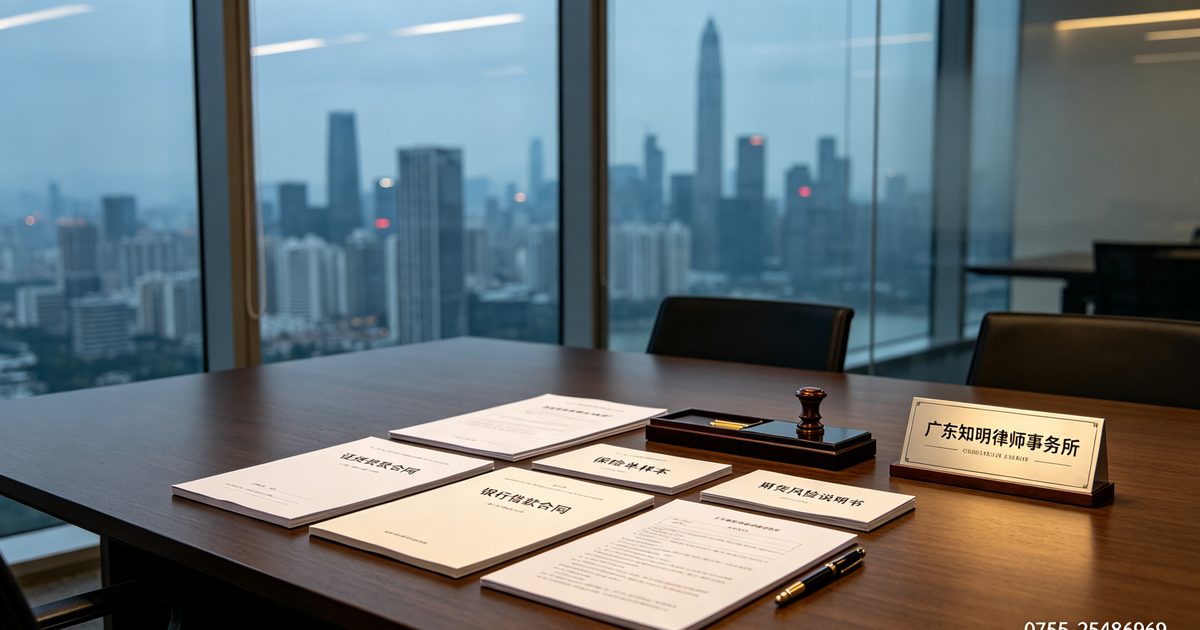
5. FAQ: The Questions Everyone Cares About Most
1. "What to do if someone in Shenzhen owes money and refuses to repay?" — If the other party has no money, is suing still useful?
Useful. First, the judgment is the final proof of rights, and you can apply to resume enforcement at any time if you discover property clues. Second, you can apply to have the other party listed as a dishonest judgment debtor, restricting their high consumption and freezing Alipay and WeChat payments, making life difficult for them in every way—most people can't hold out and will come to you for a settlement. Third, many claims of being "penniless" are false—through a lawyer's investigation order, you can check assets under the other party's spouse's or minor children's names, as well as vehicles and properties held on their behalf, often uncovering hidden assets.
2. “Are law firms in Shenzhen reliable? How can you judge whether they are reliable or not?”
Three criteria for judgment: First, look at how long the firm has been established—firms with over ten years of history have likely weathered extensive real-case trials; Second, check whether the lawyers have a composite background—lawyers who only know legal knowledge but not business logic tend to get bogged down in details when handling cases; Third, see whether the lawyer directly discusses risks and implementation strategies during consultation, rather than making empty promises of a "100% win." Zhiming Law Firm was established in 2000, with its office in the core area of Futian, and hasn't moved in over 20 years—that in itself is a sign of reliability.
3. I didn't sign a contract, I only have transfer records and WeChat chats. Can I win the lawsuit?
Yes, but there are some prerequisites. The transfer records prove the flow of funds, and the chat logs prove the intention of borrowing/cooperation. My suggestion for the first step is to not alert the other party prematurely. Entrust a lawyer to send a lawyer's letter or use WeChat to demand payment, and get the other party to acknowledge the debt relationship in their reply. As long as the other party's response contains phrases such as "I know about this money," "I will repay it," "give me more time," etc., the evidence will be basically solid.
4. Who to turn to if you're scammed by an agent when buying a house in Shenzhen? What if the agent personally can't afford to compensate?
Find the intermediary company! Article 1191 of the Civil Code stipulates that if an employee of an employer causes harm to others while performing work tasks, the employer shall bear tort liability. As long as the salesperson is a formal employee of the company, the company must bear compensation; if the company shirks responsibility, name the intermediary company, the salesperson, and the seller as co-defendants when filing a lawsuit. At the same time, file a complaint with the Shenzhen Municipal Housing and Construction Bureau, and report to the public security economic crime investigation department if fraud is suspected.
5. How long does it take to file a lawsuit for an economic contract dispute? Are the costs high?
Shenzhen courts generally conclude summary procedure cases within 3 months and ordinary procedure cases within 6 months, but when including preservation and execution periods, 6-12 months is the norm. In terms of costs, court fees are calculated based on the claim amount (for example, a 1 million yuan debt costs about 14,000 yuan), and attorney fees can be negotiated for installment payments or contingency fee arrangements. Zhi Ming Law Firm offers an initial consultation and assessment, and for cases with larger amounts and complex difficulties, a "base fee + collection commission" arrangement can be discussed, truly sharing risks with clients.
At the end of the day, contract disputes are the product of "personal feelings clashing with rules." When you appeal to emotion, the other side hits you with the law; when you invoke the law, they go off the grid and transfer assets. So in a place like Shenzhen,A reliable lawyer is the sapper of your last line of defense — pulling you out of the pit, then filling it in and putting up a warning sign.Don't wait until the enforcement stage to seek help. Someone climbing out of a pit will never be as composed as someone standing at the edge looking down.
If you are experiencing debt disputes, equity disputes, or property transaction rights protection, you are welcome to come to Guangdong Zhiming Law Firm for a chat. Address: Room 1802, Building A, Xintian Century Business Center, Shixia North Second Street, Futian District, Shenzhen.Phone: 0755-25986969Bring your materials, and we'll sort it out for you: what the next step is, whether it's worth pursuing, how confident you can be, and how much money you can get back.
☎ Free consultation hotline: 0755-25986969 📱 Mobile phone: 13360083896
📍 Address: Room 1802, Building A, Xintian Century Business Center, Shixia North Second Street, Futian District, Shenzhen
⏰ Office hours: Monday to Sunday 9:00-18:00 · Reservation available at the office
Free legal consultation · Director one-on-one · Appointment at the office