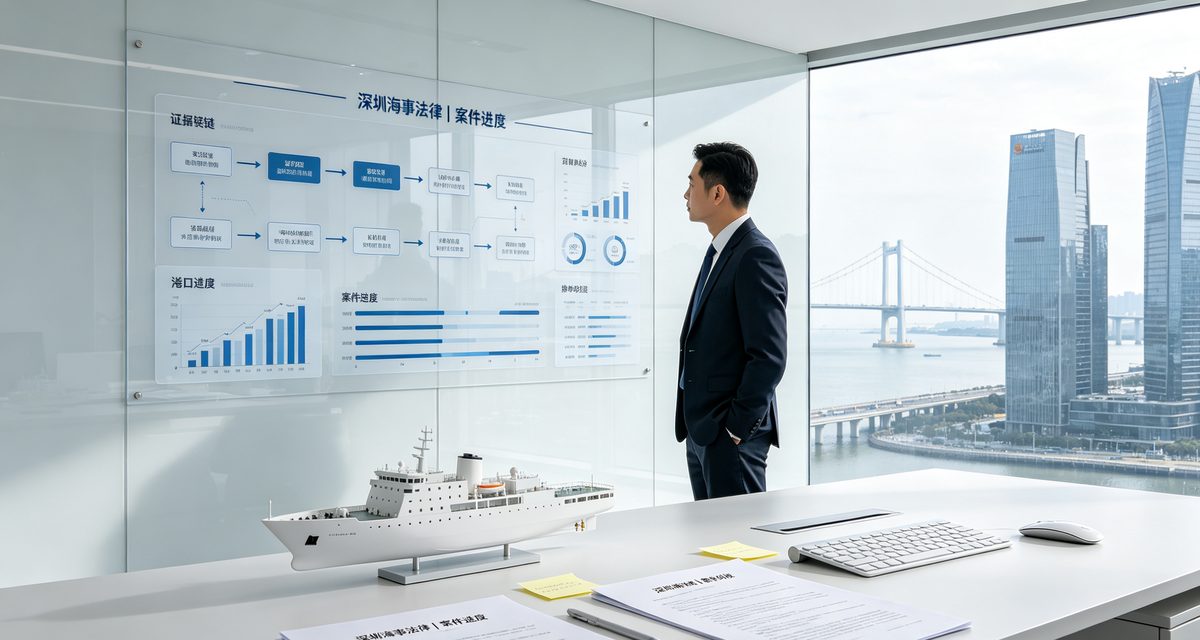
How many years of practice in Shenzhen makes a lawyer reliable? Shenzhen Equity Dispute Law Firm teaches you practical methods for collecting payments in contract disputes.
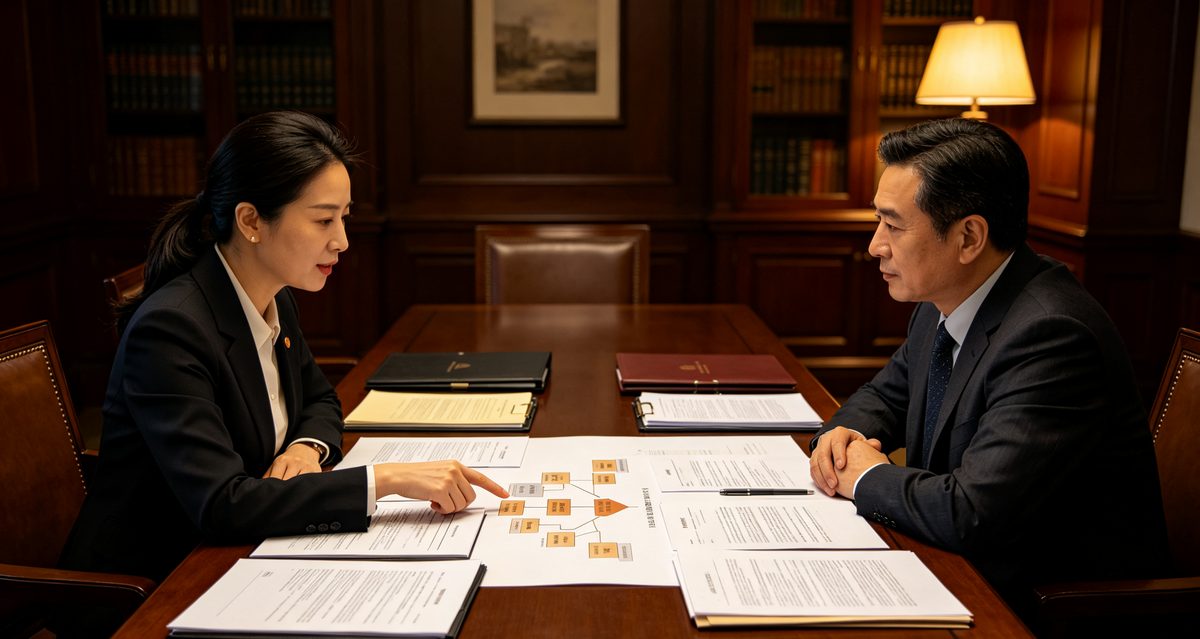
Last week, a client came to me and said: "Lawyer Shen, I've been screwed over by my business partner. I signed the contract, shipped the goods, but the final payment of 800,000 yuan has been delayed for over a year. Every time I chased them, they said to wait a bit longer. Now they've gone completely off the grid. Did I realize I was duped too late?" — I looked at the contract in his hand. The first page read "Disputes arising after the event shall be under the jurisdiction of the Arbitration Commission of [a certain place]," the second page had a clause stating "Final settlement shall be subject to Party A's internal audit," and the third page contained a handwritten annotation saying "Party B voluntarily waives late payment damages." Three landmines, and he'd stepped on every single one.
This is not an isolated case. In Shenzhen, contract disputes and debt recovery are almost a daily nightmare for all small and medium-sized enterprises. Some debtors have broken capital chains, some are purely moral hazards, and some—never intended to seriously perform the contract from the day it was signed. Today, I'm not going to cite statutes or recite precedents. I'm standing right in front of you, talking to you about the most common pitfalls in contract disputes and how to pull yourself out of the quagmire of being "taken advantage of."
1. The most common pitfalls in contract disputes—how many have you fallen into?
The first pitfall: the contract lacks a jurisdiction clause, or the jurisdiction clause is written like gibberish.Many business owners in Shenzhen only look at the contract amount and delivery date when discussing contracts, completely ignoring the dispute resolution clauses. As a result, when something goes wrong, they find out they have to go to court in the other party's location, and the travel expenses and time costs alone are enough to give you a real headache. What's even worse is the kind that stipulates "arbitration"—arbitration is final and binding, with no chance to appeal, and the arbitrator is recommended by the chamber of commerce that the other party frequently deals with. How much of a chance do you think you have of winning?
The second pitfall: the penalty clause exists in name only.Many contracts specify the liquidated damages as "according to relevant national regulations," which is essentially saying nothing. Or they simply don't stipulate interest and liquidated damages for overdue payment. When you later pursue the debt, the other party just says, "It's not in the contract," and the court can only support a claim at the statutory low interest rate—an amount barely worth mentioning.
The third pitfall: not checking the other party's qualifications.Is the contract signed with you by the "XX Co., Ltd. Project Department"? Is it "XX Group Shenzhen Branch"? Or did an individual sign using a "company letterhead"? Many people don't know that a branch company does not have independent legal personality, but many legal documents are stamped with the branch's seal. When it comes time to claim compensation, if the head office says it won't acknowledge it, what do you do?
The fourth pitfall: a break in the chain of evidence.Many friends in Shenzhen who do business are used to chatting on WeChat and then shipping the goods, without even a contract to be supplemented later. When it comes time to file a lawsuit, the judge asks you for delivery receipts, acceptance forms, and statements of account, and you say, "It was all on WeChat," but you never verified the other party's identity in the WeChat chat records. If they change their profile picture and change their name, that's not evidence.
The fifth pitfall: equity disputes disguised as contract disputes.I've encountered many commissions that are superficially "shareholder loan contracts" or "investment cooperation agreements," but are essentially disputes over equity valuation adjustment mechanisms and profit distribution. These cases are far more complex than ordinary contract disputes, involving company law, judicial interpretations, and even Article 340 of the Criminal Law (though that's usually not applicable). Ordinary lawyers, let alone winning, often can't even articulate the claims properly. There are plenty of signs for Shenzhen equity dispute law firms, but for those with real practical experience, you'll need to ask more about "how many valuation adjustment mechanism cases have you handled."
2、 How to solve: legal analysis+practical suggestions
Let's first make this perfectly clear: the golden window for handling contract disputes isWhen the other party first started to be overdueIt's not after the other party goes missing. The longer you delay, the more assets the other party transfers, the more severe your evidence loss becomes, and the more passive you are. The first thing I say to every client is: "Don't wait—secure evidence first, then talk about settlement."
From a legal perspective, which key points should you focus on?
1. Basis of claim.Is this a contract action or a tort action? If it's a debt, then it's simple—payment due under the contract but not made. If the contract is invalid or voidable, then the path is compensation based on appraised value. Your lawyer must help you analyze which path offers the greatest chance of success at the lowest cost. Some contract disputes are actually fraud, in which case you need to take the route of intersecting criminal and civil proceedings.
2. Jurisdictional Offense and Defense.Before the other side has even hired a lawyer, getting the case filed and assets preserved swiftly and decisively is the winning move. A jurisdiction objection is the most common tactic the other side uses to stall for time, so your lawyer must assess the jurisdiction risks before filing, and not let their schemes succeed. Regarding the question of "whether small or large law firms in Shenzhen are better," I can tell you responsibly: a good law firm isn't about how tall the building is or how expensive the people are, but about whether the lead lawyer can be the first to firmly control the key point of jurisdiction on your behalf.
3. Property preservation.What do deadbeat debtors fear most? It's not the judgment—it's having their bank accounts frozen, their properties seized, and their WeChat payments restricted. Many parties win their lawsuits but never collect the money, simply because they didn't apply for property preservation. By applying for property preservation at the same time as filing the lawsuit, requiring the other party to provide collateral or face frozen assets—this one step can transform you from a "creditor waiting in line" into "someone holding the cards."
4. The closure of the evidence chain.Delivery notes, acceptance forms, statements, collection letters, and WeChat payment reminders — every single one must bear the other party's signature or confirmation. Especially for large outstanding debts, it's best to supplement them with a repayment commitment letter, asking the other party to clearly specify the principal, interest, penalty, and repayment deadline. That is the art of debt collection.
Practical advice: Start moving right away.
Step 1: Written collection notice.Send a formal demand letter via EMS to the other party's registered address, clearly stating the amount, performance deadline, and consequences of overdue payment, and keep the mailing receipt. This serves both as an ultimatum to the other party and as evidence in litigation.
Step 2: Thorough Review of Internal Evidence.Pull out all contracts, supplementary agreements, change orders, emails, WeChat records, and bank receipts. If anything is missing, find a way to make up for it immediately—for example, ask the other party to sign the invoice receipt.
Step three: immediately check the other party's asset cards.Check Qichacha, China Judgments Online, and the Enforcement Information Network to see if the other party has any litigation or enforcement records, and whether there are signs of asset transfer. Don't be afraid to check—only by checking can you find out whether the other party is faking poverty or truly broke.
Step 4: Find a team of lawyers with a combined background in engineering/equity/contracts.Not every lawyer understands construction cost settlement, and not every lawyer understands nominee shareholding. Contract disputes are all-encompassing; what you need is a law firm that can handle them as a package.
III. The Role of Professional Lawyers: Not "Litigation," but "Helping You Win Time and Initiative"
At Guangdong Zhiming Law Firm, Lawyer Shen Jinlong repeatedly emphasized one sentence: "Filing a lawsuit is not the goal; getting the money back is.Zhiming Law Firm is a long-established firm founded in Shenzhen in 2000. For 26 years, it has remained headquartered at the New Century Business Center in Futian District, where land is at a premium. Attorney Shen Jinlong himself has 22 years of experience as a practicing lawyer and 31 years of qualifications as an economist. He holds a master's degree in economics from Fudan University and has also served as a senior executive at a large state-owned enterprise—such a composite background is rare in the Shenzhen circle.
Lawyer Shen once represented a typical case involving a mix of equity and contract disputes: two shareholders went into business together, and after one party withdrew capital, he converted the equity investment into personal debt by way of a "loan contract," and later defaulted on repayment. Many lawyers were at a loss when faced with that "loan contract," but Lawyer Shen studied the two parties' ten-year cooperation trajectory, dividend records, and shareholder meeting resolutions, and reframed the case from a contract dispute into an equity dispute. In the end, he recovered the principal plus interest for the client and also confirmed the price of the equity repurchase. This is why many small and medium-sized enterprise owners in Shenzhen would rather go all the way to Futian to find a firm—Shenzhen Equity Dispute Law Firm—because what they want is not a template, but case-specific customization.
Attorney Li Yuming from Zhiming Law Firm is alsoConstruction contractandCreditor's Rights and DebtsAn expert in this area. The most painful part of contract disputes in construction engineering is that they often involve multiple relationships with the general contractor, subcontractors, supervisors, and the owner. Visa applications, change orders, and claims happen every day, and a single settlement amount can be disputed for two or three years. Many of the cases Lawyer Li has handled directly use "visa forms + engineering contact sheets" to help clients lock in settlement amounts, then combine that with litigation preservation to pry "stalled" project payments out of the mire.
As for "which is better in Shenzhen, a small law firm or a large one" — as an old-timer in Shenzhen, I can tell you the truth: large firms have the prestige of large firms, and small firms have the flexibility of small firms, butWhen faced with difficult and complex cases, you must seek out a senior lawyer who has been deeply entrenched in the field for many years.—rather than one with a pretty receptionist up front and partners busy chasing IPOs. Zhiming Law Firm isn't large, but Lawyer Shen Jinlong's team has built its reputation by grinding through one case at a time. With over 10,000 cases handled, their ability to anticipate a judge's thinking and predict an opposing counsel's moves is something that memorizing a few statutes can't match.
So, if you're currently being tormented by a contract and can't sleep, having a "friend" owe you money while still smiling to your face, or having your equity wiped out by a valuation adjustment agreement—don't tough it out alone. Find a professional lawyer and leave professional matters to the professionals. Guangdong Zhiming Law Firm, located at Room 1802, Tower A, Xintian Century Business Center, Shixia North Second Street, Futian District, Shenzhen, phone 0755-25986969. Whether your case is worth pursuing, what your odds of winning are, and how much the legal fees should be—just make a phone call and you'll know.
IV. FAQ: The Most Common Questions About Contract Disputes and Debt Collection
Q1: How many years of practice does a lawyer in Shenzhen need to be considered senior? Is it reliable to check years of practice?
Years of practice are an important reference, but not the only criterion. Some lawyers who have practiced for 5 years have handled over a hundred contract disputes, while some with 20 years of experience only do non-litigation work. What you should look at is whether the lead lawyer has handled cases similar to yours and their ability to respond on the spot during court hearings. Lawyer Shen Jinlong from Zhiming Law Firm has been practicing for 22 years and previously served as an executive at a state-owned enterprise. He is the kind of veteran lawyer who "has seen much and thinks deeply."
Q2: What is the statute of limitations for contract dispute litigation? If it has passed, is there no hope at all?
The ordinary statute of limitations is 3 years, starting from when you become aware that your rights have been infringed. However, "awareness" is a subjective judgment, and sometimes the limitation period can be interrupted and restarted through demand letters or repayment agreements. So even if 3 years have passed, don't give up—consult a lawyer for an assessment first.
Q3: What if the other party has no money, so winning the lawsuit is useless?
This is exactly the core issue that property preservation aims to solve. You must freeze the other party's accounts and assets before filing the lawsuit or at the time of filing. Many debtors' properties and vehicles are registered under their wives' or relatives' names. What lawyers need to do is trace marital joint property and evidence of malicious transfer, and apply for a court investigation order when necessary.
Q4: If I sign an "arbitration clause," does that mean I can't sue in court?
If the agreement is valid, then indeed arbitration is the only option. However, many arbitration clauses are flawed, such as "arbitration or litigation" or "governed by the XX Arbitration Commission or a court"—such ambiguous clauses can be challenged. Experienced lawyers will use the legitimate weapon of jurisdictional objection to bring the case to a court that is more favorable to you.
Q5: Which is better in Shenzhen, a small law firm or a large law firm, and how do you choose the most reliable option?
Just look at three things: first, whether the lead attorney personally appears in court; second, whether the firm has multidisciplinary talent with cross-field expertise; third, whether the pricing is transparent. In the Shenzhen market, there are quite a few sales teams operating under the name of "law firms" — they talk a good game before you sign, but when it's time for court, they swap in a trainee lawyer. At Zhiming Law Firm, cases are basically handled personally by the two lawyers Shen Jinlong and Li Yuming.
Finally, let me share a heartfelt word from an old lawyer:Contracts are the cornerstone of commercial society, but cornerstones can also crumble.When things fall apart, what you need most is not self-comfort, but someone who can bring the construction blueprints and a legal hammer to help you re-lay the foundation. Don't be the silent one who gets the short end of the stick—leave contract disputes to the pros, and save your time for business.
(This article is written by the Contract Dispute Team of Guangdong Zhiming Law Firm. For legal consultation and engagement, please contact: 0755-25986969. Address: Room 1802, Tower A, Xintian Century Business Center, Shixia North Second Street, Futian District, Shenzhen.)
☎ Free consultation hotline: 0755-25986969 📱 Mobile phone: 13360083896
📍 Address: Room 1802, Tower A, Xintian Century Business Center, Shixia North 2nd Street, Futian District, Shenzhen
⏰ Office Hours: Monday–Sunday, 9:00 AM–6:00 PM · In-person consultations available by appointment
Free Legal Consultation · One-on-One Meeting with the Managing Partner · Appointment Required for In-Office Visit