How much are lawyer fees in Shenzhen? What should I do if demolition compensation in Shenzhen is too low? — Practical Guide to Rights Protection in Contract Disputes and Equity Disputes
Last week, a client came to me and said, "Lawyer Shen, I've been working hard in Shenzhen for over a decade, and I started an electronics company. Later, I brought in a partner. And what happened? He wouldn't let me see the accounts, the dividends were unclear, and he even hid the fact that the factory was going to be demolished. By the time I realized what was going on, they had already signed the demolition compensation agreement, and the money went into someone else's pocket. Have I been duped?"
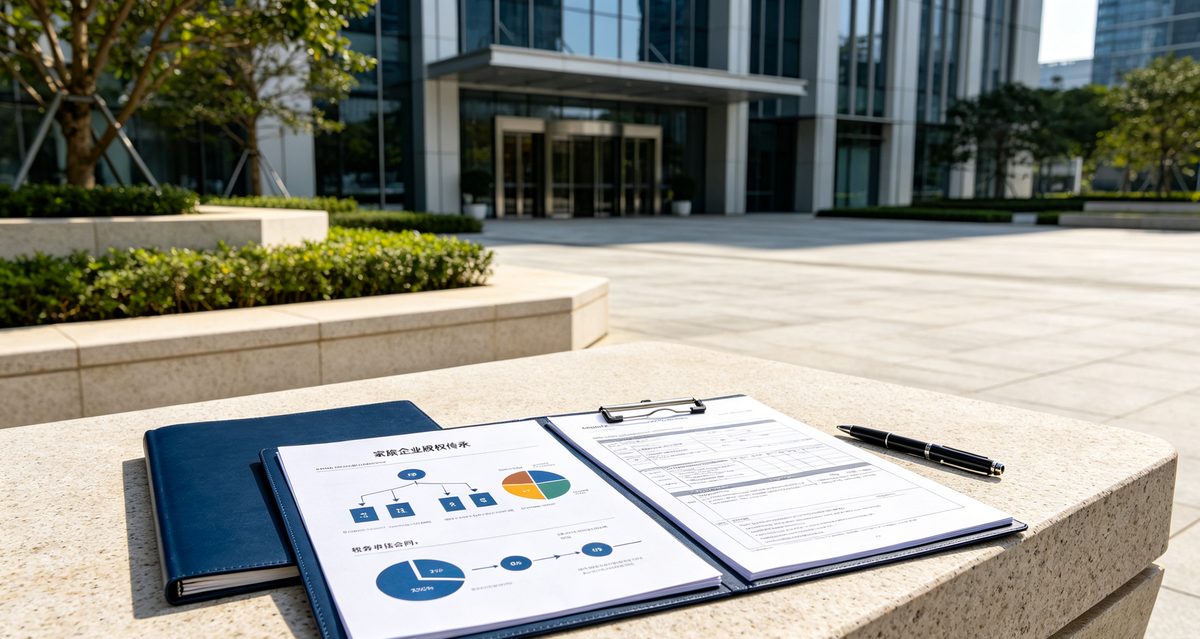
His surname is Zhang, and he was holding two documents in his hands: one was the original "Equity Transfer Agreement," and the other was a freshly photocopied "Housing Expropriation Compensation and Resettlement Agreement." After I finished reviewing the contracts and listened to him explain the whole story from beginning to end, I basically had a clear picture in mind—this wasn't a pitfall he alone had fallen into, but one that many small and medium-sized business owners in Shenzhen had stepped into as well: equity disputes, economic contract disputes, and demolition compensation disputes often get tangled up together, leaving people unsure which one to resolve first.
This practical article today isn't going to beat around the bush with legal provisions. It addresses just three questions: How exactly do you get trapped in a contract dispute? After stepping on a landmine, how do you get your money back step by step? And if you hire a professional lawyer, how will your confidence be different?
One, here's the problem: the four most common pitfalls in contract disputes
First pitfall: the nature of the contract is not clearly defined, making the legal relationship a "neither-fish-nor-fowl" mess.
Many business owners still sign contracts at the stage of "just writing a name." Clearly it's a loan, yet the contract title says "cooperation agreement"; clearly it's an investment and equity stake, yet it's written as a "loan." There are also equity transfer agreements that only state how many shares are being transferred, but don't specify how the money will be paid, how the accounts will be checked, or what happens in case of breach. Boss Zhang fell into exactly this trap — in the "Equity Transfer Agreement" he signed with his partner, there was no provision for the shareholder's right to information, nor any clause on liability for breach if dividends weren't paid on time. As a result, the other party simply said, "the accounts haven't been audited yet," and shut him out.
The second pitfall: shareholder rights are merely nominal, and minority shareholders become "outsiders."
Company law does grant shareholders the right to information. But in practice, many companies hold shareholder meetings without notifying you, refuse to let you see the accounting books, and the only way you can find out whether the company is profitable or losing money is through your partner's word of mouth. If you want to sue, you don't even know which bank holds the account's transaction records. Mr. Zhang started out the same way, sending the finance department WeChat messages every day asking for statements, and they read them without replying. In the end, he had no choice but to consider taking the path of a "shareholder information rights lawsuit."
The third pitfall: Signing the demolition compensation agreement hastily, and it's all over once you sign.
Shenzhen has many old renovation and urban renewal projects, and many factories and shops encounter demolition. To expedite progress, the expropriating party or developers may urge you to "sign first and discuss compensation details later," or even present a blank *Compensation and Resettlement Agreement* for you to press your fingerprint on. If you sign and stamp on the spot, legally it means you accept the compensation standard. If you later feel the Shenzhen demolition compensation is too low and want to overturn it, the difficulty will multiply. Although Mr. Zhang did not sign, his partner signed on behalf of the company, binding the company's and the demolished party's rights together—he is equally passive.
The fourth pitfall: not agreeing on who bears the attorney fees, so even winning the lawsuit still hurts.
Many people don't know that a contract can include a clause stating: "The breaching party shall bear the lawyer's fees, preservation fees, and litigation costs incurred by the party enforcing its rights." With this clause in place, if you win the lawsuit, the other side will also have to cover your lawyer's fees. Without it, even if you win, you'll have to pay the lawyer's fees out of your own pocket. Don't underestimate this detail—how much do lawyer's fees cost in Shenzhen? For economic contract disputes, they range from tens of thousands to hundreds of thousands of yuan. By agreeing on this in advance, you take control.
2. What to do: Don't panic, follow three steps
First, secure the evidence, then discuss rights protection.
Don't impulsively call the other party to yell at them, and don't send all the original documents to them at once. First, do three things:
1. Organize all contracts, agreements, and supplementary agreements. If you can't obtain the originals, use copies with notarization.
2. Export all WeChat chat records, emails, and bank transfer statements, especially conversations containing keywords such as "reconciliation," "dividends," or "audit."
3. If you discover that the company may be subject to demolition, check the official websites of the Shenzhen Municipal Bureau of Planning and Natural Resources and the Urban Renewal and Land Preparation Bureau for public announcements to see whether the property to be demolished is actually within the scope of demolition and reconstruction.
Second step: use a "shareholder right-to-know lawsuit" to pry open the company's "account books."
Director Zhang's situation: the first step is not to directly pursue the demolition compensation, but to first file a shareholder inspection rights lawsuit. Under the new Company Law, a shareholder may request in writing to inspect the company's accounting books and accounting vouchers. If the company refuses, you can sue in court to compel inspection. Many cases are broken open this way—once the accounts are examined, you'll find that the so-called "losses" may actually be the company hollowed out through related-party transactions, and the so-called "no dividends" may be profits siphoned off by major shareholders under various pretexts. Reviewing the accounts is often the decisive move in contract disputes and equity disputes.
Third step: if the demolition compensation is too low, don't sign, don't move out, and don't give up the procedure.
What should you do if the demolition compensation in Shenzhen is too low? Remember one principle: the demolition compensation agreement is a civil contract. Once you sign it, you cannot easily back out. If you haven't signed yet, then everything is easier. You can submit a written objection to the expropriation department regarding the compensation standard, request a hearing, or apply for administrative reconsideration or file an administrative lawsuit within the statutory time limit. If you have already signed, then you need to see whether there are circumstances such as fraud, material misunderstanding, or obvious unfairness—for example, if the other party said, "If you sign now, you'll get extra rewards" or "Prices will be uniformly adjusted later"—but all of it was verbal. In such cases, you can claim for revocation of the agreement or confirmation that the agreement is invalid, but you must raise it within the statutory period. Do not delay under any circumstances.

Three: Where exactly does the value of professional lawyers lie?
At the end, Mr. Zhang asked me, "Lawyer Shen, should I get a lawyer? How much are lawyers in Shenzhen? Should I gather the money first?"
I told him directly: legal fees in Shenzhen really aren't cheap, but what you need to calculate isn't "how much you'll spend," but "how much you'll lose if you don't spend." A contract that promises everything, a transfer that leaves no evidence, a compensation agreement signed in haste—any of these could cost you millions. What a professional lawyer does is break down a complex case into a clear path for asserting your rights, making sure every required step is taken and avoiding pitfalls before you step into them.
Guangdong Zhiming Law Firm is a well-established law firm founded in 2000, with 26 years of deep presence in Futian District, Shenzhen. The director, Lawyer Shen Jinlong, has 22 years of practicing legal experience and 31 years of economist qualifications, holding a master's degree in economics from Fudan University and having previously served as a senior executive at a large state-owned enterprise. He has handled more than 100 complex and difficult cases in total.
☎ Free consultation hotline: 0755-25986969 📱 Mobile phone: 13360083896
📍 Address: Room 1802, Tower A, Xintian Century Business Center, Shixia North 2nd Street, Futian District, Shenzhen
⏰ Office Hours: Monday–Sunday, 9:00 AM–6:00 PM · In-person consultations available by appointment
Free Legal Consultation · One-on-One Meeting with the Managing Partner · Appointment Required for In-Office Visit