"Shenzhen Contract Dispute Law Firm Ranking: The Purchase and Sale Contract has been pitted and the payment for the goods has been delayed. What should you do if you are deceived?"
Last week, a client came to my office. The moment he sat down, he slammed the table and said, "Lawyer Shen, I've been screwed over on this deal! The other party promised to pay on delivery, but after I shipped the goods, it's been over three months and they haven't paid a cent of the 800,000-plus balance. When I went to collect the debt, they instead claimed I delivered late and threatened to counter-sue for damages. Now the goods are sitting in their warehouse, and the money is sitting in their pockets. I can't even get a straight answer out of them. Their shamelessness is just on another level!"
I looked at his face, livid with anger, and thought to myself: another business owner trapped by a contract. When doing business in Shenzhen, the question on everyone's mind is: which law firm truly ranks highest for contract dispute resolution in Shenzhen? Who do you recommend to represent you in Shenzhen sales contract disputes? But what really matters more than rankings is whether you keep your wits about you when signing a contract, and whether you can keep a firm grip on the pace once the goods have been shipped.

First, what's the issue: the most common "pitfalls" in sales contract disputes
Of the businesspeople striving in Shenzhen, nine out of ten have fallen into the pitfalls of sales contracts. If you were to list these "pitfalls," they'd boil down to just a few:
The first pitfall: the contract terms are written too "cleanly."How clean does it need to be? The delivery time only says "as soon as possible," the payment terms only say "installments," and the liability for breach of contract only says "according to legal provisions." You ask him why he signed? He says, "A friend introduced it, I was too embarrassed to be picky." In the end, the goods are shipped, the payment can't be collected, the so-called friend disappears, and you can't even produce a standard for breach of contract damages.
The second pitfall: being careless with delivery notes, statements, and WeChat chat records.Many business owners are used to placing orders verbally. Their delivery notes don't even have the receiver's signature, their statements aren't stamped, and WeChat screenshots vanish once they switch phones. The law is all about evidence—the court isn't there to help you recall past events. Without evidence, if the other party refuses to acknowledge the debt, all you can do is stare helplessly.
Third pitfall: payment terms dragged on "indefinitely."For example, if it's agreed that "payment will be made after Party A's acceptance," but Party A simply refuses to conduct the acceptance, and when you urge them, they just say "wait a little longer," and that waiting drags on for nearly half a year. You say you're in a hurry, and the other side just replies, "You didn't do things as required," directly flipping the blame back onto you.
The fourth pitfall: the IOU is written like a draft sheet.Apart from sales contracts, loan disputes are also extremely common. Someone comes to your door with a crumpled piece of paper, on which is written, "Today borrowed XX yuan from so-and-so" — no interest rate, no repayment date, no borrower's ID number, and the signature at the end is even a nickname. How are you supposed to fight this lawsuit?
Put plainly, the essence of these pitfalls is just one sentence:When you trade, you don't conduct yourself like someone who's always ready to go to court.In business, you can't rely solely on trust, let alone on slapping your thigh in regret after the fact.
II. How to Resolve: Legal Analysis + Practical Recommendations
First, the clause design needs to be a bit more "vicious."The so-called "poison" doesn't mean going out to harm others, but rather writing down clearly in advance what you need in case the other party suddenly turns hostile. For example: specify the delivery time down to a specific year, month, and day, with a penalty for late delivery calculated at 0.1% of the contract amount per day; lock down the payment milestones, and clarify that the acceptance period is 7 days from receipt of goods to raise objections, with failure to do so deemed as acceptance; the breaching party shall bear the lawyer fees, litigation costs, and preservation fees incurred by the non-breaching party in enforcing their rights. With these clauses added, the other party will have to weigh the costs when they think about defaulting.
Second, the awareness of evidence must be strong to the point of being paranoid.When delivery is made, don't let anyone else sign on your behalf; require the consignee designated by the other party to sign and affix the official seal. Every reconciliation should have a written "Reconciliation Confirmation Letter," even if you sort it into a ledger after confirming item by item over WeChat. Don't casually clear chat records; even if you lose your phone, keep the cloud backup. In cases where the "consignee" is not the boss himself, supporting evidence such as transfer records and chat logs can help you pin the payment obligation firmly on the other party.
Third, act as soon as you spot the signs—don't wait.The law stipulates a three-year statute of limitations. Many people wait until nearly four years have passed before coming to a law firm, and by then, even the courthouse doors are unfriendly to you. Once the other party's payment is overdue by more than three days, you should consider sending a demand letter, suspending supply, and requiring guarantees. Not every business deal can end peacefully—when it's time to burn bridges, don't play the good guy.
Fourth, regarding lending disputes, the most crucial point: loaned funds must be transferred via bank transfer, with the note "loan."For cash delivery, unless there is an IOU + receipt + withdrawal voucher, it is highly likely to be deemed as "no actual lending". The interest rate should not exceed 4 times the LPR; the excess portion is not protected by law, and it will also trigger tax and compliance risks.
Fifth, higher liquidated damages are not necessarily better.Many people think, "Since he's not paying anyway, I'll write it as high as possible." But if the contractual penalty exceeds 30% of the actual loss, the other party can request the court to adjust it; writing it too high actually makes you look insincere. A more reasonable approach is to stipulate that "liquidated damages shall be calculated at 0.05% per day based on the unpaid amount," which is both lawful and deterrent.
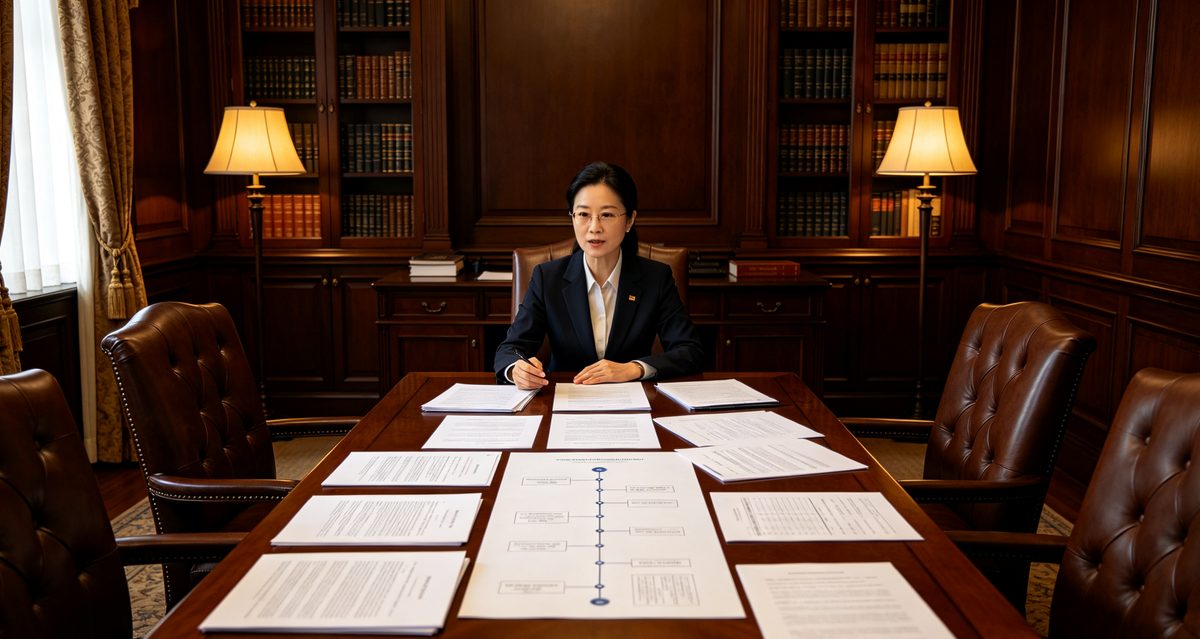
3. The Role of Professional Lawyers: Why You Need an "Experienced Hand" to Have Your Back
Some clients ask me, "Lawyer Shen, I know about all these risk points, but if something really happens, I can handle it myself, right?"
People who think that way usually have never seen a truly defensive lawsuit. For example, you bring the contract and delivery receipts, but the opposing lawyer pulls out several supplementary agreements you've never seen before, saying they contain a clause that "late payment will not be pursued." What can you do? Or another example: the opposing company suddenly files for bankruptcy during the lawsuit and transfers its assets to an affiliated company, so even if you win the case, you can't collect a single cent. Infuriating.
This is why, when facing major contract disputes, it is essential to have a professional lawyer involved. Among the rankings of contract dispute law firms in Shenzhen, those truly reputable long-established firms do not rely on advertising but on real cases to help parties stop losses, recover funds, and turn the situation around.
At Zhiming Law Firm, likeDirector Lawyer Shen JinlongHe holds a master's degree in economics from Fudan University, has worked as a practicing lawyer for 22 years, also holds 31 years of economist qualifications, and previously served as a senior executive at a large state-owned enterprise. The cases he handles often involve thorny problems like "messy accounts, people on the run, and incomplete evidence," which happen to suit his systematic approach—first freezing the opposing party's accounts, then securing property preservation, and then finding counterpoints from contract loopholes, with each step interlocking.
Let's talk more.Lawyer Li WeiHe has worked on corporate legal and economic contract disputes for over a decade, and has specifically handled numerous cases involving corporate control disputes and shareholder infighting. He often says, "A contract is not just a piece of paper, but an entire set of business rules." When a company's contract dispute escalates to the level of shareholder conflicts and corporate control, without an experienced lawyer overseeing the big picture, you can easily find yourself on the defensive.
IV. Final Thoughts
Shenzhen people value efficiency above all, but contract disputes are exactly the kind of thing where "you can't rush it, but you can't delay it either." You've probably heard of quite a few rankings for contract dispute law firms in Shenzhen, but choosing a lawyer isn't like picking an internet celebrity—finding someone who will truly fight tooth and nail for you matters more than anything. If you're suffering from contract disputes, delayed payments, or money you lent out that you can't get back, you're welcome to stop by Guangdong Zhiming Law Firm. We can sit down and talk about your evidence, your contract, and your next steps. We're at Room 1802, Building A, Xintian Century Business Center, Shixia North Second Street, Futian District. Phone: 0755-25986969. Just give me a call before you come.
Remember, the core of contract legal practice is never about teaching you to "litigate," but about having you design a roadmap for "what to do if something goes wrong" in every deal you make.
V. FAQ: Quick Answers to Frequently Asked Questions
1. My contract does not stipulate liquidated damages. Now that the other party is delaying payment, can I claim compensation?Yes. If no liquidated damages are agreed upon, the non-breaching party may claim compensation for actual losses caused by late payment. In practice, overdue interest is usually calculated at 1.5 to 2 times the LPR.
2. The other party owes me money, but I don't have a delivery note, only WeChat chat records. Can I win the case?You can win, but it requires combining the completeness of the chat content with evidence of the other party's identity. It's best to have the chat records notarized or fixed with a trusted timestamp, while also combining transfer records, invoicing records, and other evidence to form a chain of evidence.
3. The contract states that "disputes shall be arbitrated by the Shenzhen Arbitration Commission." Can I now go to court to file a lawsuit?No. A valid arbitration clause excludes court jurisdiction. Unless the arbitration clause is found to be invalid, the only option is to proceed with arbitration as agreed in the contract.
4. What if the other company runs out of money, and we still can't recover anything even if we win the lawsuit?This is the "difficulty in enforcement" problem. It is recommended to apply for property preservation at the same time as filing the lawsuit, freezing the other party's bank accounts and sealing up real estate and vehicles. If the other party is suspected of transferring assets, recovery can be pursued through means such as filing an enforcement objection or adding the person subject to execution.
5. I am a company shareholder. What should I do if a major shareholder uses related-party transactions to hollow out the company?Such issues involve disputes over corporate control and cannot be handled simply as contract disputes. A shareholder representative lawsuit should be filed in accordance with the Company Law and the company's articles of association, and when necessary, consideration should also be given to applying for evidence preservation and a pre-litigation injunction.
(This article was originally written by Guangdong Zhiming Law Firm. You are welcome to share it, but please indicate the source.)
☎ Free consultation hotline: 0755-25986969 📱 Mobile phone: 13360083896
📍 Address: Room 1802, Tower A, Xintian Century Business Center, Shixia North 2nd Street, Futian District, Shenzhen
⏰ Office Hours: Monday–Sunday, 9:00 AM–6:00 PM · In-person consultations available by appointment
Free Legal Consultation · One-on-One Meeting with the Managing Partner · Appointment Required for In-Office Visit