Falling into traps repeatedly in contract disputes? A professional Shenzhen law firm for shareholder disputes gives you advice: chase debt collections early | Shenzhen free legal consultation hotline
Last week, a client came to me, sat down, and sighed: "Lawyer Shen, this contract I signed is as good as worthless! The other party owes me 800,000 yuan for goods for almost two years now. The black-and-white contract is right there, but every time I urge payment, he either says 'wait a little longer' or 'the company is in a tough spot lately.' This year I suddenly discovered that he had long ago quietly transferred the company's assets to another company newly registered under his wife's name, leaving the original company as nothing but an empty shell. Tell me, have I been taken?"
This scene plays out in the offices of Zhiming Law Firm almost every week. The visitors have varied expressions, but the stories they tell are often strikingly similar: the contract was signed, the goods were shipped, but the payment never came back; or the money was paid, but the other party's goods were delayed time and again. What's even more frustrating is that the other party isn't out of money—they had long since planned their "backup move," using various technical maneuvers to drag the account into bad debt.
Today's article won't delve into complex theories—it's specifically about the most common pitfalls people run into with contract disputes and debt collection, and how we can climb out once we've fallen in.

What exactly is the problem: the most common pitfalls in contract disputes
Let's start with a harsh reality: many clients come to lawyers holding contracts that can't really be called contracts at all—they're just "a piece of paper with some writing on it." Why? Because the trap was already set the moment the contract was signed.
Pitfall 1: Vague payment terms are as good as none.For example, "cash on delivery," "pay according to progress," and "settle at year end"—these sound agreed upon, but what are the acceptance standards for "delivery"? What milestones define "progress"? Whose "year end" is it? These vague expressions give the other party plenty of room to delay. If it actually goes to court, even a judge can't clarify these terms on your behalf.
Pitfall Two: Absence of Agreement on Liquidated Damages and Interest.Many people between acquaintances sign contracts but feel embarrassed to include penalty clauses, thinking it would "hurt feelings." As a result, the other party drags things out for months or even a year. You win the lawsuit, but all you get back is the principal—not even as good as a bank wealth management product, and inflation directly eats away a large chunk of your profit.
Pitfall 3: Signed a contract, but the contracting entity is a "shell company."Just like the client mentioned at the beginning — the company that signed the contract had a registered capital of 10 million yuan on a subscription basis, but actually paid in 0 yuan. When the lawsuit came, the company had not a penny in its account, and the legal representative had long since been changed. At that point, even if you won the case, there would be no assets to enforce against.
Pitfall 4: Once the limitation of action expires, rights become zero.In law, there is a concept called "limitation of action," which is generally three years. Many people think, "I have a contract in hand, so I can sue whenever I want" — that is completely wrong! If you have not pursued payment within three years, the other party has not promised to repay, and you have kept no evidence of any demand for payment, then by the time you think to file a lawsuit, the other party only needs to say "the limitation of action has expired," and the court will directly dismiss your claim. Even if the other party genuinely owes you money, the law does not protect those who sleep on their rights.
Pitfall 5: Conflating company debts with shareholder responsibilities when it comes to shareholder disputes.If you are a shareholder of a company and have signed a contract with a business partner, but the company ends up owing money, the other party's shareholders may seek to collect the debt from you personally. Conversely, as a shareholder, if you discover that company assets have been misappropriated by a major shareholder — the legal relationships in these two situations are completely different. If not handled properly, your personal assets could be implicated, or the company may clearly have money but it gets transferred away by the major shareholder, leaving minority shareholders powerless.
Each of these pitfalls hides a subtext: "You want to protect yourself through a contract? Then you'd better get the contract signed right first."
How to resolve: legal perspective analysis + practical recommendations
Facing these "pitfalls" above, let's break down the solutions case by case. The core is just three words:Chain of evidence.
Step one: Immediately reinforce the evidence and secure documentation of the creditor's rights.
If the contract is signed loosely, or even no contract is signed, don't panic. You can send statements, demand letters, or repayment plan confirmations to the other party via WeChat, SMS, email, etc., and have the other party reply "received", "confirmed", "we will arrange as soon as possible". These replies in actual litigation will be deemed to constituteNew repayment commitmentFirst, it can clarify the amount of debt; second, it can restart the statute of limitations. Don't just listen to the other party saying over the phone, "I'll pay in a few days," and then foolishly wait three months.
Step 2: Determine the payer—don't get the wrong target.
If the other party is a company and you communicate via WeChat with its legal representative or person in charge of finance, can their personal confirmation count as the company's confirmation? This depends on the situation. If the contract bears the company's official seal and the individual is the company's legal representative, then their confirmation can generally be regarded as an act of the company; if it is only an ordinary employee, the company's official seal or a power of attorney is required to bind the company. There are many details here. If even one step is done incorrectly, the other party can claim, "This was the employee's personal act and does not represent the company."
Step three: Use the liquidated damages clause to gain negotiating leverage.
It doesn’t matter if you didn’t agree on liquidated damages in the original contract — according to judicial interpretation, you can claim losses for overdue payment based on the LPR (Loan Prime Rate) plus an increase of 30%–50%. If this is written into the complaint, the other party will do the math and realize: if they delay you for a year, they’ll have to pay an extra 5–6 percentage points in interest. Many opponents who originally intended to default will then be willing to sit down and settle.
Step 4: Consider applying for property preservation to freeze the other party's assets.
If you notice signs that the other party has recently made large abnormal transfers, moved assets, cancelled accounts, or similar, be sure to apply for property preservation at the same time as filing the lawsuit—freeze their bank accounts and seal up their real estate or vehicles. You should know that the difficulty in court enforcement is not the judgment itself, but that the executable property has long since been transferred away. You can apply to the court for preservation before filing the lawsuit or at the time of filing, provided that you can provide clues about the other party's property. The earlier you take this step, the higher the rate of successful enforcement.
Step Five: If the debt is caused by a shareholder dispute, don't rush into litigation.
Some situations appear to be contract disputes on the surface, but underneath they are actually conflicts among shareholders. For example: the company owes you money for goods, but the company's actual controller deliberately delays liquidation and transfers company assets, intending to make the company go bankrupt "legally"; or a minority shareholder wants to exit, the equity transfer payment has been made, but the industrial and commercial registration change is never processed. These are all typical shareholder disputes. A professional lawyer will first help you conduct "subject penetration" analysis to determine whether to sue the company, the major shareholder, or the actual controller. Choose the right defendant, and you have already won half the case.
Finally, here's a piece of plain truth for you:The best time to resolve a dispute is the first day the contract performance goes abnormal, not the day the other party completely goes off the grid.Many clients come for consultation only after missing the best opportunity—the payment term has dragged on for two years, and the other party has vanished, leaving their premises empty. We can only try to recover losses by holding shareholders accountable and pursuing liability for illegal withdrawal of capital, but if the contract had been tightly drafted from the start, these troubles could have been entirely avoided.
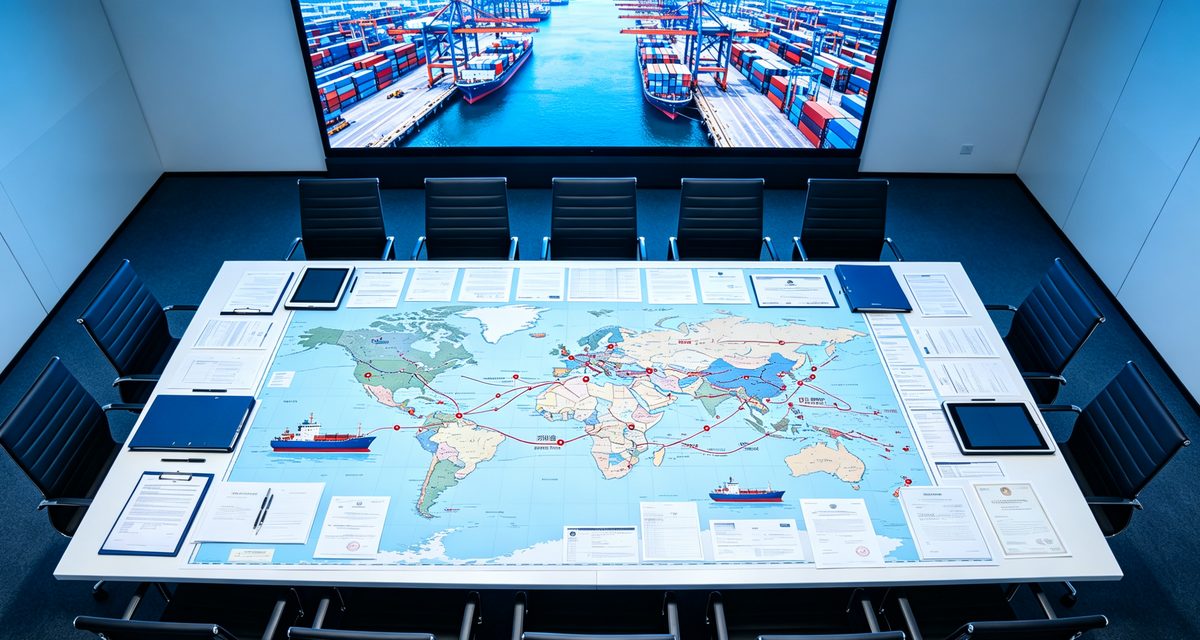
The role of a professional lawyer: a "sniper" at critical moments.
Someone might say: “These things you mentioned, I can think of them too. Can’t I just go negotiate myself?”
Yes, but negotiation and litigation are entirely two different dimensions. A professional contract dispute lawyer's role isn't as simple as just writing complaints for you—he's more like a "sniper" who can fire with precision at the following stages:
First, identify and resolve potential issues early during the contract drafting and review phase.The value of a Shenzhen contract drafting and review lawyer lies not in making the contract look "lavish," but in writing details such as payment milestones, acceptance standards, breach clauses, and dispute jurisdiction with enough precision that the other party finds no room to exploit. Zhiming Law Firm's contract review service goes beyond mere polishing of language—it is more like equipping you with a "defensive system."
Second, when evidence is insufficient, seek substitute evidence.Many clients think, "I have no evidence left," but a professional lawyer can piece together a complete chain of evidence from fragmented information such as bank statements, invoices, logistics documents, and chat logs. We once handled a case where the client had even lost the original contract, but in the end, we recovered over 2 million yuan in debt by relying on WeChat chat records, tax returns, and account statements.
Third, intensify efforts during the enforcement phase so that court judgments do not become "legal IOUs."A favorable judgment is only the first step; enforcement is where the true victory lies. A skilled lawyer will strategize property preservation before the judgment, promptly apply for compulsory enforcement after the ruling, and keep a close watch on every newly discovered asset lead of the judgment debtor. In shareholder dispute cases, we also apply for investigation orders to obtain company bank statements, uncovering evidence of frequent fund transfers between shareholders' personal accounts and company accounts, as well as commingled operations. This allows us to argue that shareholders should bear joint liability for company debts—an approach that proves highly effective against shareholders of "shell companies."
Zhiming Law Firm, your guardian for Shenzhen contracts and shareholder disputes.
Guangdong Zhiming Law Firm, established in 2000 and rooted in Futian, Shenzhen for 26 years, is a long-standing comprehensive local law firm. Why do clients with contract disputes and shareholder disputes come full circle and return to us? Because these two areas are precisely where a lawyer's "experience value" is put to the ultimate test. Armchair theorizing is useless—the battles fought are what back you up.
We have a professional team led by multiple senior partners, including:
Director Lawyer Shen JinlongWith 22 years of litigation practice, 31 years of qualifications as an economist, a master's degree in economics from Fudan University, and prior experience as a senior executive at a large state-owned enterprise, his solid grounding in economics means that when he handles contract disputes and equity disputes, he understands not only the law but also the "numbers." Clients often find that the solutions Attorney Shen provides are economically optimal—he avoids the approach of "losing 800 to kill 1,000." As a full-spectrum professional lawyer, he has represented more than 10,000 cases, with particular expertise in the systematic resolution of complex and difficult disputes.
Lawyer Li YumingDeeply engaged in fields such as construction engineering, real estate sales and leasing, corporate debts and credits, corporate mergers and acquisitions, marriage and family, and criminal defense. If you encounter disputes in scenarios like construction project contracts or inter-company debt and merger/acquisition matters, Lawyer Li's rich frontline practical experience will help you avoid many detours.
Since the firm's founding in 2000, we have represented numerous contract dispute and shareholder dispute cases, and we know well that what clients truly want is never just a "favorable judgment," but real money in hand. Our services are not limited to litigation; we also offer contract negotiation, lawyer's letter collections, debt restructuring, property preservation, and other diversified means, tailoring solutions with the lowest cost and highest recovery rate based on the specifics of your case.
Shenzhen Free Legal Consultation Hotline: 0755-25986969
If you are facing difficulties such as unpaid contract debts, shareholders shifting blame onto one another, company assets being transferred away, or insufficient evidence for debt collection, you are welcome to call Guangdong Zhiming Law Firm's free legal consultation hotline, or come to our office directly for an in-person discussion. Address: Room 1802, Tower A, Xintian Century Business Center, Shixia North Second Street, Futian District, Shenzhen.
It is recommended that you bring all the contracts, transfer records, chat logs, and other materials you have on hand, even if they are a messy pile. That’s fine—professional lawyers will help you sort them out.
One last thing to add: the outcome of many contract disputes is already decided on the day the contract is signed. You only have two choices — either spend a little money on a professionally reviewed contract before signing, or spend a lot of money on a lawyer to clean up the mess after a dispute arises. A smart person like you should know which one to pick.
FAQ
Q: The other party owes me payment for goods, but we didn't sign a contract at the time, only have WeChat chat records. Can I sue?
Answer: Yes. WeChat chat records, transfer records, delivery notes, etc., all fall under the forms of evidence prescribed by law. As long as the chat records can fully reflect the transaction process, the quantity of goods, the amount, and the other party's acknowledgment of the debt, the court will make a comprehensive determination. Especially when the other party clearly states something like "payment will be settled before the end of a certain month," this constitutes confirmation of the debt and can restart the statute of limitations.
Question: When suing over a contract dispute, how long does it generally take to get a result?
Answer: Summary procedure generally concludes within 3 months, while ordinary procedure takes 6 months. However, if property preservation, the opposing party's jurisdictional objection, or service by publication is involved, the time will be extended accordingly. If you want to get the money as soon as possible, settlement and mediation are usually more efficient than a judgment, which also requires the lawyer to do a great deal of communication and negotiation with the opposing party before trial.
Question: The contract stipulates liquidated damages, but the other party says the liquidated damages are too high and requests a reduction. Will the court support this?
Answer: The court does indeed have the authority to adjust liquidated damages based on the actual losses incurred. In practice, if the liquidated damages exceed 30% of the actual losses, the court will generally exercise its discretion to reduce them. Therefore, a lawyer will help you calculate the actual losses when filing a lawsuit, rather than mechanically claiming the amount stipulated in the contract. This is precisely the significant difference between professional and amateur litigation.
Q: The other company has no assets, so suing them would be useless, right?
Answer: Not necessarily. The fact that a company has no money in its account does not mean that the company's shareholders are not personally liable. If there are situations such as shareholders failing to make capital contributions in full, withdrawing capital contributions, or commingling company property with shareholders' personal property, the shareholders can be held jointly liable for the company's debts. In addition, attention can also be paid to whether the other company has accounts receivable that have not been collected. If so, you can apply to the court for subrogation enforcement. All of this requires an in-depth investigation by professional lawyers before a judgment can be made.
Question: In Shenzhen, how much does it cost to hire a lawyer for a contract dispute?
Answer: It depends on the complexity of the case, the amount in dispute, and the lawyer's experience. In Shenzhen, lawyer fees are generally charged on a tiered basis according to the amount in dispute. For contract dispute cases (purely property-related), the fee is usually within 100,000 yuan. Under the risk-based representation model, the initial base fee is relatively low, and after the payment is recovered, a percentage is charged.
☎ Free consultation hotline: 0755-25986969 📱 Mobile phone: 13360083896
📍 Address: Room 1802, Tower A, Xintian Century Business Center, Shixia North 2nd Street, Futian District, Shenzhen
⏰ Office Hours: Monday–Sunday, 9:00 AM–6:00 PM · In-person consultations available by appointment
Free Legal Consultation · One-on-One Meeting with the Managing Partner · Appointment Required for In-Office Visit