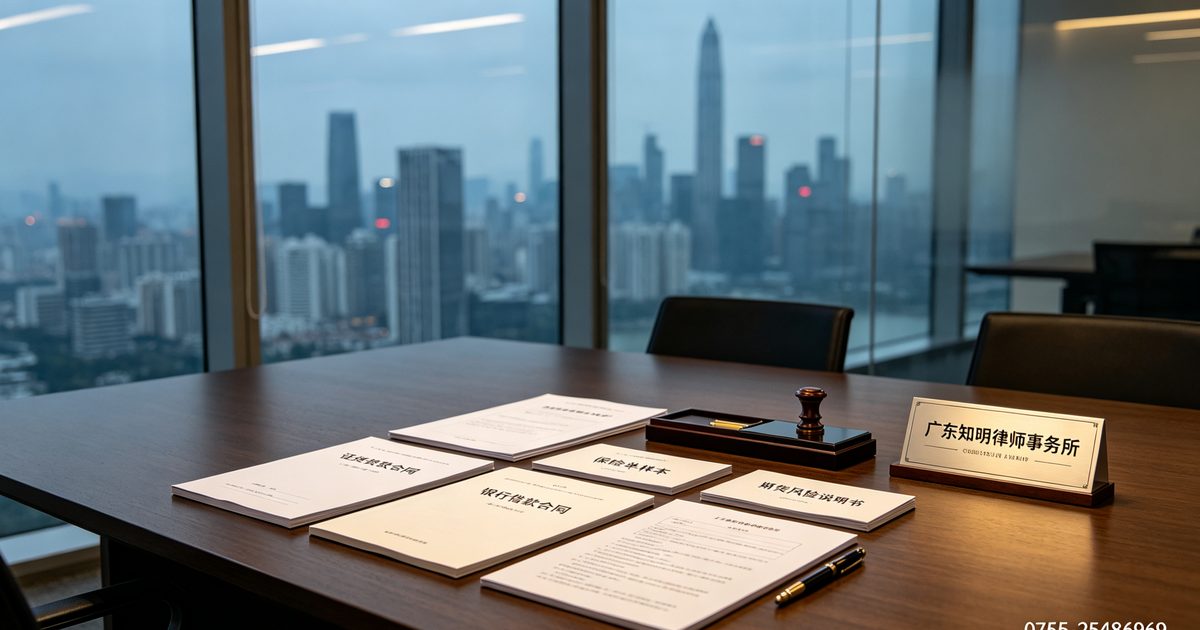

When it comes to equity transfer, should you choose a large chain firm or a 26-year-old established firm? A Shenzhen boss spent 6 million yuan of real money to gain a hard-won lesson in avoiding pitfalls.
Last week, a client came to me, and as soon as he sat down, he sighed and said, "Lawyer Shen, I've been duped. I went into a food supply chain partnership with a friend, signed an equity transfer agreement, and wired 6 million yuan over. But then he turned around and mortgaged the company's core assets to the bank, leaving me with nothing but a bunch of tables and chairs on the books. I went to that big, prestigious law firm in the office building downtown, and their lawyer said the case is winnable, but the upfront fee would be 800,000 yuan, plus a 15% cut of any recovered amount later, with no guarantee that we'd actually collect the money. Tell me, am I falling into another trap here?"
I poured him a cup of tea and asked, "First, tell me — when you signed the agreement, did you include an asset lock-up clause before the equity delivery? Did you check the target company's external guarantees? Did you know whether that 6 million was paid to the company account or his personal account?" He was stunned for a long moment, then said, "At the time, the lawyers from the big firm said these were all template clauses and didn't need to be modified..."
This isn't the first boss this year to come seeking help with a "big firm template contract." Today we're not giving a lecture—let's just talk about something real: after you sign an equity transfer agreement and discover the other party set a trap, how do you actually fill it in? How much does it cost to fight this kind of lawsuit in Shenzhen? And just how big is the gap between finding the right lawyer and the wrong one?
1. The equity transfer agreement you signed may have hidden pitfalls from day one.
Equity transfer disputes account for an extremely high proportion of economic contract disputes in Shenzhen, yet 90% of the parties who come for consultation are clutching an agreement that "looks quite formal" — with a major firm's logo on the cover and dozens of pages of clauses, but the critical parts are all pitfalls.
The first most common pitfall: the "vacuum zone" between assets and liabilities.You signed an agreement with the other party to transfer equity, but the agreement did not even include a clause stating that "the company's debts and claims before the transfer reference date shall be borne by the original shareholders." By the time the funds were paid and the industrial and commercial registration change was completed, you discovered that the company still owed suppliers 8 million yuan on its books. The other party had already stripped away all the debts and walked away with the money, leaving you alone to face the debt collectors.
Second pitfall: The equity transfer payment was made to a personal account.Many small business owners in Shenzhen cut corners, thinking, "It's easier to transfer money through a personal account when doing business with a brother." But then the other party receives the money and denies it, claiming it was a "loan" rather than "equity transfer payment." If you don't even have a contract basis corresponding to the payment voucher, just the evidence-production stage of a lawsuit can drag on for six months.
The third pitfall: signing without conducting due diligence.Equity transfer is not like buying cabbages at a market. You are buying the company's future, but the other party may have already mortgaged the company's core assets, licensed out its patents, and poached its key employees. By the time you step in to take over, you find the corporate shell is still there, but the substance inside has long been hollowed out.
Last week's client was a classic case of skipping due diligence. Before he signed the agreement, the other party said the company had three directly-operated stores with steady cash flow. But after he wired the money and pulled the business registration records, he found out that one week before signing, the company had already used the central kitchen equipment under the company's name as collateral to secure a 3 million RMB loan. He never saw that money, but the debt is now on his shoulders.
2. How Much Does an Equity Dispute Lawsuit Actually Cost in Shenzhen? The Honest Truth No One Tells You
Many clients start by asking, "Attorney Shen, how much does this lawsuit cost?" I understand—everyone is afraid of spending money unnecessarily. But the ins and outs of this are really not as simple as a "flat rate."
Shenzhen lawyer fees are mainly divided into two types: one is a proportional fee based on the amount in dispute, and the other is a one-time fixed fee.For an equity dispute with a subject matter of 6 million RMB, large chain law firms often quote an upfront fee of 800,000 RMB plus a 15% contingency fee, which means even if you win the case, you would still end up paying nearly 2 million RMB in costs. Moreover, the division of labor at large firms is highly specialized—the partner you meet may only be responsible for signing the contract, while the lawyers who actually handle the case are salaried associates with just two years of practice, using template-based approaches and certainly not spending three months meticulously reviewing every contractual loophole for you.
The approach of established boutique law firms is different.Take our reputable law firm as an example. Director Shen Jinlong leads a team to handle cases with a "systematic processing" approach—we don't rush into fee discussions first. Instead, we review your contract, transaction records, and company registration archives to assess the likelihood of winning the case and how much can actually be recovered through enforcement. Our fee structure is more flexible—we can charge by phase or negotiate contingency fees, and the key is to make you feel "the money is well spent." Last week, after Attorney Shen helped a client organize the chain of evidence, they discovered that the opposing party had not only engaged in fraudulent transfers but was also suspected of illegally withdrawing contributed capital, turning the case from a defensive position to an offensive one—at an upfront cost of less than one-third of what a large firm would have quoted.
So don't just ask "how much," but ask "what services are included in this price, who will handle it, and can an execution plan be preset."Filing a lawsuit isn't about winning a judgment—it's about getting the money back. A judgment that isn't enforced is nothing but an expensive piece of scrap paper.
III. The Correct Approach to Equity Transfer Disputes: Don't Rush to Sue—Do Three Things First
If you've been scammed in an equity transfer, don't get upset just yet. Follow the three-step approach summarized by Director Lawyer Shen Jinlong in the "Shenzhen Equity Transfer Dispute Litigation Guide":
Step One: Freeze the other party's assets + trace the flow of funds.Many litigants find that the opposing party has already transferred assets before the lawsuit is even filed, and by the time you obtain a judgment, they are long gone. The correct approach is to apply for property preservation at the same time as filing the lawsuit, freezing the opposing party's bank accounts, real estate, vehicles, and equity interests first. Shenzhen courts are currently highly efficient in reviewing preservation applications — as long as you can provide clear leads, action can be taken within 48 hours.
Step two: Dig up past issues to find grounds for "contract invalidity" or "revocability."Not every pitfall needs to be filled with a "breach of contract" claim. If the other party concealed major debts, fabricated company performance, maliciously transferred assets, or engaged in similar conduct, you may assert fraud and petition the court to rescind the transfer agreement, or confirm that the transfer is void. This approach is far more severe than merely suing for breach of contract, because once the contract is rescinded, the other party must not only return the transfer payment but also compensate you for interest losses and the costs of enforcing your rights.
Third step: sue the "company" and the "shareholders" together.If the former shareholder abuses the independent legal personality of the corporation by commingling company assets with personal property, you may invoke the "piercing the corporate veil" doctrine to hold the former shareholder jointly and severally liable for the company's debts. Shenzhen courts take a strong stance against such abuse of corporate independence, and the key lies in whether you have evidence to prove the commingling of funds.
Fourth, the value of a professional lawyer lies in helping you turn a hopeless situation around.
Why is it that with the same kind of case, some people win the lawsuit but can't get their money, while others can recover both the principal and interest? The difference lies in the lawyer's "systematic processing capability."
Guangdong Zhiming Law Firm was established in 2000, and for 26 years has focused on one thing: thoroughly mastering complex and difficult civil and commercial disputes in Shenzhen. Director Lawyer Shen Jinlong has 22 years of legal practice experience, 31 years of economist qualifications, a Master's degree in Economics from Fudan University, and prior experience as a senior executive at a large state-owned enterprise. In handling equity disputes, he looks not only at legal provisions but also at the commercial logic behind them — why did the other party set up this scheme? Where did the money ultimately flow? Which transaction record can serve as the breakthrough point?
Previously, we handled a share buyback dispute involving a Shenzhen tech company, with a disputed amount of RMB 20 million. The counterparty company falsified its performance after receiving the investment funds, and the investor demanded a share buyback under the valuation adjustment mechanism (VAM) agreement. A lawyer from a major firm reviewed the case and said, "The buyback conditions have not been triggered; you cannot win." However, Attorney Shen's team audited three years of the counterparty's financial records and discovered that it had inflated profits through related-party transactions. Ultimately, the VAM agreement was rescinded on grounds of "fraud," and not only was the full investment recovered, but an additional 20% in liquidated damages was also pursued. In this case, the preliminary evidence review alone took two months, and the bank statements pulled alone amounted to over a thousand pages.
Last week, that client, under Attorney Shen's guidance, supplemented the collection of evidence showing that the other party had used company assets as collateral for loans without disclosure, as well as bank transaction records of the transfer payments made to individuals. They then adjusted their litigation strategy—not suing for breach of contract, but for fraud, seeking rescission of the contract. No sooner had the case been filed than the other party proactively approached them to discuss a settlement. That is the deterrent power of a professional attorney.
Guangdong Zhiming Law Firm · Room 1802, Block A, Xintian Century Business Center, Shixia North 2nd Street, Futian District, Shenzhen
Consultation Hotline: 0755-25986969
With 26 years of established practice, the firm is led by Principal Attorney Shen Jinlong and has handled over 10,000 cases cumulatively. We provide systematic solutions for complex and difficult cases involving real estate, equity, contracts, inheritance, criminal defense, and administrative litigation.
5. Regarding Shenzhen contract disputes, you may also want to ask
Q1: How much does a lawsuit cost in Shenzhen? Is it true that the higher the claim amount, the more expensive the lawyer fees?
Not necessarily. Attorney fees mainly depend on the complexity of the case, the completeness of evidence, and the difficulty of collecting the amount owed. A case with a high claim amount but clear facts and sufficient evidence may actually cost less than a case with a smaller claim amount but significant disputes. Zhiming Law Firm supports analyzing the case details before providing a quote—you can bring your materials for a discussion and receive a free evaluation of the litigation strategy.
Q2: The equity transfer agreement has already been signed, can you still back out?
Yes, but there must be statutory grounds. For example, if the other party committed fraud, duress, or the agreement is obviously unfair, or the content of the agreement violates mandatory provisions of the law. Note that the statute of limitations is three years, calculated from the date you knew or should have known that your rights were infringed. Don't delay.
Q3: What should I do if the other company has no money left, and I still can't recover the money even if I win the lawsuit?
This is precisely why property preservation should be done in advance. Additionally, the original shareholders can be added as defendants to investigate whether there are circumstances such as withdrawal of capital contributions, failure to make paid-in capital contributions, or personality confusion. Shenzhen courts are relatively lenient in reviewing such applications to add parties, and the key lies in whether the lawyer can provide effective leads.
Q4: Should I look for a large firm or an established boutique firm?
It depends on the type of case. For routine, standardized matters, large firms have the advantage of scale; but for complex disputes involving equity, real estate, and other difficult issues, an experienced lead attorney handling the case personally is worth far more than a prestigious name. Zhi Ming Law Firm has been rooted in Shenzhen for 26 years and knows the local courts' adjudication standards and enforcement practices inside out. Many "tough cases" that large firms cannot crack have systematic solutions here.
Q5: Does Lawyer Shen Jinlong personally handle cases?
Yes. Director Shen insists on conducting an "initial review + scheme design + key node control" for every case, and never simply assigns cases to assistants upon acceptance. He personally appears in court, especially for equity disputes and major real estate inheritance cases.
One last word from the heart: in Shenzhen, when you're doing business, your contract is your lifeline. Don't wait until the other side has dug a trap and buried you before you think to call a lawyer. And if that day really comes, don't panic—bring your contract, bank statements, and chat records, and come have a cup of tea at Zhiming Law Firm. Lawyer Shen will take a look and tell you whether this game can still be saved.


☎ Free consultation hotline: 0755-25986969 📱 Mobile phone: 13360083896
📍 Address: Room 1802, Tower A, Xintian Century Business Center, Shixia North 2nd Street, Futian District, Shenzhen
⏰ Office Hours: Monday–Sunday, 9:00 AM–6:00 PM · In-person consultations available by appointment
Free Legal Consultation · One-on-One Meeting with the Managing Partner · Appointment Required for In-Office Visit