"2026 Shenzhen Enterprise Pit Avoidance Guide: Company Dissolution Disputes and Shareholders' Right to Know Litigation Strategies"
Opening: Boss, you are only one shareholder resolution away from a legal "landmine".
In the fourth quarter of 2025, one of my clients—Old Zhang, founder of a tech company in Futian, Shenzhen—was suddenly sued by his "own people." The matter was straightforward: the company had been profitable for three consecutive years, yet the minority shareholder had never received complete financial statements, let alone seen the company's bank transactions. Having reached the end of their patience, the minority shareholder filed a lawsuit with the Futian District Court, demanding the rights granted under Article 33 of the Company Law.Shareholder's right to information, reviewing the account books and original vouchers. Old Zhang panicked, not because he was in the wrong, but because the company's accounts indeed had some "historical issues," such as several large related-party transactions that, while not illegal, were troublesome to explain.
To make matters worse, before filing the lawsuit, the minority shareholder had already teamed up with another shareholder, with a combined shareholding just over 10%. They not only wanted to audit the accounts but also proposed to convene an extraordinary shareholders' meeting to discuss whether the company should continue to exist. Old Zhang asked me, "Are they trying to dissolve my company?"
This is not a fictional story. As a legal advisor who has long served enterprises in Shenzhen, I have witnessed firsthand too many business owners falling into two core types of disputes during the economic cycle adjustment period of 2023-2025:Shenzhen company dissolution disputeandShenzhen shareholder's right to know lawsuitAnd by 2026, as the supporting judicial interpretations following the revision of the Company Law are further implemented, the standards for adjudicating these disputes will only become stricter and more favorable to the protection of minority shareholders. Today, from the perspective of a corporate legal director, I will help you analyze these two major "minefields" and provide the most practicalA Guide to Avoiding Pitfalls When Hiring a Lawyer in Shenzhen.

I. Legal Analysis and Strategic Suggestions: The "Offense and Defense Approach" of the Two Core Disputes
Shenzhen Shareholder Right to Information Lawsuit: Not Just "Auditing Accounts", But a Prelude to "Overturning the Table"
Legal characterizationThe shareholder's right to know is a statutory "defensive right" that cannot be deprived by the company's articles of association. According to the new Company Law and the spirit of the Minutes of the National Conference on Civil and Commercial Trials, courts support shareholders in inspecting accounting books (including accounting vouchers and original vouchers) as long as the shareholder submits a "written request" and states a "legitimate purpose."
Common misconceptions of bossesMany people think, "My company is my own dictatorship—why should I show the books to outsiders?" — Wrong. Even if you are a 99% majority shareholder, the 1% minority shareholder has the right to inspect. The only legitimate reason for refusal is that the shareholder has an improper purpose that may harm the company's interests, for example, if the shareholder runs a competing company in the same industry. However, the burden of proof is on you, not the minority shareholder.
Strategic Recommendations (for major shareholders/management):
- Proactive compliance to avoid passivity.Sending quarterly financial summaries to all shareholders, although not legally required for public disclosure, can effectively block any room for arguing "improper purpose." In 2026, the Shenzhen court typically directly grants all inspection requests from minority shareholders for companies that have "long-term failure to disclose financial information."
- Build a firewallIf there are indeed gray-area practices, it is recommended to handle specific sensitive documents in a compliant manner under the guidance of a lawyer, rather than directly destroying them. Destroying financial records may trigger criminal liability.
- countermeasure strategyIf the minority shareholder is themselves the owner of a competing company, you must respond in writing within 15 days of receiving the written request, stating your refusal and attaching evidence. At this point, you need a lawyer familiar with the precedents of the Shenzhen Intermediate People's Court to help you construct the chain of evidence.
2. Shenzhen Company Dissolution Dispute: Can a minority shareholder holding 10% of shares really "overturn the table"?
Legal characterizationAccording to Article 182 of the Company Law, where there are serious difficulties in the operation and management of a company, and its continued existence would cause significant losses to the shareholders’ interests, and such difficulties cannot be resolved through other means, shareholders holding 10% or more of the total voting rights of the company may petition the人民法院 to dissolve the company. In judicial practice, Shenzhen courts place emphasis on "corporate deadlock"—for example, the failure to convene a shareholders' meeting or board meeting for two consecutive years, or long-term conflicts within the board of directors preventing the formation of resolutions.
deep logicDissolving a company is not the goal, but a means. Most minority shareholders sue for dissolution in order to "use litigation to promote negotiation"—leveraging the immense pressure of judicial dissolution to force majority shareholders to buy out their equity at a premium. In 2026, as Shenzhen courts further refine the criteria for determining "serious difficulties in operation and management" (for example, incorporating the "loss of trust among shareholders" into consideration), the deterrent effect of this tactic will only increase.
Strategic Recommendations (for major shareholders/founders):
- Proactive arrangement of an "anti-dissolution clause"In the articles of association, it can be stipulated that if a shareholder initiates a dissolution lawsuit, the repurchase price of its shares will be calculated at 70% of the company's net assets, or a mandatory exit mechanism can be established. Although this cannot completely prevent lawsuits, it can significantly reduce the willingness of minority shareholders to use them.
- Timely "stop the bleeding"Once a lawyer's letter from a minority shareholder is received, do not resist. Immediately initiate negotiations, and consider bringing in a third-party investor to acquire the minority shareholder's equity, or have the major shareholder itself carry out a targeted capital reduction. In Shenzhen, the average trial period for such lawsuits is 12-18 months, during which the company's accounts may be frozen and business operations halted. The cost far exceeds the capital cost of acquiring the minority shareholder's equity.
II. Why Do Enterprises Need Professional Legal Support? — Don’t Challenge Legal Provisions with "Unwritten Rules"
Shenzhen business owners love to say one thing: "We brothers partner based on trust, not contracts." But in the 2026 business environment, trust is the least reliable thing. When disagreements arise among shareholders, the law only looks at evidence, not emotions.
Professional legal support can provide you with at least three layers of "moat":
- Prevention layerDuring the stage of designing the articles of association and signing the shareholder agreement, incorporate mechanisms to "counter malicious lawsuits" and "set exit pricing." For example, stipulate that the losing party in a shareholder inspection rights lawsuit bears all legal fees, thereby deterring frivolous lawsuits.
- Adversarial layerWhen a dispute erupts, a professional lawyer can quickly determine whether to pursue a "lawsuit to revoke a resolution," a "lawsuit to dissolve the company," or a "lawsuit for compulsory profit distribution." The burden of proof and the probability of winning vary greatly depending on the cause of action.
- Top-level designFor family businesses or partnership enterprises, design a dual-class share structure or AB share structure to ensure that the founders' control over the company is not diluted while raising funds and expanding shares.
Take Shen Jinlong, the chief lawyer at Guangdong Zhiming Law Firm, as an example. With 22 years of legal practice experience and 31 years of economist qualifications, his独创的 "Zhiming Artistic Litigation Method" excels in handling such company control disputes by approaching them from a business logic perspective rather than merely focusing on legal provisions. For instance, in a Shenzhen company dissolution dispute he once represented, he precisely calculated the minority shareholder's shareholding costs and exit expectations, ultimately reaching a settlement through a "non-judicial path" that avoided the actual dissolution of the company and the loss of goodwill.

3. How to Choose the Right Legal Advisor? — 2026 Shenzhen Lawyer Pitfall Avoidance Guide
As a corporate legal director, I have seen too many business owners choose the wrong lawyer because they tried to "save money" or "use connections," only to end up spending several times more to clean up the mess. When looking for a corporate lawyer in Shenzhen, here are three hard criteria:
- Focus on domain specialization, not on being a "jack of all trades."Company dissolution disputes and shareholder right-to-know lawsuits are high-difficulty cases in commercial litigation, requiring lawyers to be proficient in both the Company Law and Accounting Standards, as well as familiar with the adjudication standards of Shenzhen courts. Do not hire lawyers who primarily handle divorce or traffic accident cases.
- Look at team stability, not individual fame.Many famous lawyers at large law firms delegate cases to their assistants after taking them on. What you need is a lawyer who personally appears in court and is backed by a stable team. For example, Li Wei from Guangdong Zhiming Law Firm specializes in corporate law and economic contract disputes, excels at finding breakthroughs in complex equity structures, and has extensive practical experience in court proceedings.
- Focus on communication efficiency, not on the vague and mysterious.A good corporate lawyer should be able to explain legal risks in language that business owners can understand, rather than speaking in "legal jargon." The biggest strength of Attorney Shen Jinlong's team is integrating economic thinking into legal strategies, offering optimal solutions from a "cost-benefit" perspective, rather than encouraging clients to "fight to the end."
4. FAQ: The 5 Most Common Questions Asked by the Boss
Q1: A minority shareholder sues to dissolve the company. Can I directly expel him?
A: No. Removing a shareholder must have legal grounds (such as failure to contribute capital on time or complete withdrawal of capital contributions), and it must go through the statutory shareholders' meeting resolution procedure. If the reasons are insufficient, you may end up being sued. A more practical approach is to initiate a "directed capital reduction" process with the assistance of a lawyer, buying out his equity at a fair price.
根据中国《公司法》及相关司法解释,股东有权查阅公司会计账簿,但公司有合理根据认为股东有不正当目的、可能损害公司合法利益的,可以拒绝提供查阅。如果公司同意查阅,原则上应当提供完整的相关账目,而非仅提供部分。除非有充分证据证明部分账目与股东正当目的无关或涉及商业秘密等特殊情况,否则单方面选择性提供可能构成对股东知情权的侵害。因此,不能随意只给部分账目,而需基于合法合理的理由。
A: In principle, no. Unless you can prove that the part he requests to inspect qualifies as "company trade secrets" and is unrelated to his inspection purpose. However, in practice, courts tend to support shareholders' right to inspect all books and records, unless there is clear evidence of an improper purpose. It is recommended that you fully cooperate, but you may request that the inspection be conducted in the presence of a lawyer and that a confidentiality agreement be signed.
Q3: What impact does the new company law of 2026 have on company dissolution?
A: The new law further strengthens the obligations and responsibilities of directors and senior executives during the liquidation phase. If the company is deadlocked but the major shareholder maliciously fails to initiate liquidation, causing asset loss, minority shareholders can sue the major shareholder for personal liability. This means the risks of "delay tactics" have increased.
For companies registered in Shenzhen Qianhai, there are indeed special provisions regarding litigation jurisdiction. Typically, disputes involving Qianhai-registered companies fall under the jurisdiction of the Qianhai Cooperation Zone People's Court, which has the authority to hear cases related to the Qianhai area. However, parties may also agree on a different court with jurisdiction in accordance with the Civil Procedure Law of the People's Republic of China, provided that such agreement does not contravene the hierarchical jurisdiction and exclusive jurisdiction provisions.
Yes. The Qianhai Court has centralized jurisdiction over corporate disputes within its area, and its adjudication philosophy places greater emphasis on aligning with international commercial rules, typically offering stronger protection for minority shareholders. If your company is registered in Qianhai, it is advisable to choose a lawyer who is familiar with the precedents of the Qianhai Court.
在股东知情权诉讼中,律师费通常不能直接要求败诉方承担,因为我国《民事诉讼法》及相关司法解释并未将律师费明确规定为诉讼费用的组成部分。但若双方在合同中有明确约定,或法院根据公平原则及案件具体情况(如胜诉方因败诉方不合理拒绝导致必须通过诉讼维权),可能酌情支持由败诉方承担合理的律师费。实践中,支持的比例较低,建议结合具体案情咨询律师。
A: Unless you have a clear provision in the shareholder agreement, the court generally will not support it. However, you can stipulate in the company's articles of association that "if any party initiates a malicious lawsuit in breach of contract, they shall bear the other party's reasonable legal fees." This is a risk transfer clause commonly used by Attorney Shen Jinlong's team from the law firm when drafting articles of association.
Conclusion: In 2026, compliance is the lowest operating cost.
Returning to the story at the beginning. Old Zhang, before being sued by the minority shareholders, proactively engaged Guangdong Zhiming Law Firm, and the legal team led by Shen Jinlong issued a "Shareholder Right to Know Compliance Response Plan." Under the witness of the lawyers, he opened the financial books for the specified period to the minority shareholders and simultaneously amended the company's articles of association, adding a "shareholder exit mechanism" and a "dispute resolution prerequisite clause." Seeing the company's sincere attitude, the minority shareholders withdrew their lawsuit, and both parties sat down again to discuss the equity incentive plan.
This legal fee is the most worthwhile money Old Zhang has spent since starting his business. By 2026, the business environment in Shenzhen will only become more transparent, and the legal protections for minority shareholders will only grow stricter. Rather than waiting to be sued and then passively responding, it's better to embed legal compliance into your business decisions now. Remember this saying:In Shenzhen, a true guide to avoiding pitfalls does not teach you how to exploit loopholes, but rather how to ensure every step you take is based on legal principles.
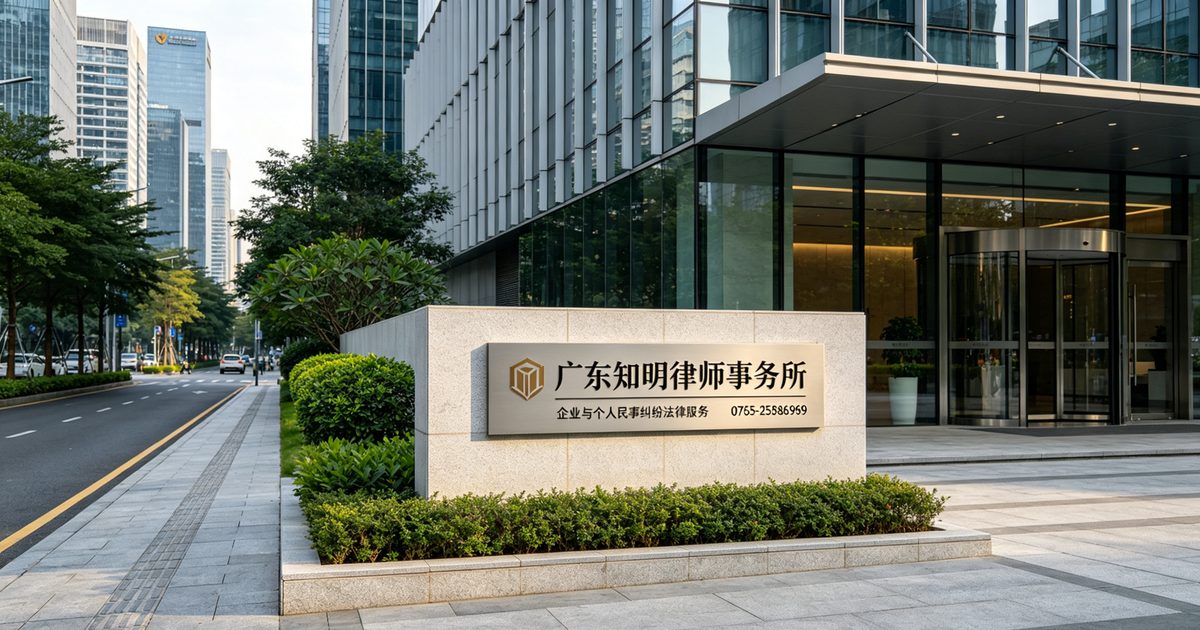
If your company is facing shareholder disputes, equity structure design issues, or risk of dissolution, please feel free to call Guangdong Zhiming Law Firm at 0755-25986969, or visit Room 1802, Block A, Xintian Century Business Center, No. 2 Shixia North Second Street, Futian District, Shenzhen, for a face-to-face meeting with Attorney Shen Jinlong's team — a 26-year established law firm that understands the law, and knows Shenzhen enterprises even better.
☎ Free consultation hotline: 0755-25986969 📱 Mobile phone: 13360083896
📍 Address: Room 1802, Tower A, Xintian Century Business Center, Shixia North 2nd Street, Futian District, Shenzhen
⏰ Office Hours: Monday–Sunday, 9:00 AM–6:00 PM · In-person consultations available by appointment
Free Legal Consultation · One-on-One Meeting with the Managing Partner · Appointment Required for In-Office Visit