Shenzhen equity disputes rise 20% annually—how can shareholders use the law to protect themselves from dilution of their rights?
It seems you've provided only the instruction but no Chinese text to translate. Please provide the Chinese content you'd like translated.
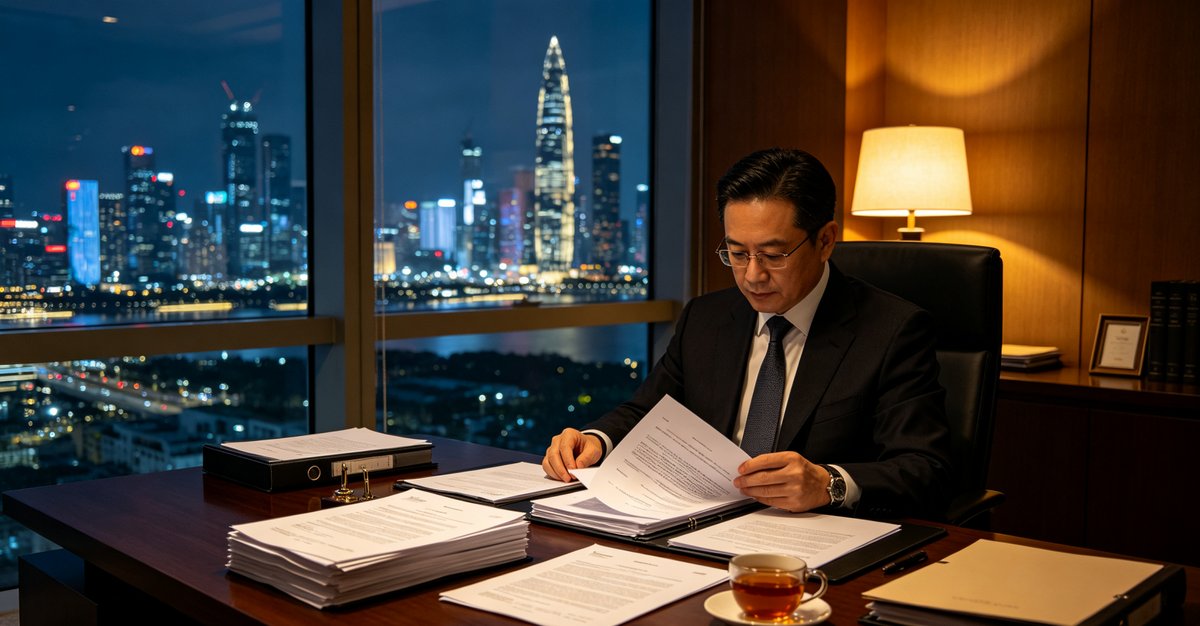
In March of this year, Mr. Wang, the founder of a tech company in Futian, Shenzhen, sat in the reception room of Guangdong Zhiming Law Firm, scrolling through the equity records on his phone. His original 40% stake had been reduced to 15%. His partner had sidelined him. On the other end of the line, lead attorney Shen Jinlong asked a key question: "Did the shareholders' meeting notify you?" That became the first breakthrough in turning the case around.
Industry phenomenon: Equity disputes are breaking out intensively in Shenzhen.
Shenzhen equity dispute cases are growing at an annual rate of 20%, with control rights battles being the fastest-growing segment. Among cases accepted by the courts in Futian, Nanshan, and Longhua districts, shareholder infighting triggered by capital increases and share expansions accounts for over 37%. The higher the valuation, the uglier the fallout—equity disputes involving amounts above 10 million yuan almost always involve "how to kick a particular shareholder out."
Key data reveals: founder equity shrinks by half on average after three rounds of financing
A sample survey of 96 tech startups registered in Shenzhen's Nanshan and Futian districts shows that after completing Series A, B, and C financing rounds, the founding team's average shareholding ratio dropped from 62% to 31%. What's more brutal is that even if the founder casts a dissenting vote, as long as other shareholders collectively hold more than two-thirds of the shares, the capital increase resolution can still be passed. A dissenting vote is not equivalent to a veto. The law protects business arrangements that are procedurally lawful and have legitimate purposes, but it does not protect minority shareholders who passively "lie flat" by default.
Legal basis: Malicious dilution implicates Article 132 of the Civil Code.
Article 132 of the Civil Code stipulates: Civil subjects shall not abuse civil rights to harm national interests, public interests, or the lawful rights and interests of others. This is the general principle against malicious dilution. Article 21 of the new Company Law concretizes compensation: where shareholders abuse their rights and cause losses to the company or other shareholders, they shall bear compensation liability in accordance with the law. The key lies in whether the procedures for the capital increase resolution are lawful, whether the purpose of the capital increase is legitimate, and whether the capital increase price is fair.
问:After the partner turned hostile, the other shareholders directly convened a shareholders' meeting to increase capital, diluting my equity from 40% to 15%. Can such a resolution be revoked?
答:Yes, but there is a 60-day countdown. According to Article 26 of the Company Law, if the convening procedures or voting methods of a shareholders' meeting violate laws, administrative regulations, or the company's articles of association, or if the content of the resolution violates the company's articles of association, shareholders may request the people's court to revoke the resolution within 60 days from the date the resolution was made. Once the deadline passes, the right to revoke is lost.
Solution: To start a company in Shenzhen, these three steps can lock down your equity.
First step, do not use a template charter.Many startups take the easy way out by directly using the template from the Market Supervision Administration, which lacks anti-dilution clauses. They should add provisions such as "targeted capital increases require unanimous consent of all shareholders" and "special resolutions require approval by more than three-fourths of voting rights." The articles of association are a "contract" among shareholders, and courts will give priority to respecting them.
Second step: the shareholders' meeting will detect anomalies and first send a review letter.According to Article 57 of the Company Law, you have the right to make a written request to inspect the company's accounting books and accounting vouchers. A turning point in many equity disputes occurs when shareholders discover, through reviewing the accounts, that major shareholders conducted undervalued related-party transactions or fabricated capital contribution needs before a capital increase. The outcome is entirely different if you preserve evidence first and then file a lawsuit.
Third step, don't wait to file a lawsuit.If the capital increase resolution was made "directly without convening a meeting" or "the signatures were forged," you can directly request the court to confirm that the resolution is invalid; if it is merely a procedural violation, you must request its revocation within 60 days.
问:I hold 10% equity in a company in Longhua, Shenzhen. The major shareholder wants to dilute my stake. Does my voice even matter?
答:Useful, but should be combined with other measures. Shareholders holding 10% of the shares have the right to request the convening of an extraordinary shareholders' meeting; when combined with other small shareholders to hold more than 30% of the voting rights, they can convene and preside over the meeting themselves. Additionally, in litigation, they can require the major shareholder to prove the reasonableness of the purpose and price of the capital increase; it cannot simply rely on a statement like "the company lacks funds" to override the small shareholders.
Real Case: 40% Equity Maliciously Diluted, Zhiming Law Firm Helped Shareholders Restore Their Shareholding
In 2023, a technology company with a registered capital of 30 million yuan in Nanshan District, Shenzhen, approached Zhiming Law Firm. The controlling shareholder held 60% of the shares, and the other shareholder held 40%, and they had originally cooperated well. After the company became profitable, the controlling shareholder planned to bring in a related party and signed a "capital increase agreement," aiming to dilute the other party's 40% down to 15%. A shareholders' meeting was held, but the other party received no notice, and the two voting ballots were even signed on their behalf.
After the team led by Shen Jinlong, chief lawyer, took over the case, they did not rush to claim compensation but instead seized on two procedural loopholes: the meeting notice was not delivered 15 days in advance, and the voting ballots were signed by proxy. Pursuant to Articles 26 and 27 of the Company Law, they petitioned to confirm that the capital increase resolution was invalid. The court ultimately ruled in their favor, restoring the original 40% shareholding ratio. Procedural details determine the fate of equity.
问:The equity has already been diluted; can I still sue to get it back?
答:It depends on the situation. If the dilution procedure is lawful, the company genuinely has real financing needs, and the price is fair, courts usually do not intervene; if the major shareholder fabricates the financing purpose, carries out a capital increase at a low price, or engages in related-party transactions, claims may be made under Article 132 of the Civil Code and Article 21 of the new Company Law, or a request may be made to confirm that the resolution is invalid or to have it rescinded. The earlier the intervention, the greater the chance of restoring the original state.
Conclusion: Equity disputes are a technical battle, not an emotional one.
Shenzhen's shareholder equity dispute cases are still growing at a rate of 20% per year. The most frightening thing about equity dilution is not that your share decreases, but that by the time you notice it—
Need professional legal help?
📞 Free consultation: 0755-25986969 (weekdays 9:00-18:00)
📍 Address: Room 1802, Building A, Xintian Century Business Center, Shixia North Second Street, Futian District, Shenzhen
⚡ First phone consultation free