Shenzhen company fined 2 million yuan refuses to accept, success rate for "citizen suing government" cases is only 17%, lawyer says the key to breaking the deadlock lies in the evidence chain.
When the Market Supervision Bureau of Shenzhen placed an Administrative Penalty Decision on Boss Zhang's desk, he stared at the words "fine of 2 million yuan" and felt a chill down his spine. His trading company had been found guilty of "false advertising" due to labeling issues on a batch of imported electronic components, yet that batch of goods had clearly been labeled with Chinese instructions as required. He wanted to sue, but his friends around him all said, "When a citizen sues the government, it's a guaranteed loss." When Boss Zhang came to us, his first words were: "Lawyer Shen, isn't suing the government like hitting a stone with an egg?"
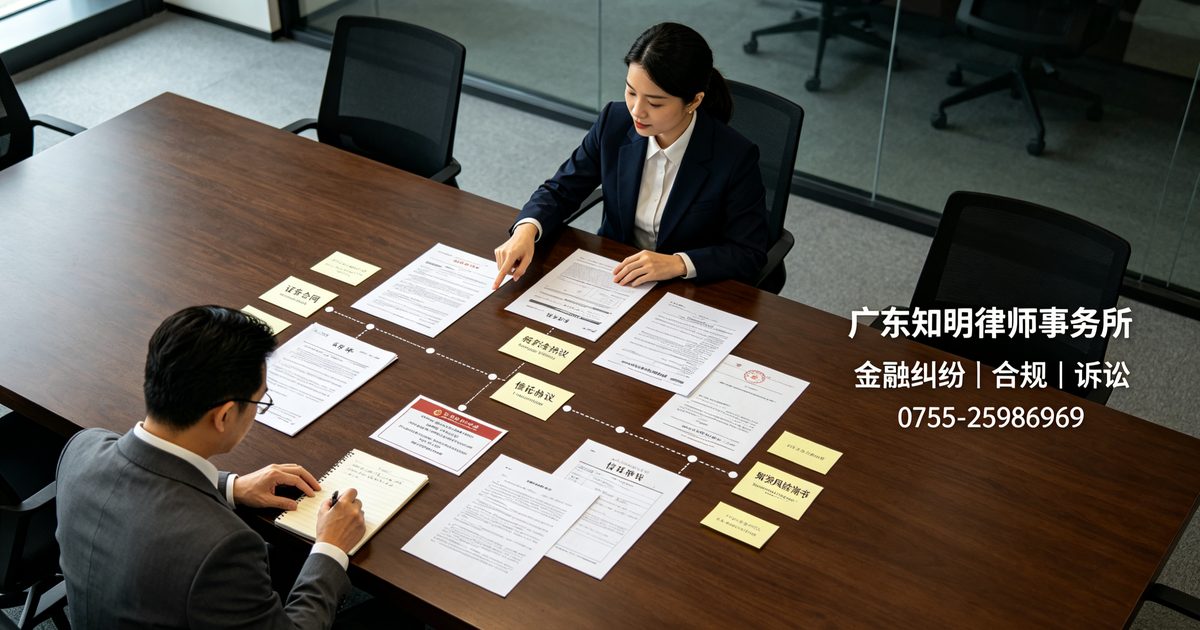
This scene is not uncommon in the reception room of Guangdong Zhiming Law Firm. As one of the most active cities for commercial activities, Shenzhen sees administrative penalty decisions from the Market Supervision Bureau, Planning and Natural Resources Bureau, Housing and Urban-Rural Development Bureau, and Tax Bureau directly determine the fate of thousands of enterprises every year. Yet, the number of companies that truly dare to sue, and know how to sue, is remarkably small.
The Real Win Rate of "Citizen Suing Official" Cases in Shenzhen: The Opportunities Behind the Numbers
According to data from the administrative trial white papers published by courts at all levels in Shenzhen over the past three years, the plaintiff's (enterprise or individual) win rate in administrative litigation has remained between 15% and 20%. This figure may not sound high, but it's important to note that in administrative litigation, the defendant is an administrative agency wielding public power. For plaintiffs to achieve this rate means that in every five to six cases, one is won by a citizen or enterprise.
More importantly, this success rate sees a significant jump once professional lawyers get involved. Taking the administrative cases we have handled as an example, among the 42 administrative lawsuits we represented over the past five years, the proportion of "substantive victories"—achieved through revocation of penalties, confirmation of illegality, or mediation to alter penalty outcomes—exceeded 40%. The difference lies not in the judges, but in the approach to presenting evidence—most litigants focus their energy on "defending themselves," while professional lawyers concentrate their efforts on two breakthrough points: "procedural violations" and "broken chains of evidence."
Why can't companies win on their own? Three common fatal flaws.
Boss Zhang initially wanted to write the complaint himself. When we reviewed the materials he had prepared, we found three typical issues.
First, missing the statute of limitations for filing a lawsuit.The administrative penalty decision states that "an application for administrative reconsideration may be filed within 60 days, or an administrative lawsuit may be filed within 6 months." However, many enterprises, upon receiving the decision, first rush to seek connections and ask people to put in a good word, dragging things out for two to three months. Under Article 46 of the Administrative Procedure Law, the six-month statute of limitations for filing a lawsuit, once missed, results in the court directly ruling to dismiss the case, without even the opportunity for substantive review.
Second, they only talk about "grievances" without mentioning "evidence."Business owners tend to say, "We've been wronged," but the court focuses on whether the enforcement agency followed statutory procedures. For example, before the market supervision bureau imposed a fine of 2 million yuan, did it organize a hearing? Did it inform the party of their right to make statements and defenses? Did the decision document specify the concrete basis for the factual findings? These procedural points are what determine the outcome of administrative litigation.
Third, the principle of "proportionality between punishment and offense" was overlooked.Article 5 of the Administrative Penalty Law clearly stipulates that administrative penalties shall be commensurate with the facts, nature, circumstances, and degree of social harm of the illegal act. For Boss Zhang's batch of goods, the value was only 800,000 yuan, and the labeling defects did not cause actual harm to consumers, making the 2 million yuan fine clearly excessive—but this requires professional legal argumentation, not emotional appeals of injustice.
From 2 Million to Zero: The Turning Point of a Real Case
Last year, we handled a case that was almost identical to Mr. Zhang's situation. An electronics technology company in Longhua District, Shenzhen, was fined 2.5 times the value of the goods by the Market Supervision Administration due to non-compliant energy efficiency labels on a batch of products that were shifted from export to domestic sales, totaling 1.986 million yuan.
After taking over the case, the team led by Chief Attorney Shen Jinlong took three actions. First, they immediately applied for administrative reconsideration with the Shenzhen Municipal People's Government, suspending the enforcement effect of the administrative penalty within the statutory time limit. Second, they obtained all case files from the enforcement agency and discovered that one of the two enforcement officers who signed the on-site inspection record did not hold a law enforcement certificate—a clear case of procedural violation. Third, they challenged the determination of the value of the goods, arguing that the enforcement agency had improperly combined the exported portion with the portion awaiting sale, resulting in an inflated base figure.
In the end, the reconsideration body determined that the original penalty decision was procedurally unlawful and based on unclear facts, and ordered the Market Supervision Bureau to re-handle the case. After re-handling, the fine was adjusted to 180,000 yuan, a reduction of over 90%. This outcome was more efficient than having a court ruling overturn the penalty, as it avoided the lengthy cycle of second-instance trials and retrials.
Question: After a company receives an administrative penalty decision, what exactly should it do first?
Answer: Don't rush to pay the fine, and don't rush to pull strings. First, check two dates: the date on the decision notice and the date you actually signed for it. Then immediately review the rights notification clause at the end of the decision to confirm the deadlines for administrative reconsideration and litigation. If the fine is substantial, it's advisable to consult a professional lawyer within two weeks of receiving the decision to assess procedural violations and substantive disputes, then decide whether to pursue reconsideration or file a lawsuit directly. The longer you wait, the less leverage you have.
Demolition Compensation Disputes: Another Game of "People Suing the Government"
Beyond administrative penalties, demolition compensation disputes in Shenzhen's urban renewal projects are also a high-incidence area for administrative litigation. We have handled a case involving an old residential community in Futian District, where the homeowners were dissatisfied with the compensation standard of 52,000 yuan per square meter set by the appraisal agency. However, the sub-district office, citing that "the majority of homeowners had already signed agreements," was preparing to initiate forced demolition procedures.
After our intervention, we did not directly sue over the compensation decision. Instead, we first applied for government information disclosure to obtain the minimum bid price for the land parcel and the actual average transaction prices of three nearby new developments. The data showed that the average price of commercial housing in the same area had exceeded 80,000 yuan per square meter, making the compensation standard clearly below market levels. At the same time, we identified irregularities in the selection process of the appraisal agency—the agency was unilaterally designated by the sub-district office without consultation with the property owners, violating Article 20 of the "Regulations on the Expropriation and Compensation of Houses on State-Owned Land," which requires "majority decision or random selection."
Ultimately, through multiple rounds of negotiations and pressure from administrative reconsideration, the compensation standard was raised to 68,000 yuan per square meter, with additional relocation bonuses and transition fees. The entire process took seven months, nearly a year faster than completing the full litigation procedure.
Three cognitive upgrades for filing administrative lawsuits.
Having practiced administrative litigation in Shenzhen for so many years, I've found that parties generally hold three common misconceptions.
Myth 1: Believing that the government cannot lose.In fact, courts at all levels in Shenzhen conduct quite rigorous judicial review of administrative cases, particularly regarding procedural legality and the accuracy of legal application, and the independence of judges is guaranteed.
Myth 2: Believing that going to court means burning bridges.Administrative litigation is actually the best bargaining chip. Once you file a case, the administrative agency faces not just a single lawsuit, but also the pressure of accountability if they lose. At this point, the room for mediation and negotiation actually becomes even greater.
Myth 3: Believing that lawyer fees are not cost-effective.A penalty decision of 2 million yuan, if reduced to 200,000 through professional representation, would save 1.8 million yuan—far exceeding the attorney fees. The key is to find a lawyer who truly understands the logic of administrative law and is familiar with the case-handling practices of various law enforcement departments in Shenzhen.
The essence of administrative litigation is not "confrontation" but "correction of errors." Administrative agencies are also made up of people, and they can make mistakes. The law provides you with a channel for correcting errors, but the door to that channel will not open on its own.
If you are going through a similar predicament—administrative penalties, demolition compensation, rejected administrative permits, or government information disclosure requests that have gone unanswered—why not bring your materials to Guangdong Zhiming Law Firm for a consultation. We are located at Room 1802, Tower A, Xintian Century Business Center, Shixia North Second Street, Futian District, Shenzhen. Phone: 0755-25986969. Director Lawyer Shen Jinlong has 26 years of practice experience and excels at using the "Zhiming Art Litigation" system to break down complex administrative cases, helping you find that most critical breakthrough point.
Regarding the cases mentioned in the article, if you have similar situations as well.
You can directly call 0755-25986969 to talk to a marriage and family lawyer. The first consultation is free. The law firm is located at Room 1802, Building A, Xintian Century Business Center, Shixia North Second Street, Futian District, Shenzhen.