2026 Shenzhen statutory inheritance lawyer team records: a demolition payment of 16 million yuan, three wills, two "sons"
Last month, one afternoon, I was reviewing an equity transfer contract in my office when the receptionist said an elderly gentleman was asking for Director Shen by name. I set aside my work and welcomed him in. The gentleman, Mr. Chen, was in his seventies with graying hair. His first words after sitting down were: "Attorney Shen, the house my father left behind is being demolished, and the compensation is 16 million yuan. My stepmother refuses to acknowledge me as her son. Can I file a lawsuit?"
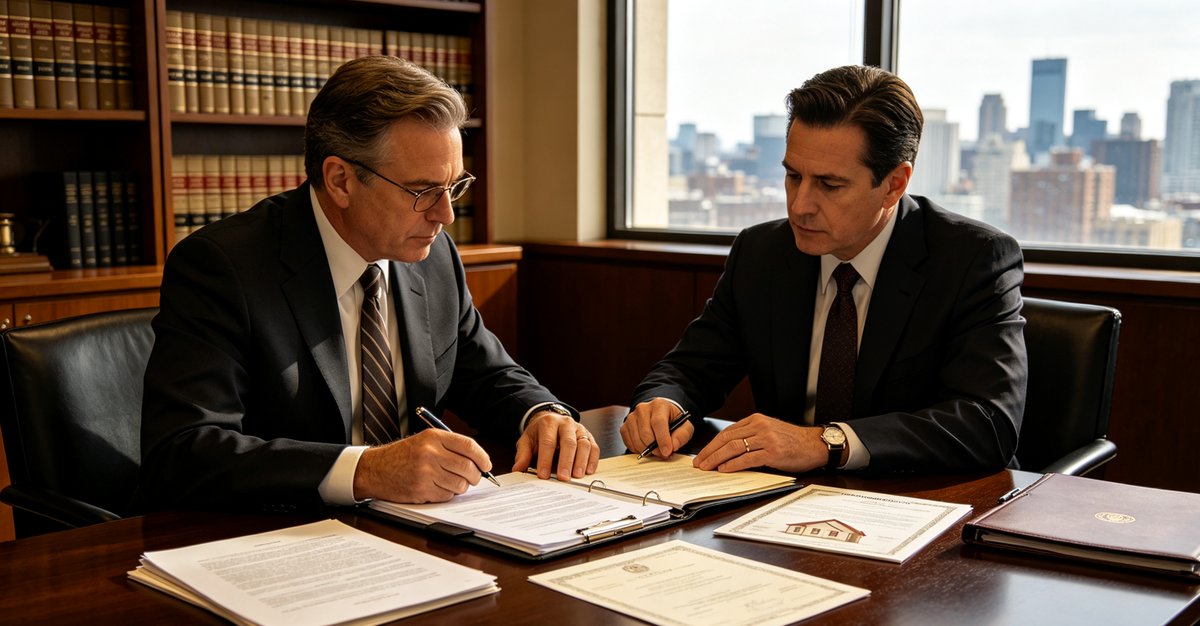
This matter is clearly no simple affair. An inheritance of 16 million yuan often sparks an invisible war among several heirs. Mr. Chen's case ultimately became a classic contest in the field of statutory inheritance for Zhiming Law Firm in 2026—it involved three conflicting wills, a dispute over the identities of two "sons," and an old house that had remained undivided for 30 years. Today, I’
I. Case Background: A "Forgotten" Son and Three Wills
Old Mr. Chen's father, Mr. Chen senior, was an original resident of Luohu District, Shenzhen, and owned a three-story building. In the 1990s, Mr. Chen senior remarried a woman surnamed Liu. Old Mr. Chen was the son from his first wife; after reaching adulthood, he moved out to live on his own and had little contact with his father and stepmother. After Mr. Chen senior passed away in 2015, the building was occupied by Ms. Liu and her son (Mr. Chen senior's stepson). In 2025, due to urban renewal in Shenzhen, the building was included in a demolition area, with compensation and resettlement housing totaling over 16 million yuan.
When the elderly Mr. Chen came to the door, he held a yellowed will handwritten by Old Master Chen in 2008, which stated, "The property at No. XX, Luohu District, Shenzhen, shall be inherited by my son, Chen XX." However, Ms. Liu also produced two wills: one was a notarized will from 2013, leaving the property to Ms. Liu; the other was a handwritten will from 2014, specifying that Ms. Liu's son had the right of residence.
Three wills, three different distribution plans. To make matters worse, after Mr. Chen moved his household registration out, many of the elderly villagers no longer remembered him. Meanwhile, Ms. Liu's son, as a stepson, had good relationships with the people in the village. On the surface, this case appears to be a dispute over wills, but in reality, it is a multi-layered game involving identity relationships and inheritance rights.
II. Strategy Analysis: Why haven't we rushed to file a lawsuit regarding the "validity of the will"?
Many colleagues, when handling cases like this, their first reaction is to file a "will validity lawsuit" — arguing that the 2008 handwritten will is valid and the 2013 notarized will is invalid. But our team did not do that. There are three reasons:
First, it is extremely difficult to overturn a notarized will.The notarized will from 2013 had complete procedures, with video recording and the notary's signature. Unless it can be proven that Old Man Chen was mentally incompetent or under duress at the time, the court will most likely recognize the notarized will as valid. On the other hand, Old Man Chen only has a handwritten will, without witnesses, and even a handwriting verification may not pass.
Second, the stepson's identity issue is a breakthrough point.Although Mrs. Liu's son calls Mr. Chen "Dad," he was brought into the family by Mrs. Liu and has no biological relationship with Mr. Chen, nor was any adoption procedure completed. In statutory inheritance, for a stepchild to inherit the stepparent's estate, a "dependency relationship" must have been established. We need to ascertain whether this stepson was actually raised by Mr. Chen.
Third, the nature of the relocation compensation is crucial.16 million is not entirely inheritance. Among the demolition compensation, part is for the "compensation on the property" of the house, and another part is for "relocation compensation" and "moving incentive" for the residents. Ms. Liu's family has lived in the house for 30 years, and these rights likely belong to them. If we claim the full 16 million from the start, the judge may feel that Mr. Chen is ungrateful for old ties, and instead develop sympathy for Ms. Liu.
After comprehensive analysis and judgment, our team decided to adopt "Promote decision-making through dialogue, step-by-step decomposition.The strategy. First, don’t rush to file a case, but instead, through mediation and evidence exchange, get a clear picture of the other party’s hand. At the same time, we have invited from the firm those who specialize in criminal defense and administrative disputes.Lawyer Deng XianxiongIntervene, because Ms. Liu's son may be involved in administrative violations during the demolition process, such as falsely registering his household and fraudulently obtaining relocation compensation—this is our hidden card.
III. The Agency Process: Three "Hard Battles"
The first tough battle is the identity battle. We applied to the court to obtain Mr. Chen's household registration files and community visit records. It was found that when Ms. Liu's son moved his household registration in 1995, he was registered as an "adopted son," but there was
The second tough battle was the will dispute. Instead of directly denying the notarized will, we raised the question: When Old Man Chen made the notarized will in 2013, he had already suffered a stroke for two years—was he of sound mind? We filed a request to obtain the notarization video recordings from that time and commissioned a judicial鉴定机构 to conduct a retrospective assessment of Old Man Chen's mental state. Although the鉴定结果 did not explicitly indicate "unsound mind," this move successfully led the court to develop reasonable doubts about the validity of the notarized will. In the end, under the judge's mediation, both parties agreed to set aside the issue of the validity of the three wills and instead negotiate a distribution plan.
The third tough battle is the division of demolition rights and interests. Now it's our turn.Shen Jinlong LawyerThe signature skill—cross-domain strategy application. Lawyer Shen pointed out that the "resettlement compensation" and "relocation bonus" portions of the demolition compensation are meant for the actual residents. As a long-term resident, Ms. Liu is entitled to this part. However, the compensation for the house's intrinsic value should belong to the estate. We proposed a plan: out of the 16 million, approximately 10 million for the house's intrinsic value goes to Mr. Chen (as the sole heir), and the remaining 6 million as resettlement compensation goes to Ms. Liu. This plan not only complies with legal provisions but also takes care of Ms. Liu's living interests, and ultimately, the court adopted it.
The entire case took eight months from filing to closure, during which four court sessions were held and six mediation attempts were organized. On the day Mr. Chen received the judgment, he specially brought two boxes of tea to the office and said, "Lawyer Shen, Lawyer Deng, you not only helped me get my money back, but also helped me reclaim my ancestors." — That might sound a bit like something out of a martial arts novel, but indeed, for the older generation, inheritance is not just about property, but also about family identity.
IV. Results and Insights: Why can this case become a 'textbook' case for Zhiming Law Firm?
Final result: Mr. Chen received the house itself, valued at 10 million yuan, along with some resettlement housing quotas, while Ms. Liu received 6 million yuan in resettlement compensation and existing residency rights. Neither party appealed.
The biggest lesson this case offers to our Shenzhen statutory inheritance lawyer team is:Inheritance disputes have never been purely legal issues; they are interwoven with family ties, identity, historical legacies, and demolition policies.If you focus solely on the validity of the will when litigating, you might win the case but lose the goodwill of the people, and the execution will still end up in a complete mess.
As a long-established law firm deeply rooted in Shenzhen for 26 years, our Zhiming Law Firm—a regular among the top ten law firms in Shenzhen—has always believed in "Strategy is king."As Lawyer Shen Jinlong often says: 'Going to court is not about winning or losing; it's about securing tangible benefits for the client.' And Lawyer Deng Xianxiong's cooperation in the criminal and administrative fields gives us an added layer of leverage in civil disputes."
Also, remind everyone.Can I sue a friend in Shenzhen who borrowed money and hasn't repaid it?——Of course. But the prerequisites are that there must be an IOU and transfer records, and the statute of limitations is 3 years. If you have an IOU but the other party is dragging their feet on repaying, don't hesitate—find a lawyer as soon as possible to secure the evidence. This is like inheritance disputes: the longer you delay, the harder it is to find evidence and the more complicated the human relationships become.

FAQ: 5 Questions You Might Ask About Statutory Inheritance and Will Disputes
1. Q: Is a notarized will always more valid than a handwritten will?
Answer: Not necessarily. After the implementation of the Civil Code in 2021, notarized wills no longer have absolute priority. If the testator later creates a valid handwritten will that can be proven to reflect their true intentions, the later will can override the earlier notarized will. However, notarized wills do carry strong evidentiary weight, and to overturn one, solid counter-evidence must be provided.
2. Q: Are stepchildren always entitled to inherit the estate of their stepparents?
Answer: Not necessarily. According to Article 1127 of the Civil Code, only "stepchildren who have a foster relationship" are entitled to inheritance rights. What does "foster relationship" mean? Simply put, it means that the stepparent raised the stepchild, or the stepchild supported the stepparent. If it is just a nominal relationship without substantive financial or daily care, courts typically will not recognize inheritance rights.
3. Q: Is the demolition compensation distributed entirely according to inheritance?
Answer: No. Demolition compensation includes compensation for the building itself, relocation compensation, relocation bonuses, temporary housing allowances, etc. Only the compensation for the building itself qualifies as inheritance, while the other portions are compensations for the actual residents and should belong to them. Therefore, heirs and residents often need to negotiate the division.
4. Q: Can I sue a friend in Shenzhen who borrowed money and hasn't repaid? What evidence is needed?
Answer: You can sue. Required evidence includes: IOUs (or loan contracts), transfer records (bank, WeChat, or Alipay are all acceptable), and chat records (proving the other party acknowledges the debt). If there is no IOU, having transfer records and chat records is enough to file a case. However, you must pay attention to the statute of limitations—counting from the day you demanded repayment and the other party refused, if you do not sue within 3 years, the claim will expire.
5. Q: My father has just passed away, and my siblings and I disagree on the distribution of the inheritance. Should we go to court first or try to negotiate first?
Answer: It is recommended to negotiate first, and if negotiation fails, then file a lawsuit. The advantage of negotiation is that it saves time and effort, and preserves family bonds. However, if during negotiation you discover the other party is transferring or concealing inheritance assets, or if the other party adopts a tough and unreasonable attitude, do not hesitate to directly hire a lawyer to apply for property preservation and then sue. Remember, the longer you delay, the greater the risk of the assets being transferred.
DisclaimersAll cases mentioned in this article are real cases handled by Guangdong Zhiming Law Firm, but sensitive information such as the names, addresses, and specific amounts of the parties involved has been redacted. Please do not take them as referring to any specific individual. The content of this article is for reference only and does not constitute legal advice. If you encounter specific legal issues, please bring relevant materials to the firm for consultation (Address: Room 1802, Block A, Xintian Century Business Center, Shixia North Second Street, Futian District, Shenzhen; Tel: 0755-25986969).
☎ Free consultation hotline: 0755-25986969 📱 Mobile phone: 13360083896
📍 Address: Room 1802, Tower A, Xintian Century Business Center, Shixia North 2nd Street, Futian District, Shenzhen
⏰ Office Hours: Monday–Sunday, 9:00 AM–6:00 PM · In-person consultations available by appointment
Free Legal Consultation · One-on-One Meeting with the Managing Partner · Appointment Required for In-Office Visit