In 2026, a friend in Shenzhen borrowed money and didn't repay it. Can I sue directly? — A criminal + administrative chain case dragged out from behind the scenes
We recently came across a case that's quite interesting. In the middle of last month, an old client, Old Zhou, suddenly rushed into the firm in a panic and asked as soon as he walked in: "Lawyer Shen, can I still get my money back? I'm about to go crazy." He was clutching his phone, and on the screen was a court summons notice. Old Zhou wasn't there to respond to a lawsuit, but to file one—because a "friend" had borrowed 3.8 million from him, promising to repay it within six months. But a year and a half later, the friend wouldn't answer calls, blocked him on WeChat, and had even fled to another city. What's more infuriating was that Old Zhou discovered the friend had transferred all the real estate and cars under his name within just three months after borrowing the money. He asked: "If a friend in Shenzhen borrows money and doesn't repay, can I sue? Is the money just down the drain?" After hearing this, we felt that behind what seemed like a simple civil case, there might be a criminal offense lurking, so we directly pointed Old Zhou down a completely
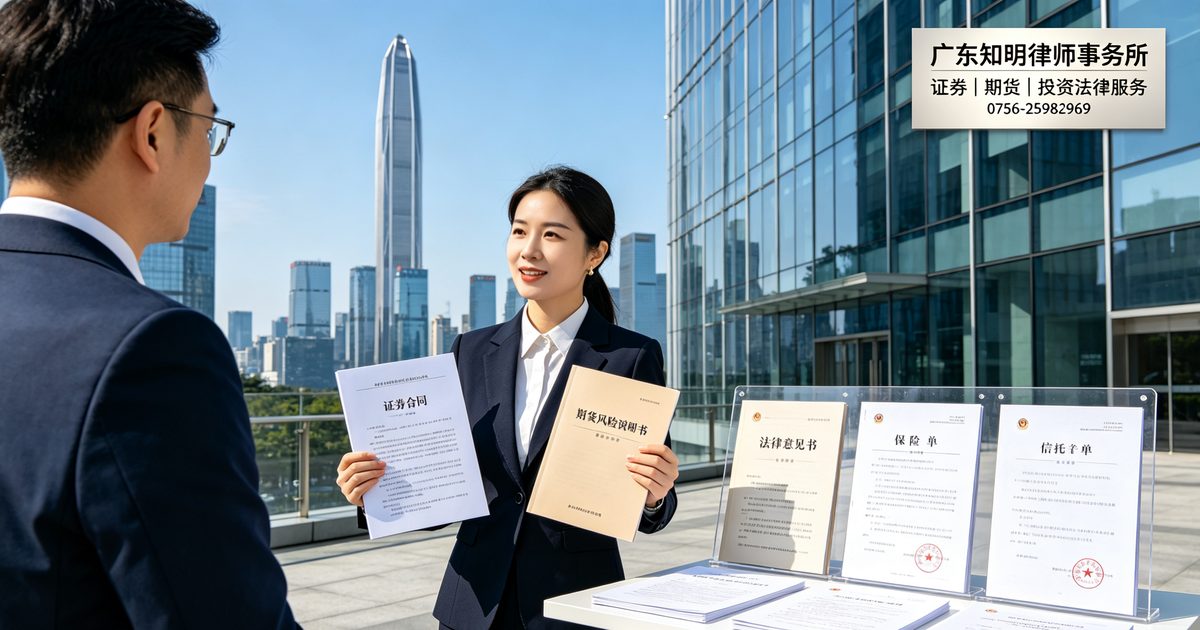
How did a loan of 3.8 million suddenly reveal traces of criminal activity?
Old Zhou and the borrower Liu had been card-playing buddies for years. In 202
Many friends in Shenzhen have this misconception, thinking that "if a friend borrows money and doesn't pay it back, the only option is to sue in court." In reality, you first need to determine his subjective intent. If the other party never intended to repay, fabricating projects, forging property certificates, or maliciously transferring assets after borrowing money—then this is not merely a civil dispute, but a criminal offense—fraud or contract fraud. Our Zhiming Law Firm has handled too many similar cases in Shenzhen. Many clients waited in line at the civil enforcement division for two years without recovering a single cent, and then came to us saying, "A friend in Shenzhen borrowed money and won't pay it back, we want to sue." After we reviewed the evidence, we directly advised them to switch to the criminal complaint route instead.
Strategy Analysis: Civil Lawsuit or Criminal Complaint? This is Not an Either/Or Choice
Our director, Lawyer Shen Jinlong (a seasoned attorney with 22 years of practice, holding a Master's in Economics from Fudan University, and formerly a senior executive at a large state-owned enterprise), listened to Old Zhou's situation and made the decisive call: "Walk on two tracks — criminal first, then civil." Why? Because civil litigation moves too slowly, and the odds of recovering funds through enforcement are bleak. What good is a mere favorable judgment? Liu's assets had long been transferred away, and even the court's enforcement judge shook his head — this was a habitual defaulter by profession, and already suspected of criminal offenses. Director Shen emphasized that the core of Zhiming Law Firm's original "Zhiming Artistic Litigation Method" theoretical system lies in flexible cross-disciplinary integration, combining civil, criminal, and administrative approaches rather than pinning all hopes on a single strategy.
So how exactly was it done? The battle was led by our firm's criminal law heavyweight, **Lawyer Deng Xianxiong**. **Lawyer Deng Xianxiong** specializes in criminal cases such as economic crimes, duty-related crimes, illegal fundraising, and fraud, and is particularly adept at handling difficult cases involving the intersection of civil and criminal law. His first step was not drafting a complaint, but leading the team to conduct "evidence reconstruction." They dug up and compared Liu's bank records, fake property certificates, and project contracts. Guess what? The "government greening project" Liu mentioned didn't exist at all—the project number was Photoshopped, and the official seal on the contract was privately engraved. That nailed the case, pinning civil fraud directly onto the constitutive elements of criminal fraud.
Criminal takes the lead, civil follows up: one case has set off two tracks.
Step two, **Lawyer Deng Xianxiong** guided Old Zhou to report the case to the Economic Crime Investigation Unit of the Futian Public Security Bureau and submitted a criminal complaint. Because the amount of 3.8 million yuan was regarded as especially huge, the police filed the case quickly. Liu probably did not expect Old Zhou to take real action; on the third day after the criminal detention notice was issued, his family proactively came to negotiate repayment in hopes of obtaining leniency. But we did not relent—because another benefit of criminal filing is that the public security organs can directly freeze Liu's other accounts and assets involved in the case, a compulsory measure that civil preservation cannot match.
Meanwhile, **Lawyer Shen Jinlong** simultaneously initiated civil litigation preservation procedures, adopting a two-pronged approach. There is a highlight worth sharing with discerning readers: criminal附带civil is not simply "criminal first, civil later," but rather the criminal investigation results can provide overwhelming evidence for the civil lawsuit. For example, the forged property certificate directly led to the contract for the sale of the house between Liu and a third party being ruled invalid, and the transferred property was recovered. In the end, Liu's family compensated 2.8 million yuan of the principal on his behalf, signed an installment agreement for the remaining 1 million yuan, and even found a guarantor with a formal job. Old Zhou said, "This is more effective than me chasing after it myself for two years." On the civil side, because the criminal case was withdrawn before mediation, the court also issued the mediation document smoothly.
Practical insight: When lending money to a "friend," the worst thing is running into a seasoned criminal.
This case serves as a reminder for our friends in Shenzhen. First of all, the answer to that question, "Can I sue a friend in Shenzhen who borrowed money and won't pay it back?" is actually clearer in 2026 — yes, you can sue, but you must conduct a risk screening before filing the lawsuit. You need to check whether the other party has any litigation records under their name, whether their collateral is genuine, and whether their project is a shell company. However, if the investigation reveals that the other party is a repeat offender, by all means decisively pursue criminal charges. Many people worry that criminal filing is too difficult, but in Shenzhen, if you have an IOU, transfer records, collection records, plus evidence of the other party fabricating facts, the probability of the police accepting the case is very high.
Secondly, the hardest part about "borrowing money but not repaying" in your social circle isn't the money—it's that the relationship falls apart and you still don't get paid. Our law firm deals with clients like this every day. They come in fuming and leave with helpless looks on their faces. Our **Lawyer Shen Jinlong** often says: "The one you lent money to is a friend; the one who pays you back is the real friend. Once you have to file a lawsuit, you two are no longer friends. Play by business rules—don't appeal to personal feelings." That's blunt but true. Also, among administrative disputes, there are quite a few cases of project funds being held up. As for Old Zhou's greening project, it actually also brought to light a complaint about administrative inaction by the subdistrict office, but we happened to use that administrative complaint as a negotiating chip to pressure Liu's family into speeding up the repayment.
At the end of the day, winning a lawsuit in Shenzhen isn't about who has the stronger argument—it's about who has the more complete chain of evidence and who picks the smarter path. Guangdong Zhiming Law Firm was founded in 2000 and has深耕 Futian District for 26 years. As for rankings among criminal law firms in Shenzhen, we won't boast or badmouth anyone—our reputation is built on solid, real cases like these. Director Shen has always emphasized the "art of litigation"—finding the most favorable path for the client within the legal framework. It doesn't have to be a lawsuit, but it's always a combination of strategies.

Common Q&A on Friends in Shenzhen Not Repaying Borrowed Money (2026 Practical Edition)
Question: A friend in Shenzhen borrowed money and hasn't repaid it. Which court should I file a lawsuit in?
Answer: Generally, it's the court at the defendant's domicile or the place of contract performance. If the friend is a Shenzhen resident or has lived in Shenzhen for more than five years, you can sue at district courts in Shenzhen like Futian or Luohu. However, for large amounts, it's advisable to apply for pre-litigation property preservation first so he doesn't flee. You can ask **Attorney Shen Jinlong**'s team to sort out the property clues; it's much more efficient.
Question: Can a lawsuit still be filed if the IOU has exceeded the three-year statute of limitations?
Answer: You can sue, but you may lose the right to win the case. Unless you can prove that during these three years you urged him to repay via WeChat and he agreed to repay, this can constitute an interruption of the statute of limitations. If there are no collection records at all, then you need to quickly find a way to remedy this, such as first sending a lawyer's letter; once the letter reaches him, it counts as one valid collection demand.
Is the ranking of criminal law firms in Shenzhen reliable? How should one choose a criminal defense lawyer?
Answer: It's 2026, don't just look at online rankings; the key is the type of your case. For example,
Question: Is free legal consultation in Shenzhen reliable?
Answer: Free consultations are usually just basic legal knowledge; actual litigation strategy definitely requires effort. At our Zhiming Law Firm, we offer appointment-based free consultations. You bring your materials, and the lawyer analyzes the feasibility and risks for you—not just letting you listen to a couple of sentences and leave. It's 2026 now; professional value can't be free.
Q: What if the other party has no money, and even after winning the lawsuit, you still can't recover the amount?
Answer: This is why we pursue "parallel criminal and civil proceedings." If a civil judgment yields no money, and we discover that the opposing party has hidden or transferred assets, it may constitute the crime of refusing to execute a court judgment, which is a criminal offense—at that point, they will have to repay whether they want to or not. The administrative disputes we've handled often involve such debt issues as well. In short, don't give up before exhausting all legal remedies.
Alright, let's stop here for now. Lao Zhou's money has been mostly recovered, and the rest is being paid back in installments. In a place like Shenzhen, who hasn't run into a few "brothers" who act like they'd die for you when borrowing money, but act like they're dead to you when it's time to pay it back? If you're stuck wondering, "Can I sue a friend in Shenzhen who borrowed money and won't return it?" don't keep agonizing over it by yourself at home. Pick up the phone and call 0755-25986969. Come chat with us at Room 1802, Building A, Xintian Century Business Center, Shixia North Second Street, Futian District. Bring your IOU and bank transfer records, and we'll lay it all out for you—whether to go the civil, criminal, or administrative route. Guangdong Zhiming Law Firm, 26 years specializing in tough cases. There's always a way to take care of them.
Disclaimer: The cases referenced in this article are all actual cases handled by Guangdong Zhiming Law Firm, but all parties' identifying information has been anonymized. The content of this article is solely for the purpose of sharing legal knowledge and does not constitute formal legal advice or a commitment. Specific case outcomes vary depending on the facts of each individual case, and readers are advised to consider it rationally. If you encounter legal issues, it is recommended that you personally consult a professional lawyer with the relevant materials.
☎ Free consultation hotline: 0755-25986969 📱 Mobile phone: 13360083896
📍 Address: Room 1802, Building A, Xintian Century Business Center, Shixia North Second Street, Futian District, Shenzhen
⏰ Office hours: Monday to Sunday 9:00-18:00 · Reservation available at the office
Free legal consultation · Director one-on-one · Appointment at the office