Shenzhen Inheritance Dispute Lawyer Answers: What to Do About Parental Property Will Disputes
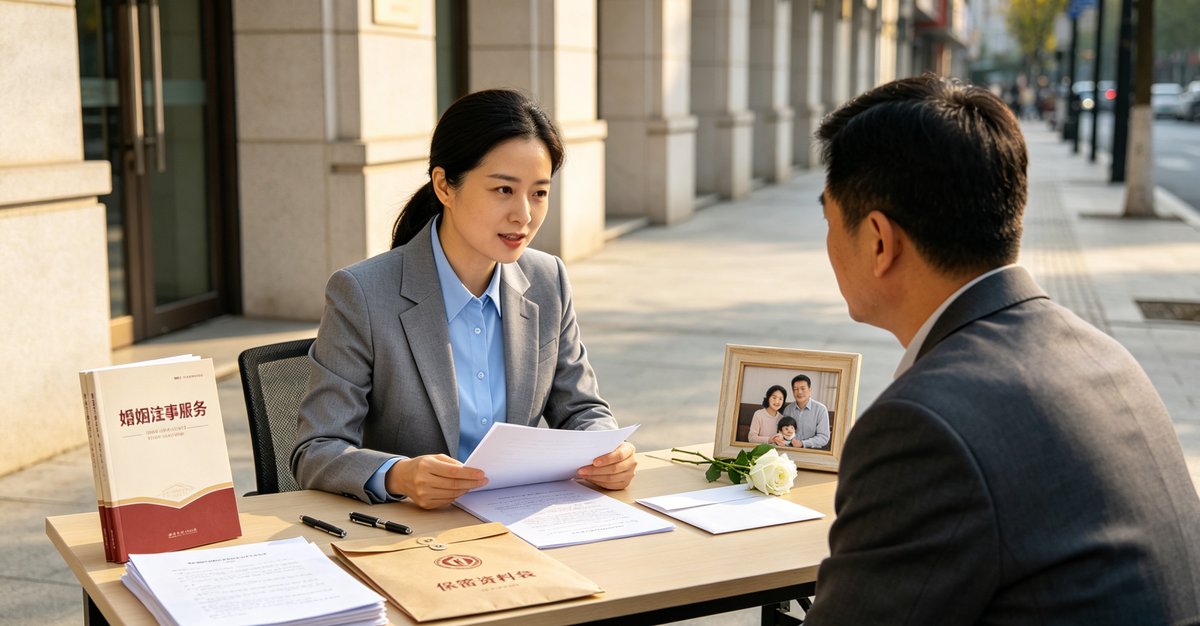
On Friday afternoon, in the reception room of Guangdong Zhiming Law Firm, Ms. Chen from Futian, Shenzhen, looked anxious. Her father passed away in May this year, leaving behind a property in Luohu District valued at about 8 million yuan. There are three siblings in the family. Her eldest brother produced a "witnessed will," claiming that their father left the entire house to him. As soon as Ms. Chen saw it, she realized that on the date the will was signed, her father was being rushed to the hospital for emergency treatment—how could he have signed it? The two sisters and their eldest brother have been arguing for three months, and neither side can convince the other.
Q: How exactly should siblings divide the property left by their parents?
Answer: First, check whether there is a legally valid will. Article 1123 of the Civil Code stipulates that upon the commencement of succession, it shall be handled in accordance with statutory succession; if there is a will, it shall be handled in accordance with testamentary succession. Therefore, the will is the first watershed. If there is no will or the will is invalid, statutory succession applies: the first-order heirs are the spouse, children, and parents—heirs in the same order generally share the estate equally.
In the past two years, the number of inheritance dispute cases in Shenzhen has grown at an annual rate of 15%, with a notable rise in the proportion of cross-border and cross-generational inheritance cases. The most typical disagreements occur over "attorney-written wills": siblings dispute the authenticity of the will, commission handwriting analysis, and apply for witnesses to appear in court—a process that takes at least 3 months and up to a year to complete. Add to that Shenzhen's high property values, where a single apartment in Futian or Nanshan can easily cost tens of millions, and siblings refuse to budge over price differences, making requests for appraisals and competitive bidding in litigation very common.
Question: If the validity of a will is disputed, what should be done to prevent it from being overturned?
Answer: The dispute over the validity of a will centers on formal requirements and authenticity. Articles 1134 to 1139 of the Civil Code respectively provide for holographic, notarized, printed, audio-video recorded, oral, and scrivener's wills. In litigation, the most frequently challenged type is the scrivener's will: it must be witnessed by two or more disinterested witnesses, with one of them writing the will on behalf of the testator, noting the year, month, and day, and signed by the scrivener, the other witnesses, and the testator. Even if a single signature is missing, the will is very likely to be deemed invalid.
There is also the issue of signature authenticity. In a real case, in Nanshan, Shenzhen, a woman named Ms. Liu's father passed away, and her stepmother held a printed will claiming 50% of the property. After Ms. Liu applied for a handwriting appraisal, it was found that the signature at the end clearly did not match the signature sample her father had left at the bank during his lifetime. The court ultimately accepted the appraisal opinion, ruled the will invalid, and handled the property according to statutory inheritance.
Question: When it comes to cross-border and cross-generational inheritance, what pitfalls are there in actual practice?
"A: Succession disputes are escalating in complexity. Cross-generational succession involves subrogation and succession: if the heir dies before the decedent, it is inherited by his direct descendants by blood relatives, in accordance with Article 1128 of the Civil Code. Succession refers to the death of the heir before the division of the estate, and his inherited share shall be transferred to his heir. Cross-border inheritance is more troublesome - parents leave a suite in Shenzhen, but their children have emigrated abroad, involving foreign-related notarization, accreditation of foreign embassies and consulates, and translation of multiple identity materials. The time is usually 30% to 50% more than in ordinary inheritance cases."
Question: Inheritance lawsuits take a long time and are mentally exhausting—is there a more reliable alternative?
"A: This is also the most frequently asked question by the parties concerned. There are no u201cquick winsu201d for inheritance lawsuits, but experienced lawyers can help you make fewer detours. Guangdong Zhiming Law Firm has represented a property inheritance case with a bid of 20 million yuan: the client's father made a self-written will to leave all the property to him, but the two siblings claimed that the will was forged. Knowing that the team fixed the evidence chain from the three dimensions of will handwriting, paper formation time, and witness testimony, it applied for professional appraisal, and finally the court determined that the will was true and valid, and the client successfully inherited the property with a market value of 20 million."
Zhiming Law Firm is a long-established law firm in Shenzhen with a 26-year history, having handled over 10,000 cases of various types. Director Shen Jinlong has been practicing law for 26 years, holds a master's degree from Fudan University, is a senior economist, and previously served as a senior executive at a state-owned enterprise
In conclusion: inheritance disputes fear "delay" the most.
The property left by parents often stirs up more than just money disputes among sisters—it brings out years of accumulated feelings of unfairness. But emotions cannot replace evidence—the original will, bank statements, the elderly parent's medical records, and family group chat logs are what truly determine the outcome.
If you are facing a similar issue, it is recommended that you do two things first: first, promptly search the property registry for the deceased's real estate to lock down the scope of the estate and prevent assets from being transferred; second, bring all relevant materials and consult with a professional lawyer in person, so the lawyer can help you assess the risks to the will's validity. Guangdong Zhiming Law Firm is located at Room 1802, Block A, Xintian Century Business Center, Shixia North Second Street, Futian District, Shenzhen. Tel: 0755-25986969. Appointments for consultation are welcome.
Need professional legal help?
📞 Free consultation: 0755-25986969 (weekdays 9:00-18:00)
📍 Address: Room 1802, Tower A, Xintian Century Business Center, Shixia North 2nd Street, Futian District, Shenzhen
⚡ First phone consultation free