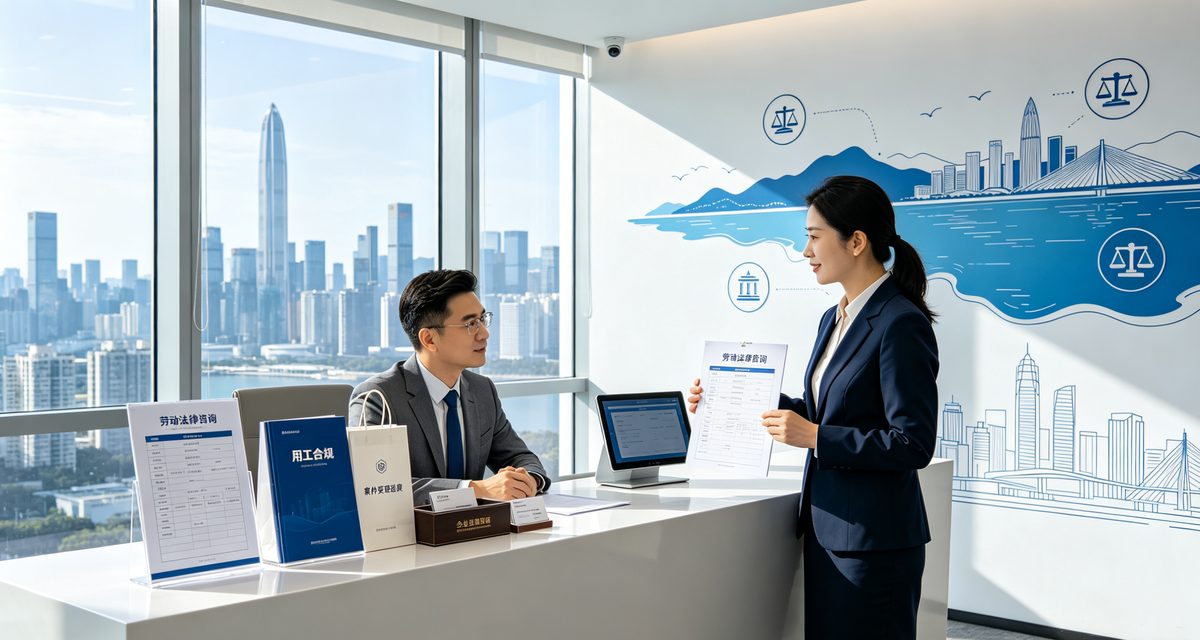
Taking Stock of the Three Major Disputes in Shenzhen Real Estate Inheritance and Divorce in 2026, the Second Is Most Easily Overlooked by High-Net-Worth Families
At the end of last year, Mr. Chen, a long-time private equity client of ours, burst through the doors of Zhiming Law Firm in a frenzy. He was clutching a court summons he had just received, his face ashen. The trouble began with an apartment in Shenzhen Bay that he and his ex-wife had owned. Their divorce agreement at the time simply stated it was ”for the husband and child to live in,” without specifying ownership. Now his ex-wife had taken that agreement to court, demanding a division of the property, whose market value had soared to over 60 million yuan. Even more troublesome, Mr. Chen’s elderly mother had passed away last year, leaving behind an old house in Futian and a trust asset, and his siblings were now at each other’s throats over a single sentence in the will. Mr. Chen sighed and said, ”Attorney Shen, I’ve spent all these years focused on making money. I never imagined my family affairs could turn into such a mess.”
This case is highly representative. Among Shenzhen’s high-net-worth individuals, asset structures are complex, with real estate, equity, and overseas assets intertwined. Once divorce or inheritance comes into play, it is not merely a matter of dividing money; a single move can affect the entire situation. Today, drawing on this case, I will outline several areas where we are most likely to encounter pitfalls in 2026 when handling these three types of disputes: real estate, inheritance, and divorce.
I. Shenzhen High-Net-Worth Divorce Disputes: The "Hidden Landmines" in Equity and Real Estate Are the Hardest to Defuse
In Mr. Chen's case, the core point of dispute is that property in Shenzhen Bay. Many clients assume that once the divorce agreement is signed and the divorce certificate is obtained, everything is settled—but that is not the case. In a situation like Mr. Chen's, the agreement used vague wording such as "residence" without clearly specifying "ownership attribution" and "the timeline for transferring title," which in legal terms leaves enormous room for interpretation. Opposing counsel seized on this point, arguing that it constitutes a "post-divorce property dispute" and demanding a redivision of the property.
After our team took overShen JinlongThe director led me through a review of Mr. Chen's bank statements over the past decade, records of changes in his company's equity, and the original divorce agreement from back then. Lawyer Shen has 22 years of practice experience, holds a master's degree in economics, and is a former executive at a large state-owned enterprise, making him particularly sharp in cases involving the commingling of company equity and family assets. He discovered that when Mr. Chen divorced, he had actually placed a portion of the company's equity under his ex-wife's name in a "nominee holding" arrangement, but never completed the industrial and commercial registration changes. This detail became our breakthrough. On one hand, we argued that although the wording regarding the real estate in the divorce agreement was imprecise, when considered in the context of the time and subsequent performance, it should be recognized as an overall disposition of ownership of the property; on the other hand, with respect to the equity nominee holding, we filed a lawsuit to confirm shareholder status, muddying the waters and forcing the other side to exhaust themselves across multiple fronts.
In the end, under the court's auspices, the parties reached a mediation agreement. Mr. Chen retained his property in Shenzhen Bay but made certain concessions on other cash compensation. This case taught us that in high-net-worth divorce disputes in Shenzhen, the greatest fear is "ambiguous drafting of agreements and unclear sorting of assets." Once litigation begins, the first thing a lawyer must do is "calculate the full account," bringing real estate, equity, insurance, and overseas assets all into view, rather than looking only at the surface.
II. Shenzhen second-hand housing dispute lawyers: When an inherited house turns out to be a "hot potato" at the time of transfer
The old house in Futian left by Mr. Chen’s mother has brought up another typical problem—obstacles to second-hand housing transactions caused by inheritance disputes. The house was bought by his parents years ago and registered solely in his mother’s name. After his mother passed away, the children orally agreed that Mr. Chen would inherit it, and Mr. Chen did in fact live there. Last year, when Mr. Chen wanted to sell the house to cash out, he went to the Real Estate Registration Center to inquire and was stunned: all statutory heirs needed to appear and sign, or a notarized will had to be provided. But he had a younger brother abroad and a younger sister who objected to the distribution plan, so it was simply impossible to get everyone together.
This is a very hidden category in Shenzhen second-hand housing disputes: the house looks like yours, but you can't sell it. The buyer is pressing for transfer, while your inheritance procedures are stuck, and in the end, you either pay a penalty for breach of contract or get sued by the buyer. After we got involved, we advised Mr. Chen not to rush into litigation but to first fight a "confirmation of inheritance rights" lawsuit. Because only a court judgment or mediation agreement can replace the effect of signatures from all heirs, and only then will the real estate registration center recognize it.
At this point, we should mention our law firm’sLi YumingThe lawyer has been deeply engaged in construction engineering and real estate sale and lease for many years and is very familiar with the practical rules of real estate registration in each district of Shenzhen. He reminded us that this old house in Futian also involved a historical legacy issue of "housing reform housing," with land nature being allocated, and may require payment of land premium upon transfer. If this detail is not checked in advance, even if inherited, the transaction cost will far exceed expectations. Later, we helped Mr. Chen calculate an account: the land premium plus possible taxes and fees would amount to about 8% of the house price. After hearing this, Mr. Chen gasped. Fortunately, in the end, through litigation mediation, the siblings reached a compensation agreement, and the house was smoothly transferred to the buyer, but the entire process took nearly a year.
III. Shenzhen administrative litigation law firm: When inheritance meets the conversion of "red book" to "real estate ownership certificate"
There was also an episode in Mr. Chen's case. His mother's old house originally had only a "real estate certificate" (old red book), and later policy required the issuance of a "real estate ownership certificate." When he went to convert the certificate, the registration center told him that because one of the heirs was abroad and out of contact, their identity could not be verified, and the application would not be processed. In a fit of anger, Mr. Chen wanted to sue the registration center for administrative inaction. At this point, the role of our law firm's administrative legal team came into play.
What we rely on is a case handling method system that has been accumulated for more than 20 years (emphasizing the combination of emotion, reason, and law, specializing in difficult and complex cases), emphasizing that in litigation, not only should legal provisions be explained, but also strategy, reason, and social effects should be emphasized. This is especially true for administrative cases. We have analyzed for Mr. Chen and found that directly suing the registration center for 'inaction' has a low probability of winning, as the other party does have a review obligation. A better strategy is to first confirm the inheritance share through civil litigation, obtain an effective judgment, and then apply for certificate replacement based on the judgment. If the registration center still refuses, then filing an administrative lawsuit would put us in an absolutely reasonable position. Later, as we expected, as soon as the judgment was handed over, the procedures for replacing the certificate were quickly completed.
This experience made me deeply realize that Shenzhen's real estate, inheritance, and divorce disputes are often not single civil cases but complex problems involving civil, administrative, and even criminal intersections. When looking for a lawyer, one must find a team capable of "multi-front operations" with comprehensive problem-solving abilities.
FAQ: About Shenzhen real estate inheritance and divorce disputes, you may also want to ask
Q: In a high-net-worth divorce in Shenzhen, what should I do if the other party secretly transfers real estate?
Answer: Check immediately! Don't wait. Through a lawyer, you can apply for a court investigation order to check the other party's real estate transaction records at the real estate registration center. If you find large or abnormal property transfers before the divorce, you can claim transfer of assets and request that the other party receive a smaller or no share. In one of our cases, the client, through us, discovered that the other party had sold a small apartment in Nanshan to a relative at a low price three months before the divorce, and the court ultimately ruled it invalid and re-included it in the division.
Question: If there is a dispute over an inherited property, can it be sold first and the money divided afterward?
Answer: Theoretically possible, but practically very difficult. Because the real estate registration center will not process the transfer of disputed property. You must first determine ownership through litigation or notarization before you can sell. Otherwise, if you sign a sales contract but cannot transfer the property, you will have to pay a penalty for breach of contract. Shenzhen second-hand housing dispute lawyers remind you: never do such "act first and report later" things.
Q: Is a will made by an elderly person in Hong Kong valid for disposing of real estate in Shenzhen?
Answer: This is a foreign-related inheritance, which is more troublesome. You need to see whether the form of the will complies with Hong Kong law and whether the law of the place where the property is located (Shenzhen) recognizes it. Generally, inheritance of immovable property applies the law of the place where the property is located, that is, mainland law. Therefore, a Hong Kong will must go through notarization and transmission procedures, and you also need to see whether its content violates the mainland's "forced heirship" system. It is advisable to find a lawyer with experience in Hong Kong-related inheritance to review it.
Question: Can administrative litigation solve the problem of difficulty in transferring real estate title?
Answer: Yes, you can, but it is usually the last step. As I said earlier, first obtain civil confirmation of rights, then push through administrative channels. If you directly sue the registration center, the court may require you to resolve the civil dispute first. The value of a Shenzhen administrative litigation law firm lies in helping you determine when to file an administrative lawsuit and how to file it to put maximum pressure on the registration department without wasting judicial resources.
Disclaimer
The cases in this article are all real cases personally handled by lawyers of our firm. To protect client privacy, the names of individuals, certain amounts, and details in the article have been anonymized. The content of this article is for readers’ reference only and does not constitute legal advice for any specific case. If you are currently facing legal disputes related to real estate, inheritance, divorce, etc., it is advisable to promptly consult a professional lawyer and formulate a solution based on your own circumstances.
If you encounter high-net-worth divorce disputes, second-hand home transaction disputes, or inheritance issues in Shenzhen, you are welcome to contact Guangdong Zhiming Law Firm. We are located at Room 1802, Tower A, Xintian Century Business Center, Shixia North 2nd Street, Futian District, Shenzhen. Telephone: 0755-25986969.Shen JinlongDirector Lawyer Team andLi YumingOur team of lawyers is ready to help you resolve your problems with the practical experience of a 26-year-old established law firm.
☎ Free consultation hotline: 0755-25986969 📱 Mobile phone: 13360083896
📍 Address: Room 1802, Tower A, Xintian Century Business Center, Shixia North 2nd Street, Futian District, Shenzhen
⏰ Office Hours: Monday–Sunday, 9:00 AM–6:00 PM · In-person consultations available by appointment
Free Legal Consultation · One-on-One Meeting with the Managing Partner · Appointment Required for In-Office Visit