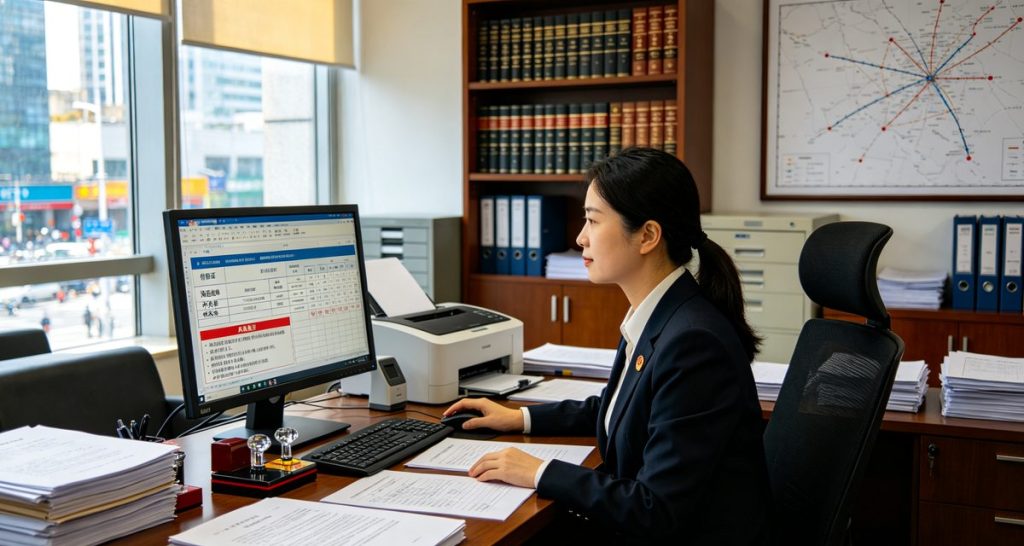
Inheritance disputes in Shenzhen increase by 15% annually; siblings fought for two years over the house their parents left behind—why did one person get the entire 20 million yuan estate?
At the end of last year, a client doing R&D in Shenzhen Nanshan Science and Technology Park came to me. The first thing he said when he walked in was, Lawyer, my sister has changed the locks on the Futian apartment my parents left behind, and I can't get in. In his hand he clutched a photocopy of a handwritten will from 2019, the handwriting crooked, the witness column blank. He said that for the two years before his mother passed away he had been the one caring for her, while his sister had settled abroad and came back once a year. But after his mother passed away, his sister produced a printed will, saying the apartment belonged to her. Two versions, one apartment, with a market value of nearly 20 million yuan, and the brother and sister spent more than two years running back and forth between Futian Court and Nanshan Court.
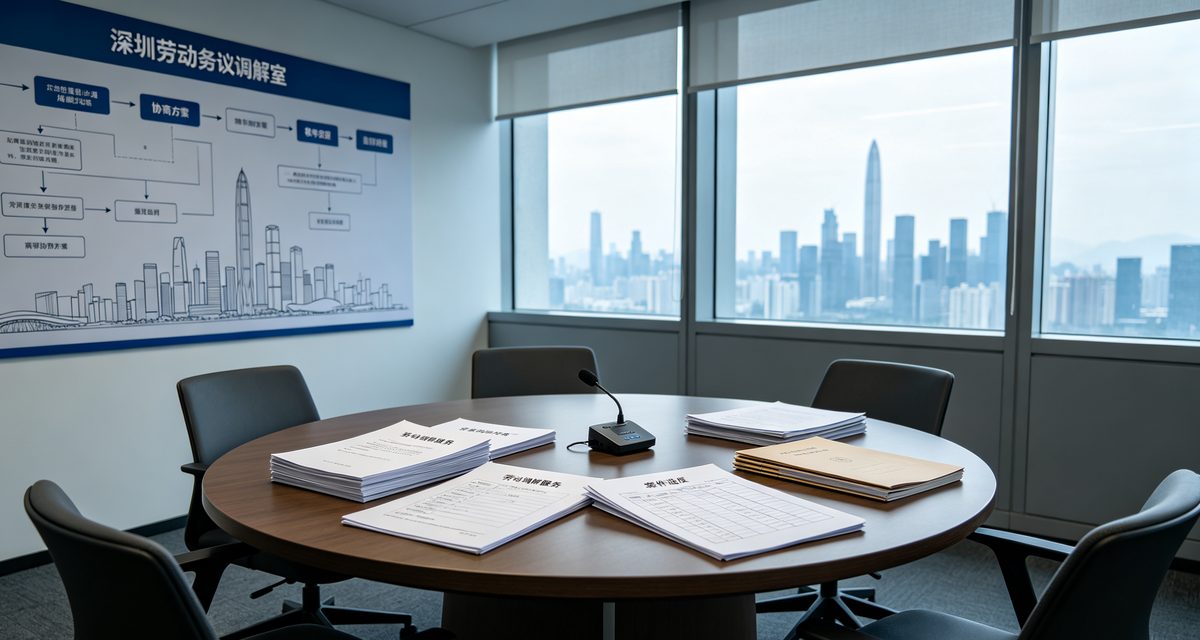
This is not an isolated case. Over the past three years, the number of inheritance dispute cases in Shenzhen's two levels of courts has grown by about 15% each year. In the family courts of Futian, Nanshan, and Longhua districts, inheritance cases generally do not have their first hearing until three to six months after filing. Cross-border factors are also increasing — where the decedent had Hong Kong identity, children are overseas, and assets are distributed both within the mainland and abroad. The proportion of such cases in Shenzhen's inheritance disputes has risen from less than 10% five years ago to nearly 30% now.
Why are inheritance cases increasingly difficult to litigate? The key comes down to one word: people. When the decedent passes away, what is left behind is not only houses and bank deposits, but also words left unclear, writing left unfinished, and arrangements left unmade. An ordinary home in Shenzhen routinely costs seven or eight million yuan, and properties in the core areas of Futian and Nanshan commonly exceed ten million yuan. When interests are at stake, family ties often cannot withstand the test.
What is even more troublesome is cross-generational inheritance. The old house left by the grandparents was not partitioned among the father’s generation, and by the time the grandchildren wanted to deal with it, they found that seven or eight heirs were involved—some had lost contact, some had died, and some produced a “family division agreement” from thirty years earlier. In Longhua, there was a case in which a self-built house involved three generations and twelve heirs, and merely determining the scope of heirs took eight months.
Validity of Wills: Ninety Percent of Disputes Center on These Three Points
I have handled many cases involving disputes over the validity of wills, and to sum up, more than ninety percent of the disputes focus on three issues: formal requirements, witness qualifications, and testamentary capacity.
Articles 1134 to 1139 of the Civil Code set out strict requirements for six forms of wills: holographic, written on behalf of the testator, printed, audio-video recorded, oral, and notarized. A holographic will must be written entirely in the testator’s own handwriting, signed, and dated with the year, month, and day; a will written on behalf of the testator must be witnessed by two or more witnesses present, one of whom writes the will on the testator’s behalf, and the testator, the person who writes the will, and the other witnesses must all sign it. If a single signature or a single date is missing, the will may be held invalid.
Witness eligibility is even more easily overlooked. Heirs, testamentary donees, and persons having an interest in them cannot serve as witnesses. I have seen a case in which the father made a will written by another person, and the witness was the eldest son’s business partner. The court ultimately found that the witness had an interest relationship with an heir, held the will invalid, and dealt with the real property according to statutory succession, dividing it equally among the five children.
The testator’s capacity is another main battleground. If the testator suffered from Alzheimer’s disease or a mental illness, or was in a state of impaired consciousness when making the will, the will’s validity will be challenged. Such disputes often require obtaining medical records and applying for a forensic appraisal, and they are lengthy and costly. There was a case in Shenzhen in which an elderly person made a printed will in a hospital; two of the three children accepted it and one objected. The court commissioned an appraisal institution to assess the elderly person’s civil capacity at the time of making the will, and ultimately found the will valid, but the entire process took eleven months.
Statutory inheritance does not mean equal division; in these situations, one may receive a larger share.
Many people assume that if there is no will, the estate is divided equally. In fact, Article 1130 of the Civil Code clearly provides: an heir who has fulfilled the obligation to support the decedent to a major extent or who lived with the decedent may be given a larger share when the estate is distributed. An heir who has the ability and means to support the decedent but fails to fulfill the obligation of support shall be given no share or a smaller share when the estate is distributed.
How can the primary support obligation be proved? Bank transfer records, medical expense receipts, caregiving records, testimony from neighbors, and community certificates are all evidence. I represented a client in Futian whose mother was bedridden for six years after a stroke. He hired a full-time caregiver and went to care for her himself every day after work, while his older sister only visited on holidays. After their mother passed away, the sister demanded an equal division of the property. We obtained the caregiver contract, six years of medical payment records, and WeChat chat records. The court ultimately determined that the client had fulfilled the primary support obligation and awarded him a 65% share of the property, while the sister received 35%.
There is another easily overlooked point: having lived with the decedent. If an heir has lived with the parents for a long time and cared for their daily needs, the court will take this factor into account even if there were no large expenditures. In many Shenzhen families, the parents live with one of their children, and that child can often secure a larger share in inheritance.
Cross-Border Inheritance: Additional Variables Arising from Hong Kong and Overseas Status
Shenzhen is adjacent to Hong Kong, and cross-border inheritance cases have been increasing year by year. If the decedent is a Hong Kong resident and leaves real property in the mainland, does mainland law or Hong Kong law apply? Under Article 31 of the Law of the People's Republic of China on the Application of Law to Foreign-Related Civil Relations, statutory succession is governed by the law of the habitual residence of the decedent at the time of death, but statutory succession of immovable property is governed by the law of the place where the immovable property is situated. In other words, for real property in Shenzhen, mainland law applies.
But the procedure is much more complicated. Inheritance documents from Hong Kong must be notarized and transmitted before they can be used in mainland courts. If the heir is overseas, the power of attorney must be notarized locally and authenticated by a Chinese embassy or consulate. The time required is often three to six months longer than in ordinary inheritance cases.
Last year, in a case I handled, the decedent died in Hong Kong, leaving two properties in Futian and Nanshan, Shenzhen, with a combined market value of about RMB 20 million. There were three heirs: one in Canada, one in Hong Kong, and one in Shenzhen. The foreign heir needed to complete notarization and authentication, the Hong Kong heir needed to provide a certificate of inheritance rights, and the mainland heir needed to provide proof of kinship. Preparing the documents alone took four months. In the end, the court ruled that the Shenzhen heir would inherit the properties, while the other two heirs would receive corresponding compensation. When the client received the judgment, he said that he had never expected an inheritance lawsuit to be more draining than a divorce.
Real Case: How Full Inheritance Rights to a 20 Million Property Were Obtained
Back to the Nanshan client from the beginning. The printed will produced by his older sister had no witness signatures, only their mother's fingerprint. We applied for a forensic appraisal of when the will was formed and also investigated their mother's mental state during the period when she made it. When the hospital medical records were retrieved, it was found that during that period their mother had been hospitalized for a cerebral infarction, and her consciousness fluctuated between clear and unclear. In light of the caregiver's testimony, the neighbors' testimony, and WeChat chat records, the court ultimately found the printed will invalid and handled the estate according to statutory succession. Because the client had fulfilled the primary duty of support, he received a 70% share of the property, while his older sister received 30%. The property had a market value of RMB 20 million. Through confirmation of inheritance rights and subsequent payment of compensation, the client ultimately obtained full ownership of the house.
This case was litigated for more than two years, during which it went through four stages: confirmation of the validity of the will, confirmation of the scope of heirs, appraisal of the property’s value, and negotiation of a compensation payment plan. Each step required evidentiary support, and each step could change the outcome.
Conclusion
The house left by parents is both a dream and a test. The number of inheritance disputes in Shenzhen is still increasing, with cross-border, cross generational, multiple heirs, and flaws in the form of wills. Each variable may lead the case to a completely different direction. Pre planning, standardizing the drafting of wills, and preserving evidence of support are more important than going to court afterwards. If a dispute has already arisen, getting a professional lawyer involved as early as possible, sorting out evidence, assessing the validity of the will, and determining litigation strategies can often save a lot of detours. Guangdong Zhiming Law Firm has been rooted in Shenzhen for 26 years and has represented a large number of cases, accumulating rich practical experience in the field of inheritance disputes. Lawyer Shen Jinlong, Director of Zhiming Law Firm, has 22 years of professional experience and holds a Master's degree from Fudan University. Our law firm has accumulated over 20 years of experience in handling cases, emphasizing the combination of emotions, reason, and law, and specializing in difficult and complex cases. If you encounter inheritance difficulties, you can chat in person at Room 1802, Building A, Xintian Century Business Center, Shixia North Second Street, Futian District, Shenzhen, or call 0755-25986969 to make an appointment for consultation.
Regarding the cases mentioned in the article, if you have similar situations as well.
You can directly call 0755-25986969 to talk to a marriage and family lawyer. The first consultation is free. The law firm is located at Room 1802, Building A, Xintian Century Business Center, Shixia North Second Street, Futian District, Shenzhen.