A 20-million-yuan old house in Shenzhen, three siblings fought over it for more than two years—does that line in the will actually count?
Last summer, a Chaoshan businessman doing foreign trade in Futian came to see me. His first words upon walking in were: "Lawyer Shen, my parents' old house in Nanshan is now worth nearly 20 million yuan. My eldest brother is holding a handwritten will claiming it all belongs to him, and says my second sister and I get nothing. The handwriting on that paper is all crooked and scrawled, and there isn't even a single witness. Can that really count?" His hands trembled the whole time he spoke—not out of fear of going to court, but out of fear that once the lawsuit was filed, the siblings would never be able to face each other again.
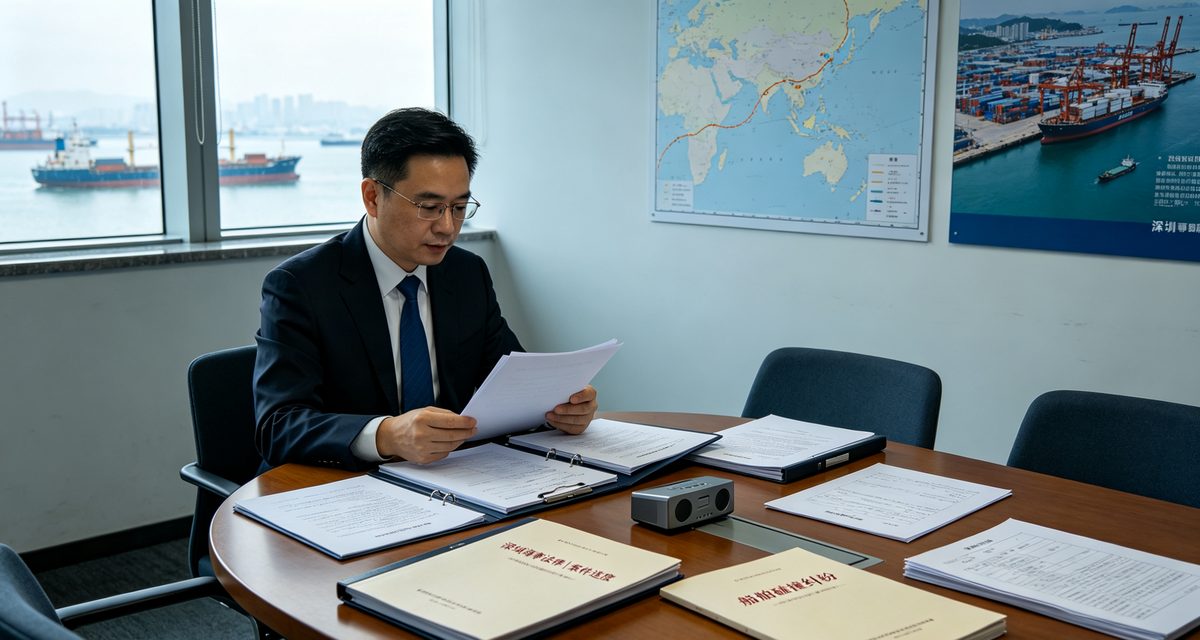
This scenario is all too common in inheritance disputes in Shenzhen. Data disclosed by the Shenzhen Intermediate People's Court over the past two years show that inheritance dispute cases have increased by about 15% annually, and the proportion involving cross-border elements (for example, one parent in Hong Kong and children in Shenzhen) and cross-generational transfers (property passing directly from grandparents to grandchildren) has risen markedly. As property has become valuable, family bonds have instead proved unable to withstand the test.
How exactly should siblings divide real estate left by their parents? And what should be done if there is a dispute over the will? Drawing on inheritance cases handled by Zhiming Law Firm over the years, I will break this down along several key dimensions.
First dimension: first check whether a will exists, then check whether it appears genuine.
Many people think a handwritten will is a holographic will and therefore valid. In fact, Article 1134 of the Civil Code sets out clear requirements for a holographic will: it must be written in the testator’s own hand, signed by the testator, and dated with the year, month, and day. If any one of these three is missing, its validity may be overturned.
The most typical dispute I’ve seen involved an elderly person, shortly before death, asking a caregiver on a hospital bed to write a will for them and then affixing their own fingerprint. This was neither a self-written will nor a scribed will (a scribed will requires two disinterested witnesses). In the end, the court held it invalid, and the real estate passed by intestate succession, divided equally among the five children. The elderly person had originally wanted to leave more to the youngest daughter who cared for them, but in the end that extra share was not given.
So the first dimension of judgment is very simple:Whether the form of a will is legal takes priority over what its contents say.If there is a fatal defect in form, no matter how reasonable the content is, it is all for naught.
Second dimension: In statutory inheritance, who gets more and who gets less depends on the facts of support.
If there is no valid will, statutory succession applies. The first order consists of the spouse, children, and parents. Shares are generally equal, but Article 1130 of the Civil Code provides an exception: an heir who performed the principal duty of support for the decedent or lived with the decedent may be given a larger share in the distribution; an heir who has the capacity and means to provide support but fails to do so shall be given no share or a smaller share.
In Longhua, there was a case in which an elderly mother lived with her youngest son for 12 years. Medical treatment, hiring a caregiver, and daily expenses were all borne by the youngest son. The other two sons only showed up during Chinese New Year. In the end, the court awarded the youngest son 55%, and the other two 22.5% each. That ratio was not set arbitrarily; the judge considered bank statements, medical payment records, community certificates, and other hard evidence.
To put it bluntly,Whoever provided more care must prove it with evidence.It is no use just saying I am filial.
Third Dimension: Cross-Border and Cross-Generational Inheritance—The Difficulty Lies in Proving Your Dad Is Your Dad
What makes Shenzhen special is that many families have relatives in Hong Kong or overseas assets. If the deceased is a Hong Kong resident, inheritance of real property in Mainland China must go through Hong Kong probate proceedings, and then return to handle notarization of inheritance rights or litigation. In terms of timing, cross-border inheritance cases take an average of three to six months longer than purely Mainland cases.
Cross-generational inheritance is even more troublesome. For example, if a grandfather makes a will before he dies leaving the house to his grandson, but the grandson is not a first-order statutory heir, this is a testamentary gift. The donee must express acceptance within 60 days after learning of the testamentary gift; otherwise, it is deemed a waiver. Many families are completely unaware of this 60-day period, and once it is missed, it is missed.
What differentiates Zhiming Law Firm in cases of this kind?
Our director, Lawyer Shen Jinlong, has been practicing law for 22 years. He holds a master's degree from Fudan University and is an economist. In his early years, he also worked as a senior executive in a state-owned enterprise. One direct benefit of this background is:In inheritance cases, look not only at legal provisions but also at the family property structure, tax costs, and subsequent disposition..
The core of our case handling methodology system, which has been accumulated for over 20 years and emphasizes the combination of emotion, reason, and law, specializing in difficult and complex cases, is not to teach you how to "win", but how to dismantle the opponent's evidence chain and strengthen your own evidence chain in litigation. This is especially true in inheritance cases - often it's not that the judge doesn't believe you, it's that you can't come up with something that can make him believe.
A Real Case: Full Inheritance Rights to a 20 Million Property
In an inheritance dispute we handled the year before last, the decedent owned a property in Futian, Shenzhen, with a market value of about RMB 20 million and also had two children. The opposing party produced a will written by another person on the decedent's behalf and claimed that the property should go to that person alone. After we took over the case, we approached it from three angles: first, one of the witnesses to that will was a business partner of the heir and was an interested party; second, the date on the will showed obvious signs of alteration; third, the medical records from the last six months of the decedent's life showed that cognitive function had severely declined.
Ultimately, the court found the will invalid and applied statutory succession. However, we did not stop at equal division; instead, we further presented evidence that our client had lived with the parents long-term and assumed the primary support obligations, ultimately securing full inheritance rights for the client. This full award was not due to luck; it was built on 132 pages of bank transfer records, 47 records of accompanying the parents to medical appointments, and a residence certificate issued by the community.
If you are facing an inheritance dispute, there are three things you can do right now.
Firstly,Don't rush to fall out with your siblings.. In inheritance cases, the average time to conclude through mediation is 40% less than through judgment, and enforcement is much smoother. Second,First, preserve the medical records, transfer records, and chat records from before the parents’ death., the longer it takes, the harder these things are to find. Third,Find a professional lawyer to conduct a validity assessment of the will., Don't just go online and look up a few legal provisions yourself and then jump to conclusions.
The district courts in Futian, Nanshan, and Longhua in Shenzhen differ slightly in their adjudicative approaches to inheritance cases. For example, regarding the standard for determining a primary support obligation, the Longhua court places more weight on actual cohabitation and daily care, while the Futian court scrutinizes financial expenditures more closely. Without having handled dozens of inheritance cases, a lawyer will find it hard to give you an accurate prediction on these details.
The inheritance dispute ends in the end, not only for the house, but also for a breath and the final dignity of a family. Zhiming Law Firm has been working in Shenzhen for 26 years and has represented a large number of cases. Inheritance disputes are just one part of it, but we treat each one as a family matter. If you have specific questions, you can call 0755-25986969 or come directly to Room 1802, Building A, Xintian Century Business Center, Shixia North Second Street, Futian District for a face-to-face chat. First, clarify the situation before deciding whether or not to fight and how to fight.
Regarding the cases mentioned in the article, if you have similar situations as well.
You can directly call 0755-25986969 to talk to a marriage and family lawyer. The first consultation is free. The law firm is located at Room 1802, Building A, Xintian Century Business Center, Shixia North Second Street, Futian District, Shenzhen.