"2026 Shenzhen divorce real estate division law firm battle: a set of "green room" triggered by the divorce, real estate and administration of the three-way battle"
We recently came across a rather interesting case. The client was a woman in her forties, surnamed Chen. One morning, she suddenly burst into our Guangdong Zhiming Law Firm, clutching an "Administrative Penalty Decision" and a divorce certificate, so flustered that she could barely speak coherently. She said, "Lawyer Shen, my ex-husband has sued the government, and now the court has notified me to participate in the litigation as a third party. My divorce has long been finalized—how come I'm still being dragged into a lawsuit?"

At first, we thought it was just another typical post-divorce property dispute, but once we heard the details, we realized this was far from simple. Behind it all, it wasn't just the messy division of real estate from the divorce agreement—it was compounded by an entire set of issues around confirming property rights for historically illegal structures in Shenzhen, as well as administrative reconsideration and litigation challenging the sub-district office's administrative determinations. It was truly a case of "a property case nested inside a divorce case, and an administrative case growing out of the property case."
Case Background: A Divorce Agreement That Was Not Fully Settled
Ms. Chen and her husband Mr. Liu divorced five years ago. At the time, the couple owned a four-and-a-half-story village house in an urban village in Futian District, Shenzhen, which is commonly known as a "green book house." Due to its special nature, the divorce agreement they signed at the Civil Affairs Bureau was very simple: "For the four-and-a-half-story building in the village, floors one to three belong to the wife, the fourth floor and above belong to the husband, and the parties have no other property disputes."
As a result, this house simply cannot undergo property division registration, because the entire building has only one collective master green book, and this green book is registered under the village joint-stock company, used to record homestead land use conditions. There is no independent property certificate at all. This type of house is a persistent problem in divorce disputes in Shenzhen, because it is not commercial housing and cannot be divided according to conventional area.
After the divorce, the man, Mr. Liu, actually occupied the entire fifth floor and the rooftop of the building, and also built a metal shed on the rooftop, renting it out to nearby small vendors as a
Case difficulty: How administrative litigation implicates divorce property disputes
Mr. Liu panicked as soon as he received the forced demolition notice. He did not understand the law but wanted to preserve that portion of rental income, so on a whim, he filed an administrative reconsideration as the property owner (though he was actually identified as the actual user of the property). However, because his statement about the current condition of the property during the reconsideration was inconsistent with the allocation scheme in the divorce agreement, the reconsideration application was rejected by the reconsideration body. Unconvinced, he turned around and filed an administrative lawsuit with the Yantian Court, accusing the subdistrict office of unclear factual determination, arguing that he was not the sole actual user, and also brought his ex-wife, Ms. Chen, in as a third party.
At this point, Ms. Chen was completely baffled. When she came to our law firm, her core demand was actually very simple:I don't want to be involved in this illegal construction lawsuit, nor do I want to bear any demolition costs or legal consequences. Most importantly, I don't want this administrative litigation to shake my claim to ownership of the first through third floors in the divorce agreement.
The difficulty of this case has three layers:
Difficulty One: Misidentification of the Subject of Administrative Penalty
The administrative penalty decision named Mr. Liu, but during the reconsideration stage, Mr. Liu argued that the property was jointly owned with his ex-wife as family common property, and he believed that the sub-district office's decision to penalize only him was targeting the wrong party. This resulted in the administrative penalty itself having an issue of unclear identification of the "responsible subject." If the court indeed revokes the penalty decision, the sub-district office would very likely re-file the case and also list Ms. Chen as a penalized party, in which case floors one to three under her name could face the risk of being identified as an "integral illegal construction that cannot be distinguished between legal and illegal portions" and subjected to complete demolition.
Difficulty Point 2: The Effect of Property Division in a Divorce Agreement Against Administrative Confirmation of Rights
Ms. Chen and Mr. Liu's divorce agreement clearly states that floors one through three belong to the woman. However, in the eyes of administrative authorities, this building is an indivisible whole with a green-title property certificate, and they do not recognize the internal division in the civil agreement, only recognizing the on-site measured area and planning approval. This has led to an awkward situation: civilly, Ms. Chen has control over floors one through three, but administratively, the entire building is suspected of illegal construction.
Strategic analysis and proxy process: separate the "people" from the "houses" and attack them individually.
After taking on this case, our team at Zhiming Law Firm, includingShen Jinlong LawyerandLawyer Li Yuming, urgently reviewed the case direction. Lawyer Shen proposed a core approach:This case must be "administrative litigation as the form, civil rights and interests as the substance."We cannot simply speak on behalf of the street office, nor can we completely take Mr. Liu's side. Instead, we must act as a third party and separate Ms. Chen's independent civil rights and interests from this illegally constructed building.
The specific steps are designed as follows:
Step 1: Apply for a court investigation order to lock down the 2010 historical leftover census records.
Lawyer Shen, through Zhiming Law Firm’s “artistic litigation” approach of reverse thinking, prompted Ms. Chen to proactively submit to the court an application titled "Application for Confirmation of Survey Registration Information for Historical Illegal Buildings Left Over from the Past." Through a lawyer's investigation order, we obtained from the subdistrict office the original archives from Shenzhen’s 2009 survey of historical illegal buildings. In the "Declaration Form for the Survey of Illegal Buildings" from those archives, the household members column clearly listed two people, Mr. Liu and Ms. Chen, and the remarks column stated: "This house constitutes the foundation of the couple's shared life." This evidence directly proved that as of 2009, the house was joint marital property.
But this is only the beginning; more importantly, it must be proven that the divorce agreement is the sole basis for property division.
Step 2: Voluntarily pay the fine, but request that the administrative penalty only target the added construction portion.
During the court session.Lawyer Li YumingAs Ms. Chen's representative, a bold strategy was proposed:Partial admission of liabilitySince the iron sheet shed added on the rooftop does indeed exist and has not obtained legal procedures, we, representing Ms. Chen, state that we can accept the results of the administrative penalty for the parts added after 2010, but we strongly request that the administrative penalty decision must clearly specify the scope of the illegal area, precise to "the added parts on the fourth floor and above," and must not vaguely treat it as "the entire building."
This move is crucial. If the court ultimately only confirms that the added construction is illegal, then, in accordance with the relevant regulations of the Shenzhen Special Economic Zone on handling historical illegal buildings, the original construction portion recorded in the 2009 census (i.e., the original structure of the first to third floors and the fourth floor) should be granted the administrative treatment of "temporary use" or "retained use." This directly safeguards Ms. Chen's bottom line of property.
Step Three: Introducing a Lawsuit for Performance of the Divorce Agreement in Out-of-Court Mediation
Lawyer Shen keenly noticed that Mr. Liu's true purpose in filing the administrative lawsuit was not to challenge law enforcement at all, but rather to pressure Ms. Chen into making concessions and to seek a re-division of the rental income from the fourth floor and above. Accordingly, while filing our defense, we separately initiated proceedings at the Futian District Court.Post-divorce property disputeThe lawsuit demands that Mr. Liu fulfill the Divorce Agreement, return the use rights to the fourth floor and the rooftop, and pay the rent collected from leasing out the fourth floor and above to third parties over the past three years.
This "besiege Wei to rescue Zhao" move completely disrupted Mr. Liu's position. Once he lost the administrative lawsuit, he would not only face demolition but also have to compensate Ms. Chen for rent in civil proceedings. In court, we presented this related litigation to the collegial panel, and ultimately the presiding judge of Yantian Court proactively organized a substantive coordination meeting to resolve the administrative dispute.
Results and Enlightenment: A Clear Account
Finally, the case was concluded through mediation, and no formal administrative judgment was issued, but the mediation agreement has legal force. There are three core results:
- Change the penalty subject:The street office agreed to change the scope of punishment in the "Administrative Penalty Decision" to "the unauthorized additional construction above the fourth floor." It was clarified that the first to third floors under Ms. Chen's name are not included in this demolition scope.
- Realization of civil rights and interests.Mr. Liu admitted in court that the divorce agreement was valid and agreed to pay Ms. Chen 280,000 yuan from the rent already collected from the fourth floor and above in installments as compensation for unauthorized use.
- Administrative risk isolation:Ms. Chen was exempted from personal liability for fines because she proactively cooperated with the administrative investigation and truthfully reported historical legacy information.
Although the case has been closed, the warning it gives us ordinary people is particularly profound.In Shenzhen, many people hold rights to "green book houses" or "historical leftover illegal constructions," believing that once a divorce agreement is signed, everything is settled. But in reality, when faced with urban renewal, investigations and demolitions of illegal structures, or administrative reconsideration, your "Divorce Agreement" weighs as lightly as a piece of paper in front of administrative agencies.
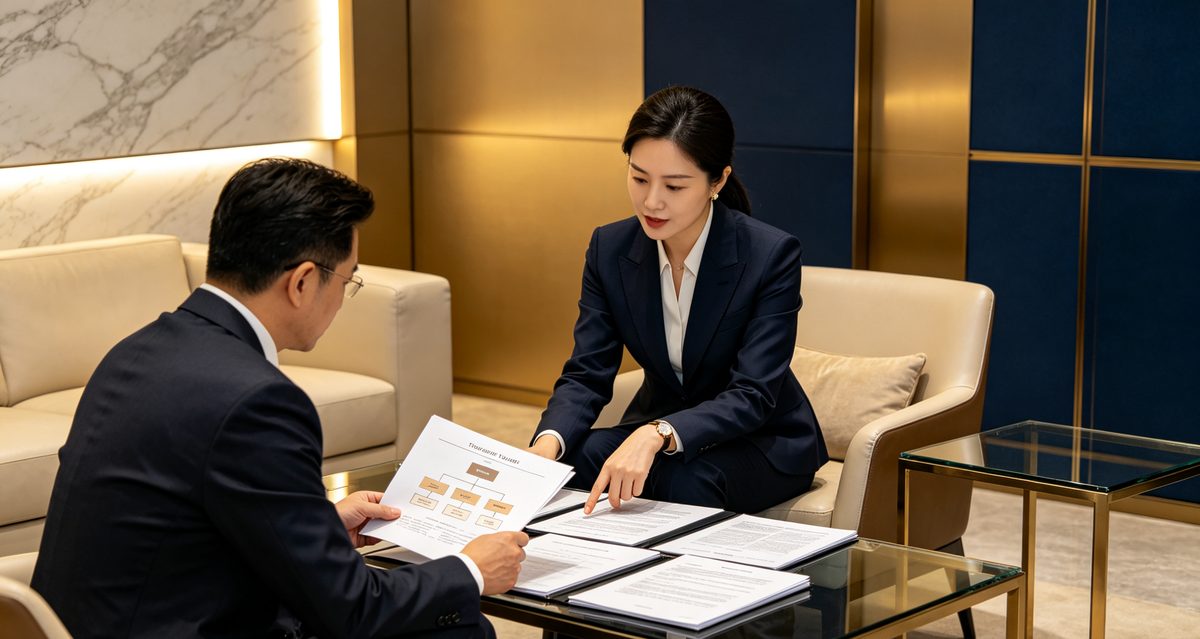
If you are facing a similar situation, don't naively take your divorce agreement to the street office to argue your case. Instead, promptly seek a professional lawyer who understands Shenzhen's real estate rules to help you sort through the housing files. In divorce disputes or administrative disputes, our Guangdong Zhiming Law Firm has handled quite a few similar cases involving the separation of "house, property, and certificate," and we have a mature response system in place.
FAQs on Common Issues Related to Divorce, Real Estate, and Administrative Disputes in Shenzhen
Question: I only have a divorce agreement in hand stating that the property belongs to me, but the other party always refuses to cooperate with the transfer of ownership. Can I directly file an administrative lawsuit?
Of course not. A divorce agreement is essentially a civil contract and does not directly produce the effect of changes in property rights. If the other party does not cooperate, what you need to file is...Civil Litigation over Property Disputes after DivorceTake the judgment document and apply for compulsory execution. If during this period the property is investigated and penalized by administrative authorities for illegal construction, you had better retain a lawyer to intervene as soon as possible to avoid conflicts between the civil judgment and administrative penalties.
Q: How is Shenzhen's "green book house" divided in a divorce? Does the court directly write that each party gets half?
Don’t write it that way. A green-covered property cannot have its ownership divided by units. Courts generally rule on “who has the right to use,” “who has the right to reside,” and “who receives the expropriation compensation.” Although the law allows a 50/50 split, it cannot be physically specified, which can easily lead to future disputes. It’s best to clearly specify in the divorce agreement the allocation ratio for compensation if the property is expropriated or demolished in the future. This point is critical.
Question: Is administrative reconsideration required before filing a lawsuit? Can I still sue if I missed the deadline?
It depends on the situation. For administrative penalty decisions made by subdistrict offices or district governments in Shenzhen, if the law does not require administrative reconsideration as a prerequisite, you may file a lawsuit directly. However, if you have already applied for reconsideration and are dissatisfied with the reconsideration decision, you may file a lawsuit with the people's court within fifteen days. If you missed the reconsideration deadline, as long as you have not exceeded the statute of limitations for filing a lawsuit, you may still sue. But note that once the reconsideration decision has taken effect and upheld the original penalty, you must file a lawsuit within fifteen days from the date of receiving the decision—this time limit is very short.
Q: If my ex-husband is sued for illegal construction and ordered to demolish, and the court notifies me to participate in the lawsuit as a third party, can I just ignore it?
I suggest you absolutely do not ignore it. If you don't participate in the litigation, the court will conduct a default hearing, which means you have waived your right to defend. Once the judgment determines that the entire building is illegal construction, it may directly affect the distribution of your future compensation. For the sake of your own property interests, even if you know nothing about administrative litigation, you should appear in court to clarify the civil rights and interests you hold.
Disclaimer
The cases referenced in this article are de-identified adaptations of recent real cases handled by Guangdong Zhiming Law Firm. All parties are referred to by pseudonyms, and case details have been technically processed, aiming to share practical litigation experience in Shenzhen. The views expressed herein do not constitute specific legal advice. If you encounter a similar dispute, please bring your case materials to our office for consultation. Do not directly apply any approach, so as to avoid irreparable legal risks.
Guangdong Zhiming Law Firm
Managing PartnerShen Jinlong Lawyer(22 years of experience as a practicing lawyer, 31 years of qualifications as an economist, Master of Economics from Fudan University)
Core LawyerLawyer Li Yuming(Construction engineering, real estate sales and leasing, corporate debts and claims, marriage and family, criminal defense)
Phone: 0755-25986969
Address: Room 1802, Building A, Xintian Century Business Center, Shixia North Second Street, Futian District, Shenzhen
Official website:www.zhiminglawyer.com
Zhiming Law Firm was founded in 2000, a well-established law firm with 26 years of history. It has pioneered the unique "Zhiming Art Litigation" theoretical system, specializing in resolving complex disputes through cross-disciplinary litigation strategies.
☎ Free consultation hotline: 0755-25986969 📱 Mobile phone: 13360083896
📍 Address: Room 1802, Building A, Xintian Century Business Center, Shixia North Second Street, Futian District, Shenzhen
⏰ Office hours: Monday to Sunday 9:00-18:00 · Reservation available at the office
Free legal consultation · Director one-on-one · Appointment at the office