Shenzhen siblings turn against each other over 8 million yuan property and 12 million yuan savings, will validity disputed—how to divide? Lawyer explains three paths in full
Last month, a client from Futian, Shenzhen came to us with three documents. After their father passed away, he left behind a school-district apartment in Nanshan District worth about 8 million RMB, plus 12 million in deposits. The three children held a family meeting and negotiated for four rounds, but no one would yield to anyone else. The eldest said their father had verbally promised the apartment to him on his deathbed, the second child pulled out a handwritten will dated 2019, and the youngest directly said the old man was already confused at the time, so the will didn't count. The family argued all the way from Meilin to Chegongmiao, and finally calmed down at the law firm.
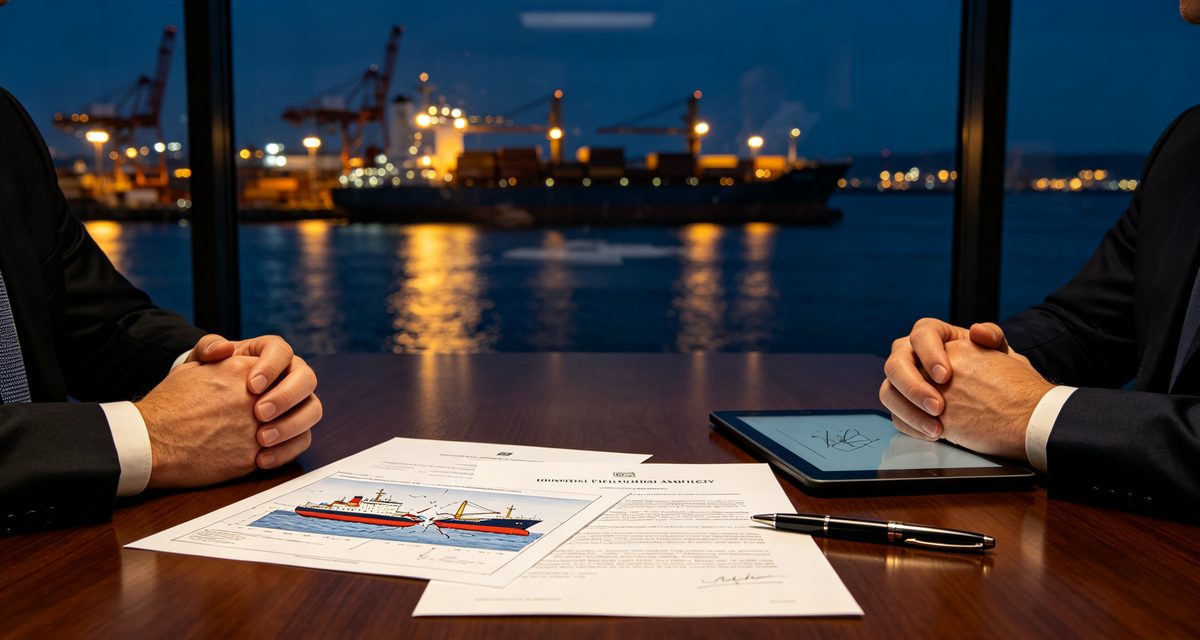
The most agonizing part of inheritance is that the house is static, but the people are dynamic. Article 1123 of the Civil Code stipulates that after inheritance begins, it shall be handled in accordance with statutory inheritance; if there is a will, it shall be handled in accordance with testamentary inheritance or bequest. This provision looks simple on the surface, but when applied to specific families in Shenzhen, disagreements usually center on two points: first, whether the will is actually valid; second, how to divide the house fairly.
The three dimensions of choice in an inheritance dispute: litigation, negotiation, and lawyer's letter — what are the costs of each?
When handling inheritance disputes, three approaches are unavoidable. The first is direct litigation. The average审理周期 for inheritance cases ranges from 6 to 12 months, and if it involves will authentication or cross-border asset verification, it is not uncommon for the case to drag on for over 18 months. Litigation fees are charged on a sliding scale based on the claim amount. For a property worth 8 million RMB, the litigation costs, plus possible appraisal fees and attorney fees, start at over 100,000 RMB. Moreover, after the judgment is rendered, if one party refuses to cooperate with the property transfer, you would need to apply for compulsory enforcement, which adds to the time costs and leaves people utterly exhausted.
The second method is negotiation within the family. Many families have tried this approach, but the outcome often hinges on an unspoken precondition: whether the siblings are evenly matched. If one side is dominant and the other is weak, or
The third method is for a lawyer to get involved in mediation or send a legal letter. The role of a lawyer's letter in inheritance disputes is often underestimated. A carefully worded letter, setting out in black and white the legal basis, analysis of the will's validity, and possible litigation consequences, can shift the other party from "I think" to "what the law says." A client in Longhua, Shenzhen, used this approach to get his brother to agree to distribution according to the will within two weeks—saving at least 5 months compared to litigation.
Why are disputes over the validity of a will the decisive factor in inheritance cases?
Once the validity of a will is challenged, things become complicated. A holographic will must satisfy the requirements of Article 1134 of the Civil Code: written by hand, signed, and dated with year, month, and day. A printed will, pursuant to Article 1136, requires two or more witnesses, and the testator and witnesses must sign each page. But in practice, the more troublesome situation is the coexistence of multiple wills. Article 1142 stipulates that if several wills are made and their contents conflict, the last will shall prevail. This means that even if a previous will was notarized, a later formally valid holographic will can still overturn it.
As an immigrant city, inheritance disputes in Shenzhen are often complicated by cross-regional and cross-border factors. Properties located in Shenzhen, heirs in Hong Kong, and wills signed overseas—the application of law in such cases is something ordinary families simply cannot handle. We once represented a case where the father owned a property in Shenzhen valued at 20 million RMB and had made a will in Hong Kong during his lifetime. His two children disputed the authenticity of the will—one insisted on equal distribution according to statutory succession, while the other insisted on execution according to the will. During the first-instance trial, the opposing party hired a local lawyer and adamantly claimed that the signature on the will was not the father's handwriting, demanding a forensic document examination.
In the end, our team secured this case. The key breakthrough was that when the will was made, the father was hospitalized at Hong Kong's Mary Hospital, and the medical records showed he was of sound mind at the time. Moreover, the will's contents perfectly matched what the father had repeatedly expressed to the nurses. We obtained the complete medical records, combined with preliminary handwriting comparison opinions, and ultimately the court ruled the will valid. Our client successfully won full inheritance rights to the property valued at HKD 20 million. From filing the case to receiving the judgment, it took a full nine months, with five court hearings in between.
Zhiming Law Firm's Differentiated Approach to Handling Inheritance Disputes
Handling inheritance cases requires more than just knowing the law—you also need to understand families. Director Shen Jinlong has practiced for 26 years and has led teams in handling no fewer than a hundred inheritance disputes. Internally, we use a working method called the "Three Checks of the Evidence Chain": check whether the will's form is complete, check whether the testator's mental state at the time of making the will is supported by medical records, and check whether there are other conflicts of interest among the heirs. Once these three checks are done, we basically have a good sense of which direction the case will go.
Another advantage that is difficult for others to replicate is cross-disciplinary capability. Inheritance disputes often become entangled with corporate equity, overseas assets, and tax issues. Director Shen holds a master's degree from Fudan University and has experience as an executive in a state-owned enterprise. In the division of estates involving business operating assets, he can tell at a glance which assets are worth fighting over and which should be liquidated in advance. This kind of judgment is not something a pure litigation lawyer can possess.
Question: My father passed away without writing a will. How should the three children divide a Shenzhen property under his name?
Answer: Handle it according to statutory inheritance, with first-order heirs dividing equally. However, in actual division, factors such as financial contribution, living arrangements, and the degree of care provided to the deceased must be considered. Based on our statistics from a certain district in Shenzhen, about 30% of statutory inheritance disputes ultimately do not result in equal division.
Question: I have a will written by my father in my hands, but it's not notarized. My mother said he was not in his right mind at the time. Is this will valid?
Answer: A handwritten will is valid without notarization, but its validity may be challenged. In judicial practice, the party asserting that the will is invalid bears the burden of proof, but courts typically require evidence of the testator's mental state at the time of making the will, witness testimony, and so on. Such cases carry high uncertainty, so it is recommended to conduct a professional evidence assessment before filing a lawsuit.
Three practical tips for Shenzhen families.
A house worth 20 million is certainly important, but what is even more valuable than the house is getting three things straight: First, whether the original will is properly kept, whether there is a copy, and don't let any single heir hold it alone; second, for ownership documents such as the property deed, purchase contract, and payment receipts, it is recommended to leave a set of photocopies at a law firm for backup; third, when family members disagree on the distribution of the estate, talk it out once first, and if no agreement is reached, have a lawyer step in as soon as possible—the longer the delay, the greater the risk of evidence being lost.
Against the backdrop of a 15% annual increase in inheritance dispute cases in Shenzhen, cross-border and cross-generational inheritance is becoming more common, and will validity disputes are a frequent flashpoint. If your family is facing a similar issue, bring your materials and stop by Guangdong Zhiming Law Firm, located at Room 1802, Tower A, Xintian Century Business Center, Shixia North Second Street, Futian District, Shenzhen. Call ahead at 0755-25986969 to explain your situation to a lawyer, and at least you'll know what your next step should be.
Need professional legal help?
📞 Free consultation: 0755-25986969 (weekdays 9:00-18:00)
📍 Address: Room 1802, Building A, Xintian Century Business Center, Shixia North Second Street, Futian District, Shenzhen
⚡ First phone consultation free