Fined 2 million by the Market Supervision Bureau, a Shenzhen business owner sued the government and got the money back? Lawyer breaks down the full process of the "citizen vs. official" case reversal.
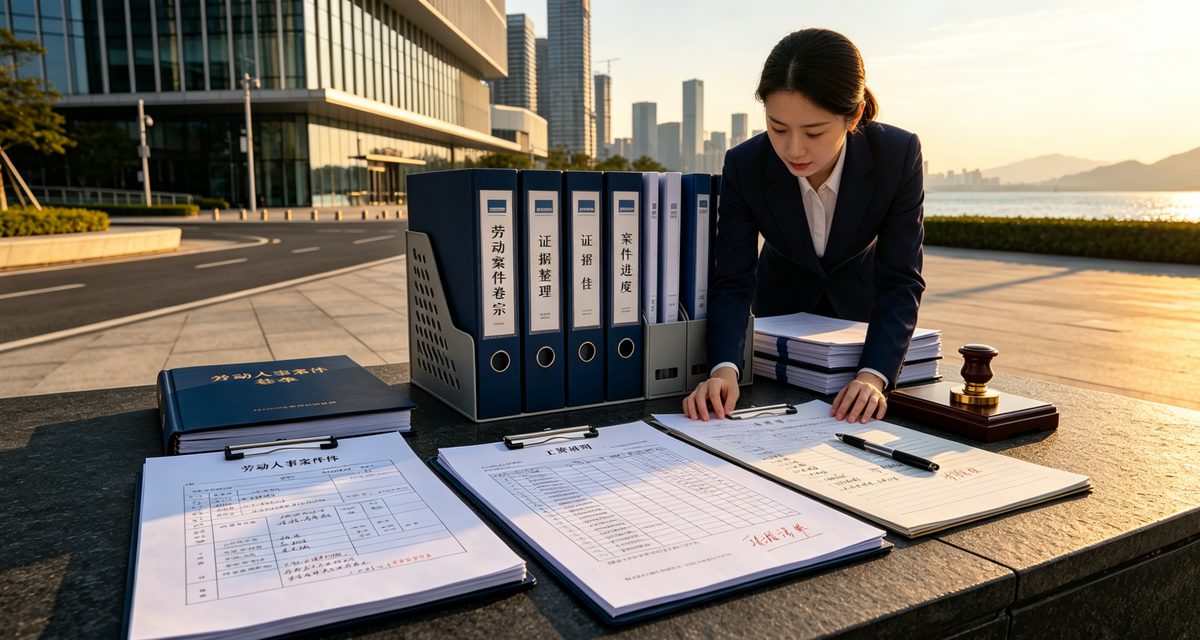
In the autumn of 2023, Boss Chen, the owner of an electronic components company in Nanshan, Shenzhen, opened an "Administrative Penalty Decision" from the Shenzhen Municipal Market Supervision Administration in his office. In black and white, the fine was 2 million yuan, on the grounds that the "high-tech enterprise" promotional language on his products constituted false advertising. Boss Chen was stunned: the brochure had been printed two years earlier, and the certificate was indeed still valid at the time—it just happened to expire three months before the penalty was imposed. Two million yuan was equivalent to 60% of the company's annual profit. He refused to accept it, but was even more anxious: if a company takes a government department to court, can it actually win?
Chen initially wanted to take the "relationship route" and had people ask around, only to find that while there were indeed flaws in the enforcement procedures of this case, no one dared to guarantee a favorable outcome. Some also advised him to just accept the penalty, after all, the win rate for "citizen suing government" in Shenzhen was only 15%–20%, and if the case dragged on for a year or more, the company's cash flow would collapse first. Chen ran the numbers: if he paid the 2 million yuan fine directly, the company could survive, but it would mean working for nothing for half a year; if he went to court, the legal fees and hidden costs alone would be at least 300,000 yuan, and he would have to bet on an uncertain outcome. He hesitated for two weeks, and finally, through a referral from a peer, he found Guangdong Zhiming Law Firm, where the director lawyer, Shen Jinlong, received him.
Director Shen has been practicing for 26 years and has handled over a thousand commercial and administrative disputes. After listening to General Chen's description, his first question cut to the heart of the matter: "In the Administrative Penalty Decision, does it specify which article and which paragraph of the 'false advertising' violation you are charged with?" General Chen pulled out the document and found that it only vaguely stated "in accordance with the relevant provisions of the Anti-Unfair Competition Law," without specifying any particular provision. Director Shen told him that this procedural defect alone was sufficient to serve as the core point of attack and defense.
Article 40 of the Administrative Penalty Law explicitly requires that when making an administrative penalty decision, the administrative organ must specify the specific provisions and legal basis of the "laws, regulations, and rules violated." Insufficient reasoning in a penalty decision is tantamount to dismantling the foundation of law enforcement legality. Director Shen also carefully reviewed the complete set of documents from the Municipal Supervision Bureau, from case filing to service, and identified two critical timeline issues: the case filing date was June 15, 2023, but the evidence collection interview records showed that covert preliminary investigations had already been conducted as early as May 20—that is, before formal case filing, the administrative organ had already carried out investigation activities with an evidence-gathering nature. Additionally, on the receipt of service for the penalty notification letter, the signatory was not Mr. Chen himself, but his front desk administrative assistant, and the date had been altered, revealing clear procedural defects.
Answer: After an enterprise in Shenzhen receives a penalty decision, it must apply for administrative reconsideration within 15 days from the date the decision is served, or file an administrative lawsuit within 6 months—do not exceed the statutory time limit under any circumstances. The administrative reconsideration authority in Shenzhen will generally make a reconsideration decision within 60 days; if dissatisfied with the reconsideration result, one may still file a lawsuit. However, if a lawsuit is filed directly, the first-instance trial period in court is 6 months, and with a second-instance trial and retrial, the entire process may exceed one year. What the enterprise should do is read the full text of the penalty decision word for word at the earliest opportunity, check it against Article 39 and Article 40 of the Administrative Penalty Law, verify whether the penalty subject is qualified, whether the illegal facts are clear, whether the evidence is sufficient, and whether the procedures are lawful, and then decide whether to take the reconsideration or litigation path.
After weighing the options, Director Chen decided to entrust Zhiming Law Firm to apply for administrative reconsideration with the Shenzhen Municipal People's Government. Director Shen's strategy was a "two-pronged approach": on one hand, deferring the fine payment through administrative reconsideration to prevent the company's bank accounts from being frozen and preserve cash flow; on the other hand, organizing the chain of evidence to seek a breakthrough. The team obtained the validity period records of the product certificate and found that although the certificate had expired three months before the penalty was imposed, the printing contract for the brochures was signed five months before the certificate expired, with only 5,000 copies printed, distributed solely at one exhibition, resulting in limited impact. Director Shen believed that the Market Supervision Bureau's characterization of "continued promotion after certificate expiration" as "false advertising" ignored the two constituent elements of the administrative counterpart's subjective intent and the harmful consequences, constituting an unclear determination of the facts.
During the reconsideration period, the Market Supervision Bureau's attitude was initially tough, asserting that "the enterprise's violation was a matter of fact, and the fine of 2 million yuan was legal and reasonable." However, Director Shen, in his written opinion, pointed out procedural defects one by one and attached precedents from similar cases previously adjudicated by Shenzhen courts—for example, the Futian District Court had once annulled an administrative penalty because the penalty decision notice failed to record the notification of the party's right to statement and defense. Director Shen also cited Articles 42 and 63 of the Administrative Penalty Law, pointing out that the case had not been organized for a hearing in accordance with the law, thereby depriving the enterprise of its right to statement and defense. This argument hit the crux of the issue: the amount involved was 2 million yuan, which constituted a large fine for which the law mandated the notification of the right to a hearing, yet the Market Supervision Bureau had failed to fulfill that obligation.
Answer: Administrative cases are very different from ordinary civil cases; the core issue is whether the administrative act is lawful, not whether you are at fault. Professional administrative litigation lawyers in Shenzhen focus on three key things: first, reviewing procedural legality, such as whether case filing, investigation, hearing, and service were conducted in accordance with the law—procedural flaws can directly overturn the entire penalty decision; second, confirming the plaintiff's standing and the filing deadline to prevent dismissal for exceeding the time limit; third, screening evidence to exclude evidence illegally obtained by administrative enforcement agencies. According to incomplete statistics, in Shenzhen administrative litigation, the success rate (including revocation, modification, and confirmation of illegality) for cases represented by lawyers exceeds 40%, far higher than the less than 15% for self-filed lawsuits.
The case remained deadlocked during the administrative reconsideration phase for over two months, as the Market Supervision Administration refused to rescind its penalty decision on its own. Zhiming Law Firm subsequently represented Mr. Chen in filing an administrative lawsuit with the Shenzhen Yantian District People's Court. During the trial, the defendant insisted that the penalty discretion was appropriate, but Director Shen focused on two procedural defects: first, the penalty decision failed to cite specific legal provisions, constituting an erroneous application of law; second, the failure to inform the party of the right to a hearing constituted a major procedural violation. When the collegial panel deliberated, the two sides remained deadlocked. The critical turning point came in the third month, when a major client of Mr. Chen's company learned of the penalty and suspended the previously agreed 8 million yuan order, deciding to wait for the court's judgment. This pressure nearly shook Mr. Chen's resolve, and at one point he discussed whether to accept mediation to have part of the fine reduced.
Director Shen calculated the costs for him: mediation would mean admitting the illegal facts, and although the fine might be reduced to 800,000 yuan, the "administrative penalty information" would be posted on the National Enterprise Credit Information Publicity System for at least three years, directly affecting future bidding and financing, with losses far exceeding that 2 million. Boss Chen gritted his teeth and chose to fight to the end. In April 2024, the Yantian District People's Court rendered a first-instance judgment: it revoked the administrative penalty decision issued by the Shenzhen Municipal Administration for Market Regulation, with the case acceptance fee borne by the defendant. In the reasoning of the judgment, the judge explicitly stated that the penalty decision in this case did not cite specific legal provisions and failed to inform the party of the right to a hearing as required by law, constituting serious procedural violations, and thus the decision should be revoked in accordance with the law.
This result made President Chen breathe a sigh of relief, but Director Shen reminded him: winning an administrative lawsuit only wins for the moment; the root cause must be completely eliminated. The company's used brochures and website pages were all destroyed and reprinted, and all external promotional copy had to be reviewed by legal counsel before publication. Six months later, the suspended 8 million yuan order was restarted, and the corporate credit report was spotless—this outcome was more valuable than saving 2 million yuan.
Answer: First, assess three points—the size of the penalty amount, whether there are obvious legal flaws, and whether there is room for mediation between both parties. If the penalty amount is under 100,000 RMB and there is indeed a verified violation, it is recommended to accept the penalty directly, and strive for installment payment or reduction of late fees rather than exhausting litigation costs. However, if the amount involved is large (for example, exceeding 500,000 RMB), or if the penalty decision contains procedural violations, insufficient evidence, or errors in the application of law, it is worth hiring a professional lawyer to challenge it. In cases handled by Guangdong Zhiming Law Firm, administrative reconsiderations and lawsuits involving penalties exceeding 1 million RMB have basically all occurred in technology parks and manufacturing enterprises in Futian and Nanshan districts in Shenzhen. What such enterprises fear most is not the fine itself, but the chain reputational impact brought by the penalty record.
Administrative litigation is not "an egg hurled against a stone" — it is a legitimate right granted to every enterprise by law. In Shenzhen, a city with a mature legal environment, anyone who crosses the red line of procedural justice will lose. If you are currently trapped by administrative penalties or compensation-for-demolition issues, and are uncertain whether it is worth suing or how to file a lawsuit, you may first seek a lawyer to conduct a comprehensive assessment. Guangdong Zhiming Law Office (Room 1802, Block A, Xintian Century Business Center, Shixia North Second Street, Futian District, Shenzhen), under the team of Lead Attorney Shen Jinlong, will help you calculate the key evidence, procedural milestones, and litigation costs item by item. Tel: 0755-25986969.
Need professional legal help?
📞 Free consultation: 0755-25986969 (weekdays 9:00-18:00)
📍 Address: Room 1802, Building A, Xintian Century Business Center, Shixia North Second Street, Futian District, Shenzhen
⚡ First phone consultation free