深圳民商诉讼要打多久?860万合同纠纷4个月回款,律师拆解胜算与周期
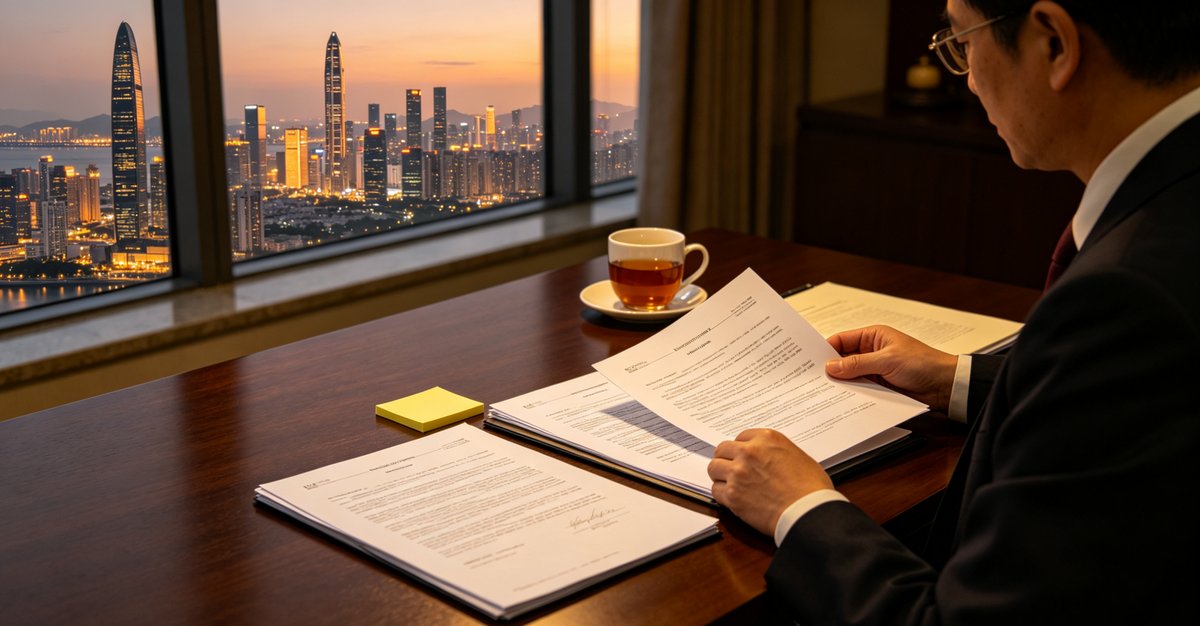
Last month, a boss in the electronic components trading business sat in the conference room of our Zhiming Law Firm, with three contracts spread out in front of him—a supply agreement, a statement of account, and a letter of commitment for deferred payment. He asked two questions: first, how long would it take from filing a lawsuit to actually getting the money? Second, what were the chances of winning? He mentioned that he had consulted several peers in the industry—some said a lawsuit wouldn't be resolved in less than a year or two, while others urged him to file a lawsuit immediately or the money would be lost, leaving him indecisive.

This is actually the most typical confusion in civil and commercial litigation in Shenzhen. Shenzhen courts consistently rank among the top nationwide in case volume, with civil and commercial judges at Nanshan District Court and Futian District Court each closing over 300 cases per year. A contract dispute with a subject amount of 8.6 million yuan was resolved by our team from filing to enforcement and recovery within four months; another case with the same subject amount had clients struggling through other channels for over two years and still stuck in the second instance. The difference isn't luck—it's strategy.
First, let's clarify one issue: what exactly is holding up the litigation cycle.
Many litigants assume that the litigation period equals the court's trial time, which is a misconception. According to Article 152 of the Civil Procedure Law, the trial period for first-instance ordinary procedures is six months, and with special circumstances, it can be extended by another six months with the approval of the court president. However, in Shenzhen's actual practice, the average trial period for civil and commercial cases at Futian and Nanshan courts is approximately 6 to 12 months. For complex cases involving amounts exceeding ten million yuan, which require audits, appraisals, or evaluations, it is not uncommon for the period to stretch to one and a half years.
But the trial deadline is just a number on paper. What really determines whether you can get your money quickly are three other stages: whether the case can pass filing on the first try, whether the defendant will maliciously delay the proceedings, and whether there are any asset leads for enforcement after the judgment. In the 8.6 million yuan contract dispute case we handled, we managed to complete the entire process within four months precisely because we took proactive measures in all three of these stages in advance.
Choosing a lawyer isn't about picking fame—it's about picking the right "strategist" for your case.
There are at least several hundred law firms in Shenzhen handling civil and commercial litigation, with over ten thousand lawyers. How do you choose? Let me give you a practical screening criterion: it's not about who has the bigger office or who runs more ads, but about three key points.
First, check whether this lawyer has handled cases similar to yours in both the nature of the dispute and the amount in question. A lawyer who has dealt with contract disputes involving tens of millions is on an entirely different level from one who has only handled small cases worth a few hundred thousand, in terms of sensitivity to building a chain of evidence, timing for asset preservation, and anticipating the other party's defenses.
Second, see if the lawyer is willing to discuss procedural details with you. If they immediately pound their chest and say, "This case is a sure win," turn around and walk away. A lawyer who has handled major cases will take the time to explain clearly: which account of the opposing party should be frozen for pre-litigation asset preservation, which district's court with jurisdiction is more favorable to you, and how to strengthen the evidence to form a complete chain.
Third, look at the team, not the individual. Director Shen Jinlong of Zhiming Law Firm has 26 years of practice experience, holds a master's degree from Fudan University, and previously served as a senior executive at a state-owned enterprise. He has handled over 10,000 cases. But more crucially, the team he has built operates a mature case workflow management system. For every case, there's a milestone chart specifying what needs to be done at each stage and when to communicate with the court. Compared to lawyers who work solo, this makes them several times more efficient.
The odds of winning aren't guessed—they're calculated.
Back to the second question the boss asked: what are the odds of winning. This question should actually be rephrased: can your evidence support your claims.
In the contract dispute we handled involving 8.6 million, the defendant raised three defenses at trial: first, that the goods had quality issues; second, that the person who signed the statement of account lacked authorization; and third, that the payment conditions had not yet been fulfilled. If any one of these defenses had held up, the case would have been dragged into an appraisal process or remanded for retrial. However, we organized all the delivery notes, acceptance records, reconciliation emails, and WeChat communication logs into a timeline in advance, and also obtained the signatory's social security records and authorization documents ahead of time. All three defenses were rejected on the spot in court.
In essence, the odds of winning are not a percentage figure, but the gap between your evidence and the other party's defense. The shorter this gap, the greater your chances of winning, and the shorter the timeline. This is also why we have always emphasized that organizing evidence before filing a case matters far more than the complaint itself.
What makes Zhiming Law Firm's approach different?
Not to brag, but I can show you a few concrete moves. Before filing the case, we first conduct a thorough investigation of the defendant's assets—properties in Shenzhen, bank accounts, equity, accounts receivable—we check everything we can, and we decisively apply for preservation where needed. If this step is played well, we won't have to just wait around during the enforcement phase later.
During the trial phase, our practice is to simulate the opposing counsel's attack strategy in advance. Director Shen often tells the team: when you draft the complaint, you must already anticipate the fiercest counterattack from the other side. That's why our evidence list always includes several sets of backup evidence, specifically designed to block any defenses the opposing party might raise.
During the execution phase, many lawyers stop once they obtain a favorable judgment, but we keep a close eye on the filing of the enforcement case and the progress of asset disposal. In the case involving 8.6 million yuan, we submitted the enforcement application on the 12th day after the judgment took effect, and the first payment arrived on the 23rd day. There was an element of luck involved, but more importantly, it was the result of well-executed preliminary preservation measures.
One more detail: our office is located at Room 1802, Tower A, Xintian Century Business Center, Shixia North Second Street, Futian District, Shenzhen. It's recommended to call 0755-25986969 beforehand to schedule an appointment, as Director Shen's schedule is basically fully booked, and you'll likely not be able to see him if you drop by without notice.
A few practical suggestions for bosses in Shenzhen.
First, don't wait until the other party completely stops answering calls before thinking about filing a lawsuit. The moment the first late payment occurs during contract performance, you should start preserving evidence. Don't delete WeChat chat records, and regularly sign off on account statements. These steps don't take much time, but when it actually comes to litigation, every single one is crucial evidence.
Second, the statute of limitations is three years, counted from the day you become aware that your rights have been infringed. Many people mistakenly believe that as long as they haven't had a falling-out, the clock doesn't start ticking—this is a dangerous misconception. Once the statute of limitations has passed, if the other party raises a defense, you won't win the case no matter how solid your evidence is.
Third, don't agonize over whether "filing a lawsuit will burn bridges." Business dealings rely on strength and rules, not on saving face. The more you show that you're "willing and ready to sue," the less the other party will dare to drag their feet on your payments.
Here's a question for you: If someone owes you money right now, and you have billing statements, transfer records, and WeChat chat screenshots where they admit the debt, would you keep chasing them and waiting for news, or spend half an hour having a professional lawyer assess whether your evidence is sufficient? Think it over — you can call 0755-25986969 to talk it through, but I hope you don't wait until they've already transferred away their assets before making that call. Business in Shenzhen moves fast, and for every extra day your money sits in someone else's account, your risk grows.
Regarding the cases mentioned in the article, if you have similar situations as well.
You can directly call 0755-25986969 to talk to a marriage and family lawyer. The first consultation is free. The law firm is located at Room 1802, Building A, Xintian Century Business Center, Shixia North Second Street, Futian District, Shenzhen.