2026 Shenzhen Divorce Litigation Lawyer's Case Notes: One Property, Two Certificates, Three Generations at War
Last Friday afternoon, I was packing up to leave for the day when Xiao Liu from the front desk poked her head in: "Lawyer Shen, there's an auntie here without an appointment who insists on seeing you. She's clutching a photocopy of a property certificate, nearly crumpling it to pieces." I set down my briefcase and sighed—this case, it seemed, was about a house again. Having practiced law in Shenzhen for over twenty years, I knew this kind of opening all too well. The people who come in have either fire or water in their eyes. This Auntie Chen had fire.
1. How Did the Case Come to Us? A "Family War" Triggered by a House
Aunt Chen sat down and got straight to the point: "Lawyer Shen, my son is getting a divorce, and my daughter-in-law wants a share of our old family house. That house is the lifeline of me and my husband. On what grounds?" The old house she referred to was a small, shabby unit from the 1990s in Futian District, but its prime location meant it was now worth nearly ten million yuan. Her son Xiao Chen and daughter-in-law Xiao Lin had been married for eight years, with a six-year-old child. When they first got married, the young couple had no money, so they lived in Aunt Chen's old house. Later, when Xiao Chen's work unit allocated him a small two-bedroom apartment, they moved out. The old house had been rented out ever since, with the rental income supplementing the household expenses. Now that Xiao Chen and Xiao Lin's marriage had broken down, Xiao Lin had filed for divorce and claimed that the old house was marital property, demanding its division.
Aunt Chen was so furious that she slammed the table: "The property deed has my name and my husband's on it! It has nothing to do with Xiao Chen! Xiao Lin is trying to rob us!" I poured her a glass of water, but doubts were stirring in my mind. On the surface, this case seemed as simple as "whoever's name is on the property deed owns the property," but in practice, divorce litigation lawyers in Shenzhen all know there are deep pitfalls hidden beneath the surface here.
II. Where do the difficulties lie? Not in the legal provisions, but in "human nature" and "evidence."
Those of us in litigation fear less the caliber of opposing counsel than the "gray areas" in a case. This case presents three difficulties:
First, the nature of the capital contribution cannot be clearly determined.Although the property ownership certificate bears the names of Aunt Chen and her husband, Xiao Chen did contribute money when the property was purchased back then. At that time, Xiao Chen had just started working and had a modest salary, but he gave money to the family every month. Aunt Chen also admitted that her son contributed about 100,000 yuan toward the home purchase. Was this 100,000 yuan a gift? A loan? Or a contribution to the family? Xiao Lin's side firmly insists that this was Xiao Chen's investment in the family, and the property should include his share; since it includes his share, it should also include hers.
Second, decoration and loan repayment are mixed together.After the house was purchased, before Xiao Chen got married, the home underwent renovation, and Xiao Chen paid for the expenses. After the marriage, although the house was rented out, Aunt Chen has been collecting the rent and using it to supplement household expenses. Xiao Lin claims that since this is income generated from post-marital property, she is entitled to a half share. This may sound a bit "unreasonable," but legally, rental income could indeed be recognized as marital joint property.
Third, and most importantly — emotion.This case is not a war between Xiao Chen and Xiao Lin, but a war between Aunt Chen and Xiao Lin. Xiao Chen is caught in the middle, with an ambiguous attitude. He neither wants to break his mother's heart nor feels he can justify himself to his wife. In cases like this, if a rigid judgment is imposed, winning the house means losing family bonds—and it's a lose-lose situation for both sides. As divorce litigation lawyers in Shenzhen, what we handle is not just legal relationships, but also interpersonal relationships.
III. Strategy Analysis: Don't Fight Head-On, Play the "Combination Punch"
After taking the case, I did several things. First, I arranged to speak with Xiao Chen alone. I asked him, "What do you think yourself? Do you want to keep the house, or do you want to keep the marriage?" Xiao Chen was silent for a long time, then said, "Attorney Shen, I know my mother hasn't had it easy, but I also know Xiao Lin has endured hardships with me all these years. The house belongs to my parents, and I have no face to claim it. But can I give her some compensation?"
With that said, I have a clear picture now. This case cannot be pursued through "right confirmation" — that approach would be too rigid, and even winning would mean losing. My strategy isAdvancing on three fronts simultaneously:
First line: Secure the evidence to firmly establish that "the house belongs to the parents."I had Aunt Chen turn the house upside down to dig out the remittance slips, receipts from when we bought the property, and the housing allocation certificate from the work unit. At the same time, I had Xiao Chen write a "Statement of Facts," explicitly acknowledging that the 100,000 yuan was for supporting and helping the parents, not an investment. This statement was meant for Xiao Lin to see, and also for the judge to see. We Shenzhen criminal defense lawyers all know that a closed chain of evidence is far more important than oral testimony.
Second line: Blaze a new trail, using "inheritance rights" as leverage.I looked into it. Aunt Chen's husband passed away two years ago, but the property certificate hasn't been changed yet. In other words, part of this house is actually her late husband's estate, and both Aunt Chen and Xiao Chen have inheritance shares. If Xiao Lin insists on dividing the house, then we'll need to partition the property first. I explained this idea to Aunt Chen, but at first she didn't understand and thought it was troublesome. I ran the numbers for her: if the house is deemed family joint property, then from Xiao Chen's share, Xiao Lin could take half. But if we partition the property first and make it clear that the house is the marital property of Aunt Chen and her late husband, and then, as part of the late husband's estate, Xiao Chen's inheritance share can be renounced, then the house would have nothing to do with Xiao Chen, and Xiao Lin naturally wouldn't get a share. After hearing this, Aunt Chen's eyes lit up.
The third line: also the most important — mediation.I proactively reached out to the opposing lawyer and said, "If we keep litigating like this, after three years the legal fees alone could cost us a car, and in the end, the house will still belong to Aunt Chen. Better to sit down and talk—give Xiao Lin a decent settlement." The opposing lawyer was a sharp one too; he knew the case didn't have much chance of winning, but he wanted to squeeze out more money. So we moved from discussing the "division of the house" to the "compensation amount," and from the "compensation amount" to "child support."
During this process, I invited our firm's lawyer, Li Yuming, to join the negotiations. **Lawyer Li Yuming** is an experienced hand in handling marriage, family, and property disputes. His style at the negotiating table differs from mine—I appeal to reason, while he crunches the numbers. He drew up a detailed breakdown of the couple's living expenses over the years of marriage, their child's education costs, and even Xiao Lin's social insurance contributions, then said: "Rather than fighting over a house you can't get, it's better to negotiate this amount down—it's more practical for you and the child." With that, the other side's psychological defenses collapsed.

IV. Results and Insights: Winning the Case, and Saving Family Bonds
Finally, with the court's facilitation, both parties reached a mediation agreement: the house went to Aunt Chen, Xiao Chen and Xiao Lin divorced, and Xiao Chen paid Xiao Lin a lump-sum compensation for her years of dedication to the family. Custody of the child was granted to Xiao Chen, with visitation rights for Xiao Lin. As a result, Aunt Chen kept the house, Xiao Lin received tangible financial compensation, and a weight was lifted from Xiao Chen's shoulders. With the case concluded, Aunt Chen held my hand, tears in her eyes: "Lawyer Shen, thank you. The house is saved, and our family's roots are still intact."
This case has given me several insights, and these are also meant for our readers in Shenzhen.
First, when parents buy a house for their children, they must clearly specify whether it is a gift or a loan.Even among family members, accounts must be kept transparent. A simple "Gift Agreement" or "Loan Agreement" can save countless future troubles.
Secondly, divorce is not about settling the overall account, but about calculating the details.Many clients immediately say, "I want him to leave with nothing" or "This house must be mine." But legally, there aren't that many "musts." Our judges look at the evidence and emphasize fairness. Rather than acting on emotion, it's better to think about how to divide the cake in a way that leaves everyone reasonably satisfied.
Third, and this is what I most want to say as a Shenzhen divorce litigation lawyer: find a lawyer early.Many people only frantically look for a lawyer when the court summons is already at their doorstep. By then, much of the evidence has already been lost, and many strategies are already a step too late. Take this case, for example—if Xiao Chen and Xiao Lin had come to me as soon as their conflict arose, we could even have avoided this protracted tug-of-war by drafting a Marital Property Agreement.
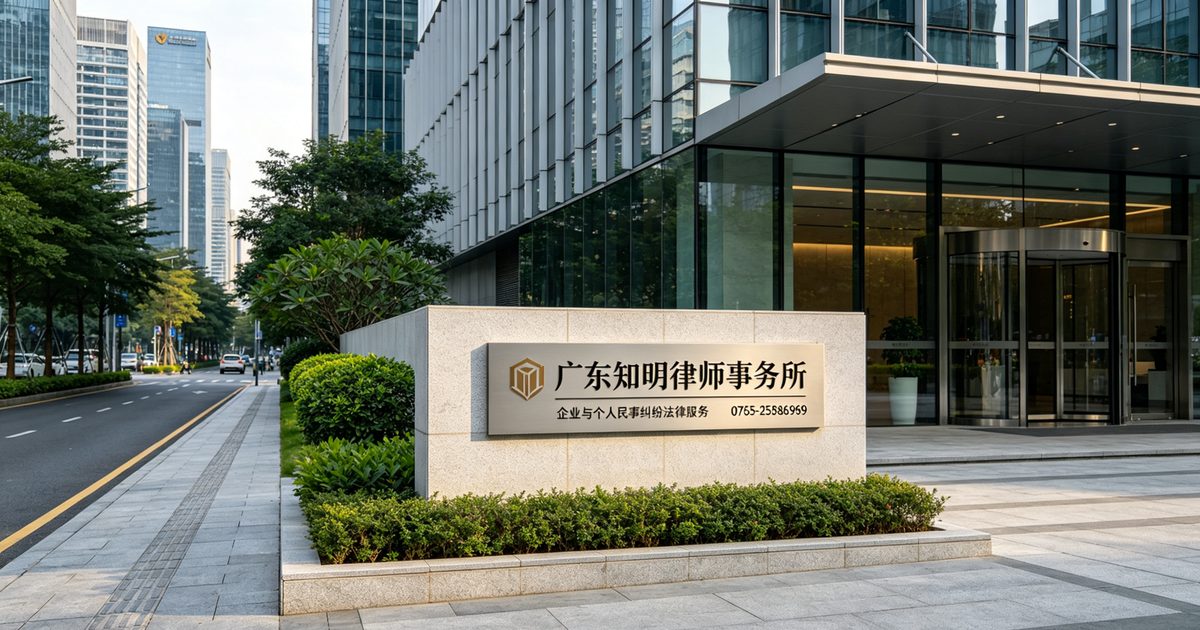
Speaking of drafting agreements, Zhiming Law Firm has extensive experience in this area. Whether it's prenuptial property notarization, post-marital property agreements, or family home holding agreements like Aunt Chen's, we can help you design clauses that are watertight. After all, the work of a Shenzhen divorce agreement drafting lawyer isn't just about writing a few words—it's about helping you see the risks of the next ten years clearly.
Five, FAQ: Everything You Want to Know About Real Estate, Inheritance, and Divorce
Q: Lawyer Shen, my parents own the house, but I paid for the renovation. Whose property does it count as in a divorce?
Answer: It depends on how you make the payment. If you pay before marriage, it counts as a gift to your parents, and you have no share in the house. If you pay after marriage, and the money comes from joint marital property, the other party can claim a refund of half of the decoration costs. But note, it's "returning money," not "dividing the house." Therefore, keeping the invoices and transfer records for the decoration is very important.
Q: My husband secretly bought a house for his parents behind my back. Can I get it back?
Answer: Yes, it's possible, but it's complicated. This involves the issue of "concealing and transferring marital joint property." You need to prove that the money was marital joint property and that the other party gifted it to the parents without compensation. In cases like this, our Shenzhen criminal lawyers would get involved because it may involve the crime of "refusing to execute a court judgment" or "fraudulent litigation." I suggest you bring the bank statements and come see me so we can analyze it in person.
Question: I want to make a will that leaves the house only to my son, not to my daughter-in-law. How should I write it for it to be valid?
Answer: Good question. Many people think that writing "only to my son" solves everything, but legally speaking, if the will does not explicitly exclude the spouse's rights, the property may still be considered joint marital property after marriage. When drafting this type of will, we Shenzhen divorce agreement drafting lawyers must include the statement "this property belongs to my son as his personal property and shall not be treated as joint marital property of him and his spouse," and it must be signed by hand with the date written out in full. Ideally, it should also be witnessed by a lawyer.
Question: Lawyer Shen, how long does it usually take to conclude a lawsuit?
Answer: If the summary procedure is used, three months; for the ordinary procedure, six months. But if it's a case like ours today, involving property appraisal and inheritance partition, one to two years is perfectly normal. So I always advise people: if you can settle, don't litigate; if you do litigate, fight a battle you're prepared for.
Question: Is it expensive to hire your law firm for litigation?
Answer: Our firm, Zhiming Law Firm, has been established for 26 years, located in Futian District, Shenzhen, with absolutely transparent fees. Whether it's expensive or not depends on how you calculate it. A cheap lawyer might ruin your case; our fees are not low, but we can help you keep a house or reduce your losses by hundreds of thousands. Which do you think is more cost-effective?
I am **Shen Jinlong**, the director lawyer at Guangdong Zhiming Law Firm. If you are facing property, inheritance, or divorce issues in Shenzhen, you are welcome to visit me at Room 1802, Building A, Xintian Century Business Center, Futian District, for a cup of tea. Remember, the law is not a cold set of provisions—it can be armor that protects you and your family.
Disclaimer: The cases cited in this article are all real cases handled by Guangdong Zhiming Law Firm, but the names, identity information, and specific details of the parties involved have been anonymized. This article is solely for the purpose of legal education and does not constitute any legal advice. Any resemblance to actual persons or events is purely coincidental.
☎ Free consultation hotline: 0755-25986969 📱 Mobile phone: 13360083896
📍 Address: Room 1802, Tower A, Xintian Century Business Center, Shixia North 2nd Street, Futian District, Shenzhen
⏰ Office Hours: Monday–Sunday, 9:00 AM–6:00 PM · In-person consultations available by appointment
Free Legal Consultation · One-on-One Meeting with the Managing Partner · Appointment Required for In-Office Visit