Shenzhen Business Owner Recovers RMB 8.6 Million in Overdue Payments—Case Resolved from Filing to Enforcement in Just Four Months? A Lawyer Breaks Down the Entire Litigation Process for Contract Disputes
Lao Zhou, a veteran electronics components trader based in Futian, walked into our office at the end of last year with a look even gloomier than Shenzhen’s winter sky. Clutching a stack of account reconciliation statements and delivery notes, his first words were: “Attorney Shen, this RMB 8.6 million payment for goods has been overdue for a year and a half. The counterparty remains fully operational—posting advertisements daily on WeChat Moments—yet refuses to pay. If I file a lawsuit, how long will it take? And what are my chances of winning?”
Mr. Lao Zhou’s question is one that virtually every business owner facing unpaid debts asks upon walking into a law firm. Today, using this case as an example, I will comprehensively and clearly explain—step by step—the entire process, typical timeline, and critical considerations for civil and commercial contract disputes in Shenzhen, from case filing through enforcement.
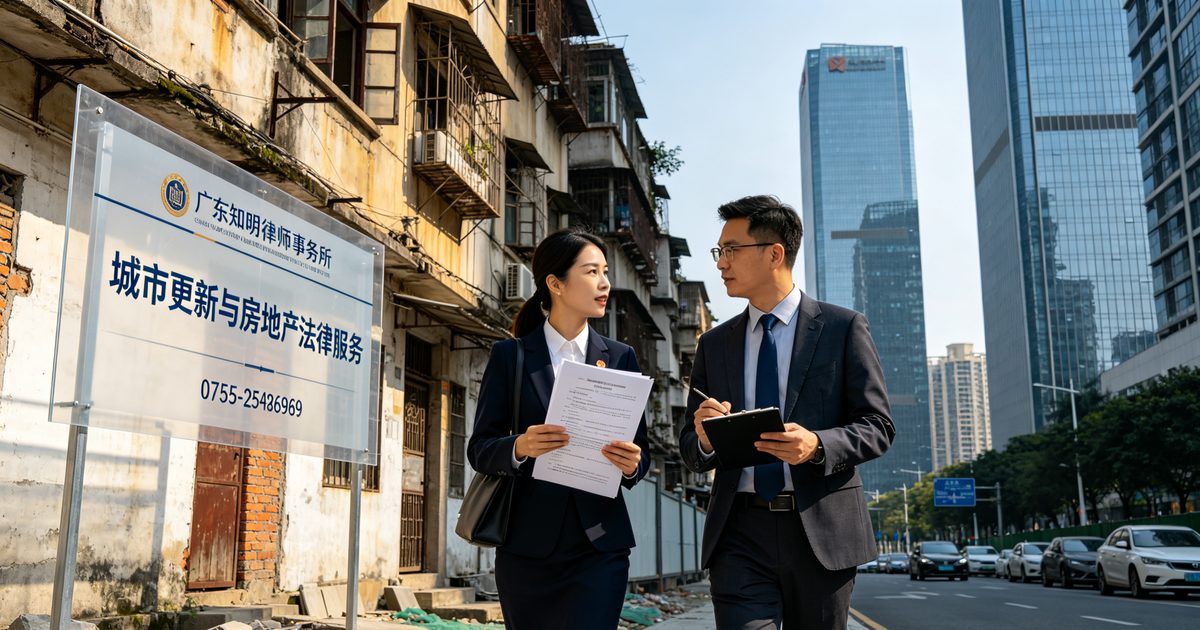
Lao Zhou’s case differs from many debt disputes—in this instance, the opposing company is not insolvent; its factory and equipment remain intact, and it has even secured new orders. Yet when you press for payment, the finance department responds, “The CEO is on a business trip,” while the CEO himself vanishes. This situation—where the debtor possesses the capacity to perform but deliberately refuses to do so—is precisely the most common—and most demanding—scenario in litigation, testing a lawyer’s skill to the utmost.
We reviewed the company’s official business registration records and litigation history, and found that it has been named as a defendant in seven or eight cases over the past three years before the Nanshan and Bao’an District People’s Courts in Shenzhen. Although the amounts involved in these cases are relatively small, all were resolved through court-mediated settlements—or even dismissed voluntarily by the plaintiffs. What does this indicate? It suggests that the company routinely employs a “delaying” strategy—prolonging proceedings until plaintiffs, worn down by time and cost, voluntarily concede or withdraw their claims. If Lao Zhou continues sending demand letters and making follow-up calls, the outcome will most likely be the same.
Many parties hold a misconception about litigation timelines, assuming, “It must take two or three years to complete both the first and second instances.” This perception is partly correct—but not entirely. According to recent judicial administration data from Shenzhen courts, the average duration for first-instance civil and commercial cases is approximately six months. Including appeal and enforcement proceedings, completing the entire process typically takes around 12 months. However, this figure represents an “average”; actual timelines vary significantly from case to case.
Regarding Mr. Lao Zhou’s case, our assessment indicates that it qualifies for the “fast-track” procedure. Why? Because the chain of evidence is complete—purchase orders, delivery receipts with signed acknowledgments, reconciliation statements, partial bank transfer records, and WeChat records documenting payment follow-ups—all interlock seamlessly. Although the opposing party has failed to make payment, it has never raised any written objections regarding the quality or quantity of the goods. Legally, this establishes a critical fact: the opposing party has confirmed receipt of the goods and has not raised any quality-related objections within a reasonable time period.
Pursuant to Article 626 of the Civil Code, the buyer shall pay the purchase price in the amount and by the method stipulated in the contract. This provision forms the legal foundation for recovering outstanding payments; however, citing the law alone is insufficient—the critical challenge lies in effectively transforming this statutory provision into a court judgment that “upholds the plaintiff’s claims.”
Many lawyers handling such payment disputes merely draft the complaint, pay the court fees, await the hearing, and then wait for the judgment. However, after taking on Lao Zhou’s case, we went above and beyond—carrying out three “extra” steps.
We conducted a comprehensive investigation into the opposing party’s bank accounts, real estate holdings, and motor vehicles. Simultaneously with filing the lawsuit, we applied to the Futian District People’s Court for pre-litigation asset preservation, successfully freezing three of the opposing party’s corporate bank accounts. This step proved critical: although the balances in those accounts were relatively modest, the freeze severely disrupted the opposing party’s day-to-day operations and eligibility to participate in tenders and bidding processes—effectively compelling them to return to the negotiating table.
Through publicly available channels, we discovered that the opposing party’s primary clients are two manufacturing enterprises located in Longhua District, with substantial accounts receivable. We have prepared a draft “Notice of Demand for Payment of Matured Claims.” If the opposing party continues to delay proceedings during litigation, we will apply to the court to issue Notices for Performance of Matured Debts to these two clients.
Initially, Mr. Zhou only sought recovery of the principal amount of RMB 8.6 million. However, we included in the claim all amounts stipulated in the contract: liquidated damages for late payment, interest for fund occupation, attorney’s fees, and property preservation fees—raising the total claimed amount to nearly RMB 9.2 million. A key detail: the contract stipulated liquidated damages at a rate of 0.05% per day, a standard that the court upheld as enforceable.
After the case was filed with Futian District Court, the initial hearing date was scheduled for three months later. However, once the preservation measures took effect—specifically, after the opposing party’s corporate bank account was frozen—the opposing company proactively contacted the court expressing its willingness to mediate. The mediation process itself involved two rounds of negotiations: the opposing party proposed installment payments over 24 months, which we rejected outright, as such a proposal would effectively shift the risk back onto Mr. Zhou.
Ultimately, under the supervision of the presiding judge, the parties reached a mediation agreement: the opposing party agreed to pay the principal amount of RMB 8.6 million, plus liquidated damages, litigation fees, and property preservation fees totaling approximately RMB 480,000, in a single payment within 15 days. Should payment not be made by the deadline, the claimant would be entitled to apply for compulsory enforcement of the full amount of RMB 9.2 million. All funds were received on the 12th day following the effective date of the mediation order. From case filing to completion of enforcement, the entire process took just over four months.
Of course, this outcome involved an element of luck—namely, that the opposing party’s account held sufficient funds and that the court acted swiftly to impose asset preservation. More importantly, however, the entire litigation strategy was deliberately designed from the outset to achieve “rapid recovery of funds,” rather than merely to “win the case.” This critical distinction is one that many clients fail to fully grasp.
A: Clients ask this question almost daily. If the opposing party is a shell company with no assets and no bank transaction history, filing a lawsuit may indeed have limited practical value—obtaining a favorable judgment would still result in “unenforceability.” In practice, however, many companies that appear “insolvent” merely hold no funds in their corporate accounts, while their shareholders personally own real estate, vehicles, or third-party receivables. In such cases, recovery may be achieved by petitioning to add shareholders as judgment debtors or by applying to enforce matured receivables owed to the debtor. We recommend engaging a lawyer to conduct a pre-filing asset investigation—a modest investment of several hundred RMB could save hundreds of thousands in legal fees and time.
Returning to Lao Zhou’s case, during a meal some time later, he asked me, “Attorney Shen, if I had filed the lawsuit myself back then, would I still have won?”
I replied that he likely would have won—but perhaps only after a year, and only on the principal amount of RMB 8.6 million. Due to insufficient evidence, his claims for interest and liquidated damages would most likely have been dismissed. More critically, without having applied for pre-judgment asset preservation, the defendant would have long since transferred all its assets. As a result, even with a favorable judgment in hand, he would have been left holding nothing more than a piece of worthless paper.
The subject matter of commercial disputes in Shenzhen often amounts to tens of millions, but the winner of the lawsuit is often not on the case itself, but outside the case - the excavation of property clues, the timing of preservation measures, the design of penalty clauses, and even the customer structure of the opposing company. These are the real variables that determine the efficiency of payment collection. If you are currently stuck in a similar contract dispute, why not bring your materials to Zhiming Law Firm for a chat? Our office is located at Room 1802, Building A, Xintian Century Business Center, Shixia North Second Street, Futian District, with a phone number of 0755-25986969. The experience of handling a large number of cases in the 26th can at least help you judge one thing: whether to take this path or to take a different path.
(This article is for general legal education purposes only. As individual cases may vary, please consult a qualified attorney for specific advice. Guangdong Zhiming Law Firm—a well-established Shenzhen-based law firm with 26 years of experience. Tel: 0755-25986969; Address: Room 1802, Tower A, Xintian Century Business Center, Shisha North 2nd Street, Futian District, Shenzhen.)