Patent Infringement Case Evidence Reconstruction Full Process: How Can Lawyers Use Legal Source Defense to Exempt Companies from Millions in Damages?
### Introduction: How did a patent lawsuit go from "millions in compensation" to "the price of a piece of clothing"?
In October 2025, Shenzhen lawyer Zhang Feifei was selected for the "Lawsive 2025 Annual Power List: Top 20 Intellectual Property (Patent) Lawyers." In a design patent infringement case she handled for Great Wall Motor, where the client faced the risk of millions of yuan in damages, the court ultimately upheld the legitimate source defense, requiring the client to bear only a minimal portion of the costs. The case drew industry attention not only because of the reversal in outcome, but also due to the comprehensive "evidence reconstruction" methodology behind it.
In patent infringement litigation, "difficulty in evidence collection and low compensation" have long been pain points for rights holders seeking to protect their rights. However, for enterprises, being accused of infringement also presents the dilemma of insufficient evidence and no avenue for defense. Zhang Feifei's approach to handling cases reveals a key proposition: on the battlefield where technical facts and legal rules are intertwined, how can lawyers build an effective defense for enterprises through systematic evidence organization and the legal source defense? This article will dissect this typical case from a legal practice perspective and further explore a systematic path for enterprise patent risk prevention and control.
I. Design Patent Infringement Determination: Comparison Rules and Defense Space
The core of design patent infringement determination lies in "overall observation, comprehensive judgment," which means determining whether the accused infringing design and the authorized design are similar in overall visual effect. According to Article 64, Paragraph 2 of the Patent Law, the scope of protection of a design patent right is based on the design of the product as shown in the drawings or photographs.
In this case represented by Zhang Feifei, the accused infringing product and the patent involved in the case are only similar to a certain extent in the front view, while the differences in other views are obvious. This reminds us that the comparison for design patent infringement is by no means a simple "quick glance," but requires a comprehensive analysis combining factors such as product category, design space, and the state of prior design. If the accused design is close to the prior design, or differs significantly from the patented design, it does not constitute infringement.
However, the real difficulty in this case is not the characterization of infringement, but the establishment of the defense of legal source. According to Article 70 of the Patent Law, where any person, for the purpose of production and business operations, uses, offers to sell, or sells a patented product that he does not know is manufactured and sold without the permission of the patentee, and can prove the legal source of the product, he shall not be liable for damages. Here, "legal source" refers to obtaining the product through normal commercial means such as legal sales channels and ordinary sales contracts, and the user or seller has no subjective knowledge of the infringement.
The burden of proof for the legal source defense lies with the defendant. In judicial practice, courts typically require the defendant to provide materials such as contracts, invoices, payment records, and logistics documents that form a complete chain of evidence. However, small and micro enterprises often operate without standardized practices, leaving their evidence scattered or even missing—this was precisely the predicament of the client in Zhang Feifei's case.
II. Evidence Reconstruction: From "Scattered Sand" to "The Complete Business Picture"
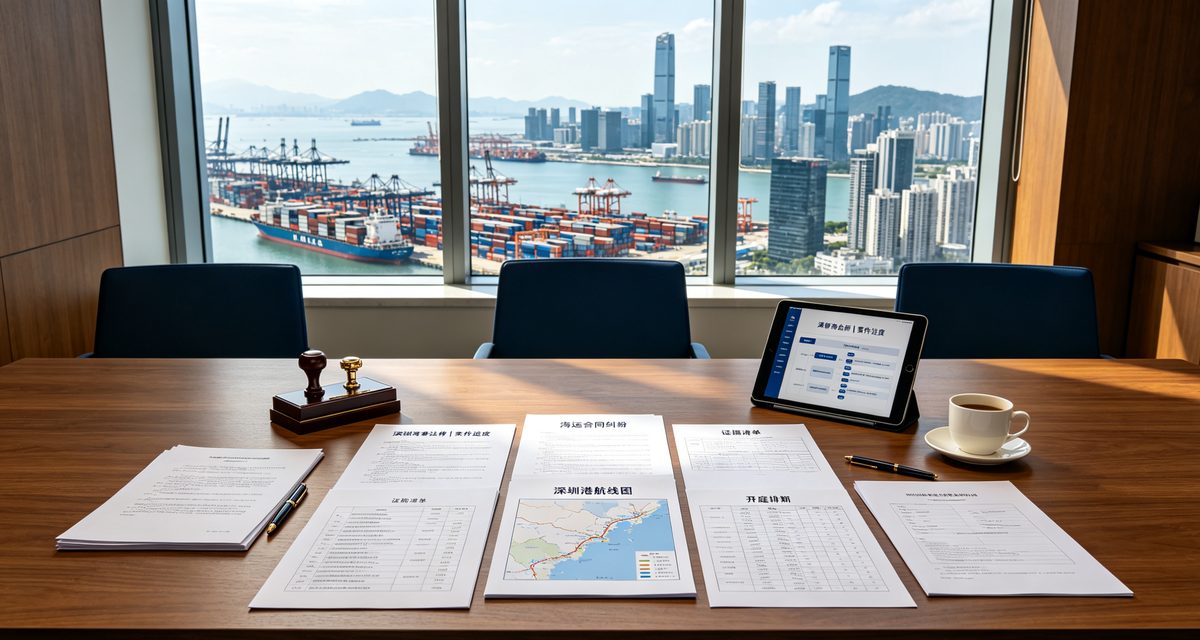
Evidence reconstruction is not the fabrication of evidence, but rather the systematic organization and logical connection of existing factual traces. Zhang Feifei's team adopted a dual approach of "deep excavation" and "reconstruction": on one hand, they thoroughly reviewed the client's delivery notes and transaction records spanning six months, mining self-media displays and business chat records; on the other hand, they guided the client to reinforce key evidence within legal and compliant bounds. Ultimately, they presented the transaction patterns and business logic through visualization, enabling the court to form an inner conviction that "although non-standard, the transactions did genuinely occur."
Behind this methodology lies the legal requirement of completeness of the evidence chain. According to Article 8 of the Interpretation (II) of the Supreme People's Court on Several Issues Concerning the Application of Law in the Trial of Patent Infringement Dispute Cases, the lawful source defense requires the provision of evidence such as receipts and contracts that conform to trading practices. However, in practice, courts do not mechanically require "all three documents to be complete," but rather comprehensively examine the relevance, consistency, and reasonableness among the evidence.
For lawyers, the key points of evidence reconstruction include: first, comprehensively collect circumstantial evidence, such as logistics information, chat records, and payment transaction flows, to corroborate the authenticity of transactions; second, make good use of technical means such as notarization, blockchain evidence preservation, and timestamps to fix electronic evidence; third, when necessary, apply for a court investigation order or evidence preservation to compensate for the parties' insufficient evidence-producing capacity.
This case also reminds businesses that in daily operations, they should standardize contract management, invoice issuance, and archiving of performance evidence, so as to avoid losing the opportunity to defend themselves in litigation due to missing evidence. The cost of after-the-fact remediation is far higher than the investment in proactive compliance.
III. Patent Litigation Methodology: Evidence Collection Strategies and Damages Calculation
Addressing the two major pain points of "difficulty in obtaining evidence" and "low compensation," Zhang Feifei has developed a full-process investigation mechanism: before filing a lawsuit, conduct a "blanket search" through public channels including official websites, suppliers, trade shows, and press conferences; offline, gather evidence in the capacity of a potential customer, using notarization and blockchain-based evidence preservation to secure the evidence; for cases involving large equipment, apply for court preservation; for import and export goods, have them detained through customs filing. During litigation, rigorously scrutinize the financial statements of listed companies, apply for investigation orders to obtain bank and tax data, and, when necessary, bring in professional appraisal institutions.
Regarding damages calculation, under Article 71 of the Patent Law, the amount of damages for patent infringement shall be determined in order according to the actual losses suffered by the patentee due to the infringement, the profits gained by the infringer from the infringement, and a multiple of the patent license fee, and shall also include the reasonable expenses incurred by the patentee to stop the infringement. Where patent infringement is committed intentionally and the circumstances are serious, punitive damages of not less than one time but not more than five times the amount determined by the above methods may be awarded.
Zhang Feifei emphasized "fully utilizing legal tools," asserting multiple compensation calculation methods in parallel, resolutely advocating for punitive damages against malicious infringement, repeated infringement, or acts engaged in as a business, and including attorney fees, investigation fees, and appraisal fees entirely in reasonable expenses. This requires the lead attorney to achieve perfection at the evidence level, using hard evidence such as financial data and sales records to support compensation claims, rather than relying on judicial discretion.
The implication for businesses and lawyers is that the amount of compensation is not a matter of "luck," but a direct reflection of the precision of evidentiary work. Rights holders should secure evidence of infringing profits before filing a lawsuit, while defendants should actively invoke statutory defenses such as the legitimate source defense and prior art defense to reduce or eliminate liability for damages.
IV. Corporate Patent Risk Prevention and Control: Three-Tier Defense System and Overseas Expansion Strategy
The ultimate defense in patent litigation lies in prevention beforehand. Zhang Feifei proposed a three-tier defense system for companies preparing to list on the STAR Market and small and medium-sized technology companies: the first tier is internal management, including agreements on the ownership of employee inventions, high-quality patent portfolio layout, and annual fee monitoring; the second tier is proactive action, including novelty searches before R&D project initiation, FTO analysis before listing, and patent due diligence on suppliers; the third tier is strategic upgrade, using patents as competitive weapons, building barriers, and monitoring competitors' movements.
The legal foundation of this system lies in Article 6 of the Patent Law regarding provisions on service inventions, as well as the disclosure requirements in the Measures for the Registration Management of Initial Public Offerings on the Science and Technology Innovation Board, which mandate that the ownership of core technology intellectual property be clear and free from major disputes. If a company has lapsed core patents, ownership disputes, or infringement risks before listing, it may directly lead to the examination being obstructed.
In the process of Chinese enterprises going global, "product first, patent later" is a common misconception. The patent system follows the "first-to-file principle." Once a product is publicly disclosed, it may lose novelty and be unable to obtain authorization, or it may be preemptively registered by competitors. Lawyers advise that enterprises should complete patent applications and FTO analysis before entering target markets, use the PCT international application or the Paris Convention route to lay out overseas patents, and clarify the allocation of intellectual property infringement liability in procurement contracts.
### Conclusion: From Case-by-Case Representation to Strategic Empowerment
Zhang Feifei's career trajectory reflects the transformation of intellectual property legal services from "case-by-case representation" to "strategic empowerment." For lawyers, the core competitive advantage is not just legal knowledge, but the ability to translate technical language into legal logic; for enterprises, patent risk prevention and control should be embedded throughout the entire process of R&D, production, and sales, rather than being reactive "firefighting" after the fact.
Guangdong Zhiming Law Firm specializes in intellectual property and civil & commercial dispute resolution, with a composite team possessing both technical and legal backgrounds. If your enterprise faces patent infringement litigation, intellectual property inquiries during STAR Market IPOs, or overseas patent portfolio issues, we welcome your consultation. We will provide professional services to build a complete closed loop for you, from risk prevention to dispute resolution.