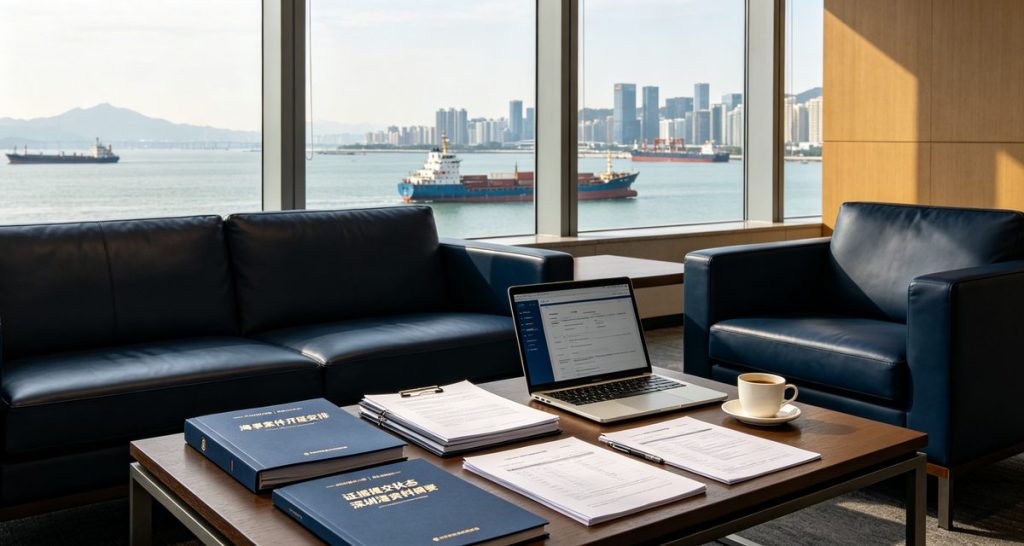
In Wuhan's teacher recruitment interview, a suspected leak of exam questions occurred, with the waiting room window directly facing the examination room. A lawyer analyzed the legal risks of violations in the recruitment process.
Recently, a teacher recruitment interview venue in a district of Wuhan was exposed for serious procedural flaws: the waiting room windows faced the examination room, allowing candidates waiting to clearly see the answers being given inside. As soon as the news broke, it immediately sparked heated public discussion, with many netizens bluntly asking, "Doesn't this count as indirectly leaking the exam questions?" Against the backdrop of increasingly fierce competition in teacher recruitment, this incident not only concerns the fairness for the candidates involved, but also touches the sensitive nerve of public trust in the credibility of recruitment by public institutions. As a lawyer who has long handled labor disputes and administrative litigation, I believe this is by no means a trivial matter of "improper examination room layout" — it may strike at the legal foundation of open recruitment by public institutions, and could even lead to legal proceedings.
How is this legally characterized when the waiting room and the examination room face each other?
From a legal perspective, the fact that the waiting room window directly faces the examination room first involves the relevant requirements of the "Provisional Regulations on Open Recruitment of Personnel in Public Institutions" (Order No. 6 of the Ministry of Personnel). The regulations clearly stipulate that open recruitment must adhere to the principles of "openness, equality, competition, and merit-based selection" and adopt necessary confidentiality measures. Although the regulations do not specify details such as "the orientation of windows," their essential spirit is to ensure that the examination process is free from interference and that examination question information is not disclosed in advance.
At the operational level, recruitment announcements in various localities typically append "Examination Room Rules" requiring physical segregation between candidates awaiting their turn and those currently being interviewed, to preclude any possibility of information transmission. When the waiting room windows face directly onto the examination room, allowing candidates in waiting to observe the interview process and even transmit signals to candidates inside through non-verbal means such as lip movements and gestures, this directly undermines the closed nature of the examination room. From an evidentiary perspective, such an arrangement itself constitutes prima facie evidence of procedural violation—without needing to prove that actual question leakage occurred, the mere existence of a reasonable possibility of leakage suffices to call into question the legitimacy of the recruitment procedure.
In judicial practice, when courts hear such cases, they often focus on whether "there are major procedural defects." For example, in judgment (2021) E 01 Xing Zhong No. 456, the court found that an interview venue of a public institution failed to implement closed management, allowing candidates waiting for interviews to come into contact with those already interviewed, which constituted a serious procedural violation, and ultimately revoked the hiring decision. It is thus evident that face-to-face contact through a window is by no means an insignificant detail.
How can examinees protect their rights? An analysis of administrative appeals and litigation paths.
For candidates participating in this Wuhan teacher recruitment, if they believe their right to fair competition has been infringed upon, they do not have to simply endure it silently. The law provides two main avenues for relief.
First, administrative appeal channels. According to the "Provisions on Handling Violations of Discipline and Misconduct in Open Recruitment by Public Institutions" (Order No. 35 of the Ministry of Human Resources and Social Security), candidates who believe that violations exist in the recruitment process may file an appeal with the recruiting unit or the competent department within the prescribed time limit. Article 14 of these provisions clarifies that those who have objections to the determination and handling of disciplinary violations involving themselves or others may apply for review or file an appeal. Candidates should collect evidence such as photos of the examination room layout, videos, witness testimonies, and submit appeal materials in writing, requesting the competent department to investigate and publicly disclose the handling results.
Second, the administrative litigation channel. If administrative appeals yield no result, the examinee may, pursuant to Article 12 of the Administrative Procedure Law, file an administrative lawsuit naming the recruiting unit (typically the education bureau or the human resources and social security bureau) as the defendant, requesting that the court confirm the unlawfulness of the recruitment procedure and order a re-conduct of the interview. The difficulty of such lawsuits lies in proving the "causal relationship between procedural defects and the resulting harm." However, as noted above, as long as the court determines that the procedure involves a material and obvious illegality, it is generally unnecessary for the examinee to prove actual leak of the examination questions; an inference of impairment to fairness may be drawn.
Additionally, if the exam leakage involves specific individuals (such as staff deliberately disclosing test questions), it may also trigger the "crime of organizing exam cheating" or the "crime of illegally selling or providing exam questions and answers" under Article 284-1 of the Criminal Law, and candidates may report the case to public security authorities. Although the threshold for criminal case filing is relatively high, once the facts are established, the responsible persons will face criminal penalties, and the recruitment results will inevitably be invalidated.
Legal Liability and Consequences of the Hiring Entity
For the recruiting institution, such incidents are by no means something that can be resolved with a mere "apology." Under the Regulations on the Administration of Public Institutions' Personnel and the Interim Provisions on Open Recruitment by Public Institutions, the recruiting institution bears a statutory obligation to ensure procedural fairness. If the recruitment results are rendered invalid due to procedural violations, the institution must bear multiple consequences.
First, administrative liability. The competent authorities may order the recruiting unit to reorganize the interview or cancel the recruitment plan for the relevant position, and impose sanctions on the directly responsible supervisors and other directly responsible personnel in accordance with the law. In the Wuhan incident, if the investigation determines that there was gross negligence in the setup of the examination room, the relevant responsible personnel may face warnings, demerits, or even demotion.
Secondly, civil compensation liability. If a candidate incurs registration fees, transportation costs, lost wages, and other expenses in reliance on the fairness of the recruitment process, and is subsequently disqualified due to procedural violations, they may claim tort damages under Article 1165 of the Civil Code. Although such claims have a low success rate in judicial practice, they are not without precedent. For example, a local court once ruled that the recruiting entity compensate the candidate for direct economic losses caused by procedural violations.
Finally, reputational damage. Teacher recruitment serves as a window into public services, and procedural scandals can severely undermine public trust in the education system. Although this hidden cost cannot be quantified, it may affect the number of applicants in subsequent recruitment drives and the quality of talent introduced.
It is worth noting that if the recruiting unit can prove that "although there was window-to-window visibility, no actual leakage of test questions occurred," and the interview process included remedial measures such as complete audio and video recording and random question selection, the court or competent authority may determine that the irregularity was minor and decline to revoke the recruitment result. However, this requires the unit to present solid evidence, not mere verbal justification.
From Individual Cases to Institutional Frameworks: How to Prevent "Windows" from Becoming "Loopholes"
This incident has exposed not just management negligence at a single exam site, but also the lack of standardized procedures in public institution recruitment. From what I understand, exam venue setups in many regions have no unified standards and rely entirely on the "experience-based operations" of the organizing units. This leaves room for human manipulation.
To fundamentally resolve such issues, I suggest proceeding from three aspects: First, formulating a unified national "Standards for Examination Room Setup in Recruitment Tests," clarifying the spatial distance and visual isolation requirements among waiting rooms, examination rooms, and examination administration offices—for example, waiting rooms must not be on the same floor as examination rooms or must face the opposite direction. Second, introducing a third-party oversight mechanism, inviting disciplinary inspection and supervision personnel or social supervisors to participate in the entire process of examination room arrangement and the examination itself, rather than relying solely on internal self-inspection. Third, establishing a rapid-response platform for candidate complaints, initiating investigations within 48 hours of reports of procedural irregularities to prevent delays that could lead to the loss of evidence.
Returning to this incident in Wuhan, regardless of the final outcome of the investigation, it serves as a wake-up call to all recruitment units: procedural justice is the safeguard of substantive justice. A seemingly insignificant "loophole" may overturn the efforts of hundreds of candidates, or even nullify the entire recruitment work of a unit.
Lawyer's Advice: What Should You Do When Facing Unfair Recruitment?
As a practicing attorney, I have seen too many candidates give up defending their rights because they "don't want the hassle" or "think it's useless." But the law never protects those who sleep on their rights. If you or someone around you encounters illegal practices in a recruitment process, please remember the following key points: First, preserve evidence immediately, including taking photos, recording videos, and saving copies of official announcements. Second, file a complaint within the statutory time limit (usually within 60 days from the date you knew or should have known your rights were infringed) — do not delay. Third, consult a professional lawyer to assess the likelihood of success and the cost of enforcement, so as to avoid filing a lawsuit blindly.
Guangdong Zhiming Law Firm has long focused on public institution recruitment, labor disputes, and administrative dispute fields, and has represented numerous cases defending candidates' rights, accumulating rich practical experience. If you encounter unfair treatment during the recruitment process, or have doubts about procedural legality, please feel free to contact us. We will provide professional perspectives to help you clarify legal pathways and safeguard your right to fair competition.
Fairness is the soul of recruitment, and the law is the bottom line of fairness. May every window let in sunlight, not shadow.