The Inner Mongolia Tourism Hotel Skills Competition opened, drawing attention to hotel employment compliance and labor law risks.
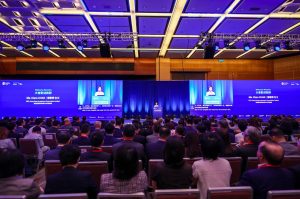
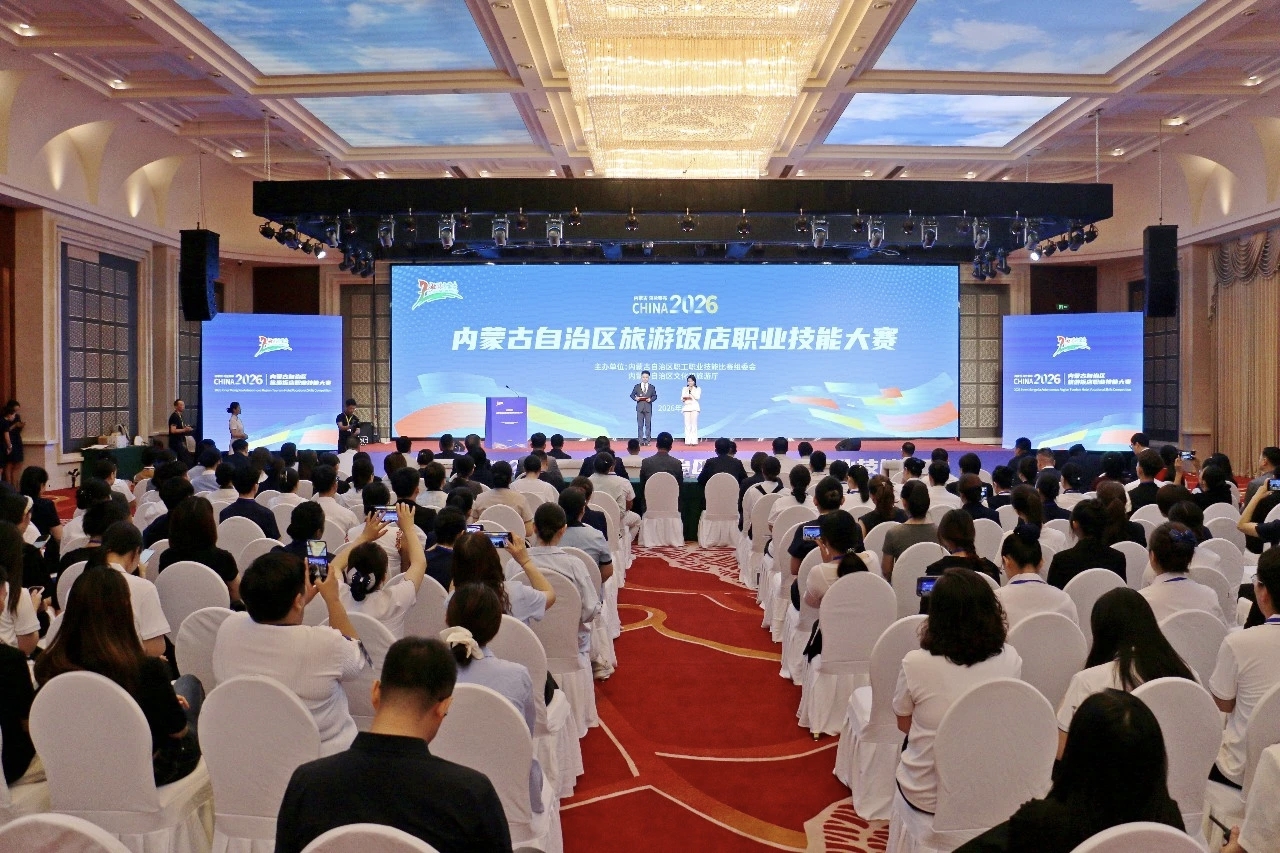
On August 10, 2026, the Inner Mongolia Autonomous Region Tourism Hotel Industry Vocational Skills Competition opened in Ulanqab, with more than 100 contestants from 12 league cities across the region competing in events such as front desk reception, housekeeping services, Chinese food service, and Western food service. This competition is not only a review of the industry's service standards but also reflects the deep legal issues in talent cultivation and labor management within the tourism hotel industry. As a lawyer who has long focused on labor law and the cultural tourism industry, I believe that behind the high-skilled talent competition in the industry, how hotel enterprises achieve compliant employment and how to avoid legal risks in skills training are propositions more worthy of attention than gold medals.
Legal Issues of Labor Contracts and Training Service Periods Behind Skills Competitions
The tourism hotel industry is a labor-intensive sector. The "on-the-job training" advocated by the skill competition is directly linked to the internal training system of enterprises. According to Article 22 of the Labor Contract Law, where an employer provides special training funds for a worker and provides the worker with professional technical training, the employer may enter into an agreement with the worker to stipulate a service period. If the worker violates the service period agreement, the worker shall pay liquidated damages to the employer in accordance with the agreement.
In practice, many hotels select outstanding employees to participate in such skills competitions and bear the training fees, travel expenses, and other costs during the competition period. In such cases, if the employer wishes for the employee to remain in their position after the competition, it should sign a written training service period agreement, clearly specifying the scope of training expenses, the service period, and the method for calculating liquidated damages. Otherwise, if the employee resigns after the competition, the employer will face difficulties in providing evidence when claiming liquidated damages. Conversely, employees should also note that if the employer has not actually incurred special training expenses and has only arranged internal job rotation or general skills training, it is not entitled to impose a service period. Lawyers suggest that before organizing employees to participate in competitions or internal training sessions, hotels should distinguish between "general vocational training" and "special technical training" and design compliant training agreements accordingly.
Employee injury during competition, work injury determination and responsibility allocation
The practical operation projects of the skills competition cover room service, Chinese food service, etc. During the competition, contestants may suffer accidental injuries due to operating equipment, carrying heavy objects, and the like. At this time, whether the participating employees constitute work-related injuries is a common concern for both enterprises and employees. According to Article 14 of the Regulations on Work Injury Insurance, injuries caused by work-related reasons during working hours and in the workplace shall be identified as work-related injuries. However, the competition scenario is different from the daily work post, and its determination has particularities.
If an employee is assigned by their employer to participate in a competition, and the content of the competition is related to their job duties, it can generally be regarded as an extension of "during business travel for work" or "work-related reasons," and judicial practice tends to recognize it as a work-related injury. For example, a court in one locality once ruled that a hotel chef who was scalded by hot oil while participating in an industry cooking competition was ultimately recognized as having a work-related injury because the participation was assigned by the employer and related to the job. However, if an employee voluntarily registers for a competition and the connection to their work is weak, it may be difficult to obtain such recognition. Lawyers advise that hotels should purchase accidental injury insurance for participating employees before the competition and retain written records of the assignment to address potential disputes. At the same time, companies should regulate attendance and safety management during the competition
Compliance Boundaries and Risk Prevention for Flexible Employment in Tourist Hotels
The hotel and tourism industry has obvious peak seasons. Behind the "service quality leap" advocated by skills competitions, enterprises often resort to flexible methods such as labor dispatch, part-time employment, and interns to alleviate manpower pressure. However, if flexible employment crosses legal boundaries, it can easily lead to disputes. According to Article 66 of the Labor Contract Law, labor dispatch may only be implemented in temporary, auxiliary, or substitute positions, and the number of dispatched workers shall not exceed a certain proportion of the total workforce. If hotels outsource or dispatch core positions such as front desk and housekeeping on a long-term basis, it may be determined as "fake outsourcing, true dispatch," requiring them to bear joint and several liability.
Additionally, when hotels use interns or rehired retirees, they must clarify the distinction between such arrangements and labor relations. Interns generally do not constitute a labor relationship, but if the internship duties are identical to those of regular employees and are subject to full management, it may be recognized as a de facto labor relationship. Lawyers suggest that hotels establish a classified management system for flexible employment: sign fixed-term or open-ended labor contracts for core positions; adopt part-time or labor service agreements for seasonal work and strictly record working hours; and sign tripartite agreements for interns to clarify the nature of the internship. At the same time, outsourcing contracts should be reviewed regularly to ensure that business outsourcing has genuine management boundaries and to avoid "substituting outsourcing for management."
Legal Red Lines in Competition Incentives and Performance Appraisal
Skills competitions are often accompanied by honorary commendations and material rewards, which are part of an enterprise's incentive mechanism. However, when hotels set up internal competitions or performance assessments, they must be careful not to cross legal red lines. For example, linking competition results to employees' base salaries may violate the provisions of the Labor Contract Law on full payment of labor remuneration. If an enterprise terminates a labor contract on the grounds of "last-place elimination" or competition ranking, it directly violates the termination procedure for inability to perform work stipulated in Article 40 of the Labor Contract Law—training or job reassignment must first be provided, and only if the employee is still unable to perform the work may the contract be terminated with thirty days' prior notice, along with economic compensation.
In practice, some hotels use competition results as the basis for "waiting-for-post training" or "salary reduction," which requires clear stipulations in the labor contract or institutional rules, and the system must be formulated through democratic procedures and publicly announced. Lawyers remind that incentive systems should focus on positive guidance and avoid using competition rankings as a punitive management tool. When enterprises formulate performance assessment plans, they should ensure objective assessment criteria, transparent processes, and retain employee confirmation records. Otherwise, once a labor dispute arises, the enterprise will face the risk of losing the case.
Legal Insights and Lawyer's Advice
The holding of the Inner Mongolia Tourism Hotel Skills Competition represents a positive practice of the industry's talent strategy, but beyond the competition itself, the labor compliance system of hotel enterprises needs to be upgraded in tandem. From agreements on training service periods to prevention of work-related injury risks, from the boundaries of flexible employment to the red lines of performance appraisal, every link concerns the stable operation of enterprises and the protection of employees' rights and interests. For tourism hotel enterprises, it is recommended to strengthen legal management in the following areas: first, establish a sound training agreement management system to distinguish between special training and general training; second, purchase comprehensive accident insurance for employees dispatched to participate in competitions and retain evidence of assignment; third, comprehensively review employment models to ensure that labor dispatch, outsourcing, internships, etc., comply with legal requirements; fourth, optimize performance appraisal systems to ensure their legality and reasonableness.
Guangdong Zhiming Law Firm has long been deeply engaged in legal services in the fields of labor law and the cultural tourism industry, having provided employment compliance reviews, labor dispute representation, and rules and regulations design services for several hotel groups. If you or your enterprise encounter specific legal issues in the employment management of tourist hotels, you are welcome to consult us. We will provide you with practical and feasible solutions from a professional perspective.