Shenzhen's five-party joint pilot for unmanned delivery launched in Longgang, lawyer interprets key points on accident liability and data compliance
In August 2026, Longgang District, Shenzhen officially launched the nation's first "five-party co-operation" unmanned delivery pilot program, with technology provider Neolix, asset provider DST, logistics provider Lalamove, operation provider Eastern Bus, and government regulatory bodies working in coordination to explore a new model for nighttime logistics. This event marks Shenzhen's autonomous driving sector advancing from technical testing to ecosystem operations, but it also raises a series of legal issues: who bears liability when unmanned vehicles are involved in traffic accidents? How should massive delivery data be handled in compliance? How should small and medium-sized merchants guard against contractual risks when participating? This article will break down these key legal issues one by one from a lawyer's perspective, based on the current legal framework.
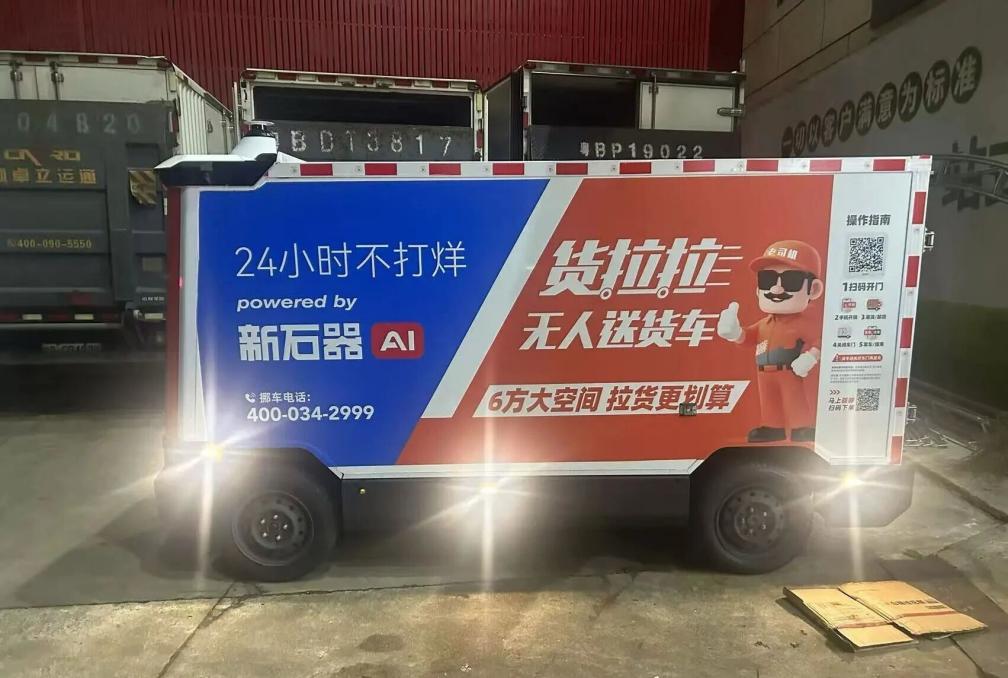
I. Allocation of Legal Liability under the Five-Party Co-Operation Model: From "One-to-One" to "Network Structure"
Under the traditional framework, liability for motor vehicle traffic accidents is relatively clear-cut. According to Article 1208 of the Civil Code of the People's Republic of China, where a motor vehicle causes damage in a traffic accident, compensation liability shall be borne in accordance with the relevant provisions of road traffic safety laws. However, under the "five-party joint operation" model—where the technology provider supplies the vehicles and algorithms, the asset party holds vehicle ownership, the operations and maintenance party is responsible for safety control, the commercial flow party connects orders, and the regulatory party conducts real-time monitoring—once an unmanned delivery vehicle injures a pedestrian or damages property during nighttime operations, the question of liability attribution becomes significantly more complex.
Article 1213 of the Civil Code establishes the order of liability among the vehicle owner, manager, and user, but in the context of autonomous driving, the concept of "user" of the vehicle is ambiguous. If the accident arises from a defect in the system algorithm, Article 1202 of the Civil Code regarding product liability may apply, with the technology provider (as the producer) bearing compensation liability; if the accident arises from the operator's failure to conduct timely maintenance or the safety officer's scheduling errors, it may constitute fault liability under a service contract. In legal practice, it is recommended that all parties specify an "accident liability allocation clause" in their cooperation agreements, stipulating the proportion of liability based on factors such as technology, operation, and management, and establish a liability traceability mechanism to avoid disputes after the fact.
In addition, the pilot requires that "whoever manufactures bears ultimate responsibility and ensures traceability," which in essence places the technology provider in the position of primary responsible party. However, legally, whether the technology provider can truly "bear ultimate responsibility" depends on the validity of its internal agreements with the asset owner and the operation and maintenance party. If the agreement has not undergone professional legal review, the transfer of liability may be rendered invalid, or even trigger the invalidity circumstances under Article 153 of the Civil Code. Therefore, enterprises participating in the pilot must complete compliance review before launch to ensure that the liability clauses are legal and effective.
II. Data Compliance and Privacy Protection in Nighttime Logistics: A Regulatory Red Line That Cannot Be Overlooked
During nighttime operations, autonomous delivery vehicles continuously collect massive amounts of data, including road conditions, pedestrian movements, and merchant orders. This data not only involves trade secrets but may also contain personal information, and is therefore subject to the Personal Information Protection Law of the People's Republic of China. According to Article 28 of this law, processing sensitive personal information (such as location tracking) requires separate consent and the adoption of strict protective measures. However, in the autonomous delivery scenario, the data automatically collected by vehicles is often not explicitly authorized by the data subjects, posing compliance risks.
In the "five-party co-operation" model, the regulatory authority requires "real-time monitoring of vehicle data," which constitutes an act of government regulation. Under Article 35 of the Data Security Law, administrative agencies may require data providers to cooperate when performing statutory duties. However, data sharing among enterprises such as technology providers and commerce flow parties must comply with the provisions on classified and graded data protection under Article 27 of the Data Security Law, and establish a data security management system. Lawyers suggest that enterprises participating in the pilot should promptly develop a "Data Compliance Manual," clearly defining the scope of data collection, storage period, and sharing boundaries, and entrust a third party to conduct compliance audits.
Furthermore, nighttime logistics involves merchant order information, which constitutes trade secrets protected under the Anti
III. Legal Risks and Key Points of Contract Review for Small and Medium-Sized Merchants Participating in Unmanned Delivery
A major highlight of the "five-party co-operation" model is enabling small and medium-sized merchants to share in the benefits of unmanned delivery. However, such merchants often lack legal resources and may easily find themselves at a disadvantage in contracts. For example, when merchants sign a delivery service agreement with the logistics party (Huolala), they should pay attention to the following key points: First, service standard clauses, including delivery time limits and damage compensation standards, avoiding vague wording; second, exemption clauses—if an unmanned vehicle causes order delays due to technical failure, who bears the responsibility? Third, data authorization clauses—do merchants agree to share operational data with the technology provider?
According to Article 496 of the Civil Code, the party providing standard form clauses shall fulfill the duty of drawing attention and providing explanations; otherwise, the other party may claim that such clauses do not become part of the contract. When signing agreements, small and medium-sized merchants should focus on reviewing these standard form clauses and, if necessary, consult professional lawyers. In addition, if merchants suffer losses due to unattended delivery services, such as lost or damaged goods, their claim path may involve multiple parties and take a long time. Lawyers suggest that merchants may include a "advance compensation" mechanism in the contract, whereby the commercial flow party or the operation and maintenance party advances the payment first and then seeks internal recourse, so as to reduce the cost of rights protection.
The pilot program also prohibits vicious low-price competition, which involves the application of the Antimonopoly Law. Although this is currently only a policy orientation, if it develops into industry rules in the future, small and medium-sized merchants should be careful not to participate in price alliances, so as not to violate the prohibition on fixing prices under Article 13 of the Antimonopoly Law.
Four. From Pilot to Promotion: How Enterprises Use Legal Tools to Protect Their Rights and Interests
After the successful pilot in Longgang, Shenzhen plans to expand the "five-party co-operation" model to the entire city. Companies planning to participate—whether as technology providers, asset owners, or small and medium-sized merchants—should proactively prepare for legal risk prevention. First, establish a compliance system aligned with local regulations such as the Shenzhen Special Economic Zone Intelligent Connected Vehicle Management Regulations to ensure full operational qualifications. Second, improve contract management; given the complexity of five-party collaboration, it is recommended to engage professional lawyers to draft a "Co-operation Agreement" that clearly defines
For ordinary citizens, autonomous delivery vehicles traveling through streets and alleys at night may pose safety hazards. If citizens suffer personal injury or property damage caused by autonomous vehicles, they should promptly preserve evidence, file complaints with regulatory authorities, and seek compensation from the responsible party in accordance with Article 1208 of the Civil Code. Lawyers can assist victims in sorting out the chain of liability, identifying the appropriate defendants, and avoiding difficulties in rights enforcement caused by dispersed responsible parties.
Guangdong Zhiming Law Firm has long focused on legal matters related to autonomous driving and logistics technology, and has provided compliance consulting for multiple intelligent connected enterprises. We recommend that whether for businesses or individuals, when facing innovative models such as "five-party co-operation," priority should be given to seeking professional legal advice to resolve risks in advance. In the future, with technological iteration and the improvement of regulations, unmanned delivery will become more deeply integrated into daily life, and law will serve as the cornerstone safeguarding its healthy development.