Legal Risks Behind Shenzhen Community Summer Childcare Services: Analysis of Liability and Rights in Summer Camp Activities for Employees' Children
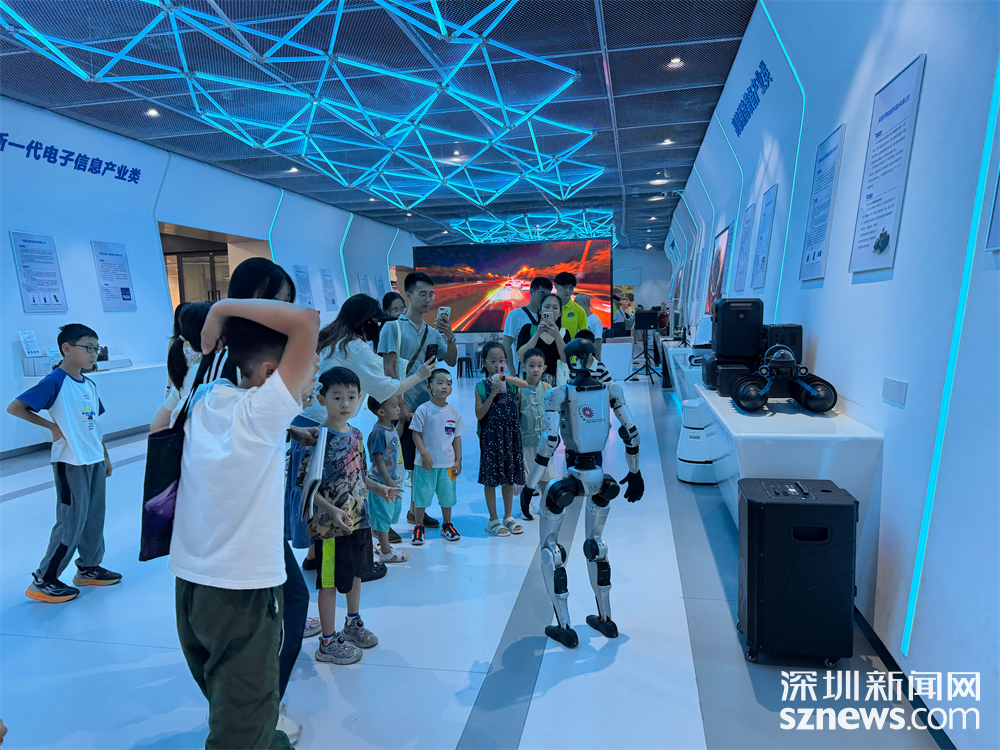
In August 2026, the "Playful Summer, Growing Together" themed summer camp for employees' children, hosted by Songquan Community in Dongxiao Subdistrict, Luohu District, Shenzhen, officially concluded after more than a month of activities. According to Shenzhen News Network, the camp launched on July 6 and was rolled out in four phases, with a total of 40 activities serving over 1,000 person-times of employees and their families. The curriculum covered diverse topics including oral English, Cantonese nursery rhymes, food workshops, ecological field studies, fire safety experiences, and half-day science and innovation camps, aiming to alleviate the pain points of "difficulty in childcare, tutoring, and companionship" faced by employee families. This livelihood project has won praise from parents, yet it also subtly touches upon a series of easily overlooked legal issues in community public services. When communities, labor unions, or enterprises organize summer childcare and parent-child activities, who is responsible for the children's safety? In the event of an accident, how should liability be allocated? How can parents use legal tools to protect their children's rights? This article will, from a lawyer's perspective, drawing on the Civil Code, the Minor Protection Law, and relevant judicial interpretations, break down the legal logic behind community summer activities, providing a practical legal guide for community service providers and employee families in Shenzhen and across the country.
I. Safety Assurance Obligations of Event Organizers: How Does the Law Define Them?
A community summer camp, as a public welfare activity led by the community Party committee, the trade union federation, and others, is not a law-free zone. Under Article 1198 of the Civil Code, operators or managers of business premises, public places such as hotels, shopping malls, banks, stations, airports, sports venues, and entertainment venues, or organizers of mass activities, who fail to fulfill their safety protection obligations and cause harm to others, shall bear tort liability. The Songquan Community Summer Camp carried out activities in multiple venues, including the community Party and Mass Service Center, commercial districts, and study tour bases. The organizing parties (such as the community trade union federation and the Party and Mass Service Center) are legally "organizers of mass activities" and bear statutory safety protection obligations.
The obligation specifically includes: first, reviewing the reasonableness of the activity plan, ensuring that the course content is suitable for the age and physical and mental characteristics of minors, and avoiding high-risk projects; second, conducting safety inspections of the premises and facilities, such as fire escape routes at study bases and the use of tools in handicraft classes, to eliminate potential hazards; third, ensuring adequate staffing and training, with a sufficient number of staff or volunteers with first aid skills; fourth, formulating emergency response plans, such as procedures for handling sudden illnesses or accidental injuries. In judicial practice, when determining whether an organizing party has fulfilled its obligations, courts will comprehensively consider factors such as the nature of the activity, the degree of risk, and the age of the participants. For example, if a summer camp organizes a parent-child water party but fails to provide professional lifeguards or warning signs, the organizing party cannot escape liability in the event of a drowning accident.
It is worth noting that community activities often involve coordination with multiple resources, such as the Luohu District Water Affairs Bureau, fire rescue stations, and commercial areas mentioned in the report. In such cases, the responsible parties may be multiple. Under Article 1191 of the Civil Code, if an employee of an employer causes harm to another person in the course of performing work duties, the employer shall bear tort liability. If a research and study base causes injury to a child due to facility defects, the base, as the manager of the business premises, may bear primary liability. However, if the community organizer fails to fulfill its obligation of review and warning, it may also bear corresponding supplementary liability. Lawyers recommend that organizers sign written agreements with all partners to clearly define各自的 safety responsibilities and risk allocation, so as to avoid disputes over liability after an incident.
II. Injury Accidents Involving Employees' Children: Liability Allocation and Key Points of Evidence Production
During summer camp activities, children participate in handicrafts, cooking, outdoor study tours, and the like, so bumps or accidents are inevitable. Once an injury accident occurs, parents often become emotionally agitated, but the law emphasizes evidence and the principle of fault. According to Article 1165 of the Civil Code, a person who through their fault infringes upon the civil rights and interests of another and causes damage shall bear tort liability. This means that parents must prove that the organizer was at fault, such as failing to fulfill the duty of safety protection, before they can claim compensation.
In practice, common points of contention include: first, whether the activity exceeds the child's adaptability for their age. For example, if young children are organized to engage in complex crafts using sharp tools, and adequate guidance and protection are not provided, the organizing party may be found at fault. Second, whether the organizing party provided timely medical treatment. If, after a child is injured, staff fail to send the child to the hospital or notify the parents at the first opportunity, causing the injury to worsen, the organizing party must bear liability for the resulting expanded losses. Third, the validity of exemption clauses. Some activities may require parents to sign a "safety responsibility statement," declaring that "all consequences are borne at one's own risk." However, under Article 497 of the Civil Code, if a party providing standard form clauses unreasonably exempts or reduces its own liability, increases the other party's liability, or restricts the other party's main rights, such standard form clauses are invalid. Therefore, this type of "overbearing clause" is generally invalid in law, and the organizing party cannot be completely exempted from liability on this basis.
For parents, evidence preservation is crucial. It is recommended that before sending children to activities, parents carefully review the activity arrangements and safety measures, and retain documents such as promotional materials and registration forms. If a child is injured, parents should immediately take photos and videos to document the scene, keep medical records and payment receipts, and promptly communicate with the organizing party. If necessary, they should report to the police or seek community mediation. In Shenzhen's judicial practice, similar cases are often resolved through mediation, but if the case goes to litigation, the court will apply the principle of "whoever asserts must prove" and require parents to provide sufficient evidence. Guangdong Zhiming Law Firm has represented multiple injury cases on campuses and at activity venues. The lawyers remind parents: do not miss the golden period for evidence collection due to emotional distress—handle the matter calmly and protect your rights in accordance with the law.
III. Protection of Workers' Rights and Interests: A Labor Law Perspective on Custodial Services
Songquan Community Summer Camp is positioned as "summer childcare for employees' children," aiming to solve the problem of employees' difficulty in arranging childcare. From the perspective of labor law, this involves the extension of employee welfare and corporate responsibility. Under the Labor Contract Law and the Special Regulations on the Labor Protection of Female Employees, employers are obligated to provide necessary working conditions and welfare to employees, but are not mandatorily required to provide childcare services for their children. However, when enterprises or trade unions proactively provide such services, attention must be paid to the gray areas of the legal boundaries.
First, if the hosted activity is organized by the enterprise's trade union and employees participate during working hours, does it count as overtime? According to Article 44 of the Labor Law, employers who arrange for workers to extend working hours shall pay overtime wages. However, community summer camps are mostly holiday activities, and employee parents participate in parent-child study tours in the capacity of "companions." If the enterprise requires employees to attend on working days without providing compensatory time off or paying overtime wages, labor disputes may arise. Lawyers suggest that enterprises should clarify the nature of such activities; if participation is voluntary and does not affect work, the notice should specify "non-working hours" or "voluntary registration" to avoid subsequent disputes.
Secondly, if a workplace injury occurs to an employee's child during the托管service, the employee may need to take leave to care for the child. Would this affect their wages? According to the Shenzhen Employee Wage Payment Regulations, if an employee takes leave for personal reasons, the employer may withhold wages; however, if the leave is due to force majeure or public interest needs, such as participating in community-organized activities, the enterprise may handle the matter at its discretion. In practice, most enterprises handle such situations with a humane approach, but there is no mandatory legal requirement. Employees should proactively communicate with their employers and keep records of leave requests and communications to protect themselves against unreasonable wage deductions.
Additionally, the summer camp led to 10 workers newly joining the trade union federation, reflecting the union's cohesion. However, legal risks in union activities, such as organizer liability, are also subject to the aforementioned duty of safety and security. As an independent legal entity, the union may also become a defendant if it is at fault in an activity. Therefore, the union should purchase activity liability insurance to spread risks, which both protects itself and safeguards workers' rights and interests.
IV. Practical Legal Advice for Communities and Parents
Based on the above analysis, both community organizers and worker parents should have awareness of legal risk prevention.
For community and union organizers: First, establish and improve safety management systems, including activity approval filing, risk assessment, personnel training, and emergency response plans, while retaining written records; Second, sign contracts with all partners that clearly define rights and responsibilities, requiring partners to provide qualification certificates and safety commitments; Third, purchase public place liability insurance or event accident insurance to transfer risk through insurance mechanisms; Fourth, distribute a Safety Notification to parents before events, clearly stating prohibited items and emergency contact information, but do not use exculpatory form clauses.
For employee parents: First, before registering, verify the organizer's qualifications and activity plan, and prioritize institutions with experience and insurance; Second, truthfully disclose the child's health condition and allergy history to avoid liability disputes caused by withholding information; Third, keep communication channels open during the activity and educate children to follow the rules, but if an accident occurs, promptly preserve evidence and consult a professional lawyer; Fourth, if work-related rights are harmed due to participating in custody activities, such as wage deductions, you may file a complaint with the labor inspection authority or apply for labor arbitration.
As an immigrant city, Shenzhen has many dual-income families, making community托管 (daycare/after-school care) services an essential livelihood need. However, while services "warm up," the legal "defense line" must not be breached. Guangdong Zhiming Law Firm has long focused on community governance and labor rights, and can provide legal consultation and risk prevention solutions for community organizations, enterprises, and workers. Whether it is drafting activity agreements, handling accident disputes, or representing labor disputes, we are willing to use our professional strength to protect children's smiles and workers' peace of mind.
The conclusion of the community summer camp is not an end, but a starting point. It reminds us that behind the warm and caring services, the rigor of law and professional support are the cornerstone for ensuring that livelihood projects proceed steadily and go far.