As Typhoon Shadel approaches Shenzhen, who bears the losses from business shutdowns? A lawyer explains the rules of force majeure and contract performance.
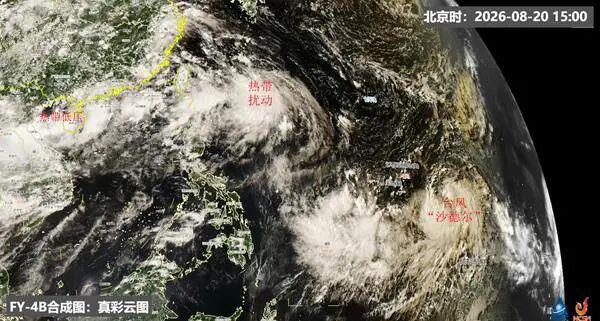
On August 21, the Central Meteorological Observatory issued a blue warning for heavy rain, with Typhoon "Saudel" potentially reaching super typhoon strength and possibly making landfall on the eastern coast of China next week. Although Shenzhen is not expected to be at the core of this typhoon's landfall, the southern coastal region will experience heavy rainfall, and Shenzhen businesses and residents must remain highly vigilant. Whenever a typhoon passes through, beyond typhoon and flood prevention, a series of legal issues also emerge: Does a typhoon constitute force majeure? Who bears the losses from work stoppages caused by the typhoon? If an employee is injured by the typhoon while commuting to or from work, does it count as a work-related injury? This article, from a lawyer's perspective and in light of the Civil Code, the Labor Contract Law, and relevant judicial interpretations, sorts out the legal risks and response strategies for Shenzhen businesses and residents under typhoon weather conditions.
Does a typhoon constitute force majeure? The legal determination has strict standards.
Article 180 of the Civil Code stipulates that force majeure refers to objective circumstances that are unforeseeable, unavoidable, and insurmountable. As a natural disaster, typhoons are generally considered to fall within the scope of force majeure; however, not all typhoon weather conditions can automatically trigger an exemption from liability based on force majeure. In judicial practice, courts take into comprehensive consideration factors such as the intensity of the typhoon, the timing of early warning issuance, and the level of government emergency response, in order to determine whether the parties involved have fulfilled their duty of reasonable care.
Taking Shenzhen as an example, if the typhoon warning signal reaches the red level and the government has issued a notice to suspend work and classes, the impediment to contract performance can generally be recognized as force majeure. However, if the typhoon is only under a blue or yellow warning, and the parties had reasonable time to take preventive measures but failed to do so, they may be found at fault and cannot be fully exempted from liability.
Moreover, the legal consequences of force majeure do not automatically exempt all liability. Article 590 of the Civil Code stipulates that if a party is unable to perform a contract due to force majeure, liability shall be partially or fully exempted based on the impact of the force majeure, unless otherwise provided by law. At the same time, the party concerned shall promptly notify the other party to mitigate potential losses caused to the other party and provide proof within a reasonable period. Therefore, if a company is unable to deliver goods or provide services on time due to a typhoon, it should notify the contractual counterparty in writing at the earliest opportunity and retain evidence such as meteorological certificates and government notices; otherwise, it may bear corresponding liability for failing to fulfill the notification obligation.
When a typhoon causes work stoppages and production halts, how should wages be paid? Enterprises must operate in accordance with the law.
During typhoon weather, enterprises in Shenzhen often face the practical issue of work stoppages and production halts. According to Article 35 of the Guangdong Province Wage Payment Regulations, if an employer suspends work or production for reasons not attributable to the workers, and the suspension does not exceed one wage payment cycle (up to a maximum of thirty days), the employer shall pay wages in accordance with normal working hours. If the suspension exceeds one wage payment cycle, wages may be paid according to a newly agreed standard between both parties based on the labor provided by the workers; if the employer does not arrange work for the workers, the employer shall pay living expenses to the workers at no less than 80 percent of the local minimum wage standard.
This means that if a typhoon prevents a company from operating normally, it must still pay wages at the normal standard within one month and cannot arbitrarily deduct them. After more than one month, if the company has still not resumed operations, it may pay living expenses at 80% of the minimum wage standard. Shenzhen's current minimum wage standard is 2,360 yuan per month, based on which living expenses must not be lower than 1,888 yuan per month.
It is worth noting that if a company forcibly requires employees to report to work during a red typhoon warning, employees have the right to refuse. The Regulations on Meteorological Disaster Prevention in Guangdong Province explicitly stipulate that during the effective period of yellow, orange, or red typhoon warning signals, employers shall, except for essential positions, arrange for employees to delay reporting to work, leave work early, or suspend work based on factors such as the workplace location, nature of the work, and disaster prevention and avoidance needs. If a company violates the regulations and forces employees to work under hazardous conditions, and an accident occurs, the company will not only face administrative penalties but may also bear civil liability for compensation.
If an employee is injured while commuting during a typhoon, does it count as a work-related injury?
During typhoon weather, if employees are injured on their way to or from work due to falling trees, electric shock from accumulated water, or similar causes, does this constitute a work-related injury? Article 14 of the Regulations on Work-Related Injury Insurance stipulates that injuries sustained on the way to or from work due to a traffic accident for which the employee is not primarily responsible, or due to an accident involving urban rail transit, passenger ferry, or train, shall be recognized as work-related injuries. However, this provision is explicitly limited to "traffic accidents" or "accidents involving urban rail transit, passenger ferry, or train," and does not include accidental injuries caused by typhoons.
Therefore, if an employee is injured by a billboard blown down by a typhoon while commuting, or suffers an electric shock injury while wading through water, it is generally difficult to recognize such injuries as work-related. However, if an employee is injured by a typhoon while going out on work-related business during working hours, they may apply for work injury recognition in accordance with Article 14, Item (1) of the Regulations on Work Injury Insurance, which states that "injuries sustained due to work-related reasons during working hours and at the workplace" qualify for such recognition.
For businesses, safety reminders should be strengthened during typhoon weather, and work schedules should be adjusted or remote work allowed when necessary. If an employee has an accident while commuting, the company should promptly assist with medical treatment and guide the employee in collecting evidence, with legal aid available if needed. Guangdong Zhiming Law Firm has handled multiple personal injury compensation cases during typhoon weather; such disputes often involve the concurrence of tort liability and work-related injury recognition. It is recommended that businesses and employees consult professional lawyers promptly to avoid losing the opportunity to assert their rights due to procedural errors.
Typhoons cause property damage, key points for insurance claims and legal recourse.
Typhoons often cause business property losses, such as flooding in factory buildings, damage to equipment, and dampness in inventory. Enterprises should first check whether the insurance types they have purchased cover typhoon-related losses. Currently, comprehensive commercial property insurance typically lists typhoons and heavy rain as insurable risks, but attention must be paid to deductibles and exclusion clauses. For example, if a business fails to truthfully disclose risks such as low-lying factory premises when purchasing insurance, the insurance company may use this as grounds to deny compensation.
During the claims process, the enterprise should promptly take photos and videos to document the losses and notify the insurance company in a timely manner. If the insurance company unreasonably denies the claim or offers an excessively low payout, the enterprise may file a lawsuit in accordance with the relevant provisions of the Insurance Law. Additionally, if the losses are caused by the fault of a third party, such as a property management company failing to clear drainage pipes in a timely manner, resulting in water backflow, the enterprise may seek recourse from the at-fault party under Article 1165 of the Civil Code.
Guangdong Zhiming Law Firm advises Shenzhen enterprises to establish typhoon emergency response plans, including inspecting flood prevention facilities in advance, purchasing sufficient insurance, and designating emergency contacts. After the typhoon passes, losses should be promptly assessed and evidence collected, with professional institutions commissioned to evaluate the amount of damages when necessary. Legal issues often lie hidden in the details; only by planning ahead can one respond with composure.
Lawyer's Advice: Corporate Compliance and Individual Rights Protection During Typhoon Weather
Although Typhoon Saudel did not make direct landfall in Shenzhen, the risks of heavy rainfall and secondary disasters it brought cannot be overlooked. For businesses, it is essential to closely monitor weather warnings, arrange work stoppages and production halts in accordance with the law, standardize wage payments, and mitigate risks related to contract performance. For individuals, it is important to strengthen legal awareness, understand the boundaries of work-related injury recognition during typhoon weather, and promptly preserve evidence and seek legal assistance when suffering personal injury or property damage.
Guangdong Zhiming Law Firm has深耕 the Shenzhen legal services market for many years, accumulating extensive experience in areas such as contract disputes, labor disputes, and insurance claims. If you encounter legal issues due to typhoon weather, you are welcome to consult us at any time. We will provide practical solutions from a professional perspective. Law is a firewall against risks; by planning ahead, you can navigate steadily and far.