DJI cameras traveled to space and back aboard the Zhuque-3 rocket; a Shenzhen lawyer interprets compliance for aerospace data assets and intellectual property.
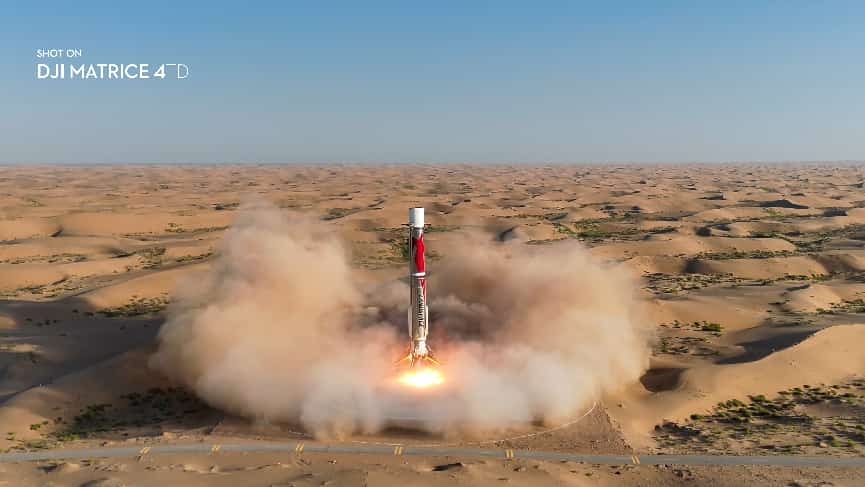
On August 19, 2026, LandSpace's Zhuque-3 reusable carrier rocket was successfully launched and recovered, with 12 unmodified DJI Osmo Action 6 action cameras completing a round trip to space aboard the rocket, capturing the entire process from ignition to landing. This milestone not only showcases a technological breakthrough in China's commercial space sector but also raises an easily overlooked question: when consumer-grade devices are used in space missions, how should the intellectual property rights to the data and footage they generate, data compliance, and potential legal liabilities be defined? As a Shenzhen lawyer deeply engaged in technology and commercial legal services, I believe it is necessary to analyze the deeper issues behind this event from a legal perspective.
The ownership of intellectual property rights in aerospace data: contractual agreements are key.
In the Zhuque-3 mission, the image data captured by DJI cameras was used for engineering review and technical analysis. This data holds high value and commercial potential. Under Article 1273 of the Civil Code concerning data property rights, and the protection of audiovisual works under the Copyright Law, image data generated during space missions may constitute a legally protected subject matter. However, the core issue lies in: who owns the copyright to this data? Is it DJI, LandSpace, or the commissioning party?
In commercial aerospace practice, intellectual property ownership is typically explicitly defined by contract. If LandSpace and DJI enter into an agreement that clearly stipulates data generated during the mission belongs to LandSpace, then LandSpace has the right to use such data; conversely, in the absence of such an agreement, ownership may be determined under Article 19 of the Copyright Law, attributing the copyright to the creator, namely DJI. Additionally, if the mission involves government funding or national projects, provisions under the Science and Technology Progress Law regarding the ownership of outcomes from financially supported projects may also apply. Lawyers advise that enterprises participating in aerospace missions should clarify terms such as data ownership, scope of use, and revenue distribution at the contract signing stage to avoid subsequent disputes.
Consumer-grade devices entering aerospace scenarios: product liability and safety compliance
DJI Osmo Action 6 withstands temperatures of 500°C and intense vibration without special modification, and its reliability is remarkable. However, this also raises legal issues of product liability. If the device fails during a mission or causes damage, according to Article 1202 of the Civil Code, the producer shall bear tort liability for harm caused to others due to product defects. Yet, the determination of a "defect" requires consideration of whether the product was used within reasonable expectations. If LandSpace uses a consumer-grade camera in extreme space environments, this may exceed the product's intended design use, thereby affecting the determination of liability.
Meanwhile, space missions involve national security and public safety, and relevant equipment must comply with the draft Space Law and the Measures for the Administration of Space Object Registration. As an arrow-borne device, does DJI camera's data collection and transmission involve sensitive information? If the imagery contains undisclosed details of space technology, it may trigger the application of the Law on Guarding State Secrets or the Data Security Law. Lawyers advise that enterprises engaged in space cooperation should assess data sensitivity, establish compliance review mechanisms, and ensure that equipment use does not violate security regulations.
Legal Challenges in the Commercial Space Industry and Shenzhen's Opportunities
The success of Zhuque-3 marks a new phase for the commercial space industry, with Shenzhen, as China's technology innovation hub, hosting a large number of enterprises along the aerospace supply chain. Commercial space activities involve multiple legal issues, including launch licensing, insurance, intellectual property, and international trade. For instance, under the Interim Measures for the Administration of Licenses for Civil Space Launch Projects, domestic enterprises must obtain a license for launches, while cross-border civil space activities must also adhere to the principles of international space law.
When Shenzhen enterprises participate in the aerospace supply chain, they need to pay close attention to the liability allocation clauses in contracts. Space launches carry high risks, and a failure can result in enormous losses, making insurance clauses and exemption clauses critically important. Lawyers advise that enterprises should leverage the policy advantages of Shenzhen as a pilot demonstration zone, refer to local regulations such as the Shenzhen Special Economic Zone Data Regulations, and take the lead in establishing aerospace data compliance guidelines, providing a model for the rest of the country.
Legal insights for businesses and the public.
This event is not only a technological triumph but also a model of the integration of law and technology. For enterprises, especially tech companies, when participating in similar cutting-edge projects, it is essential to prioritize early-stage legal risk assessments, including intellectual property strategy, data compliance, and product liability insurance. For the public, while the application of consumer-grade devices in extreme environments is exciting, attention must be paid to the boundaries of personal data collection.
Guangdong Zhiming Law Firm has long focused on the intersection of technology and commercial law, having provided aerospace, drone, and data compliance services to multiple technology companies in Shenzhen. We recommend that enterprises planning to enter the commercial aerospace sector consult professional lawyers as early as possible, ensuring that technological innovation operates within the framework of the rule of law through contract design, compliance review, and dispute prevention mechanisms.
Every step of space exploration relies on legal safeguards. Shenzhen lawyers are willing to walk alongside technology enterprises to jointly build the legal foundation for commercial aerospace.