Hong Kong tourists flood Shenzhen business district during National Day holiday, lawyers dissect seven types of legal risks behind cross-border consumption one by one
Hong Kong tourists heading north for consumption upgrade, lawyers see a different side
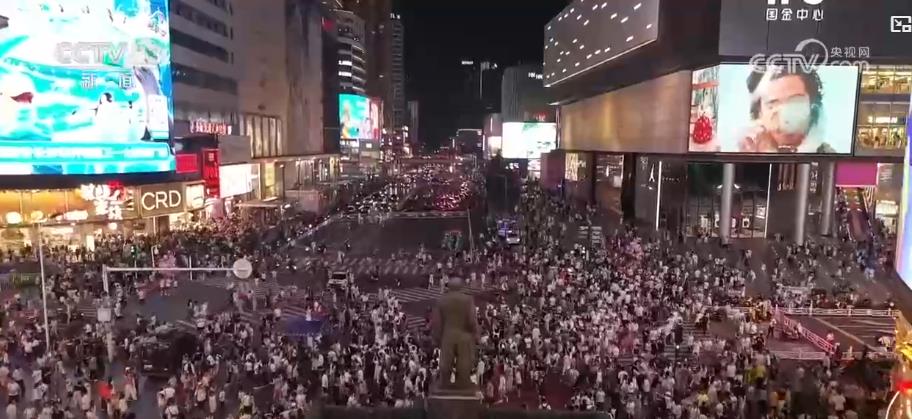
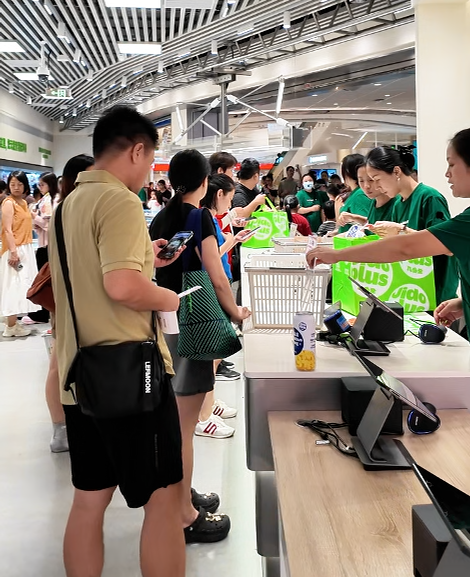
During the 2026 National Day holiday, the proportion of Hong Kong and Macau tourists at Yitian Holiday Plaza in Luohu, Shenzhen, surged to 35%. Long queues formed at the entrances of Ba Nu, Sushi Lang, and Fei Chef, and Cantonese conversations were heard one after another. Cross border buses go directly from Mong Kok and Yau Ma Tei to shopping malls, and the itinerary of Hong Kong passengers has changed from "just having a meal and leaving" to a one-stop service of dining, shopping, leisure, and accommodation. The shopping mall even offers the right to receive bus tickets for Hong Kong and Macau members who spend over 388 yuan.
As a lawyer who has been practicing in Shenzhen for many years, my first reaction to this news is not the consumer heat, but a new type of legal service demand that is emerging behind it - the legal protection for cross-border consumption is almost in a vacuum zone. Who should Hong Kong customers turn to when they encounter problems while dining in Shenzhen restaurants? How to track down merchants who run away after depositing money on prepaid cards? Where is the jurisdiction court for the discovery of quality issues with home appliances purchased in Shenzhen and brought back to Hong Kong? Currently, the vast majority of consumers and businesses do not have clear answers to these questions.
Food safety issues, Hong Kong consumers' rights protection path is more complex than mainland consumers'
Hong Kong customers dining in Shenzhen restaurants are legally subject to the Food Safety Law of the People's Republic of China and enjoy equal rights as mainland consumers. Article 148 of the law stipulates that if consumers suffer damage due to food that does not meet food safety standards, they may demand compensation from the operator or producer for the losses, and may claim punitive damages of ten times the price or three times the loss. If the amount is less than one thousand yuan, it shall be calculated as one thousand yuan.
The problem lies at the execution level. If Hong Kong tourists only find themselves feeling unwell after leaving Shenzhen and returning to Hong Kong, the chain of proof will be instantly stretched - they need to prove the causal relationship between the damage and dining in Shenzhen, and the time and economic costs of cross-border evidence collection often exceed the compensation amount itself. The common practice of Shenzhen lawyers in practice is to keep consumption receipts, electronic payment records and screenshots of restaurant positioning at the first time. If they have returned to Hong Kong, they can complain online through the Shenzhen 12315 platform, and the market supervision department will access the restaurant monitoring and purchase accounts after intervention.
Another point that is easy to ignore is that some Hong Kong customers use Hong Kong credit cards or Octopus to pay. Once they need to refund or claim, the fund return path is completely different from the mainland electronic payment. Lawyers suggest using WeChat, Alipay and other mainland payment tools as far as possible to form a complete fund evidence chain.
Prepaid cards and membership benefits have a higher probability of Hong Kong tourists stepping into the trap than local residents
The Hong Kong and Macau membership coupons and dining recharge discounts launched by shopping malls are essentially prepaid consumption contracts. The Interpretation of the Supreme People's Court on Several Issues Concerning the Application of Law in the Trial of Civil Disputes over Prepaid Consumption, which will come into effect on May 1, 2025, clarifies that if an operator ceases to operate after receiving a prepayment and fails to fulfill its refund obligation, consumers may claim punitive damages.
The special risk for Hong Kong tourists lies in information asymmetry. Local residents can timely learn about abnormal business operations of a certain merchant through community groups and local forums, while Hong Kong customers often wait until the next time they go north to discover that the store has changed its sign. Article 563 of the Civil Code grants consumers the right to terminate a contract in the event of a fundamental breach by the merchant, but the prerequisite for exercising this right is to find the defendant. When handling such cases, Shenzhen lawyers usually first check the business registration information of the merchants through the market supervision department to confirm whether they have been deregistered or included in the list of abnormal operations. If they have been deregistered, shareholder liability needs to be traced.
For Hong Kong customers, the most practical suggestion is to keep the single recharge amount within the acceptable loss range, retain recharge vouchers and screenshots of membership agreements, and prioritize choosing chain brands over single store recharge.
Cross border shopping returns and exchanges, jurisdiction and legal application are two hurdles
Hong Kong customers who purchase food and daily necessities from supermarkets and retail stores in Shenzhen and bring them back to Hong Kong, if quality problems are found, Article 24 of the Consumer Rights Protection Law shall apply, and the operator shall bear the obligation of returning, replacing, and repairing. But the practical obstacle to cross-border returns and exchanges is that the seven day no reason return policy only applies to online shopping, and products purchased in offline stores are not subject to this clause unless the merchant voluntarily promises.
Even more tricky is the issue of jurisdiction. According to Article 35 of the Civil Procedure Law, contract disputes shall be under the jurisdiction of the court where the defendant resides or where the contract is performed. Hong Kong customers purchase goods in Shenzhen, and the place of contract performance is in Shenzhen. Theoretically, they can sue in Shenzhen, but the round-trip cost is high. If the merchant has affiliated companies in Hong Kong, Hong Kong customers can also consider suing in Hong Kong, but they need to prove that the Hong Kong court has jurisdiction, and the application of the law may point to mainland laws, making the process more complex.
Shenzhen lawyers usually evaluate whether it is worth initiating legal proceedings when dealing with cross-border consumer disputes. For disputes with smaller amounts, resolving them through the Shenzhen International Arbitration Court or the Guangdong Hong Kong Macao Greater Bay Area mediation platform is often more efficient than litigation.
Merchant perspective: The compliance pressure brought by the influx of Hong Kong tourists should not be underestimated
For catering and retail businesses in Shenzhen, the increasing proportion of Hong Kong customers means that compliance standards need to be improved simultaneously. There are differences between Hong Kong consumers' requirements for food safety, labeling, and service standards and those in mainland China. Once disputes arise, Hong Kong consumers are more inclined to file complaints through social media and the Hong Kong Consumer Council, which may have a much greater impact on the brand reputation of businesses than similar complaints from mainland consumers.
Merchants should focus on checking three areas: first, whether the food business license and employee health certificate are complete; Secondly, whether the issuance of prepaid cards complies with the filing and fund custody requirements of the "Management Measures for Single purpose Commercial Prepaid Cards"; The third is whether cross-border promotional language involves false advertising, such as expressions like "Hong Kong direct supply" and "authentic Hong Kong style". If there is no basis, it may violate Article 28 of the Advertising Law.
Lawyer's suggestion: Legal protection for cross-border consumption needs to be laid out in advance
The trend of Hong Kong tourists heading north for consumption will not reverse, but the improvement of the legal protection system will take time. For consumers, retaining credentials, choosing legitimate merchants, and understanding channels for safeguarding rights are basic skills. For merchants, compliant operation is not only a legal obligation, but also a commercial prerequisite for undertaking cross-border traffic.
Guangdong Zhiming Law Firm has long served Shenzhen commercial enterprises and cross-border consumers, accumulating rich practical experience in consumer contract disputes, food safety claims, prepaid card refunds, and other fields. Whether Hong Kong tourists encounter legal barriers in Shenzhen consumption or Shenzhen merchants need to improve their cross-border consumption compliance system, the intervention of professional lawyers can effectively reduce risks and costs. Under the heat of cross-border consumption, legal protection should not be absent.