What legal risks should cross-border passengers pay attention to during the flag raising ceremony when the National Day passenger flow at Liantang Port exceeds 270000? Interpretation by Shenzhen Lawyer
Lead
During the National Day holiday in 2026, Liantang Port unexpectedly gained popularity due to its daily flag raising ceremony. According to Shenzhen News Network, the total number of inbound and outbound personnel at Liantang Port exceeded 275000 in the first three days of the holiday, with an average of 91000 people per day. On October 3rd, the daily inspection volume exceeded 100000 people. In addition to traditional passenger flows such as visiting relatives, traveling, and spending, there has been a significant increase in the number of tourists who come specifically to watch the flag raising ceremony and clock in, resulting in a "secondary increase" in passenger flow at the port. Liantang Border Inspection Station has dynamically adjusted its police deployment to ensure safe and orderly customs clearance.
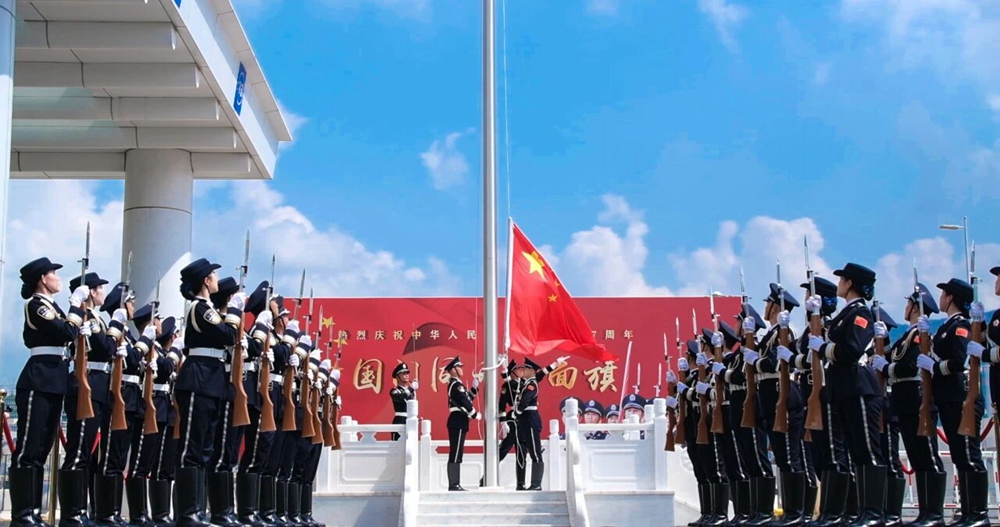
On the surface, this phenomenon is a combination of holiday economy and patriotic enthusiasm. However, from the perspective of legal practice, there are significant legal risks hidden behind the large-scale cross-border personnel flow: whether the entry and exit documents are compliant? Is it crossing the border to take photos and clock in within the restricted area at the port? How to protect rights in cross-border shopping disputes? Passengers may accidentally cross the legal red line in cross-border travel where they can leave at will. This article examines several legal issues that ordinary people are most likely to overlook during the check-in craze at Liantang Port from the perspective of Shenzhen lawyers.
1、 Compliance with immigration documents and endorsements: the first legal threshold for customs clearance
As an important land port in the Guangdong Hong Kong Macao Greater Bay Area, Liantang Port first faces the issue of the legality of entry and exit documents for passengers to clear customs. According to Article 11 of the Exit and Entry Administration Law of the People's Republic of China, Chinese citizens shall apply for passports or other travel documents for exit and entry in accordance with the law; Article 14 specifies that Chinese citizens who settle abroad must complete relevant procedures upon returning to China for settlement. For mainland residents traveling to and from Hong Kong and Macau, they are also required to comply with the Interim Measures for the Administration of Chinese Citizens' Private Travel to and from Hong Kong or Macau, and hold a valid Hong Kong and Macau travel permit and corresponding endorsement.
In legal practice, the most common violations include attempting to clear customs despite expired visas, using other people's documents, and engaging in business activities with travel visas. According to Article 71 of the Exit and Entry Administration Law, those who enter or exit the country with forged, altered or other people's entry and exit documents shall be fined between 1000 yuan and 5000 yuan; Those with serious circumstances shall be detained for not less than five days but not more than ten days. Many passengers mistakenly believe that they are just going to clock in and have no problem traveling back and forth on the same day, but ignore the validity period and frequency limit of the visa. It is particularly noteworthy that during the National Day holiday, some passengers temporarily intended to go to the port without checking the remaining number of visas in advance, resulting in being advised to return or even punished at the border inspection channel.
Shenzhen lawyer's suggestion: Before traveling, it is necessary to check the validity period and remaining times of the visa through the "Immigration Bureau" mini program or official website; If travelers holding L visas (group travel) choose to travel independently, they need to confirm whether they comply with the local exemption policy; Do not trust the "visa agency" personnel around the port, as such behavior may involve the crime of forging national government documents.
2、 Photo check-in in restricted areas at ports: a legal balance between freedom and boundaries
The flag raising ceremony ignited the "check-in" feature at Liantang Port, and passengers took photos in front of the national flag stand to commemorate the occasion. But ports are not ordinary public places, but border management areas strictly regulated by the Exit and Entry Administration Law and the Anti Terrorism Law. According to Article 6 of the Exit and Entry Administration Law, the state establishes entry and exit border inspection agencies at ports to manage restricted areas at ports. The so-called "port restricted area" usually includes border inspection waiting areas, inspection channels, monitoring areas, etc., and unauthorized entry or detention is not allowed.
Is it illegal to take photos in restricted areas at the port? The key lies in the shooting content and location. If passengers take photos outside the border inspection hall, in front of the national flag stand, or other public open areas, it generally does not constitute a violation of the law; But if you stay and take photos near the inspection channel or self-service customs clearance gate, it may hinder the order of border inspection. According to Article 82 of the Exit and Entry Administration Law, those who disrupt the management order of restricted areas at ports shall be given a warning or fined up to 2000 yuan; Those with serious circumstances shall be detained for not less than five days but not more than ten days. In 2025, a passenger livestreamed in the border inspection waiting area of Futian Port and was administratively detained on suspicion of disrupting order. This case has been widely discussed in the Shenzhen legal community.
In addition, according to the Law of the People's Republic of China on Guarding State Secrets and relevant border inspection regulations, it is prohibited to take photos of border inspection facilities, monitoring equipment, and inspection processes. If passengers upload such photos to social media, it may also trigger national security reviews. Lawyer's reminder: When checking in as a souvenir, choose an open area to avoid filming on duty police officers or inspecting equipment; When encountering dissuasion from border inspection personnel, one should actively cooperate and avoid disputes or forced filming, otherwise it may escalate from administrative violation to obstruction of official duties.
3、 Cross border consumption and shopping disputes: the rights protection path behind WeChat
According to the report, Ms. Xu, a Hong Kong tourist, came to Shenzhen through Liantang Port to "take a stroll and buy some souvenirs". This cross-border consumption scenario is extremely common during holidays, but once disputes arise, the difficulty of safeguarding rights is much higher than domestic consumption. According to Article 2 of the Consumer Rights and Interests Protection Law of the People's Republic of China, the rights and interests of consumers who purchase goods or receive services for their daily needs are protected by this law. However, when Hong Kong and Macau tourists shop in Shenzhen, if there are quality issues with the products, they need to apply mainland laws instead of Hong Kong's "Product Description Regulations".
Common problems in practice include: inability to enjoy national warranty after purchasing electronic products, merchants refusing to issue invoices, and difficulties in returning and exchanging cross-border e-commerce products. According to Article 577 of the Civil Code, if one party fails to perform its contractual obligations or does not perform in accordance with the agreement, it shall bear the liability for breach of contract, such as continuing to perform, taking remedial measures, or compensating for losses. However, cross-border consumers often give up their rights due to a lack of shopping vouchers and unfamiliarity with mainland complaint channels. Shenzhen lawyer's suggestion: When shopping, be sure to ask for formal invoices or electronic transaction records; In case of disputes, you can call 12315 or file a complaint through the "National 12315 Platform"; If the amount involved is large, you can apply for arbitration to the Shenzhen International Arbitration Court or entrust a lawyer to send a lawyer's letter.
It is worth noting that some passengers have misunderstandings about the customs tax-free limit when bringing items into Hong Kong and Macau. According to the regulations of the General Administration of Customs, mainland residents who bring self use items from Hong Kong and Macao are exempt from tax for items with a total value of less than 5000 RMB. Any excess must be declared and taxed voluntarily. If carrying a large amount of cosmetics and luxury goods under the name of "hand mail" without declaration, it may be deemed as smuggling behavior and face confiscation of goods and fines.
4、 The traps of "purchasing agents" and "currency exchange" around ports: criminal risks should not be underestimated
The peak passenger flow at Liantang Port has also given rise to the surrounding gray industry chain. Some illegal elements solicit passengers near the port under the pretext of "purchasing agents" and "exchanging currency". According to Article 45 of the Foreign Exchange Administration Regulations of the People's Republic of China, those who engage in unauthorized buying and selling of foreign exchange, disguised buying and selling of foreign exchange, or buying and selling foreign exchange in reverse shall be given a warning by the foreign exchange management authority, have their illegal gains confiscated, and be fined up to 30% of the illegal amount; For serious cases, a fine of no less than 30% of the illegal amount and no more than its equivalent shall be imposed. If it involves large amounts of money or multiple transactions, it may also constitute the crime of illegal business operations.
Shenzhen lawyers have been exposed to a number of similar cases in practice: passengers, seeking preferential exchange rates, exchanged Hong Kong dollars through "underground banks", and their bank cards were frozen, or even listed as suspect. According to Article 225 of the Criminal Law, those who illegally engage in fund payment and settlement business, disrupt market order, and the circumstances are serious, shall be sentenced to fixed-term imprisonment of not more than five years or detention, and shall also or only be fined. In addition, helping others carry goods through customs and charging "labor fees" may constitute the crime of smuggling ordinary goods if the goods are prohibited from entering or leaving the country.
Lawyer's suggestion: Cross border travel should choose formal channels such as banks to exchange currency; Reject any form of request for 'paid carrying'; Be vigilant against "purchasing agents" and "currency exchange" personnel who initiate conversations around the port. Once investigated by border inspection or customs, lawyers should be appointed to intervene as soon as possible to avoid making unfavorable statements due to unfamiliarity with the law.
Conclusion: Legal lessons behind cross-border convenience
The flag raising ceremony at Liantang Port is a hot topic, reflecting the increasingly close personnel exchanges in the Guangdong Hong Kong Macao Greater Bay Area. The more convenient cross-border travel is, the more legal compliance awareness cannot be lacking. From visa verification to port behavior norms, from consumer rights protection to criminal risk prevention, every step requires passengers to do "legal homework" in advance. For enterprises, when organizing cross-border team building and business inspections, they should pay more attention to the compliance of employees' documents and port behavior guidelines to avoid individual negligence affecting the overall itinerary.
Guangdong Zhiming Law Firm has been deeply involved in legal services in Shenzhen for many years, accumulating rich practical experience in the fields of entry and exit administrative compliance, cross-border civil and commercial disputes, and criminal defense. Whether individual travelers encounter customs clearance obstacles, administrative penalties, or cross-border contract disputes faced by enterprises, they can seek the support of professional lawyers. Cross border is no small matter, compliance is the bottom line - making every trip both enjoyable and reassuring.