Legal Risks Behind Shenzhen's New Consumption Scenarios: When Check-ins Turn into Retention, How Can Businesses and Consumers Protect Their Rights in Compliance?
Lead: When "check-ins" become a thing of the past, how does the law safeguard the "retention economy"?
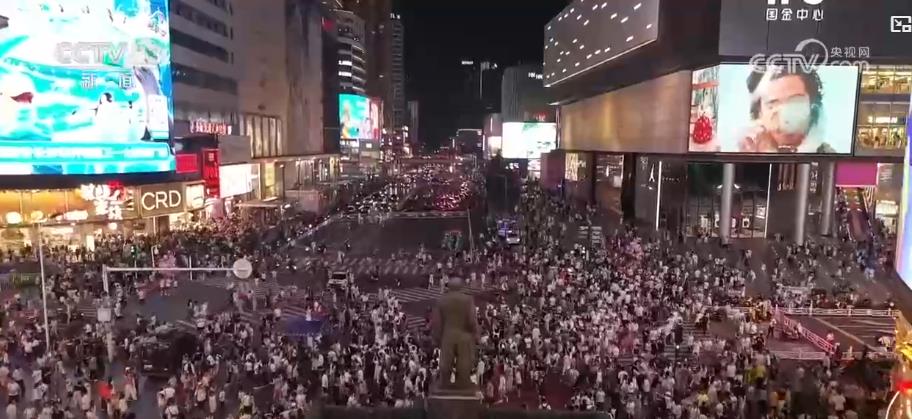
In August 2026, CCTV.com reported on a new trend in the consumer market shifting from "check-in traffic" to "consumer retention." Shenzhen, as a city of innovation, has seen an endless emergence of immersive experiences, themed precincts, and internet-famous dining establishments, all attempting to convert fleeting foot traffic into sustained spending power. Behind the bustling facade, however, legal risks lurk beneath the surface: Do merchants who attract customers with exaggerated promotional claims constitute false advertising? How is consumers' personal information misused when they scan QR codes to order or register as members? And in the event of a dispute, how can consumers efficiently assert their rights? This article, from the practical perspective of a Shenzhen lawyer, deconstructs the legal boundaries in new consumption scenarios and provides compliance guidelines and rights-protection pathways for both businesses and ordinary consumers.
I. From "Traffic" to "Retention": The Legal Red Lines of Marketing Innovation and False Advertising
The core of new consumption scenarios lies in the "sense of experience," but in order to stand out in competition, some businesses are prone to crossing into the minefield of false advertising. For example, a popular Shenzhen restaurant claimed to have a "Michelin-starred chef presiding in the kitchen," yet was unable to provide proof; or an immersive exhibition touted as a "world premiere" was in fact a local imitation. Pursuant to Article 8 of the Consumer Rights Protection Law of the People's Republic of China, consumers have the right to know the true circumstances of the goods they purchase, use, or the services they receive. If a business fabricates facts or conceals the truth to induce consumers to make purchases, it violates Article 20 of the same Law and constitutes false advertising.
In judicial practice, Shenzhen courts have heard multiple consumer disputes arising from exaggerated advertising. In 2024, a gym in Futian District was ordered to refund part of membership fees and compensate for losses because its advertised "constant-temperature pool" failed to meet the required water temperature. Lawyers remind that when marketing, businesses should retain supporting evidence for promotional content, such as certification certificates and testing reports, and avoid using absolute terms like "best" or "first"; otherwise, they may face administrative penalties under Article 57 of the Advertising Law, with a maximum fine of 200,000 yuan.
For consumers, when faced with enticing advertisements, they should retain evidence such as advertising screenshots and webpage links. If they encounter false advertising, they may claim "refund plus triple damages" in accordance with Article 55 of the Consumer Rights Protection Law, that is, requiring the merchant to refund the purchase amount and pay punitive damages of three times the price. In recent years, the Shenzhen Consumer Council has also intensified its supervision over false advertising. Consumers can file complaints through the 12315 platform or entrust lawyers to initiate civil litigation.
II. Scan-Code Ordering and Membership Registration: Shenzhen's Practice in Personal Information Protection
New consumer scenarios generally rely on digital tools, with scan-to-order, following official accounts, and membership registration becoming important means of converting "retention." However, many consumers have their personal information excessively collected without being fully informed. For example, a certain tea beverage brand requires customers to authorize their phone numbers and location information before placing an order, otherwise the service cannot be used; or a certain shopping mall forces consumers to follow its official account before connecting to WiFi. These behaviors are suspected of violating Article 6 of the Personal Information Protection Law of the People's Republic of China, which stipulates that the processing of personal information should have clear and reasonable purposes, be directly related to the processing purpose, and adopt methods that have the least impact on individual rights and interests.
As a pioneering zone for personal information protection, Shenzhen's "Shenzhen Special Economic Zone Data Regulations," implemented in 2025, further refined the rules, explicitly stipulating that businesses may not refuse to provide basic services on the grounds that consumers refuse to provide non-essential information. Lawyers have pointed out that if businesses forcibly collect non-essential information, consumers may file complaints with the Shenzhen Market Supervision Administration or the cyberspace administration department. In accordance with Article 66 of the Personal Information Protection Law, businesses may face warnings or fines, and in cases of serious circumstances, fines of up to 50 million yuan or 5 percent of the previous year's turnover.
In practice, a consumer in Shenzhen has already sued a chain coffee brand for excessive information collection, and the court ultimately ruled that the merchant must delete the relevant data and pay compensation for emotional distress. Lawyers advise that consumers should strengthen their awareness of information protection. When encountering unfair terms such as "cannot use without authorization," they can take screenshots of the authorization page and file complaints by calling 12345. Merchants, on the other hand, should establish personal information compliance systems, adhere to the "minimum necessary" principle, and conduct regular data security audits to avoid legal risks.
III. Food Safety and Contract Disputes in New Consumption Scenarios: Analysis of Key Points for Rights Protection
Under the "retention economy," dining and experience-based consumption have surged, making food safety and contract performance issues particularly prominent. Taking a popular night market in Shenzhen as an example, some stalls operate without licenses and the sources of their food are unknown, which has triggered multiple complaints of diarrhea. According to Article 148 of the Food Safety Law of the People's Republic of China, consumers who suffer harm due to food that does not meet food safety standards may claim compensation for losses and also demand compensation of ten times the price of the food or three times the amount of the losses, with a minimum of one thousand yuan. Lawyers remind consumers to keep receipts, records of vomiting, or medical visit records, promptly report to the market regulatory authorities, and apply for inspection and appraisal when necessary.
Additionally, prepaid consumption is a common model for converting "retention" traffic, such as gym annual memberships and beauty salon packages. However, disputes frequently arise, including merchants absconding and service quality deterioration. In Shenzhen, a chain educational institution once suddenly ceased operations, leaving hundreds of students unable to recover their prepaid tuition fees. Under Article 563 of the Civil Code of the People's Republic of China, if a merchant is unable to continue performing the contract, consumers have the right to terminate the contract and demand a refund of the remaining amount. If fraud is suspected, a report may be filed with the public security authorities. Lawyers advise that when engaging in prepaid consumption, consumers should sign a written contract specifying the service content and refund conditions, and retain payment receipts.
For merchants, compliant operations are essential for long-term success. In recent years, courts at all levels in Shenzhen have tended to protect consumer rights and interests, adopting the principle of "favoring consumers" in contract interpretation. Therefore, merchants should improve their contract terms and avoid setting unreasonable standard clauses such as "the right of final interpretation belongs to this store." Otherwise, pursuant to Article 497 of the Civil Code, such clauses may be deemed invalid.
IV. Responding to Disputes: Diverse Rights Protection Paths for Shenzhen Consumers and the Role of Lawyers
Faced with legal issues in new consumption scenarios, consumers in Shenzhen are not without recourse. In addition to traditional negotiation, complaints, and litigation, they can also utilize Online Dispute Resolution (ODR) platforms for rapid mediation. For instance, the "Shenrong Diversified Dispute Resolution" platform promoted by the Shenzhen Intermediate People's Court allows parties to apply for mediation online, where lawyers can assist parties in organizing evidence and assessing litigation risks.
Lawyers play a key role in consumer rights protection. When negotiations between consumers and businesses break down, lawyers can represent clients in litigation and seek punitive damages; for mass disputes, lawyers can assist in class actions to improve efficiency. Guangdong Zhiming Law Firm has long been deeply involved in the field of consumer rights protection, having represented multiple cases involving false advertising by popular restaurants in Shenzhen and personal information infringement, helping consumers recover losses. We recommend that consumers, when their rights are infringed, preserve evidence immediately and consult professional lawyers to avoid losing their right to win the case due to the statute of limitations.
Meanwhile, lawyers also provide compliance consulting services for businesses, helping review marketing copy and data collection agreements to prevent legal risks. In Shenzhen, a rule-of-law-based consumption environment is a vital part of the city's competitiveness. Both businesses and consumers should respect the law so that the "retention economy" can achieve steady and long-term growth.
Conclusion: Law is the ballast stone of the retention economy.
From "check-ins" to "customer retention," the vitality of Shenzhen's consumer market is evident to all, yet only by operating within the framework of the rule of law can sustainable development be achieved. Businesses should abandon short-sighted marketing tactics and prioritize compliance; consumers should strengthen their legal awareness and protect their rights rationally. Guangdong Zhiming Law Firm, as a local legal service provider in Shenzhen, is willing to offer professional support to both enterprises and individuals, working together to safeguard a healthy and orderly consumer environment.