A lighter exploding and injuring someone after being exposed to intense heat inside a car—who bears the liability? A Shenzhen lawyer interprets product liability and the assumption of risk.
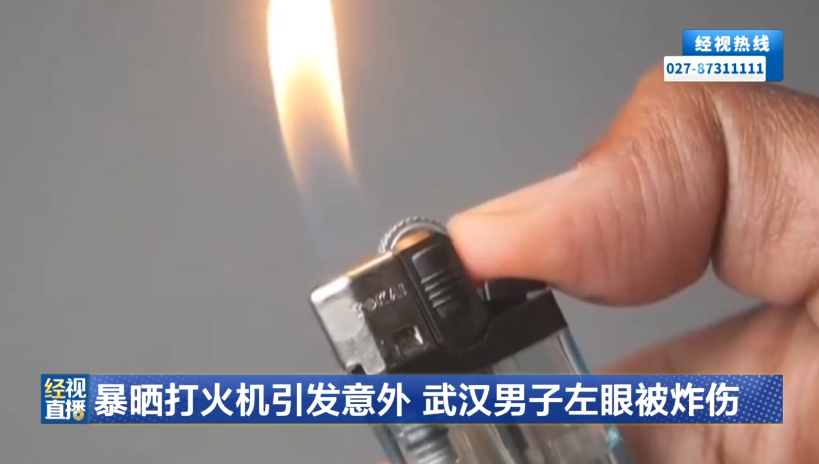
In August 2026, a Wuhan resident, Mr. Liu, was injured when a lighter he had left in a sun-exposed car suddenly exploded as he retrieved it, leaving his left eye injured and his vision reduced to counting fingers. Although his vision recovered to 1.0 after treatment, the incident sparked widespread public discussion regarding the safety of items left in vehicles during hot weather and the associated legal liability. As lawyers in Shenzhen, we not only focus on the safety warning presented by the incident itself, but also need to analyze from a legal perspective: in such accidental injuries, can the victim claim compensation? Are producers and sellers liable? How do consumers' own actions affect the apportionment of liability? This article, referencing the relevant provisions of the Civil Code, clarifies the legal logic and practical key points for you.
I. Incident Review: Sun-Exposed Lighter Becomes a "Time Bomb"
Mr. Liu's experience is not an isolated case. In summer high temperatures, the enclosed space inside a car can reach temperatures above 60°C, and flammable gases such as butane inside lighters expand when heated, easily causing explosions. According to doctors, Mr. Liu's left eye suffered damage from the shockwave and plastic fragments, resulting in hyphema and mydriasis. Although his vision recovered after treatment, doctors warned that damage to the fundus of the eye could lead to permanent vision impairment. After the incident was reported by the media, the public, while expressing sympathy, also raised a question: if Mr. Liu files a lawsuit, how should it be legally characterized?
From a lawyer's perspective, this incident involves at least three legal dimensions: first, product liability, namely whether the lighter had a quality defect; second, victim fault, namely whether Mr. Liu's placing the lighter in a sun-exposed environment constitutes assumption of risk or negligence; and third, the scope of damages, including medical expenses, lost wages, and emotional distress damages. The following is an analysis of each.
II. Product Liability: Do Producers and Sellers Bear Liability?
According to Article 1202 of the Civil Code, if a product causes harm to others due to a defect, the producer shall bear tort liability. Article 1203 provides that if damage is caused by a product defect, the injured party may request compensation from either the producer or the seller. Therefore, whether the producer or seller of a lighter bears liability depends on whether the product has a "defect."
Defects include design defects, manufacturing defects, and warning defects. In this case, an ordinary lighter will not explode under normal use, but if the product manual fails to warn that it "must not be placed in a high-temperature environment for an extended period," or fails to indicate the temperature resistance range, it may be found to have a warning defect. For example, if the lighter's casing material is not resistant to high temperatures, or if the valve design cannot release pressure when heated, the producer cannot escape liability. Conversely, if the product has fulfilled its reasonable duty to warn and complies with national standards, the producer may assert a defense of exemption from liability.
In practice, the burden of proof in such cases is relatively heavy. The victim must prove the existence of a product defect, the resulting damages, and the causal relationship between them. If Mr. Liu intends to file a lawsuit, he needs to preserve evidence such as the remnants of the exploded lighter, purchase receipts, medical records, and apply for judicial appraisal. In recent years, when hearing similar cases, courts in Shenzhen have often relied on Article 46 of the Product Quality Law, using "the existence of unreasonable danger endangering personal safety or the safety of others' property" as the standard for determination. If the appraisal conclusion shows that the lighter may explode even under normal storage temperatures, it will be difficult for the producer to evade liability.
III. Victim Fault: Assumption of Risk or Comparative Negligence?
Article 1173 of the Civil Code stipulates that if the injured party is at fault for the occurrence or expansion of the same damage, the liability of the tortfeasor may be reduced. This means that even if the producer bears liability, whether Mr. Liu's act of placing the lighter in a car exposed to the sun for several days constitutes fault will directly affect the compensation ratio.
Legally, "assumption of risk" typically applies to sports and recreational activities (Article 1176), but this case is more suited to the principle of comparative negligence. As an adult, Mr. Liu should have foreseen the risk that a lighter might explode under high temperatures. His negligence, whether through carelessness or overconfidence, constitutes "ordinary negligence." The court may accordingly reduce the producer's liability, such as holding the producer liable for 60%-70% of the damages, with the victim bearing 30%-40% himself.
But it should be noted that if the lighter's product warnings are clear and Mr. Liu failed to use it according to the instructions, the producer may be completely exempt from liability. Conversely, if the product has serious defects, the producer still bears primary liability even if the victim was grossly negligent. Shenzhen lawyers suggest that when pursuing claims, victims should focus on collecting evidence such as product warning labels and instruction manuals to rebut the "assumption of risk" defense.
IV. Damages: Which Items Can Be Claimed?
Pursuant to Article 1179 of the Civil Code, compensation for personal injury includes medical expenses, nursing fees, transportation expenses, lost wages, and disability compensation, among others. Although Mr. Liu's vision has recovered, if he suffers from aftereffects, he may apply for a disability assessment and claim disability compensation. In addition, for the mental anguish caused by the explosion incident, he may claim moral damage compensation in accordance with Article 1183.
In practice, Shenzhen courts award relatively high mental distress damages for eye injury cases; if a disability is established, they typically support awards ranging from 10,000 to 50,000 RMB. Lost wages are calculated based on the actual reduction in income and require supporting documents such as labor contracts and bank statements of salary payments. If Mr. Liu decides to file a lawsuit, he should retain complete medical bills, diagnostic certificates, and proof of lost work, and be mindful of the statute of limitations (3 years, calculated from the date he became aware of the infringement of his rights).
It is worth noting that if a lighter is a counterfeit or substandard product, the seller may be liable for "punitive damages." Pursuant to Article 55 of the Consumer Protection Law, if a business operator knowingly provides defective products and causes serious harm, punitive damages may be claimed. However, such claims are rarely applied in ordinary lighter cases, unless it can be proven that the producer intentionally concealed the risk.
V. Lawyer's Suggestions: Key Points for Self-Protection and Rights Defense During the High-Temperature Season
This incident reminds us that in summer, explosive items such as lighters, perfume, sunscreen spray, and power banks must not be left in vehicles. From the perspective of legal risk prevention and control, Shenzhen lawyers suggest:
1. Consumers should develop good habits, checking items inside the vehicle before leaving, and avoid leaving flammable or explosive items exposed to direct sunlight. If such an injury unfortunately occurs, seek medical attention immediately and preserve evidence, including photos of the scene, item remnants, purchase receipts, medical records, etc.
2. If you decide to defend your rights, you should consult a professional lawyer to assess whether the product is defective, whether you are at fault, and your expectations for a claim. In the Shenzhen area, you may file a complaint with the Consumer Council or directly file a lawsuit in court, with a statute of limitations of 3 years.
3. For producers and sellers, product warning labels should be improved to clearly indicate high-temperature risks, and product liability insurance should be purchased to spread risks.
Guangdong Zhiming Law Firm has deep expertise in the field of tort disputes, with extensive practical experience in product liability and personal injury compensation cases. If you encounter similar issues, please feel free to contact us for professional legal advice. We will develop a rights-protection strategy tailored to your situation and maximize the protection of your legitimate rights and interests.
In hot weather, safety is no trivial matter. Although the law can resolve disputes after the fact, prevention beforehand is even more crucial. May every reader enjoy a safe summer, far away from such "unexpected disasters."